
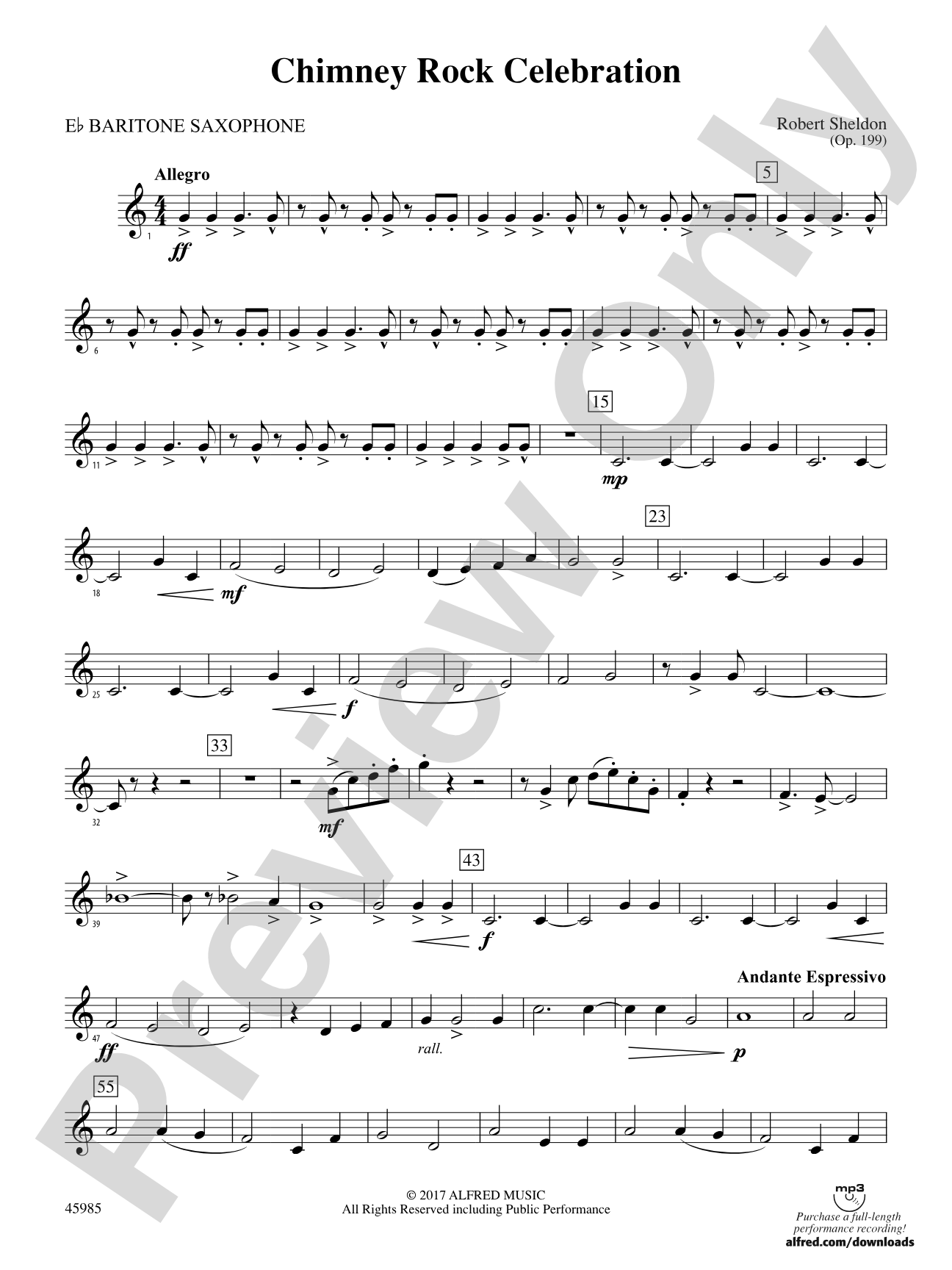

Chimney Rock Celebration: E-flat Baritone Saxophone
By Robert Sheldon
Grade: 3 (Medium)
Item: 00-PC-0017711_BTX
$3.00
Pickup currently not available
Description
Commissioned by the Nebraska State Bandmasters Association, this piece was written to commemorate the Nebraska Sesquicentennial, while also honoring the pioneers who helped develop the American West. (4:25)


Don't just read it, hear it, play along with it, and watch your students grow with it. In MakeMusic Cloud, Chimney Rock Celebration: E-flat Baritone Saxophone comes alive with professional accompaniment, adjustable tempo, and built-in practice tools that turn solo practice into real progress.
Open in the Player
Jump straight in and assign it today.
Start Your Free Trial
Open this title and explore the full library in minutes.
Sample Audio
1
Audio File
--:--
0:00
0:00
Sample Video
Additional Details
Series:
Young Symphonic
Publisher:
Alfred Music
Page Count:
132
SKU:
00-PC-0017711_BTX
More about this title
About the Composer: Robert Sheldon

Robert Sheldon stands among the most frequently performed composers in wind band repertoire. His work spans commissions, educational publications, and concert pieces that have earned recognition from the American School Band Directors Association, Phi Beta Mu, and ASCAP. He is the lead author of Sound Innovations for Concert Band and maintains an active schedule conducting All-State and Regional Honor Bands across the United States and internationally.
Sheldon's music reaches audiences worldwide and appears regularly on both concert and contest programs. He has conducted his works in renowned venues including Carnegie Hall, Boston Symphony Hall, Sydney Opera House, and the Kennedy Center. His conducting and clinician appearances have taken him throughout North America, Europe, Asia, and Australia, and he received an honorary doctorate from VanderCook College of Music in 2020.
Why we love this
Sheldon writes with genuine understanding of what Grade 3 ensembles can accomplish without oversimplifying the musical content. This piece lands perfectly in that middle ground where students feel challenged but can deliver something genuinely moving, and that balance makes it rewarding for everyone involved. The historical context gives your program depth and gives students a reason to care beyond the notes on the page.
What to expect
Chimney Rock Celebration opens with the kind of bright, purposeful energy you'd expect from a commemorative piece, then settles into a more reflective storytelling mode. The writing honors the pioneer legacy without becoming sentimental; instead, it feels direct and sincere, like music composed to capture a moment in time rather than to impress judges.
Who it's for
Concert bands at the Grade 3 level who want substantial repertoire with historical meaning. Directors programming sesquicentennial celebrations or heritage-focused concerts will find this piece particularly fitting, and it works equally well for festival performances where you want musicality to stand out alongside technical cleanliness.
How to get the most out of it
- Pay attention to the fanfare-style passages early on; these need clarity and precision from the brass section, but keep the articulation light enough that it doesn't feel brittle. Sheldon scores these moments to sound celebratory, not harsh.
- Balance the woodwinds against the brass during the thematic sections. This piece works best when you can hear both colors equally; if the brass overwhelms, the folk melody character gets lost.
- Lock in the rhythm section from the start. Grade 3 bands often rush celebratory moments, so establish a clear pulse in rehearsal before adding the layered textures.
- Shape the longer melodic lines with gentle dynamic swells rather than sudden changes. Sheldon's phrasing here mirrors hymn-like writing, which students often find easier to execute when they understand the vocal quality he's after.
How to use it
Program this as a concert opener or mid-program anchor rather than a closer. The piece has enough presence to establish your band's musicality early, leaving room for lighter fare or contrasting styles afterward. It also pairs naturally with other Americana-inspired repertoire or other works by Sheldon from the Young Symphonic series, giving you flexibility in building a coherent concert narrative.
Skills your students will build
- Balancing ensemble color across mixed timbres (brass and woodwind)
- Executing sustained phrasing in celebratory idioms
- Interpreting historical and programmatic context in performance
- Maintaining rhythmic stability in fanfare-style figures
- Listening for and correcting dynamic balance within sections