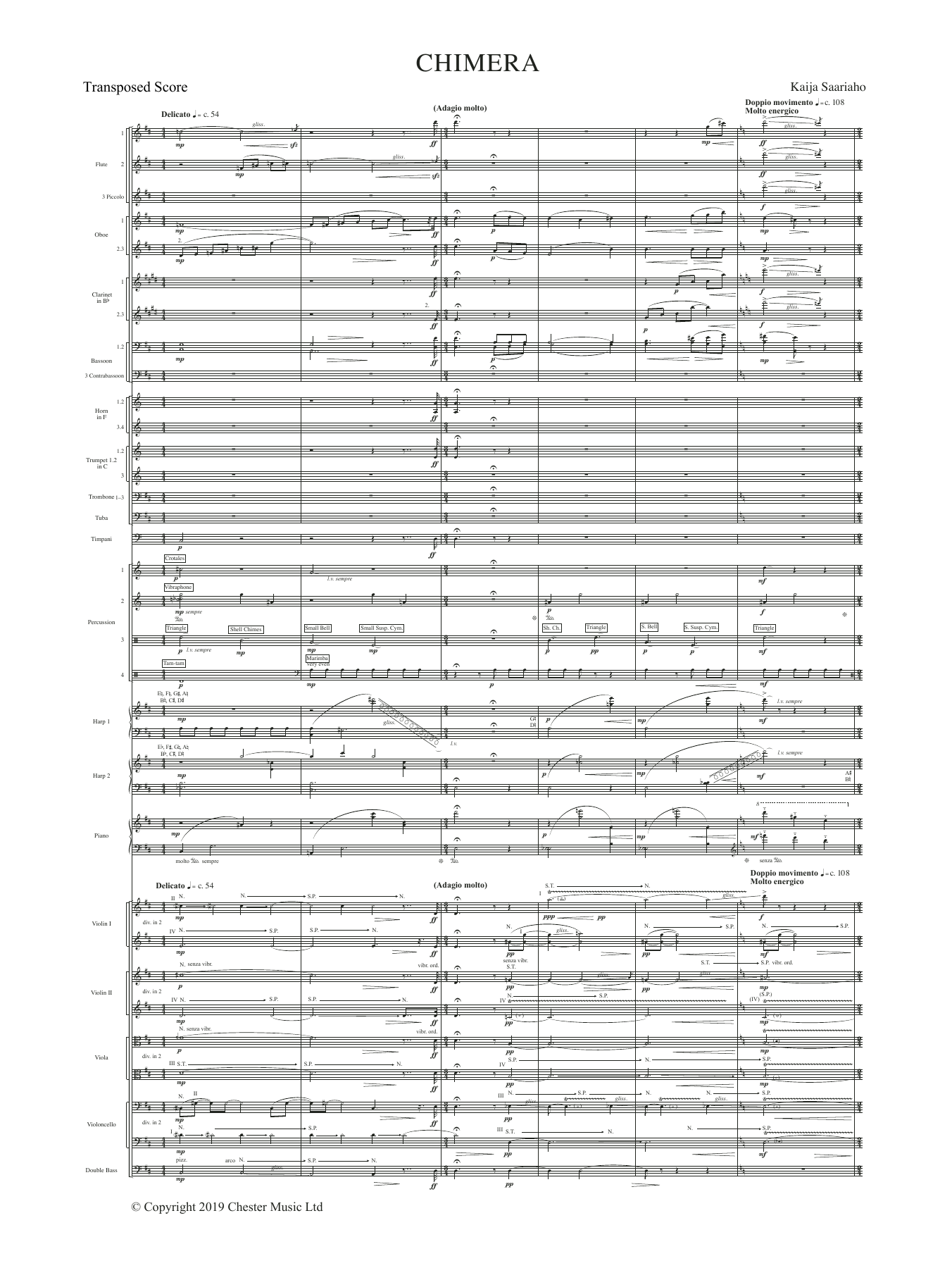
Kaija Saariaho is a Finnish composer whose orchestral and chamber works have earned her a distinctive voice in contemporary classical music. Her compositions often explore the interplay between acoustic and electronic sound, and her writing for strings reveals a sophisticated understanding of timbre and gesture that makes her work both accessible and intellectually engaging for performers.
Why we love this
Chimera offers string orchestras a genuinely modern work that doesn't demand extreme technical virtuosity or esoteric extended techniques to sound compelling. The piece rewards careful attention to tone production and ensemble balance in ways that deepen your musicians' listening skills while delivering an impressively contemporary sound in concert.
What to expect
Chimera emerges as a shimmering, often ethereal soundscape where individual instrumental voices weave in and out of focus. The piece balances moments of lyrical stillness with passages of restless energy, creating an atmosphere that feels both introspective and searching.
Who it's for
Advanced high school orchestras and college string programs seeking a 21st century work that challenges musicianship without requiring a specialized extended technique workshop. Conductors working with ensembles ready to engage with contemporary compositional language will find Chimera rewarding both to teach and to perform.
How to get the most out of it
Approach dynamic shifts as architectural moments rather than surface effects; each change in texture shapes the overall emotional arc of the piece.
Attend closely to the balance between sections, as Saariaho's orchestration often features transparent layering where a single viola line can define an entire passage.
Allow rubato to emerge naturally from phrase contours rather than imposing it mechanically; the music breathes when individual lines retain their independence within the ensemble.
Study the score for subtle divisi passages that might be overlooked at first reading; these create harmonic complexity that shouldn't be buried in the texture.
How to use it
Pair Chimera with Romantic era string repertoire to demonstrate how contemporary composers think about orchestral color and form. The work functions beautifully as a concert centerpiece that opens audience ears to modern writing without alienating listeners unfamiliar with the contemporary idiom.
Skills your students will build
Listening for and responding to transparent orchestration and textural clarity
Sustaining ensemble cohesion while maintaining individual voice independence
Interpreting contemporary notation and compositional intent
Responding to nuanced dynamic and timbral gestures
Understanding harmonic color through instrumental blend rather than traditional functional harmony
You May Also Like
Scan to Complete Your Purchase
Use your phone's camera to scan the code below
You'll log in on your phone and the order will be added to your account