

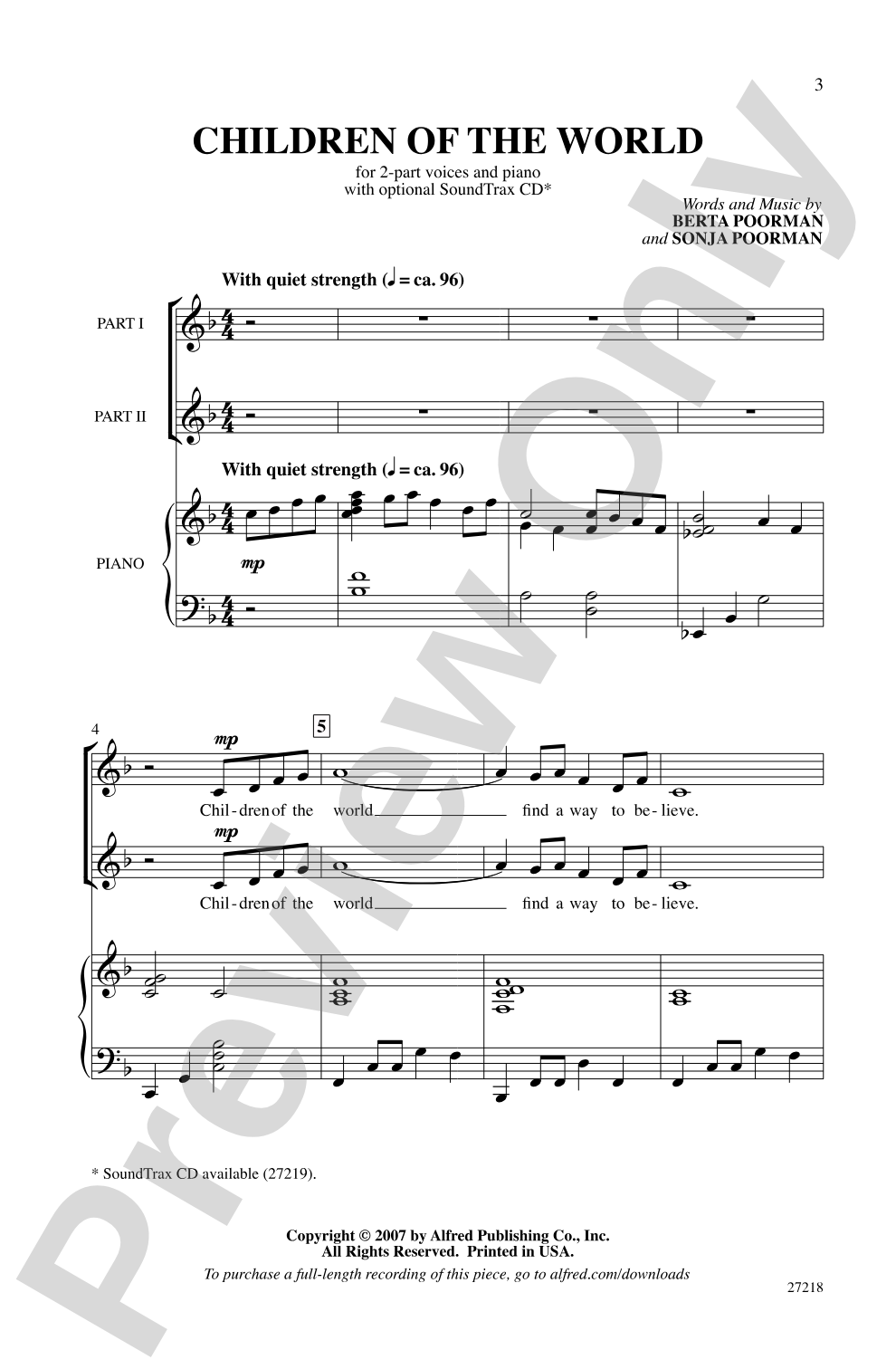

Children of the World: 2-Part Choral Octavo
Words and music by Berta and Sonja Poorman
Item: 00-PO-0000330
$2.25
Minimum order quantity: 20 copies
Pickup currently not available
Description
A gentle descant floats above the pentatonic melody during the final verse of this poignant song for developing choirs. Opens with a quiet unison and grows into a solid echo-song format. The peaceful SoundTrax CD (optional) suggests a Native American backdrop.


Children of the World: 2-Part Choral Octavo isn't in MakeMusic Cloud just yet...but it could be. Let us know you'd like to see it, and you'll help shape what comes next. In the meantime, start a free trial and dive into thousands of interactive titles your students can play along with today.
Request This Title
Tell us you want it.
Start Your Free Trial
Explore everything that's ready to play right now.
Sample Audio
1
Audio File
--:--
0:00
0:00
Sample Video
No sample videos found.
Additional Details
Series:
Alfred Choral Designs
Publisher:
Alfred Music
Page Count:
12
SKU:
00-PO-0000330
More about this title
About the Composer: Berta Poorman
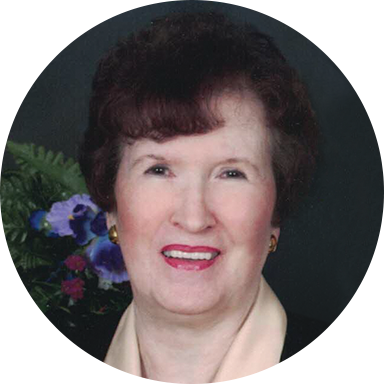
Berta and Sonja Poorman have spent more than two decades creating choral music together as a mother-daughter composing team. Their work spans sacred and secular repertoire, shaped by extensive experience directing singers of all ages in church choral settings. Both composers are known for their careful voice leading and commitment to texts that uplift and inspire.
Why we love this
This piece offers developing choirs a genuine musical arc without overwhelming complexity. The progression from unison to echo-song format with a descant finale builds confidence and allows singers to experience independence within a supportive harmonic structure. The pentatonic melody and cultural backdrop create space for meaningful interpretation rather than technical gymnastics.
What to expect
This music inhabits a contemplative, grounded space. The pentatonic melody carries a quiet nobility, and as the descant enters in the final verse, the texture deepens into something both delicate and assured. There is nothing rushed about it; instead, the arrangement invites singers and listeners to sit with stillness and reflection.
Who it's for
This octavo works well for developing mixed-age youth choirs, middle school students, and church choirs seeking accessible literature with cultural substance. The 2-part voicing and straightforward harmonic language make it feasible for singers with limited reading experience, while the arrangement's architectural elegance rewards thoughtful interpretation.
How to get the most out of it
- Balance the opening unison so it sounds confident rather than tentative; this quiet beginning sets the reflective tone for the entire piece.
- When the echo-song format enters, ensure the second part hears and locks onto the rhythmic pattern rather than simply shadowing melody. Rehearse the echo entrances separately first.
- Introduce the descant gradually in the final verse. Have singers who carry the descant practice it alone before combining with the main melody to secure independence.
- If using the SoundTrax accompaniment, allow students to absorb the Native American instrumentation in context before rehearsing; it shapes the interpretive character of the whole arrangement.
How to use it
Pair this with other world-music influenced selections to create a thematic program about cultural perspectives and shared humanity. Its gentle nature makes it an excellent choice for opening a concert or bracketing a set of more energetic pieces. The optional accompaniment also adapts well to interfaith services, school assemblies, or community events seeking music with both accessibility and dignity.
Skills your students will build
- Reading 2-part voicing with rhythmic independence
- Sustaining unison pitch and tone quality
- Echo-song phrasing and response timing
- Interpreting pentatonic melody with cultural awareness
- Balancing descant against main melodic line