
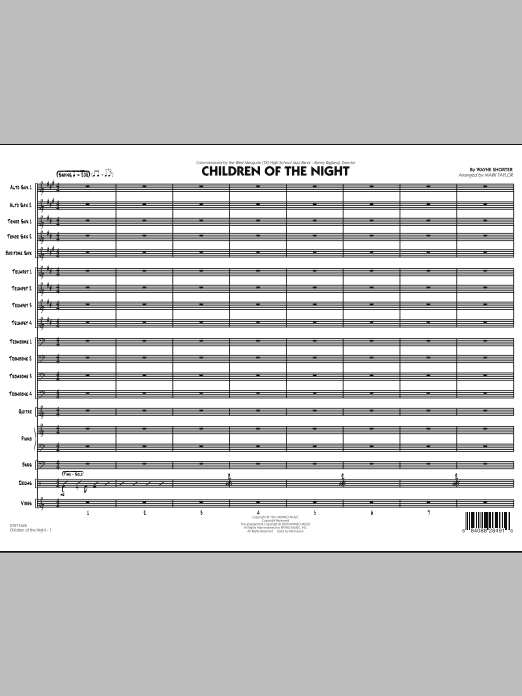

Children of the Night: Jazz Ensemble Conductor Score & Parts
By Wayne Shorter / As performed by Art Blakey / Arranged by Mark Taylor
Grade: 4
Item: 35-PK00129480
$55.00
Pickup currently not available
Buy Extra Parts (Digital PDF Download)
Parts Added to Cart!
Description
Recorded by Art Blakey the Jazz Messengers on the classic 1961 album Mosaic, this jazz standard shows the harmonically mature writing style of Wayne Shorter along with an intense hard bop energy. Mark's uptempo swing chart opens with a small group on the head with accompaniment figures from the rest of the ensemble. A tenor sax solo is featured followed by solo space for drums.


Children of the Night: Jazz Ensemble Conductor Score & Parts isn't in MakeMusic Cloud just yet...but it could be. Let us know you'd like to see it, and you'll help shape what comes next. In the meantime, start a free trial and dive into thousands of interactive titles your students can play along with today.
Request This Title
Tell us you want it.
Start Your Free Trial
Explore everything that's ready to play right now.
Sample Audio
No sample audio found.
Sample Video
No sample videos found.
Additional Details
Publisher:
Hal Leonard
SKU:
35-PK00129480
More about this title
About the Composer: Wayne Shorter
Wayne Shorter composed during jazz's most harmonically adventurous period, bringing classical training and restless harmonic imagination to the hard bop language. His work with Art Blakey's Jazz Messengers and later with Weather Report established him as a voice who could balance accessibility with sophisticated chord movement, making his compositions equally at home in the jazz club and the classroom.
Shorter's pieces reward repeated listening. The harmonic density that marks his writing teaches ensemble members to listen beyond the melody line, developing their ear for chord extensions and voice leading that defines mature jazz musicianship.
Why we love this
Mark's chart captures the propulsive engine of the original Blakey recording without oversimplifying Shorter's harmonic sophistication. The structure accommodates both solo voices and section writing elegantly, giving your band members distinct roles that feel purposeful rather than padding.
What to expect
Propulsive and sophisticated without pretension. The groove propels forward with serious hard bop energy while the chord changes ask questions that keep musicians engaged through multiple hearings.
Who it's for
Jazz ensembles at the intermediate level who are ready for harmonic density and stylistic maturity. Your students need solid section reading skills and comfort with jazz comping, but this chart teaches rather than punishes.
How to get the most out of it
- Balance the opening small group head against the ensemble's accompaniment figures by rehearsing those two elements separately before integrating them; the interplay works only if both layers have clarity and independence.
- Shape the tenor sax solo space with genuine restraint from the rhythm section. Lighter touch on comping during the solo invites the soloist to explore rather than battle the ensemble.
- Maintain the uptempo energy through the form by keeping articulation crisp in the ensemble hits; loose, behind-the-beat phrasing will slow the piece's momentum.
How to use it
Pair this with other Wayne Shorter compositions or hard bop standards to build a concert set that demonstrates the Messengers' influence on modern jazz. The uptempo head also works well as a second-set opener when you need to recapture energy after a ballad.
Skills your students will build
- Comping over moving chord changes (ii-V progressions with extensions)
- Listening to harmonic layers while maintaining rhythmic pocket
- Solo space management and rhythm section responsiveness
- Articulation control in fast swing feels