Children of Sanchez: 2nd B-flat Trumpet Sheet Music Preview

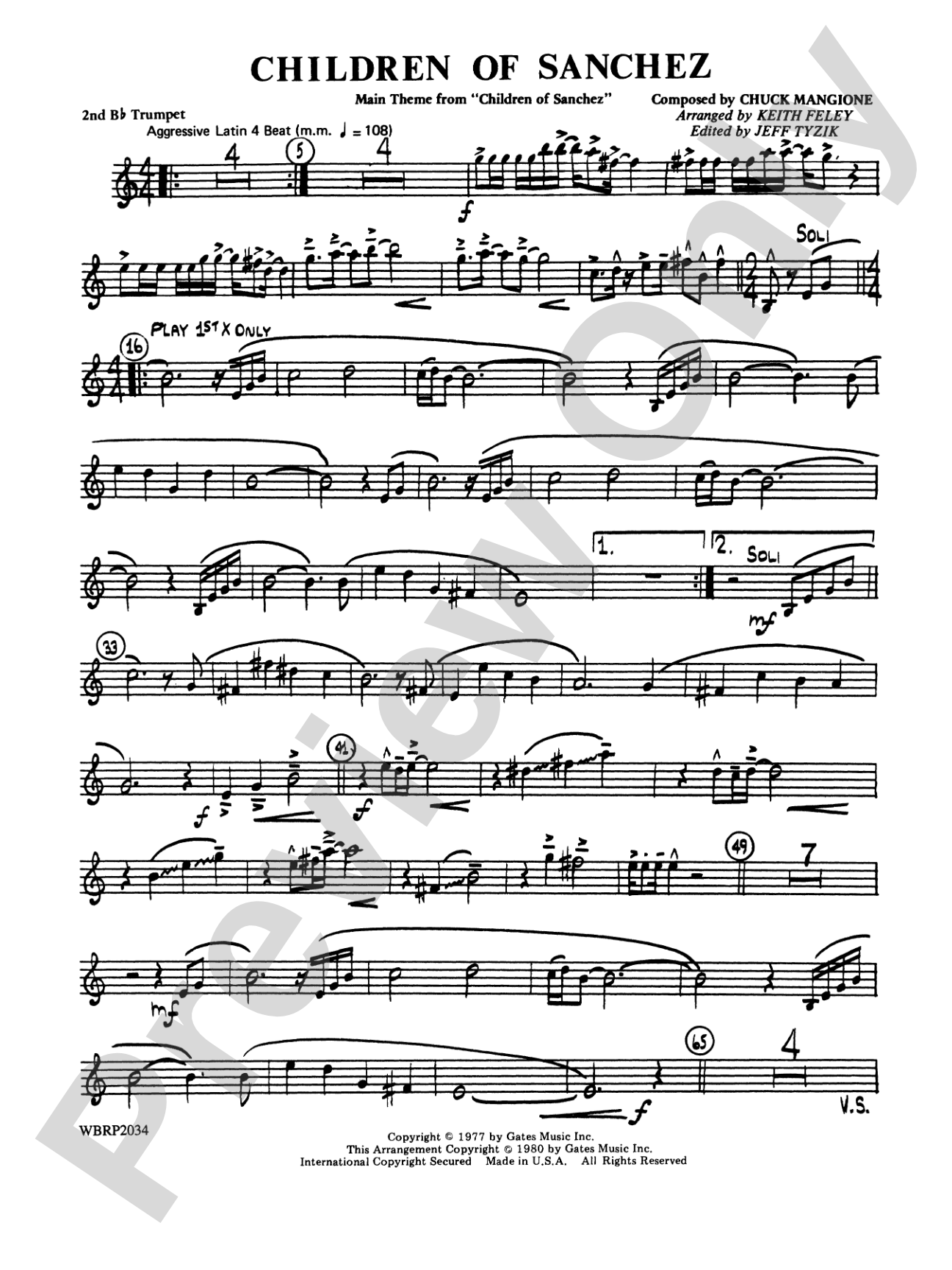
Children of Sanchez: 2nd B-flat Trumpet

By Chuck Mangione / ed. Jeff Tyzik, arr. Keith Foley

Grade: 3 (Medium)

Item: 00-PC-0014768_T2

Digital Download
$3.00
Description
Children of Sanchez. is a level 3 jazz band series piece designed for high school and advanced junior high school band. Full instrumentation includes 5 saxophone, 8 brass and 4 rhythm parts. Optional parts include flute, tuba, horn in F and baritone T.C. / tenor saxophone. Solos are written out with chord changes, the rhythm section parts suggest chord voicings and rhythms and guitar chord frames are provided to help young guitarists.

Don't just read it, hear it, play along with it, and watch your students grow with it. In MakeMusic Cloud, Children of Sanchez: 2nd B-flat Trumpet comes alive with professional accompaniment, adjustable tempo, and built-in practice tools that turn solo practice into real progress.

Sample Audio
No sample audio found.
Sample Video
Additional Details
Series: Jazz Band Series
Publisher: Alfred Music
Page Count: 82
SKU: 00-PC-0014768_T2

More about this title

About the Composer: Chuck Mangione

Chuck Mangione is a trumpeter and composer known for blending jazz sophistication with accessible melodies that connect with broad audiences. His work spans film scores, television themes, and concert jazz, earning him a Grammy Award and establishing him as a bridge between commercial and artistic jazz traditions.

Why we love this

Keith Foley's arrangement translates Mangione's lyrical sensibility into a piece that works perfectly for developing jazz ensembles without sacrificing musical substance. The written-out solos give students concrete models for jazz phrasing and improvisation, while the chord voicing suggestions in the rhythm section parts provide real-time scaffolding that builds confidence in young players still learning how jazz harmony functions.

What to expect

Warm and conversational, with the kind of melodic elegance Mangione is known for. The piece breathes with jazz sensibility, inviting soloists to shape phrases over supportive harmonic changes while the ensemble provides a sophisticated but not overwhelming backdrop. There's a lyrical quality beneath the jazz language that makes it feel both contemporary and timeless.

Who it's for

High school jazz bands and advanced junior high school ensembles looking for a medium-difficulty piece that teaches real jazz concepts without requiring professional-level chops. The comprehensive instrumentation (5 saxophones, 8 brass, 4 rhythm, plus optional parts) makes it accessible to larger programs while remaining playable by smaller groups willing to double parts strategically.

How to get the most out of it

  • Spend rehearsal time with your rhythm section on the suggested voicings and rhythmic feels before full ensemble run-throughs. Guitarists especially benefit from the chord frames provided, but they should understand the underlying harmonic motion so they can voice independently if needed.
  • Balance the written solos carefully in the context of the arrangement. These are learning tools first, so clarity matters more than volume; ensure soloists can be heard without overwhelming the ensemble sound.
  • Establish a steady swing feel early and maintain it consistently. The level 3 difficulty sits at a sweet spot where the band is capable of genuine rhythmic sophistication, so commit to authentic jazz time rather than a mechanical interpretation.
  • Use the full instrumentation to build ensemble color, but make strategic use of the optional parts to accommodate what your band has available. The core arrangement holds together without them.

How to use it

Feature this as a centerpiece on a concert that showcases your ensemble's jazz credentials without asking for technical virtuosity beyond high school reach. The 82-page score suggests a substantial piece that commands a full set slot, making it ideal for a jazz-focused concert or a mixed repertoire evening where you want to demonstrate serious musicianship across styles.

Skills your students will build

  • Reading jazz chord symbols and chord changes
  • Swing feel and jazz rhythmic interpretation
  • Solo interpretation and phrasing from written changes
  • Ensemble voicing and blend in a jazz context
  • Understanding jazz big band sectional balance and orchestration
  • Guitar chord frame reading and comping foundations

You May Also Like