
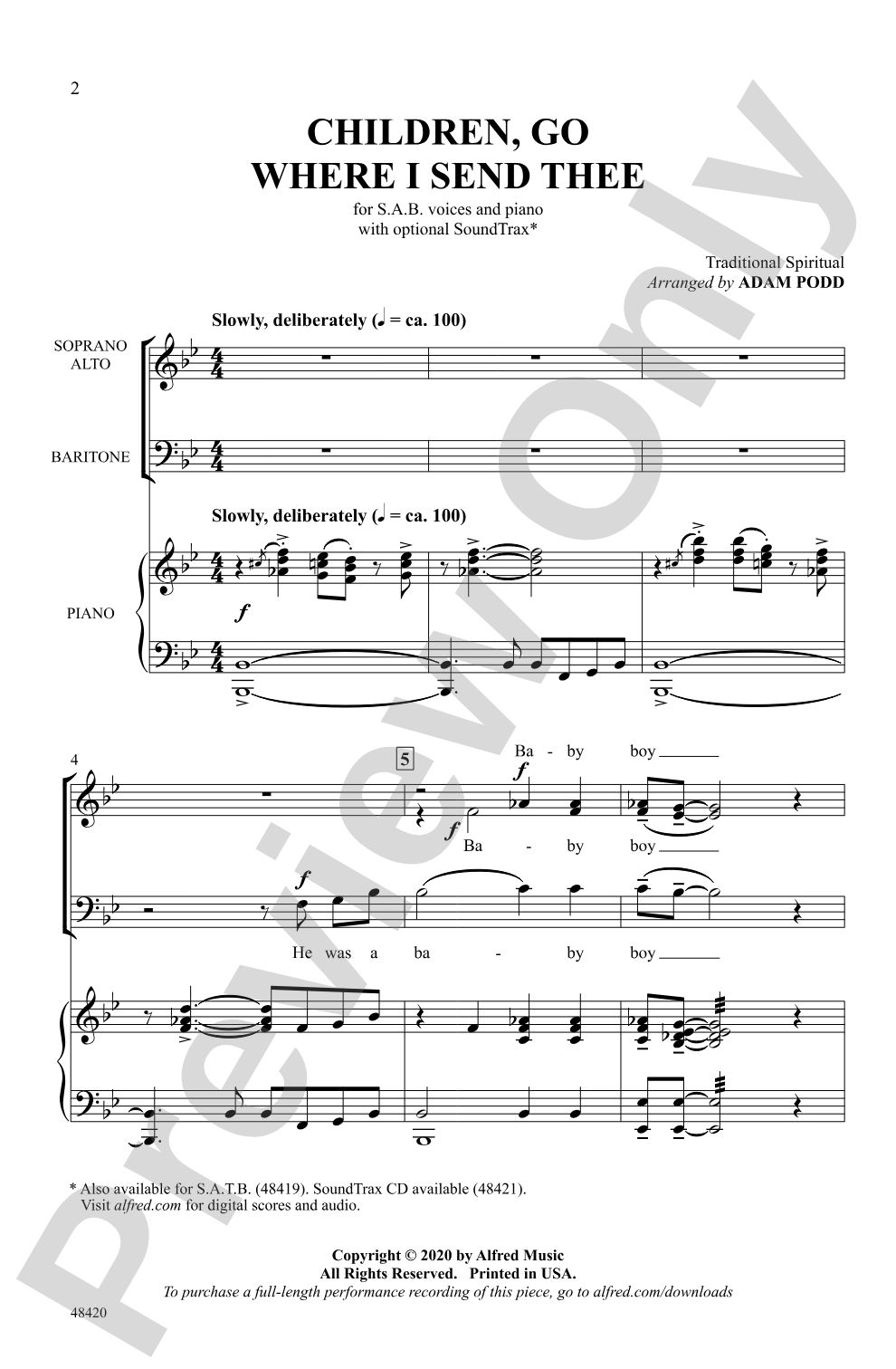
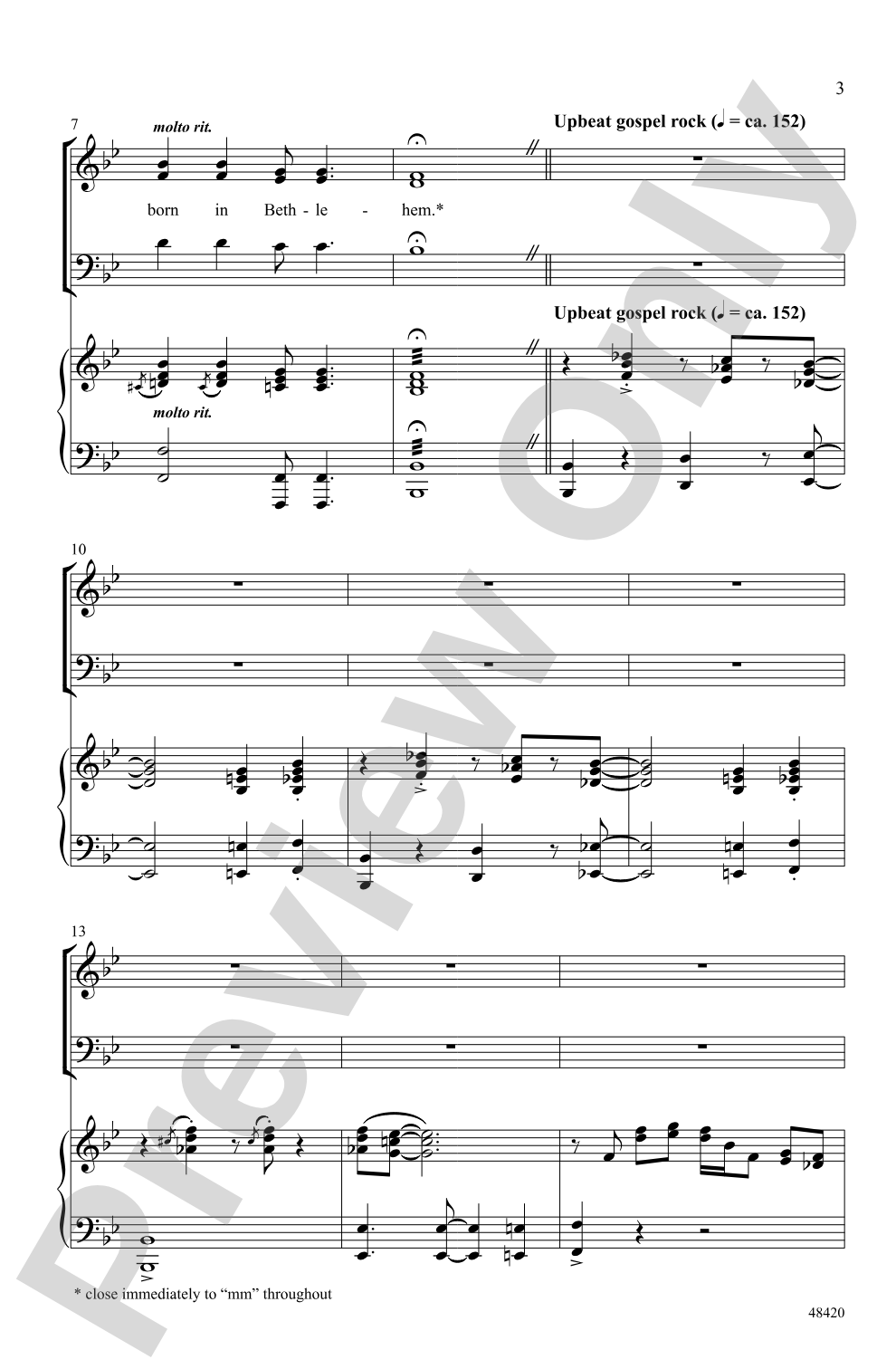
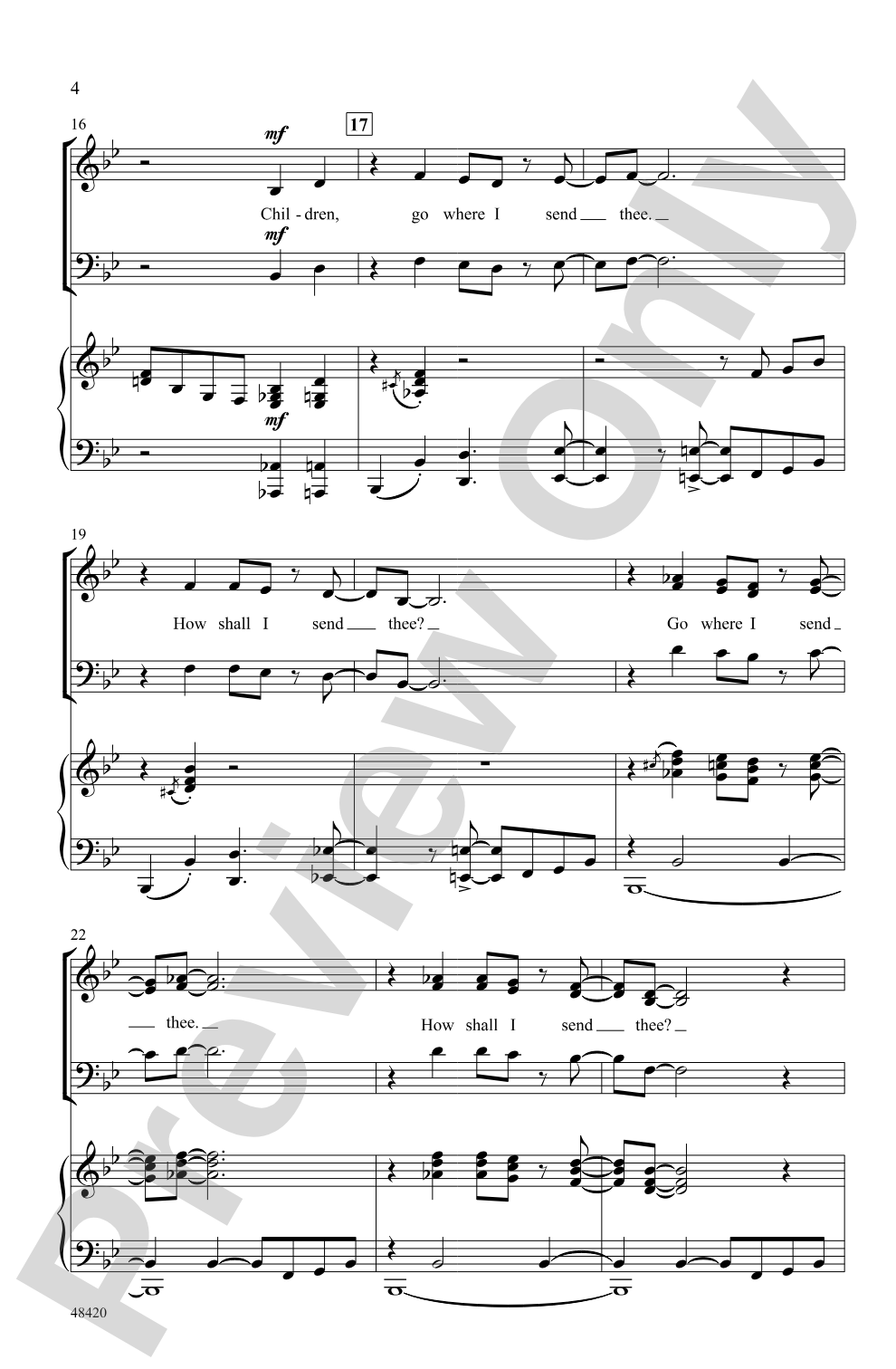

Children, Go Where I Send Thee: SAB Choral Octavo
Traditional Spiritual / arr. Adam Podd
Item: 00-PO-0006360

$2.20
Minimum order quantity: 20 copies
Pickup currently not available
Related Items
Children, Go Where I Send Thee: SoundTrax Digital Audio Download |
$29.99
|
View | |
Children, Go Where I Send Thee: SATB Choral Octavo |
$2.20
|
View | |
Children, Go Where I Send Thee: SATB Choral Octavo |
$2.20
|
View | |
Children, Go Where I Send Thee: SAB Choral Octavo |
$2.20
|
View | |
Children, Go Where I Send Thee: Choral Octavo SoundTrax CD |
$29.99
|
View |
Description
This enthusiastic gospel treatment of the traditional Christmas spiritual is a bona fide roof-raiser! Additive verses feature solos, duets, or entire sections, and everyone joins in for the exuberant refrains. A final repeated chorus stacks voice parts to take the rockin' arrangement over the top. Don't miss the fantastic SoundTrax! This title is available in MakeMusic Cloud.


Don't just read it, hear it, play along with it, and watch your students grow with it. In MakeMusic Cloud, Children, Go Where I Send Thee: SAB Choral Octavo comes alive with professional accompaniment, adjustable tempo, and built-in practice tools that turn solo practice into real progress.
Open in the Player
Jump straight in and assign it today.
Start Your Free Trial
Open this title and explore the full library in minutes.
Sample Audio
1
Audio File
--:--
0:00
0:00
Sample Video
No sample videos found.
Additional Details
Series:
Alfred Choral Designs
Publisher:
Alfred Music
Page Count:
16
SKU:
00-PO-0006360
More about this title
About the Arranger: Adam Podd

Adam Podd is a music director and arranger working across classical, musical theater, and worship contexts from his base in Brooklyn. He has collaborated with major orchestras including the National Symphony Orchestra, Boston Pops, and New York Pops, as well as Broadway and concert artists, in venues ranging from Carnegie Hall to the Kennedy Center.
At First Unitarian Church in Brooklyn, Podd serves as Music Director and choral conductor, where he develops arrangements that bridge sacred and secular traditions for the congregation's progressive musical life. He frequently collaborates with his twin brother Matt on various musical projects and ensemble work. More information is available at adampodd.com.
Why we love this
Podd's arrangement captures the infectious energy of this spiritual without losing its roots, building momentum through smart use of solos, duets, and sectional entries before stacking voices into a finale that genuinely feels like a celebration. The additive structure keeps singers engaged and gives every voice part meaningful solo moments, which translates to better rehearsal energy and more invested performers. For directors balancing accessibility with musicianship, this delivers both.
What to expect
Joyful, driving, and communal. The gospel rhythms and additive structure create forward momentum that builds naturally from intimate solo moments to an exuberant full-voice finale. There's a sense of invitation throughout, with each new voice entry drawing listeners deeper into the celebration.
Who it's for
This arrangement works well for intermediate choral programs that have developed basic blend and part-singing skills and are ready to tackle stylistic singing in a gospel idiom. It's ideal for holiday concerts and any program that calls for a spiritual with contemporary energy and accessible three-part writing.
How to get the most out of it
- Let the solos and duets breathe in the additive verses; resist the urge to rush the build. The arrangement's power comes from the contrast between intimate moments and full-voice sections.
- Balance the refrain carefully so that it remains punchy and rhythmically cohesive across all three parts, especially when voices stack in the final chorus.
- Use the recorded accompaniment to lock in the groove and help singers hear how their parts sit within the gospel style and rhythmic feel.
- When stacking voice parts in the finale, cue singers to sing with confidence and fullness; this is where the arrangement's energy pays off.
How to use it
Program this as a centerpiece in a holiday concert or end-of-semester celebration where you want to shift the energy into something celebratory and participatory. It pairs well with both traditional and contemporary sacred music and works particularly effectively as the final or near-final piece on a program.
Skills your students will build
- Gospel rhythmic feel and swing
- Layering voices in additive arrangements
- Balanced blend across three-part mixed voicing
- Solo and small ensemble confidence
- Stylistic interpretation of spiritual traditions