
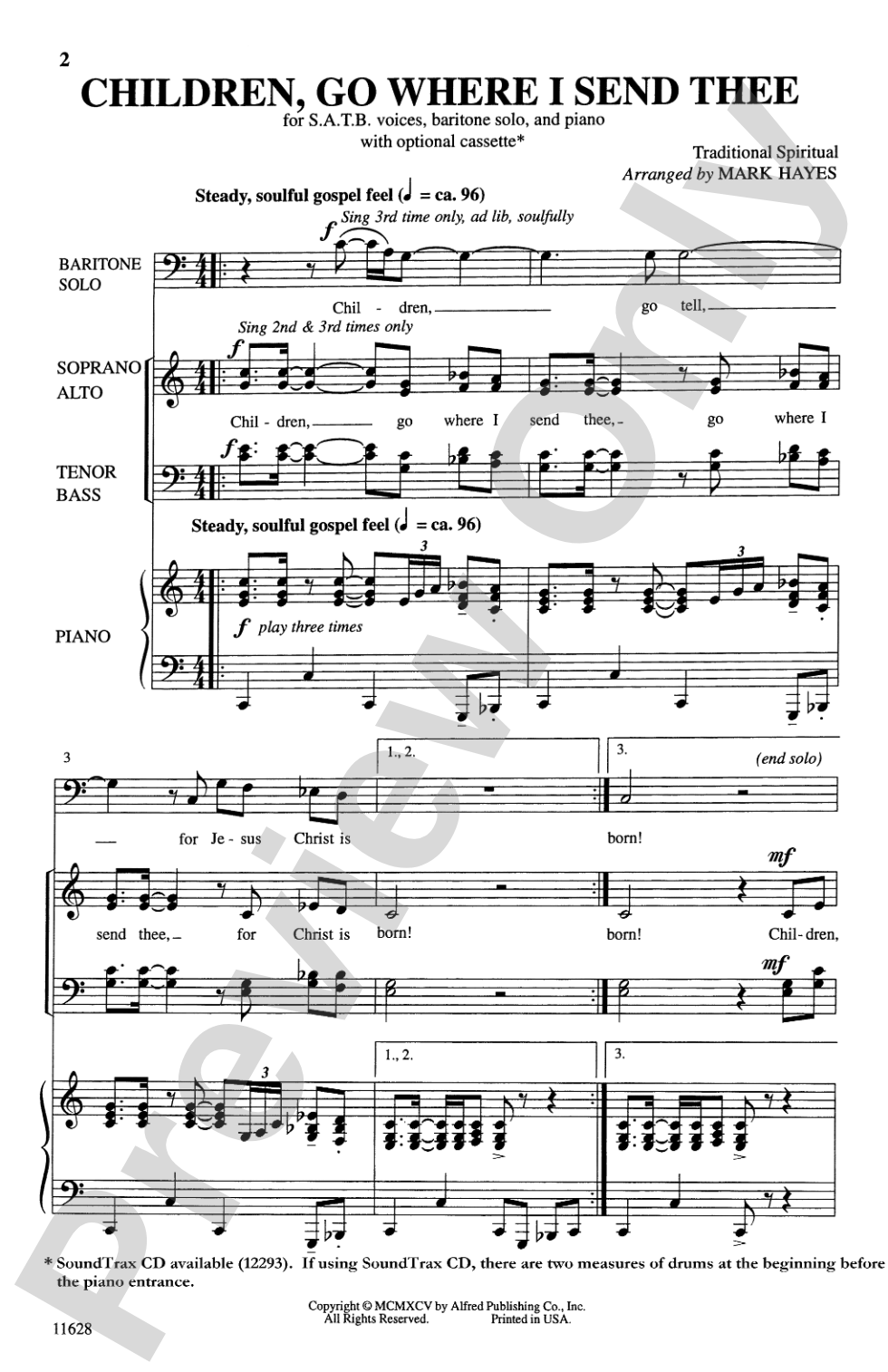
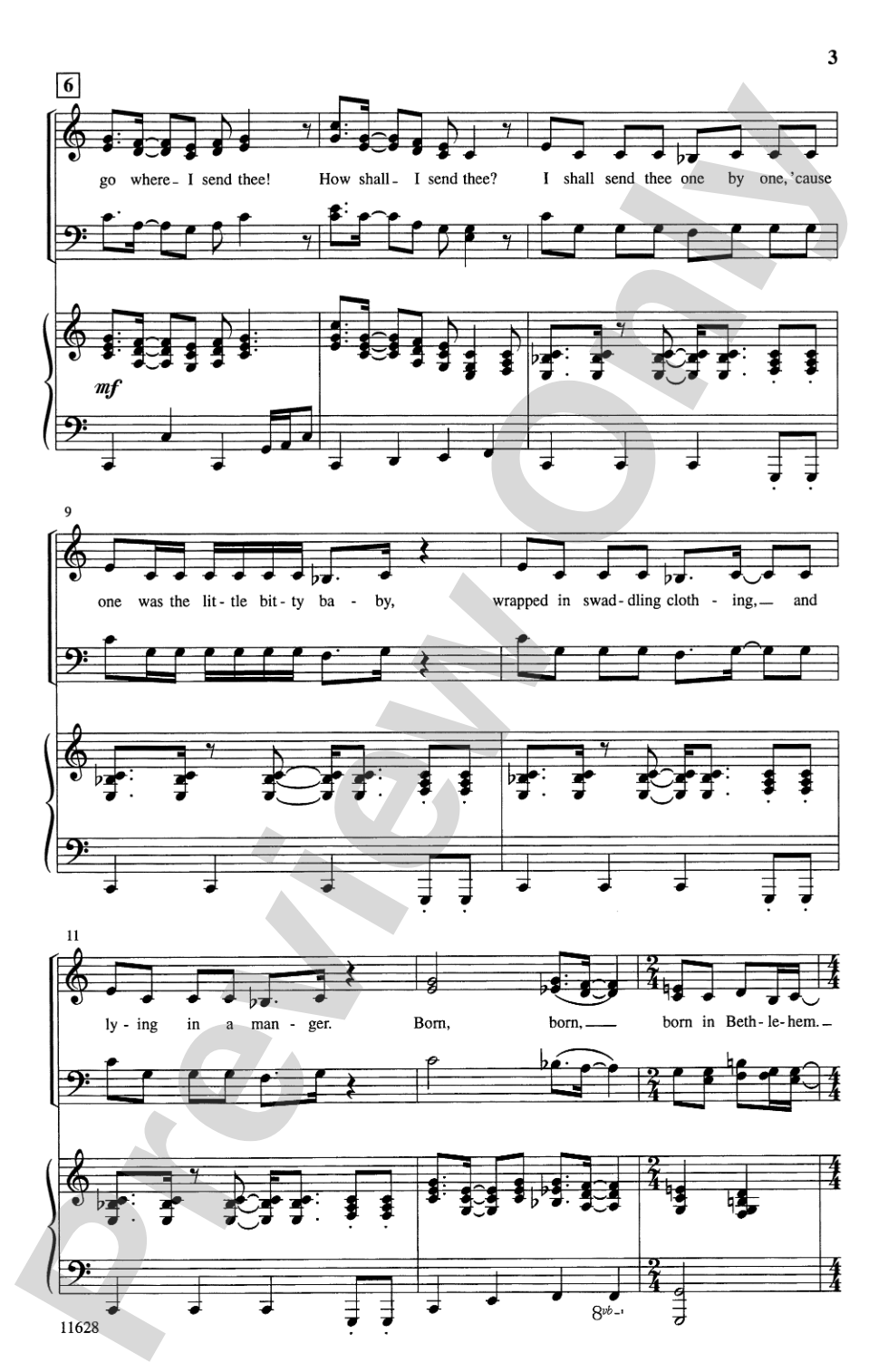
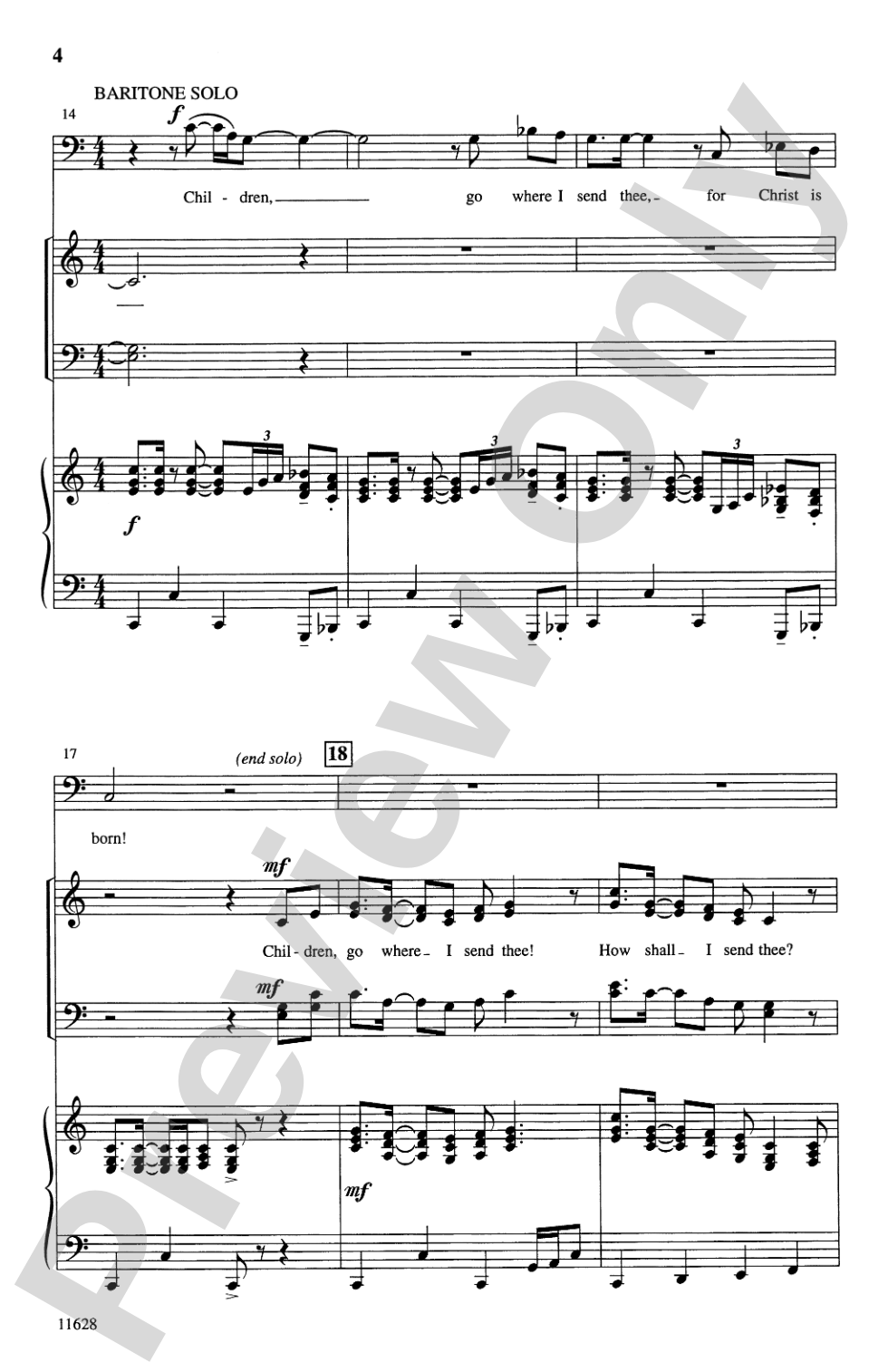
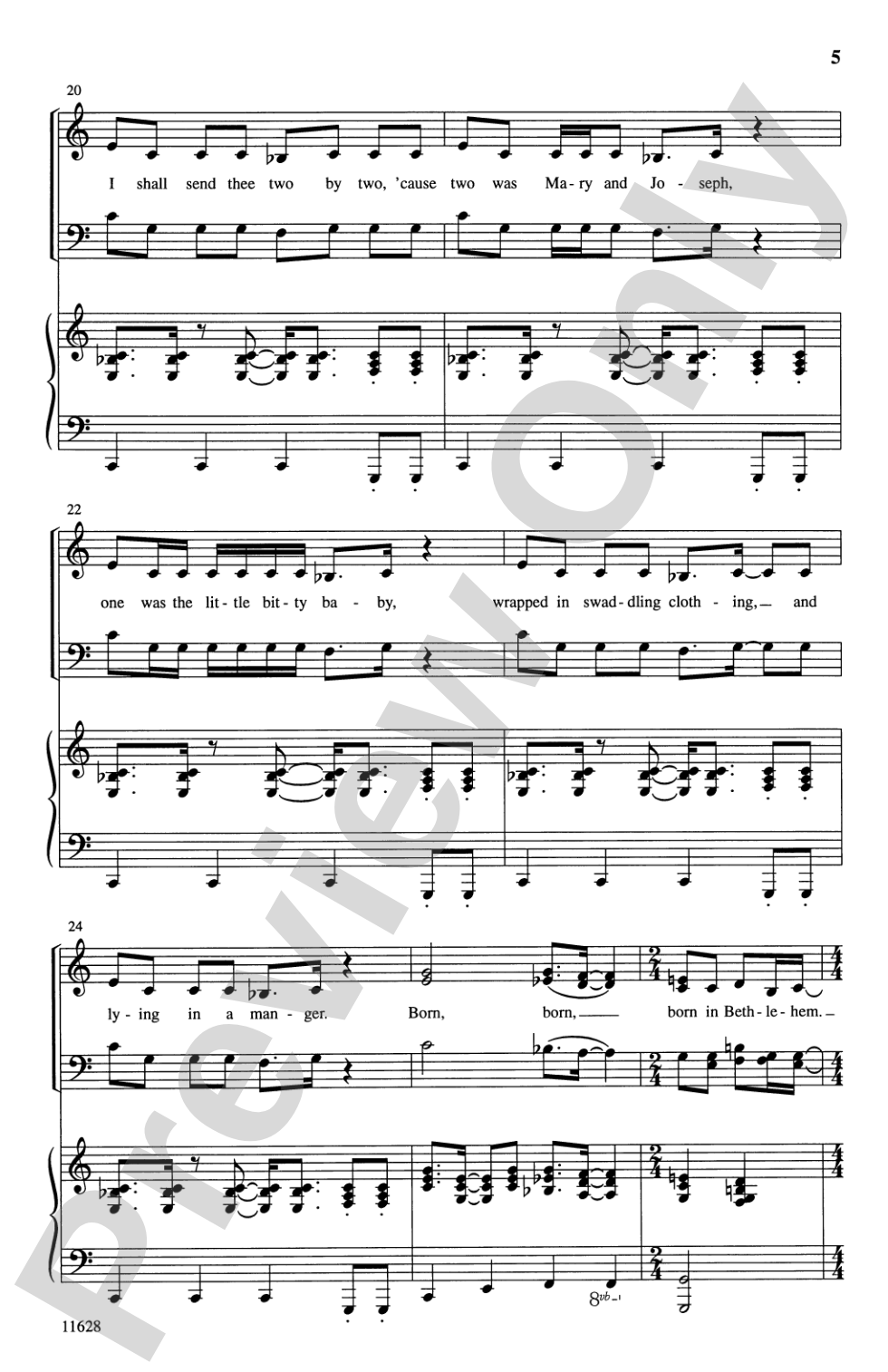
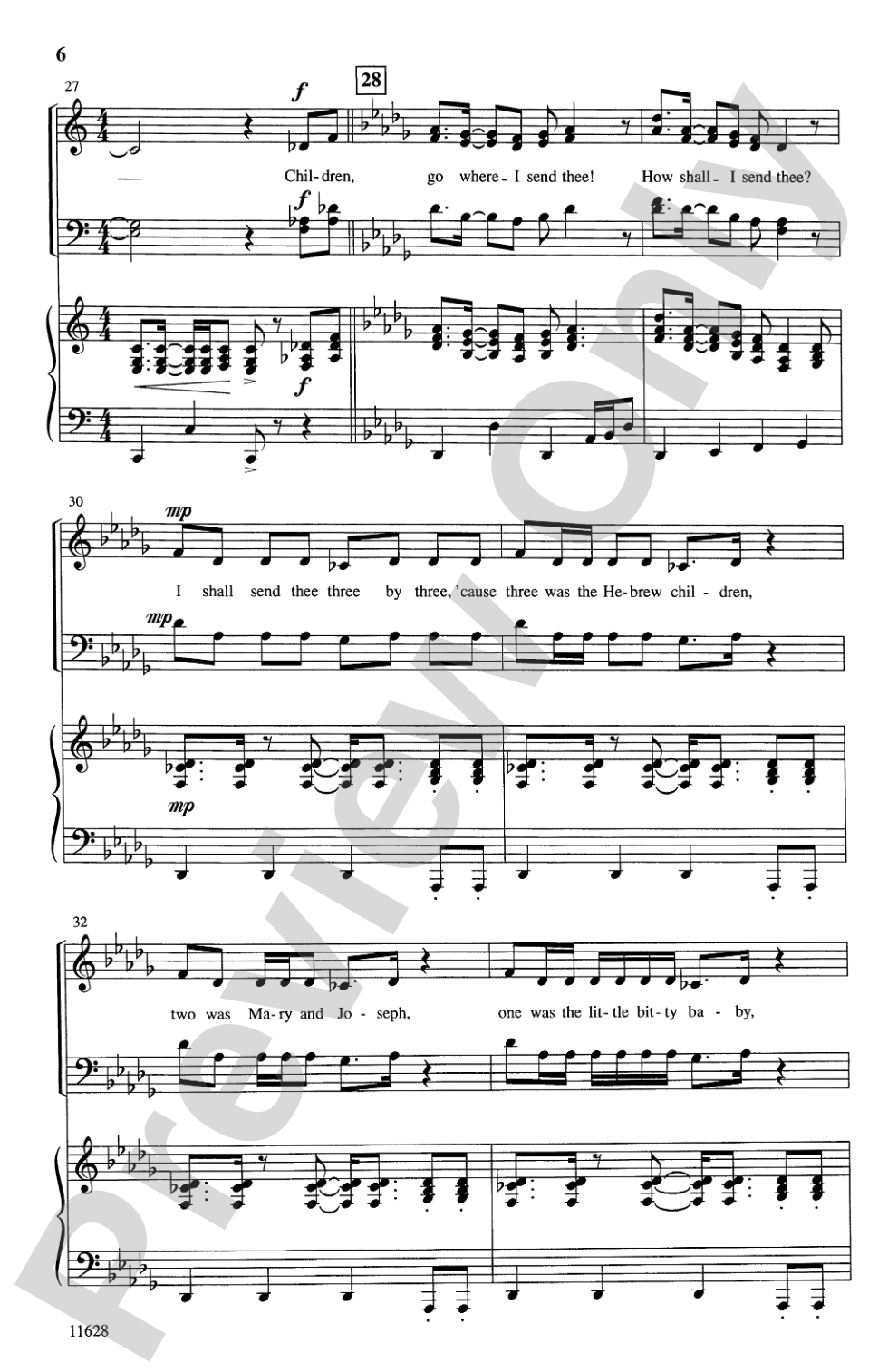
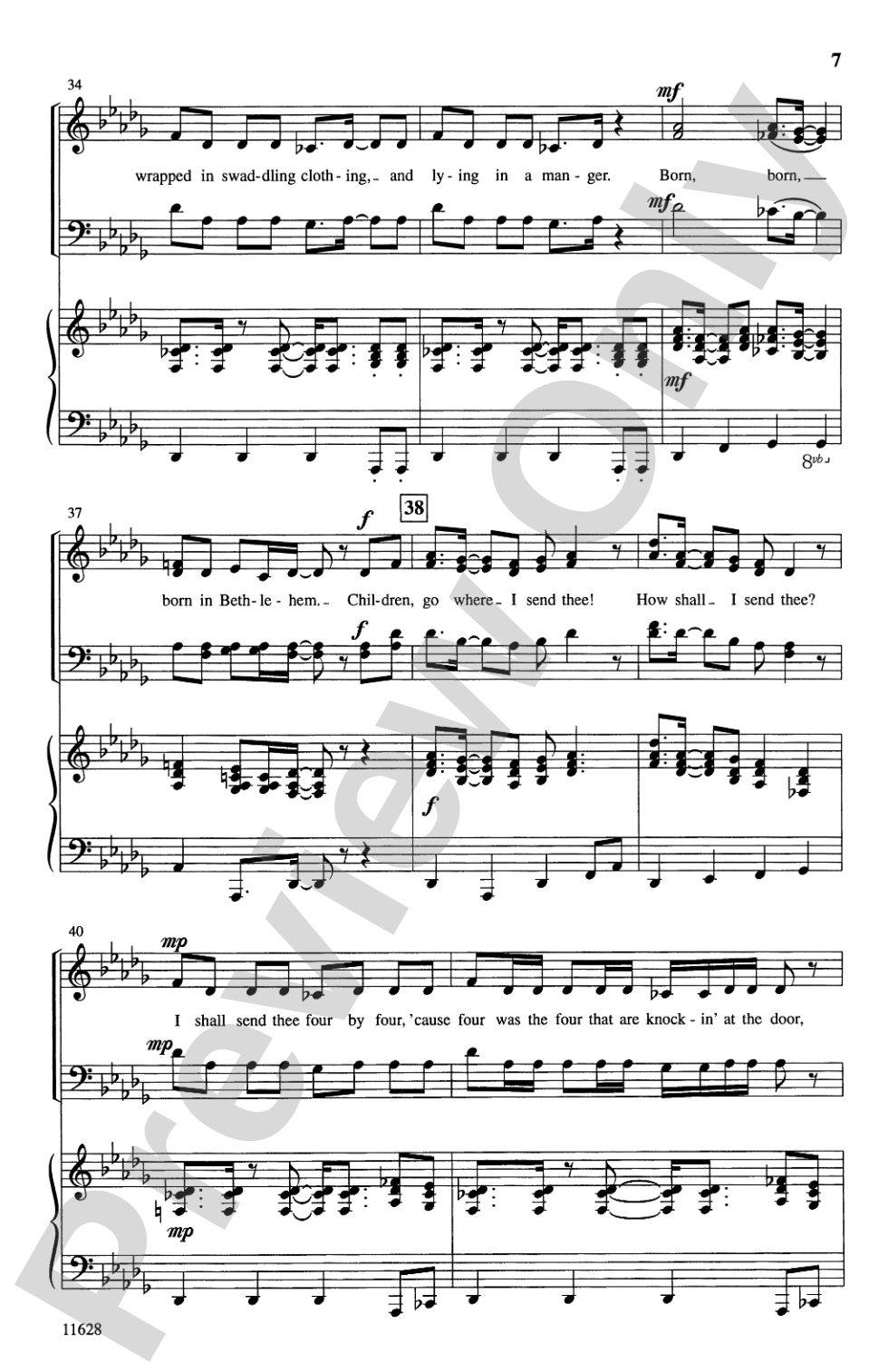

Children, Go Where I Send Thee: SATB (with Opt. Baritone Solo) Choral Octavo
Arr. Mark Hayes
Item: 00-PO-0002067
$4.25
Minimum order quantity: 20 copies
Pickup currently not available
Description
An exceptional, 6 1/2 minute Mark Hayes arrangement filled with rhythmic energy from the very first measure. Successive half step modulations help this piece build to a powerful finish. Features a baritone solo and a steady, soulful gospel feel. The SoundTrax is exciting and highly recommended.


Children, Go Where I Send Thee: SATB (with Opt. Baritone Solo) Choral Octavo isn't in MakeMusic Cloud just yet...but it could be. Let us know you'd like to see it, and you'll help shape what comes next. In the meantime, start a free trial and dive into thousands of interactive titles your students can play along with today.
Request This Title
Tell us you want it.
Start Your Free Trial
Explore everything that's ready to play right now.
Sample Audio
No sample audio found.
Sample Video
No sample videos found.
Additional Details
Series:
Alfred Archive Edition: Alfred Choral Designs
Publisher:
Alfred Music
Page Count:
28
SKU:
00-PO-0002067
More about this title
About the Arranger: Mark Hayes
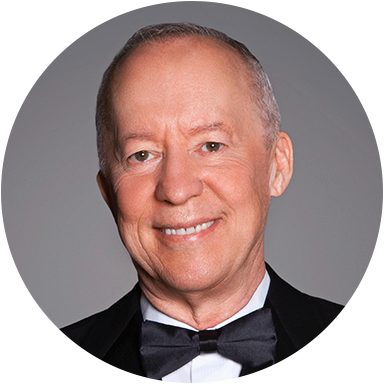
Mark Hayes has built an extraordinary career composing and arranging across nearly every musical genre. With over 1,750 published works and a summa cum laude degree in piano performance from Baylor University, he brings both technical precision and deep musicality to everything he touches. His resume reads like a who's who of American musical institutions: he's conducted at Lincoln Center, the National Cathedral, and Carnegie Hall, and premiered his Requiem in Rome as part of a Vatican-sponsored festival.
Beyond sacred music, Hayes is equally fluent in musical theater, orchestration, and record production. He's orchestrated hit musicals, written for film, and maintains a particular passion for piano literature, with over 100 piano books in print spanning gospel, classical, jazz, and Broadway. In 2010, Baylor University recognized his lifetime contributions with the Award for Exemplary Leadership in Christian Music. Whether he's composing symphonic works or arranging spirituals, Hayes consistently demonstrates why he's one of the most recorded and performed arrangers in American choral music.
Why we love this
Hayes understands how to keep a spiritual alive without sacrificing its soul. The successive half step modulations build momentum organically, and the optional baritone solo gives you a natural focal point for dramatic contrast. Best of all, the rhythmic energy never feels forced; it emerges from genuine gospel phrasing and authentic harmonic movement.
What to expect
Soulful and propulsive from the opening note. The gospel feel is genuine, not manufactured, and the harmonic movement pulls you forward with natural momentum. By the final modulations, the piece builds to an undeniable, joyful power.
Who it's for
Choirs with solid ensemble cohesion and at least one baritone comfortable with gospel soloing will find this rewarding at the high school and community choir level. If your ensemble thrives on rhythmic precision and full-voiced sonority, this arrangement plays to those strengths.
How to get the most out of it
- Establish the groove in the first eight measures and commit to it completely. The SoundTrax is designed to lock in hard, so your choir needs to find that pocket early and never let go.
- Give the baritone soloist room to breathe and inflect the solo passage with genuine freedom. The accompaniment sits back enough to support, not constrain, their interpretation.
- Plan your modulation points strategically during rehearsal. Mark where the key shifts happen and walk through the voice leading so no one gets caught off guard when the ground shifts beneath them.
- Use the recorded accompaniment from the beginning of your rehearsal process. Hearing it in context shows your singers exactly where the energy should live and makes the gospel feel contagious rather than academic.
How to use it
Program this for a concert where you want to shift energy and lift the room. Its six and a half minutes make it substantial enough to stand alone as a second-half opener, and the Christmas tradition behind the spiritual gives it instant accessibility for holiday programming.
Skills your students will build
- Gospel phrasing and syncopation in SATB texture
- Reading and executing successive modulations
- Balancing full choir texture with solo spotlight
- Rhythmic independence and ensemble lock
- Stylistic authenticity in spiritual arrangements