
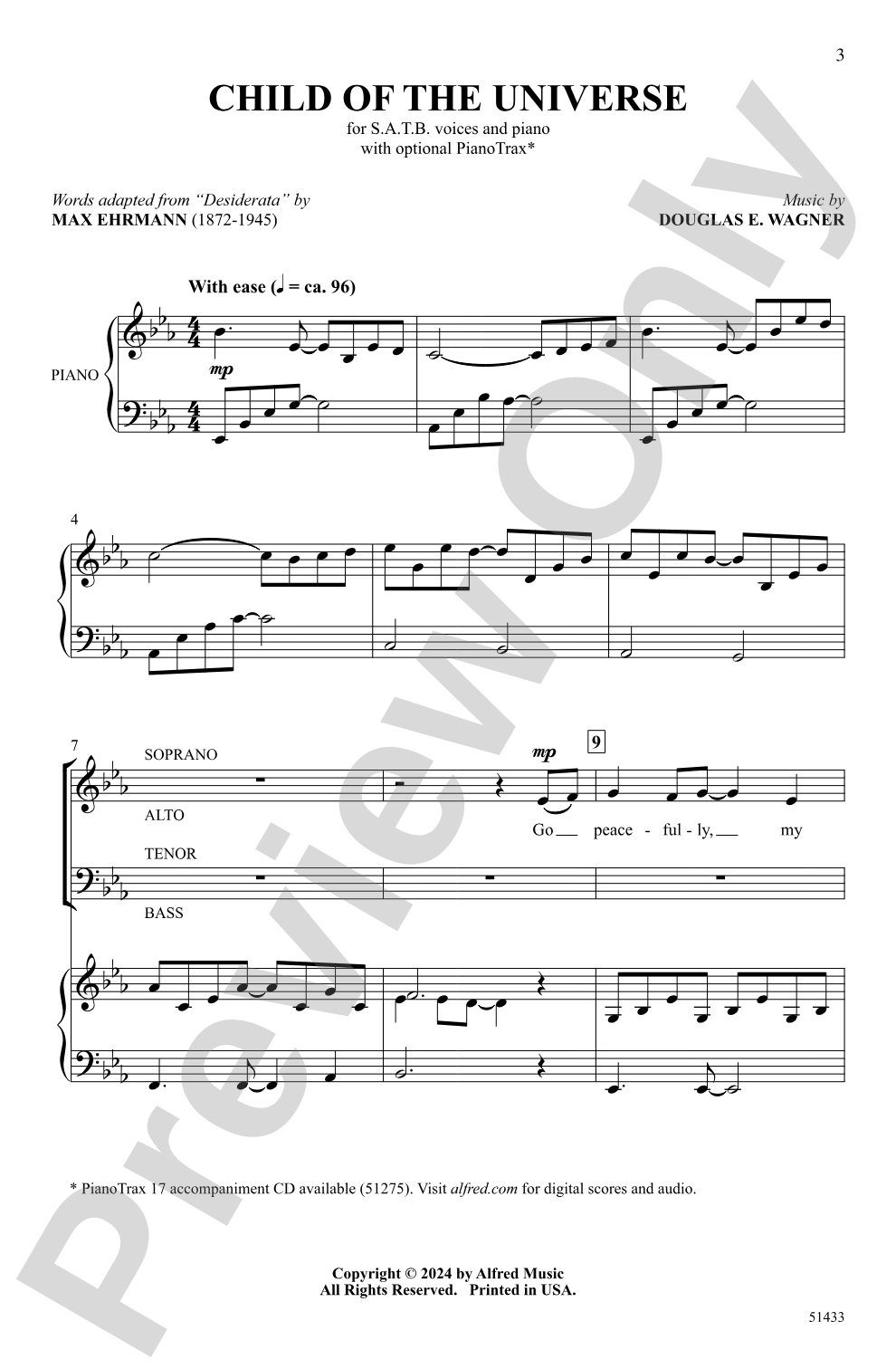
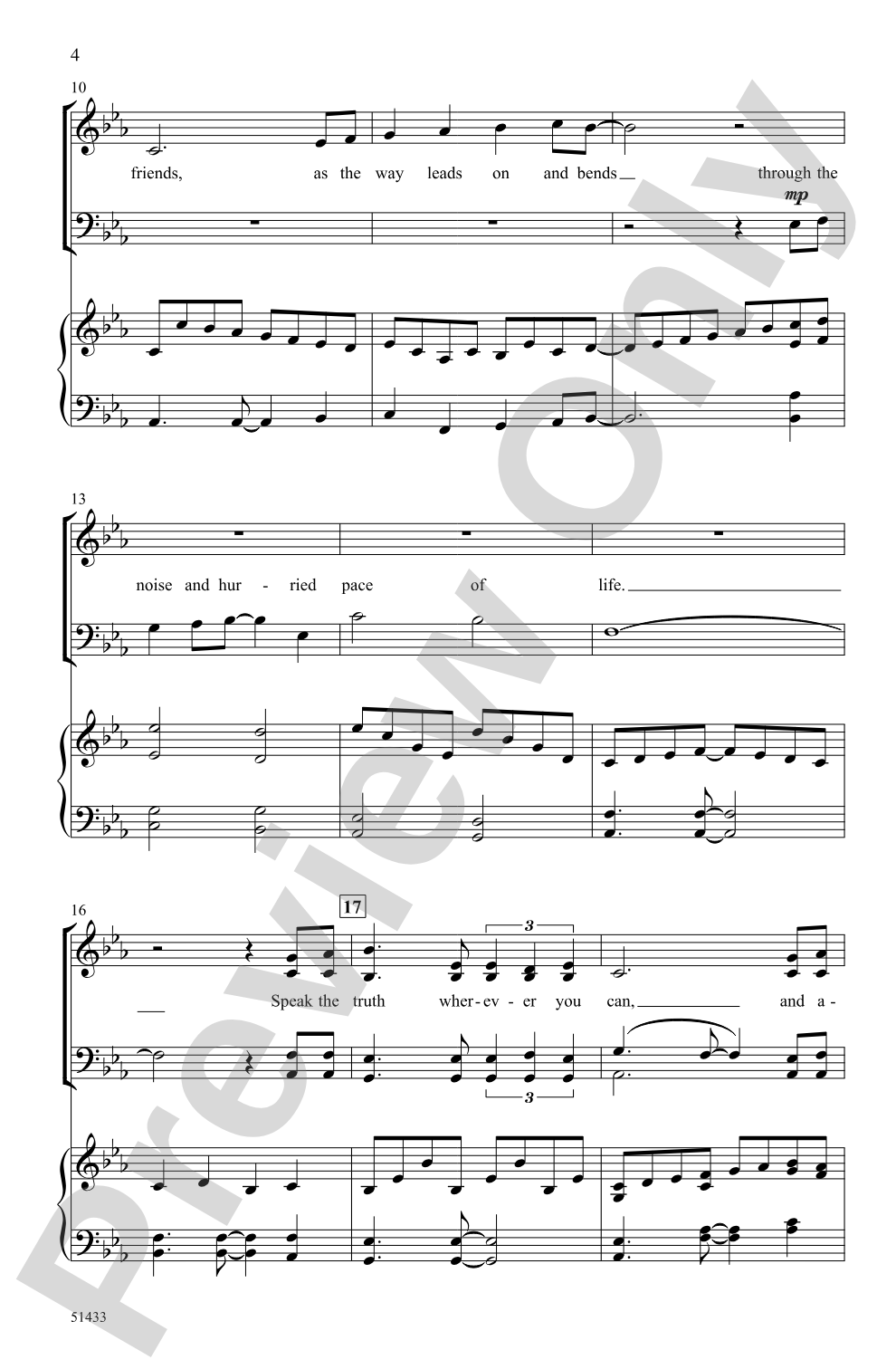

Child of the Universe: SATB Choral Octavo
Words by Max Ehrmann, music by Douglas E. Wagner
Item: 00-PO-0007328
$2.30
Minimum order quantity: 20 copies
Pickup currently not available
Description
Lyrics adapted from Max Erhmann's "Desiderata" focus on finding inner peace amidst the external noise and haste of this world. Bound to be a choir favorite, with gorgeous unison passages and rich choral harmonies that are a pleasure to sing. Perform this sumptuous setting as a touching closer throughout the concert season and then again at graduation. "A beautiful world awaits you now."


Child of the Universe: SATB Choral Octavo isn't in MakeMusic Cloud just yet...but it could be. Let us know you'd like to see it, and you'll help shape what comes next. In the meantime, start a free trial and dive into thousands of interactive titles your students can play along with today.
Request This Title
Tell us you want it.
Start Your Free Trial
Explore everything that's ready to play right now.
Sample Audio
1
Audio File
--:--
0:00
0:00
Sample Video
Additional Details
Series:
Alfred Choral Designs
Publisher:
Alfred Music
Page Count:
12
SKU:
00-PO-0007328
More about this title
About the Composer: Douglas E. Wagner
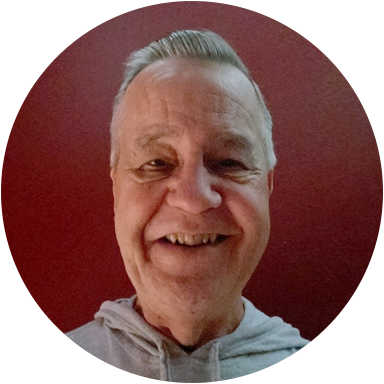
Douglas E. Wagner grew up in Chicago and studied music at Butler University, where he earned both undergraduate and graduate degrees. He spent three decades as a high school music director and administrator before committing himself fully to composition in the 1970s.
Since then, Wagner has become one of the most prolific composers in American music education, with over 3,500 published works spanning choir, concert band, orchestra, handbells, organ, piano, and vocal music. His compositions have reached millions of performers worldwide and appear regularly in concert halls, broadcasts, and festivals across the United States and internationally. He currently lives in Indianapolis with his wife, Sandy.
Why we love this
Wagner's setting respects the contemplative weight of Desiderata while writing for singers, not around them. The unison sections provide moments of collective breath and clarity that frame the harmonic richness elsewhere, making this work feel like a genuine journey rather than a showcase piece. It reads as sermon and song at once, which is exactly what a strong concert closer or graduation finale should do.
What to expect
The music unfolds like a quiet conversation with yourself in a crowded room. Unison passages cut through with clarity and vulnerability, then give way to rich, enveloping harmonies that feel like being held. The overall arc moves from searching outward to finding stillness within.
Who it's for
This octavo fits choirs at the intermediate to advanced level who have secure voice independence and can sustain the emotional arc of a longer piece. It works equally well in school choirs preparing for spring concert and in church or community ensembles seeking repertoire with spiritual depth but secular text.
How to get the most out of it
- Bring out the lyrical shape in the unison passages by resisting the urge to push the tempo. These moments land harder when they breathe.
- Balance the inner voices in the choral sections carefully. Wagner's harmonies reward attention to voicing clarity, especially where the alto and tenor lines carry the harmonic movement.
- Use the recorded accompaniment to establish the harmonic foundation in rehearsal, then gradually move to piano or a cappella to build ownership in your singers.
- Shape the final phrases with a slight ritardando and soften the dynamic in the last measures. The closing feels most powerful when it recedes gently rather than decays.
How to use it
Save this for the slot just before intermission or as your final piece of the evening. It has the gravitas and emotional resolution that sends an audience out thinking, making it ideal for concert closers, graduation celebrations, or festival performances where you want the last sound to linger. Pair it with lighter, more energetic selections earlier in the program to let this work's contemplative power stand out.
Skills your students will build
- Sustained legit singing through longer phrase shapes without breath interruption
- Balance between unison and harmonic sections, distinguishing textural roles
- Interpretive control of dynamics and tempo rubato in expressive, non-metrical passages
- Text clarity and diction in intimate, slower tempos where every word is heard