

Child of Peace: 2-Part Choral Octavo
Words and music by David Waggoner
Item: 00-PO-0002331
$2.05
Minimum order quantity: 20 copies
Pickup currently not available
Description
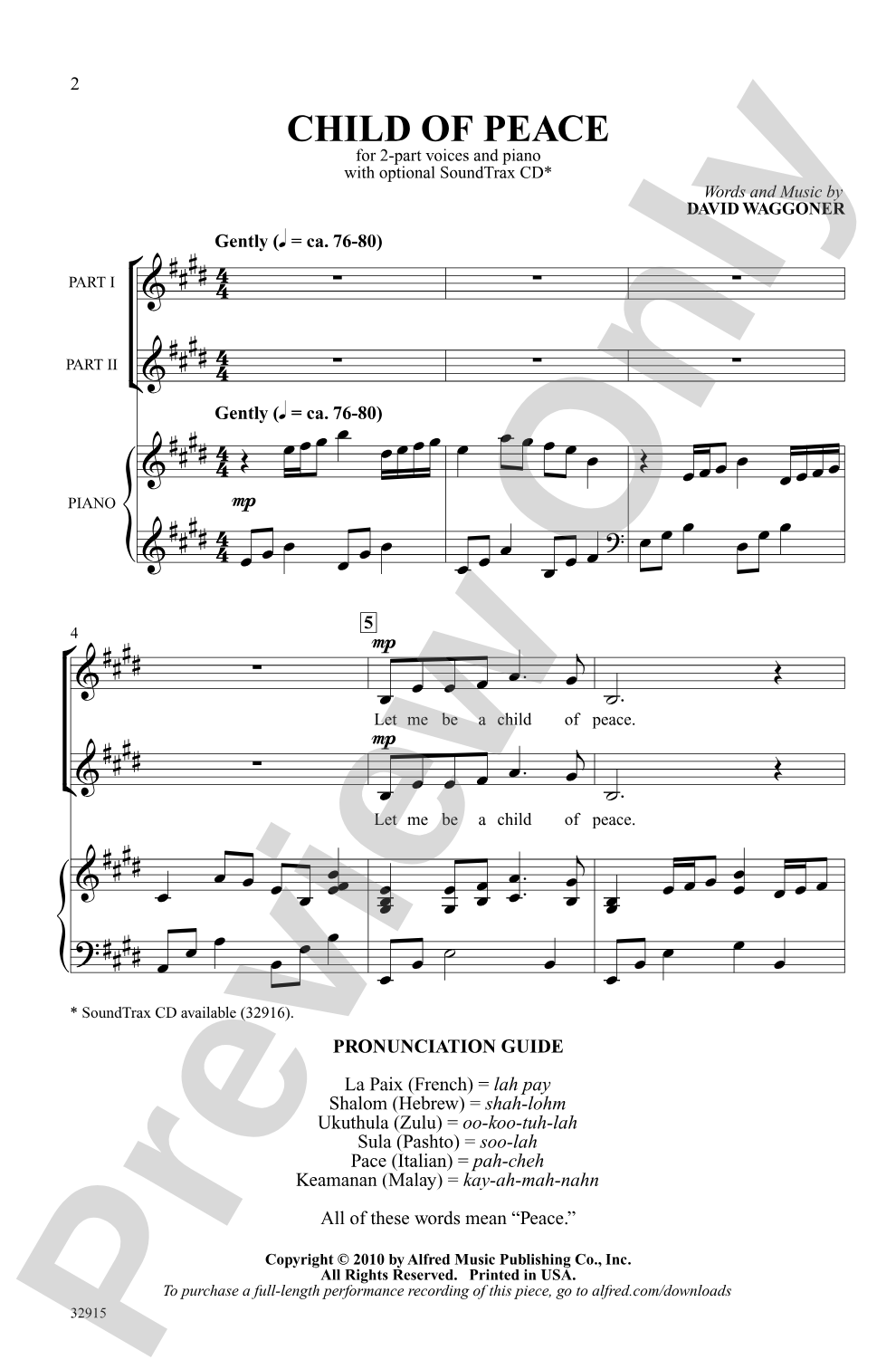
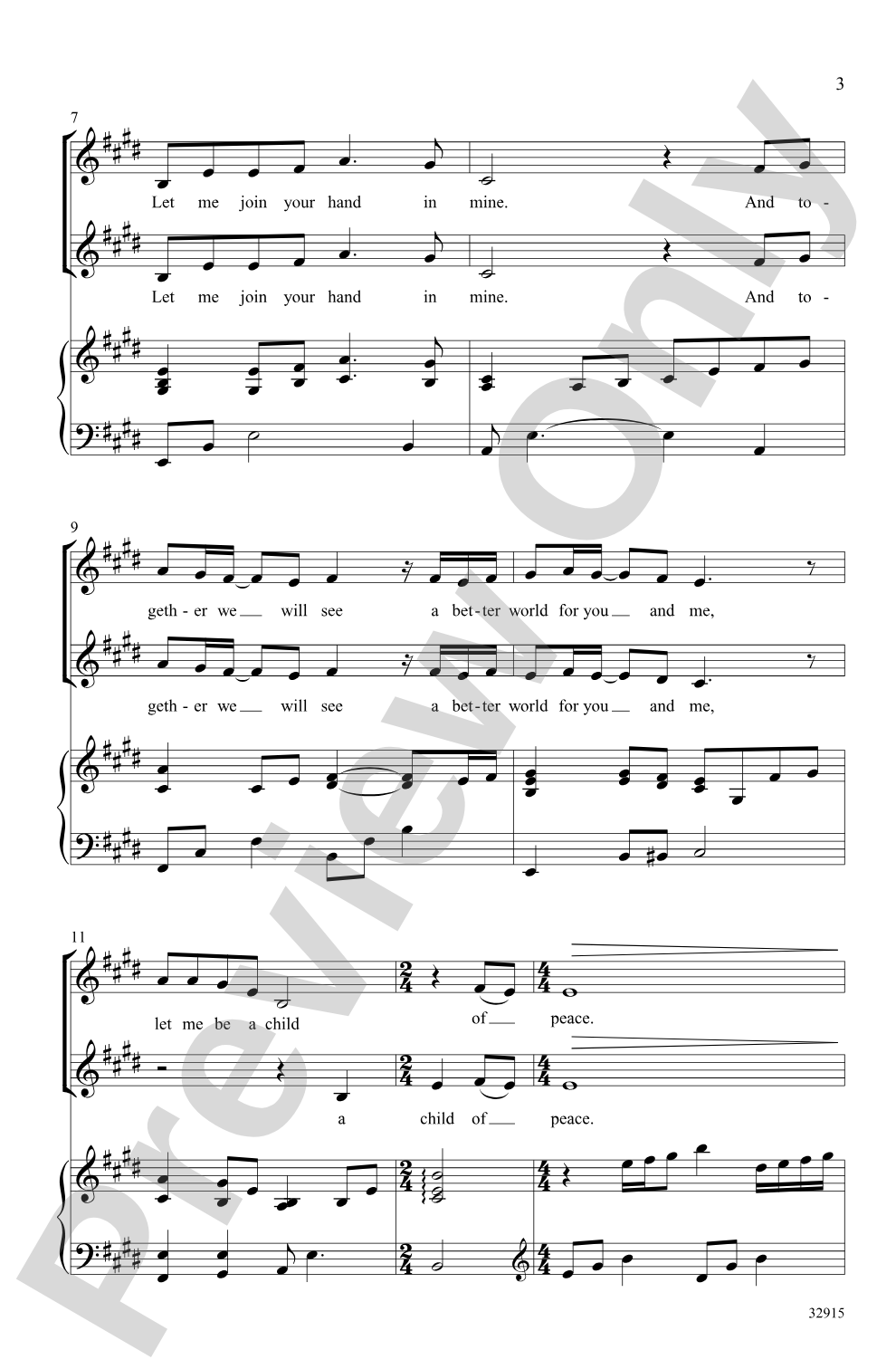
The word "peace" is sung in six languages as a special touch in this moving concert selection for younger choirs. The inspiring message and lyrical music are guaranteed to make this a student, parent, and conductor favorite!


Child of Peace: 2-Part Choral Octavo isn't in MakeMusic Cloud just yet...but it could be. Let us know you'd like to see it, and you'll help shape what comes next. In the meantime, start a free trial and dive into thousands of interactive titles your students can play along with today.
Request This Title
Tell us you want it.
Start Your Free Trial
Explore everything that's ready to play right now.
Sample Audio
1
Audio File
--:--
0:00
0:00
Sample Video
No sample videos found.
Additional Details
Series:
Alfred Choral Designs
Publisher:
Alfred Music
Page Count:
8
SKU:
00-PO-0002331
More about this title
About the Composer: David Waggoner

David Waggoner holds degrees from the University of Michigan School of Music and a master's degree from Eastern Michigan University. He brings his training directly into the classroom, where he teaches elementary music in Woodhaven, MI, and serves as Director of Music at the First United Methodist Church in Wyandotte, MI.
Waggoner has built a substantial catalog of compositions across multiple genres and ensembles, including choral works, handbells, and instrumental pieces. His experience balancing classroom teaching with church music direction shapes his understanding of what younger singers need: accessible yet meaningful music that resonates with both students and audiences.
Why we love this
This piece solves a real programming challenge: finding secular choral music for younger singers that carries genuine emotional weight without condescension. The multilingual weaving of 'peace' becomes a teaching moment as well as a musical one, giving your students a concrete connection to something larger than themselves while they're learning to balance two-part writing.
What to expect
The piece carries a quiet conviction rather than bombast. Six different languages washing through the same musical gesture creates a sense of unity without erasing difference, which younger singers can feel and understand even before they fully articulate it intellectually. The lyrical, accessible melody ensures that the emotional content lands without requiring advanced vocal technique.
Who it's for
Young choir singers in middle school or upper elementary grades who are ready to handle two-part voicing but benefit from music that speaks clearly and directly. This works equally well for community youth choirs, church children's choirs, and school concert programs where students need material that engages both performers and listeners.
How to get the most out of it
- Pay attention to the language inflections in each country's word for peace. Rehearse these as isolated vowel and consonant sounds before placing them in the musical line so diction becomes part of the interpretation rather than an obstacle.
- Bring out the lyrical quality of the melodic line by thinking of it as one continuous phrase rather than stopping at phrase marks. This transforms the piece from feeling sectional into something that flows naturally.
- Use the recorded accompaniment strategically during early rehearsals to establish harmonic context quickly, then gradually shift to piano-only rehearsals so singers develop independence before performance.
How to use it
Program this as a centerpiece for a concert theme around cultural awareness, global citizenship, or conflict resolution. It pairs well with other secular selections that explore interconnection, or it can stand alone as a powerful closing selection that leaves audiences with something hopeful and grounded. The eight-page length makes it substantial enough to anchor a set without consuming excessive rehearsal time.
Skills your students will build
- Singing in two-part harmony with maintained independence
- Diction clarity across multiple languages and phonetic systems
- Phrasing and breath management in lyrical melodic lines
- Understanding cultural perspectives through language and music
- Blending voices while maintaining individual voice quality