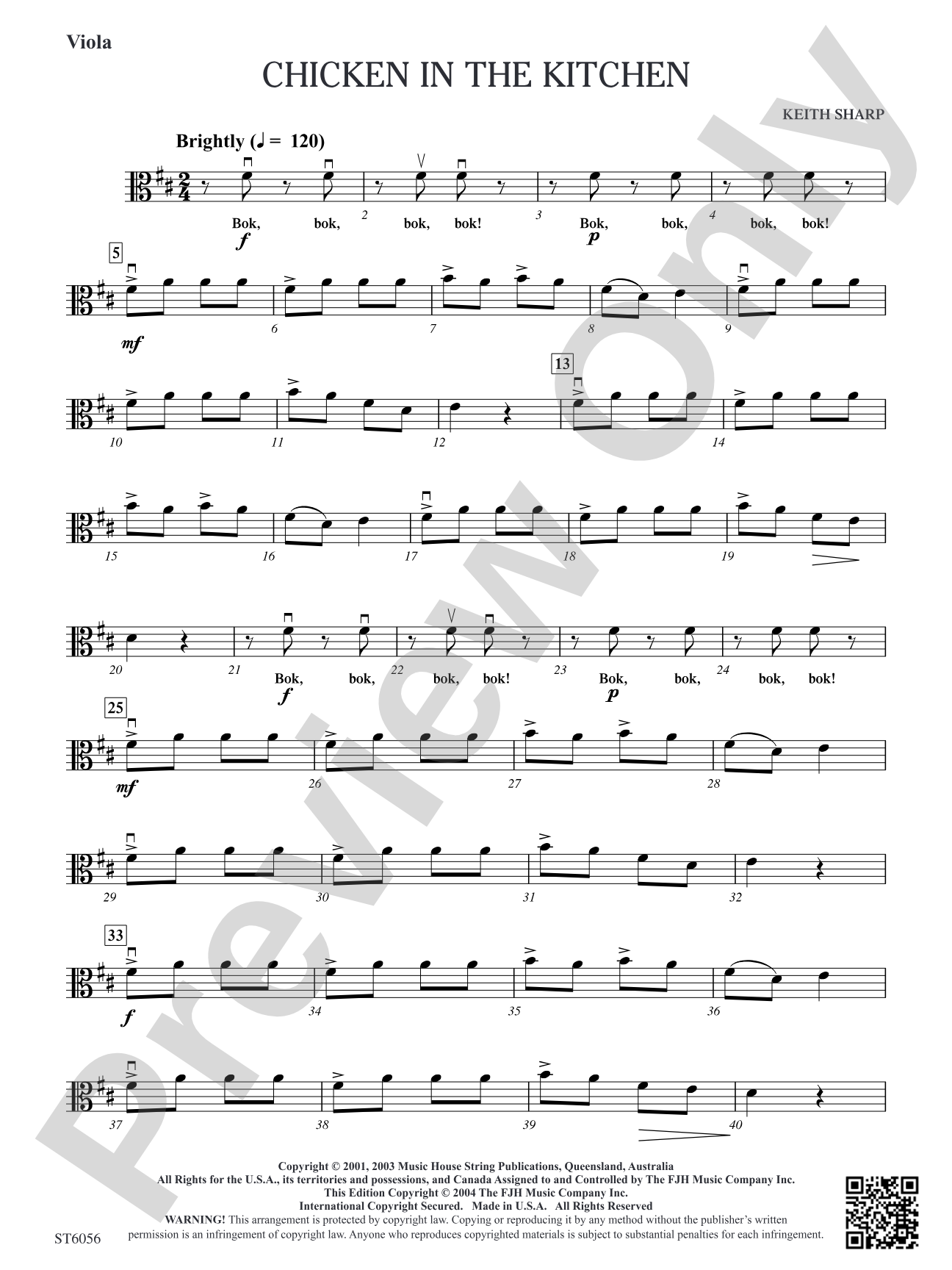
Chicken in the Kitchen: Viola Sheet Music Preview

Chicken in the Kitchen: Viola

By Keith Sharp

Grade: 1

Item: 98-PC-DST6056_VA1

Digital Download
$7.00
Description
The perfect change of pace for your next concert! This novel piece includes vocal "books" from the ensemble to help create the sound of a bewildered chicken running around the kitchen with an angry chef.

Don't just read it, hear it, play along with it, and watch your students grow with it. In MakeMusic Cloud, Chicken in the Kitchen: Viola comes alive with professional accompaniment, adjustable tempo, and built-in practice tools that turn solo practice into real progress.

Sample Audio
0:00
0:00
Sample Video
Additional Details
Series: FJH Beginning Strings
Publisher: The FJH Music Company, Inc.
SKU: 98-PC-DST6056_VA1

More about this title

About the Composer: Keith Sharp

Keith Sharp

Keith Sharp has shaped string programs across Brisbane's education system since 1985, moving to Brisbane State High School in 2012 where he emphasizes ensemble and group learning. His gift for writing engaging, imaginative pieces for young string players has earned international recognition, with works published by Alfred Music and FJH Music Company and selected multiple times as "Editor's Choice" in major catalogs.

Beyond composing, Sharp serves the music education community as a guest clinician, conductor, and workshop presenter. His contributions have been acknowledged through Ryan Recognition and "Can Do, Educator of the Year" awards (2006, 2013), a AUSTA State Award for Queensland (2012), and the Paul Harris Fellow distinction from Rotary. He holds a Bachelor of Music Degree and a Graduate Diploma of Further Education, and co-authored the Encore on Strings series with collaborators.

Why we love this

Sharp crafted this piece specifically for the novelty-concert context where conductors need something to energize an audience without sacrificing musicality or rehearsal value. The vocal "books" from the ensemble (mimicking a frantic chicken) transform what could be a gimmick into genuine fun that young players remember and perform with commitment. At Grade 1, it delivers genuine entertainment while keeping the string writing accessible and the conductor's part manageable.

What to expect

Controlled chaos meets playful storytelling. The piece captures the kitchen-scene absurdity with frantic rhythms and vocal sounds that turn your orchestra into actors, creating a brief escape from the concert's formal tone while keeping everyone engaged and smiling.

Who it's for

String orchestras at the beginning level who need a moment of levity on a concert program without compromising musical growth. This works especially well for younger players (middle school and below) who respond to humor and enjoy the novelty of singing within an orchestral context.

How to get the most out of it

  • Rehearse the vocal parts separately before combining them with the string lines so players internalize the rhythm and character without struggling to read both simultaneously.
  • Encourage exaggerated expression during the chaos sections; this is where younger players often hold back, but bigger dynamics and articulation make the comedy land.
  • Record a rehearsal performance and play it back for your ensemble. Hearing themselves create the "bewildered chicken" effect builds ownership and confidence in the comic intent.
  • Balance the vocal sound so it supports rather than overwhelms the strings. The piece works best when both elements are equally present.

How to use it

Place this after a more serious opening work to shift the concert's energy and reset audience attention, or use it as a closer to send the audience out laughing. It also works as an excellent festival or competition entry in the novelty category, giving judges something unexpected while showcasing your group's versatility and musicianship.

Skills your students will build

  • Dynamic contrast and dramatic expression in ensemble playing
  • Rhythmic precision during rapid, syncopated passages
  • Coordination of sustained strings with rhythmic vocal lines
  • Character interpretation and storytelling through musical sound
  • Ensemble balance and blend when combining pitched and non-pitched vocal effects

You May Also Like