Chiaroscuro II (score) Sheet Music Preview

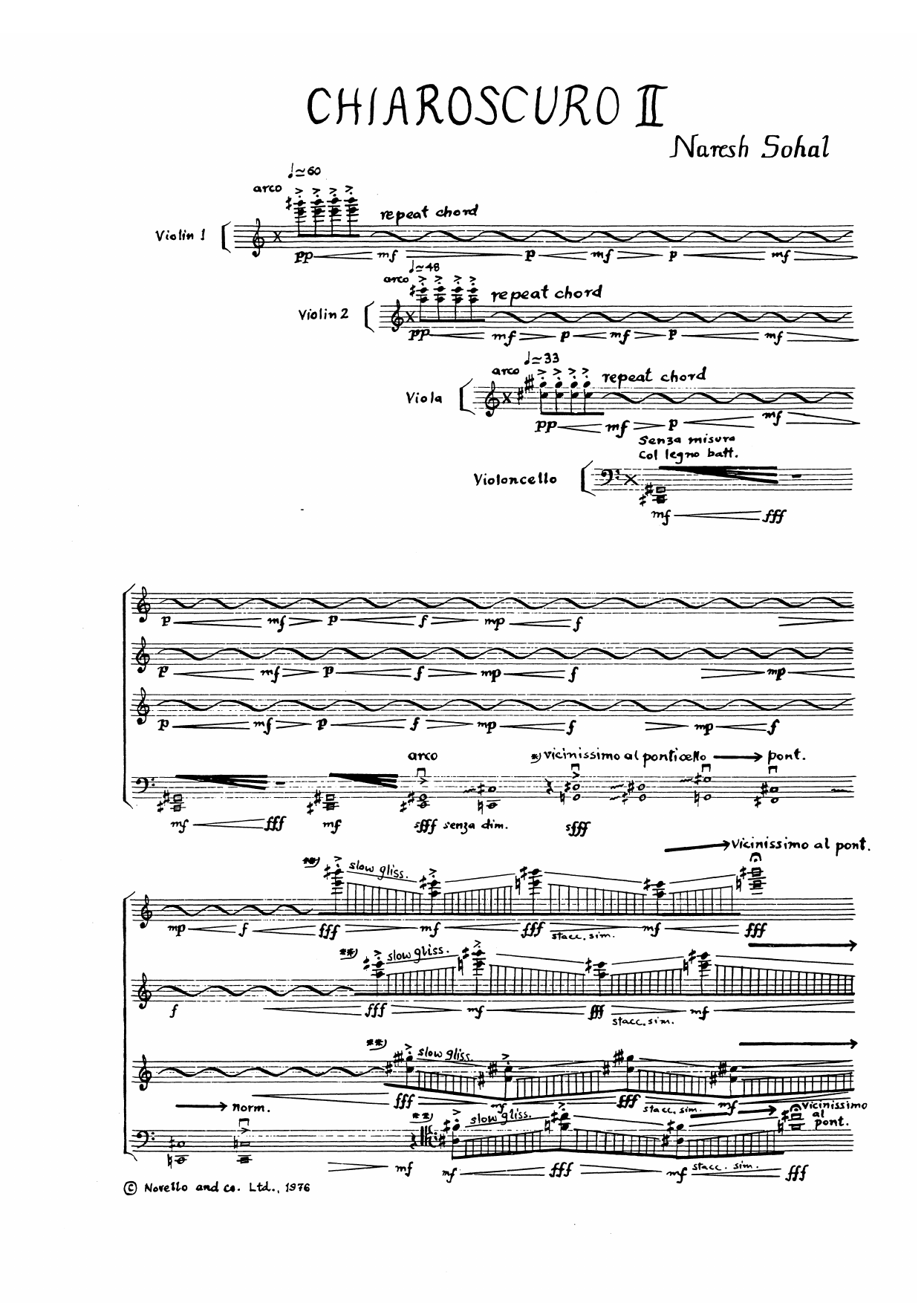
Chiaroscuro II (score)

By Naresh Sohal

Item: 35-PK01785732

Digital Download
$38.95
Description
Chiaroscuro II (score)

Chiaroscuro II (score) isn't in MakeMusic Cloud just yet...but it could be. Let us know you'd like to see it, and you'll help shape what comes next. In the meantime, start a free trial and dive into thousands of interactive titles your students can play along with today.

Sample Audio
No sample audio found.
Sample Video
Additional Details
Publisher: Hal Leonard
SKU: 35-PK01785732

More about this title

About the Composer: Naresh Sohal

Naresh Sohal is a British composer of Indian heritage whose work bridges Western classical traditions with influences from Indian classical music. His compositions are known for their sophisticated harmonic language, rhythmic complexity, and exploration of timbre, earning him recognition in contemporary classical circles and performances by major orchestras.

Why we love this

Sohal's second exploration of chiaroscuro (the interplay of light and shadow) demonstrates his mastery of orchestration and emotional contrast. This score rewards careful study of texture and dynamics, making it compelling for ensembles ready to engage with contemporary classical writing that feels accessible yet intellectually demanding.

What to expect

Chiaroscuro II unfolds through carefully calibrated shifts between transparency and density, creating a visual quality in sound. The piece inhabits the space between restraint and expression, inviting listeners into moments of intimate clarity followed by richer, more complex textures.

Who it's for

Advanced high school and college ensembles with solid musicianship and experience reading contemporary notation. This score works well for programs seeking substantive contemporary classical repertoire that challenges players without requiring avant-garde techniques.

How to get the most out of it

  • Attend closely to the specified dynamic markings and timbral shifts. Sohal uses contrast as structural material, so precision in execution reveals the work's architecture.
  • Identify the primary melodic lines across the ensemble and ensure they speak clearly without overwhelming the supporting textures that create the harmonic environment.
  • Balance rhythmic precision with expressive phrasing. Contemporary notation here serves the music's intent rather than limiting interpretation.

How to use it

Feature this work on a contemporary classical concert alongside earlier 20th-century repertoire to show the evolution of orchestral writing. Its moderate length and sophisticated but approachable idiom make it ideal for spring concerts targeting engaged audiences.

Skills your students will build

  • Interpreting dynamic layering and timbral orchestration
  • Balancing transparency and density in contemporary textures
  • Responding to precise articulation and attack markings
  • Ensemble listening across complex harmonic environments

You May Also Like