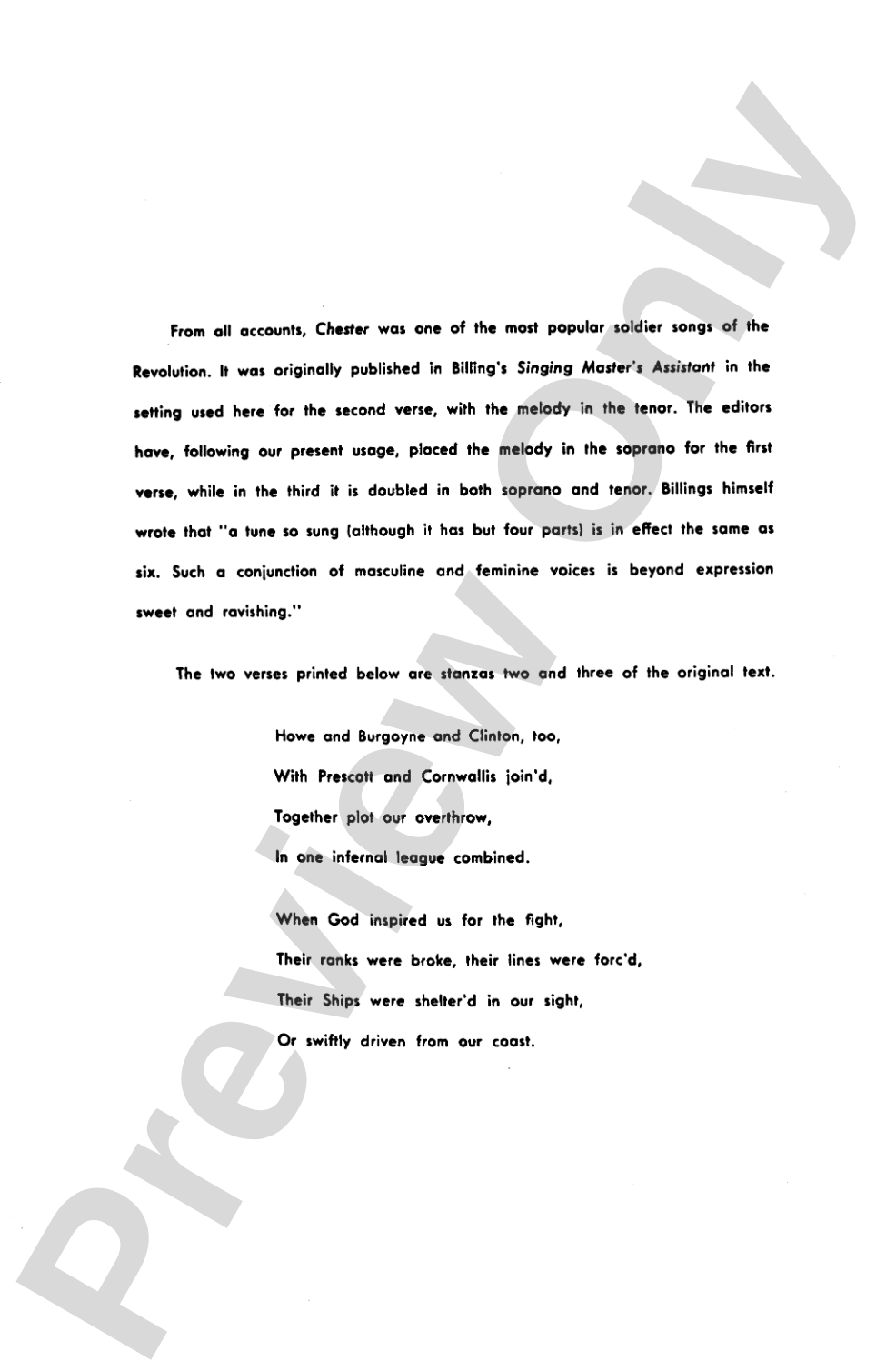
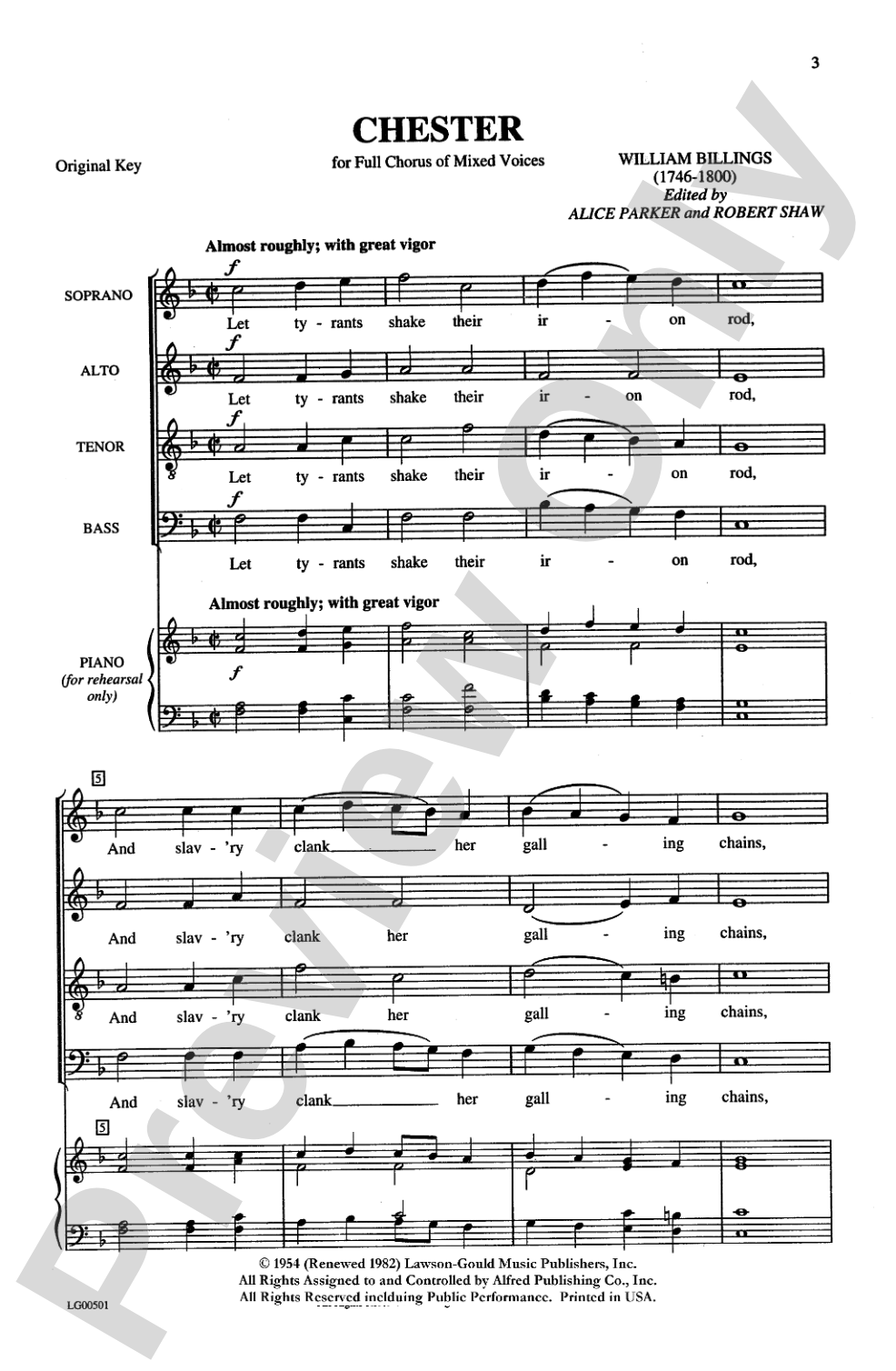
William Billings (1746-1800) was the first major American-born composer and a self-taught musician who fundamentally shaped early American choral music. Working in Boston during the Revolutionary era, he composed hymns, fuging tunes, and secular works that blended European counterpoint with a distinctly American musical voice, establishing choral singing as a central part of colonial musical life.
Billings' compositions are characterized by robust four-part writing, rhythmic vitality, and harmonic directness that made them singable for community choirs without formal training. His legacy as a music educator and publisher (through his tunebooks like "The New England Psalm Singer") established practices that influenced American choral traditions for generations.