
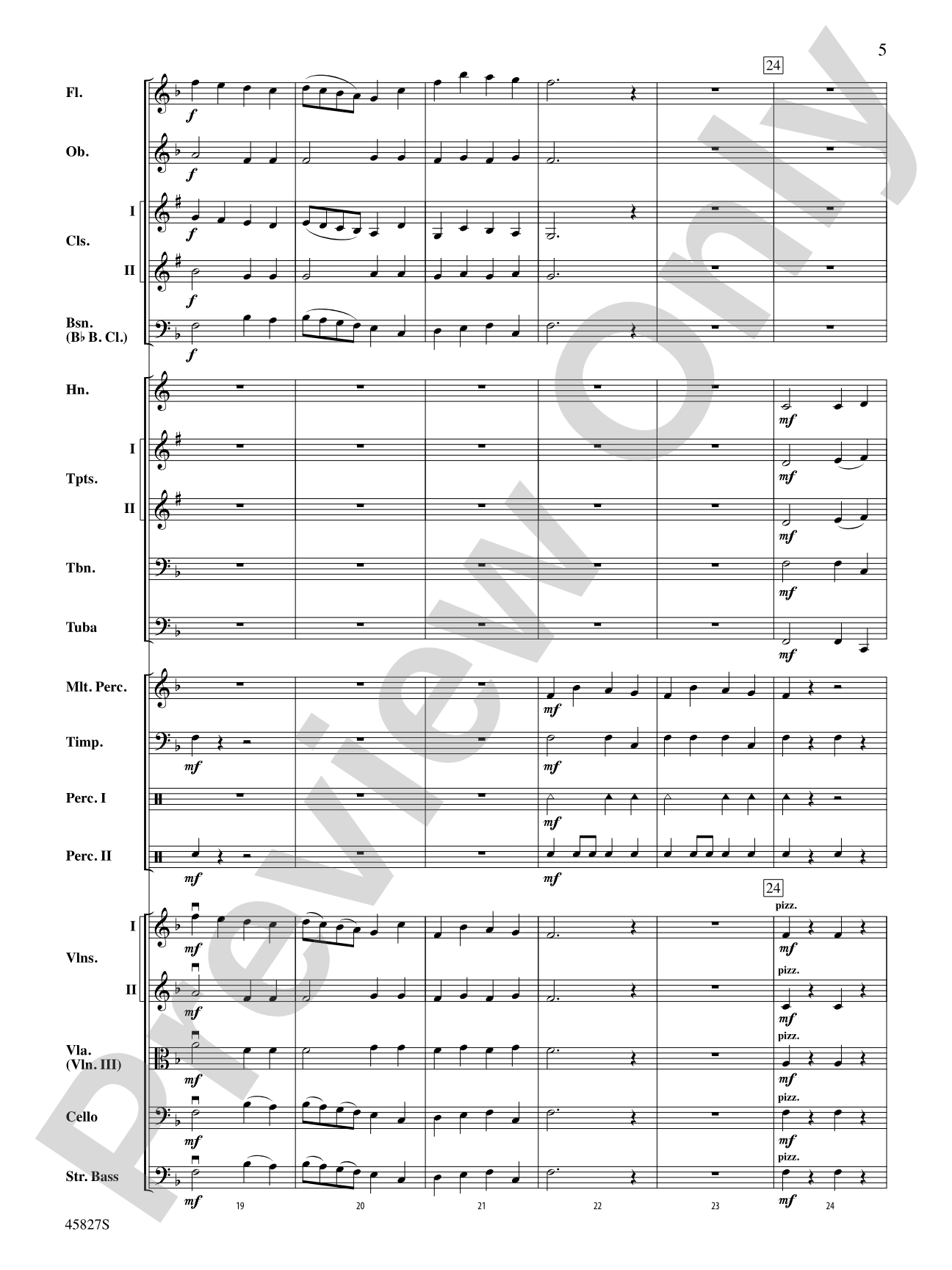
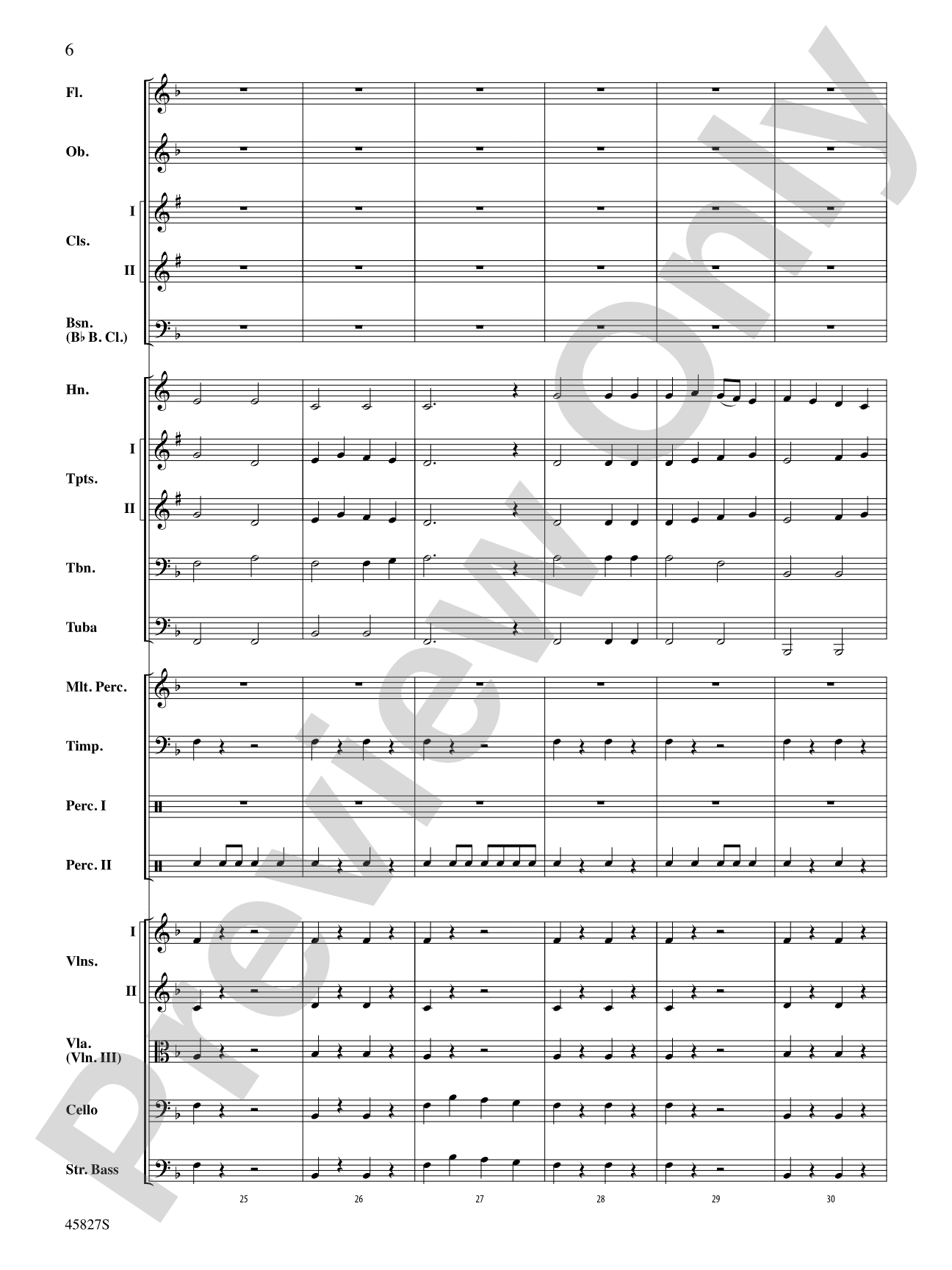
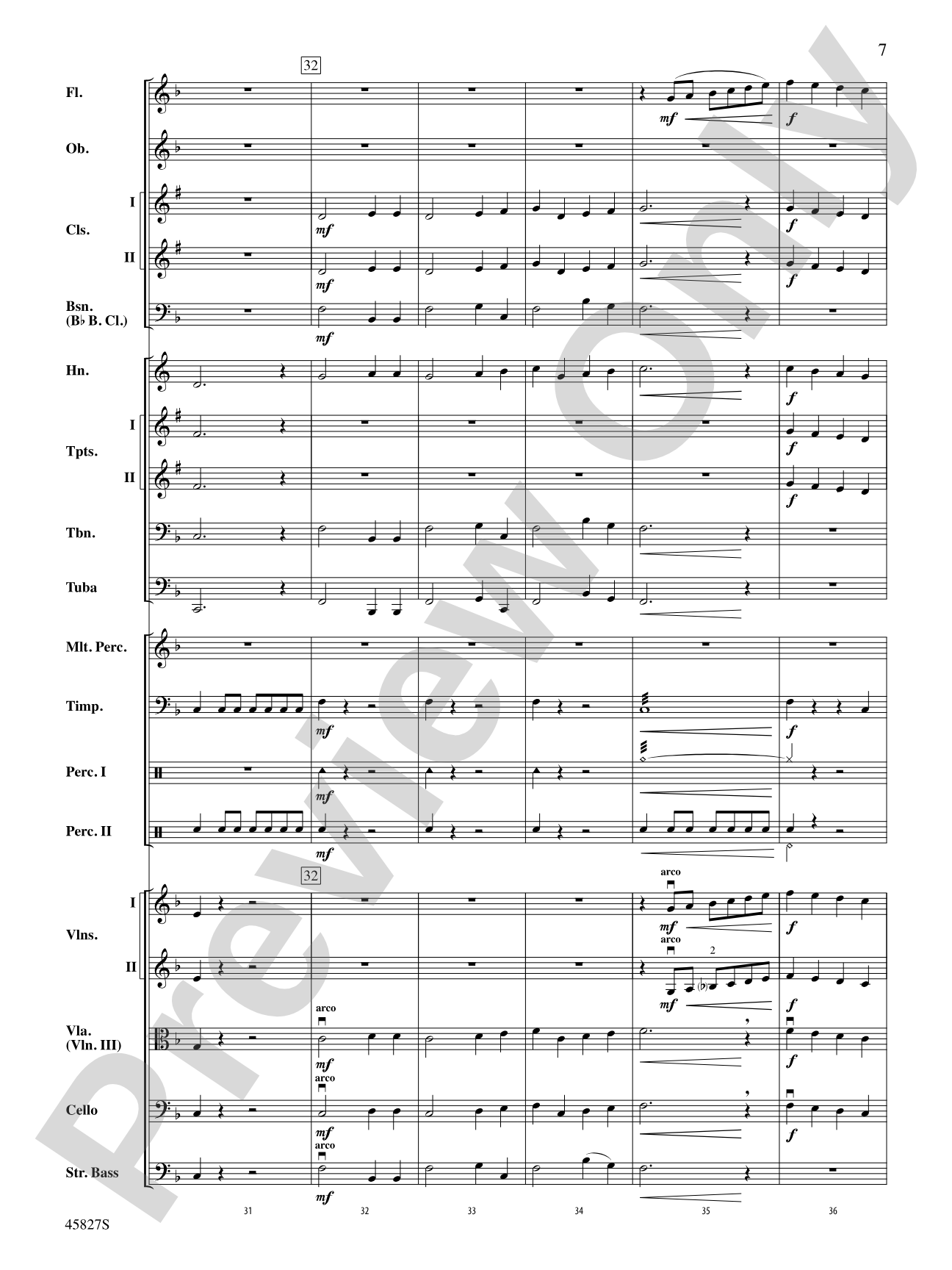
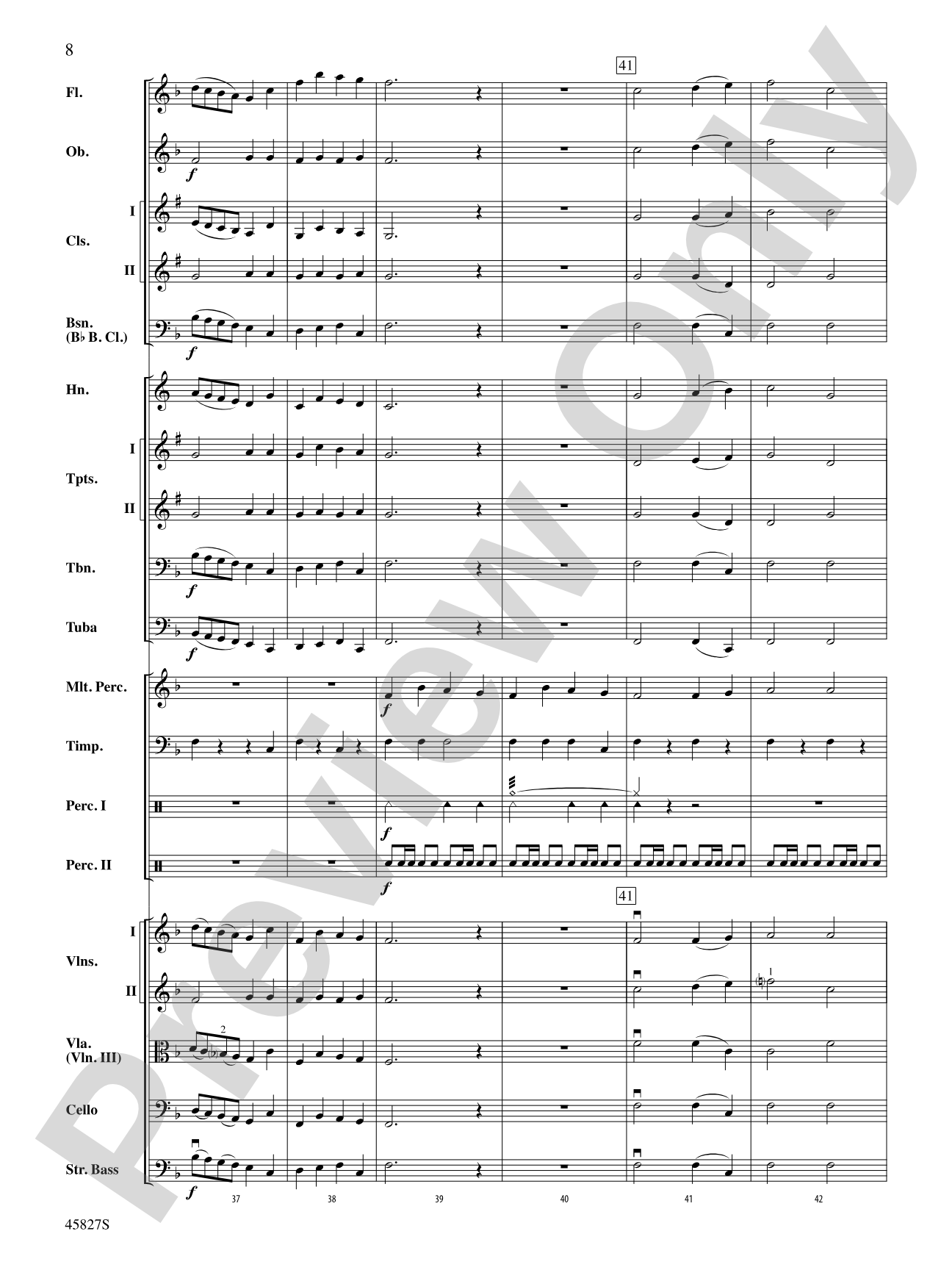
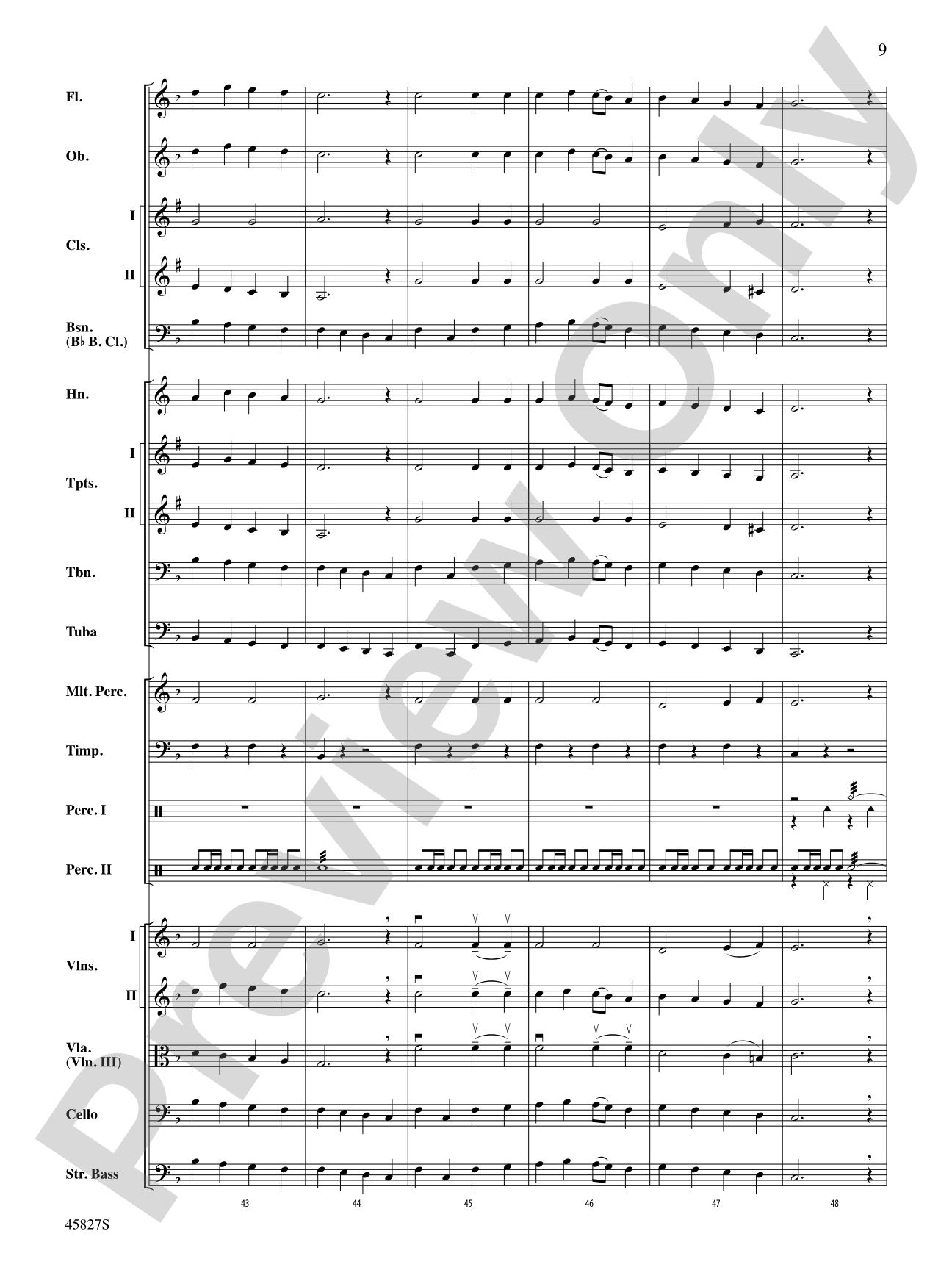
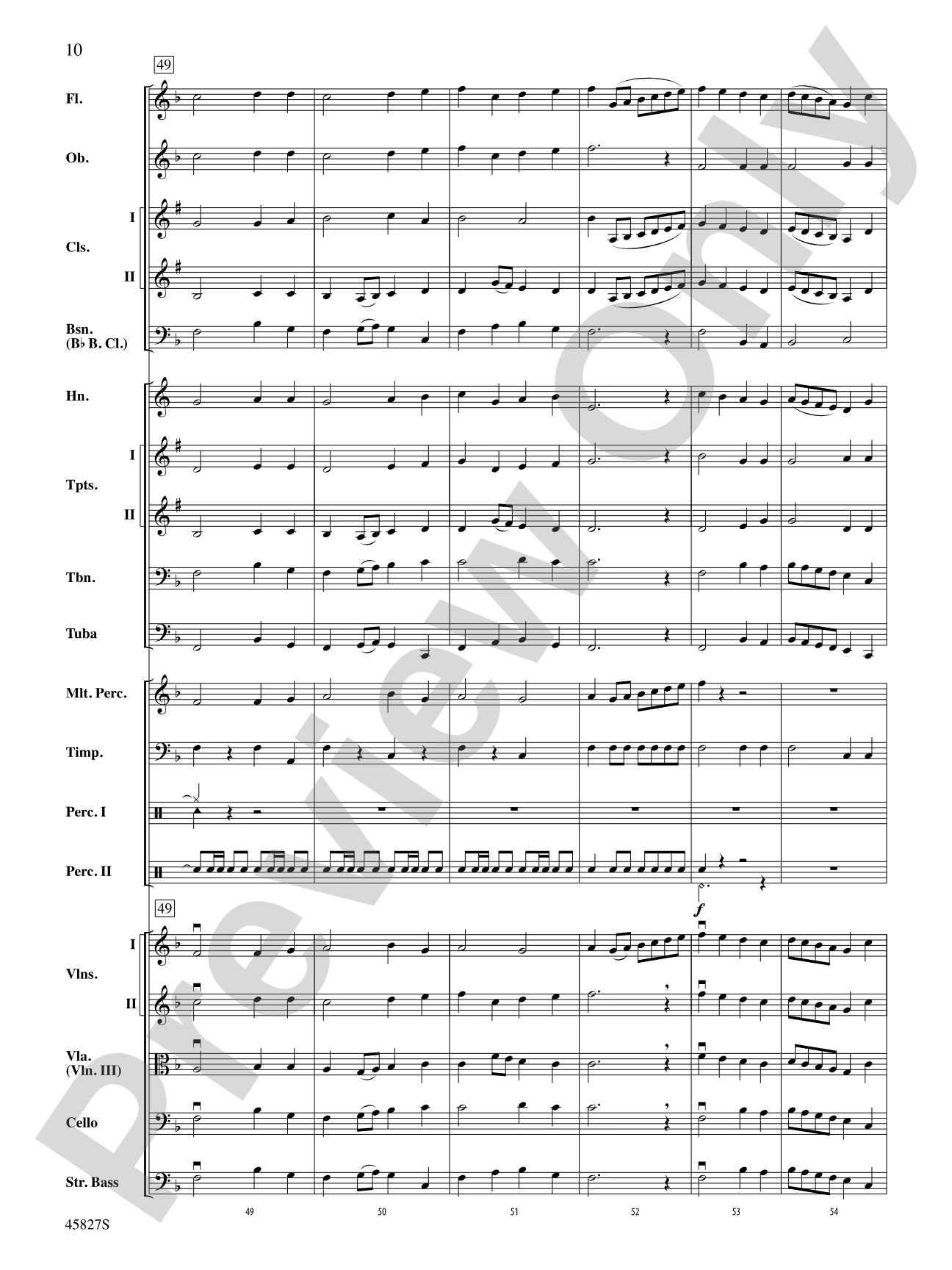
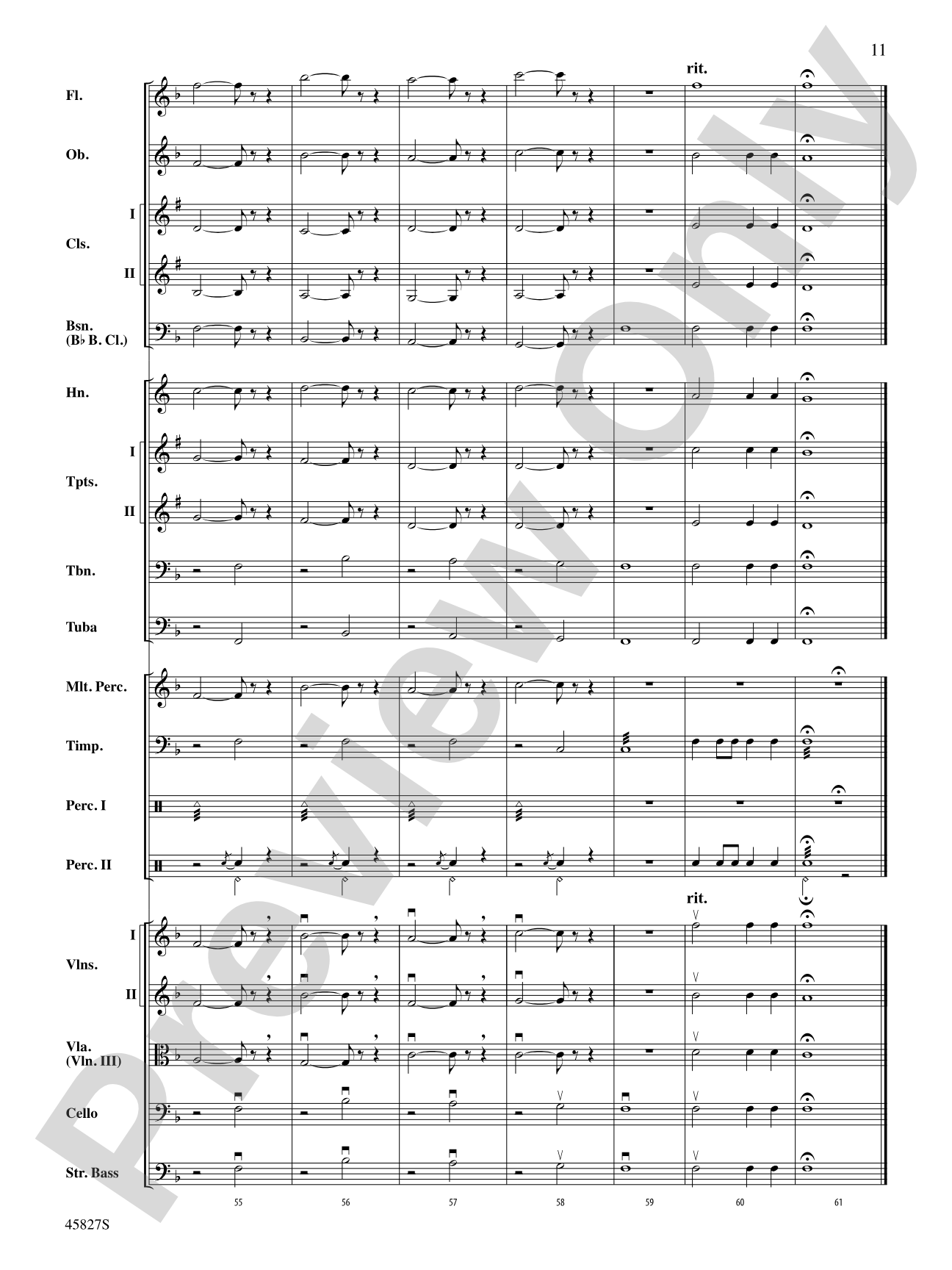

Chester: Full Orchestra Conductor Score & Parts
By William Billings / arr. Brad Pfeil
Grade: 1.5
Item: 00-PK-0007336

$60.00
Pickup currently not available
Buy Extra Parts (Digital PDF Download)
| Product | Price | Quantity |
|---|---|---|
| Chester: Score | $9.00 | |
| Chester: Flute | $3.00 | |
| Chester: Oboe | $3.00 | |
| Chester: Bassoon | $3.00 | |
| Chester: 1st B-flat Clarinet | $3.00 | |
| Chester: 2nd B-flat Clarinet | $3.00 | |
| Chester: B-flat Bass Clarinet | $3.00 | |
| Chester: 1st B-flat Trumpet | $3.00 | |
| Chester: 2nd B-flat Trumpet | $3.00 | |
| Chester: 1st F Horn | $3.00 | |
| Chester: 1st Trombone | $3.00 | |
| Chester: Tuba | $3.00 | |
| Chester: Mallets | $3.00 | |
| Chester: 1st Percussion | $3.00 | |
| Chester: 2nd Percussion | $3.00 | |
| Chester: Timpani | $3.00 | |
| Chester: 1st Violin | $3.00 | |
| Chester: 2nd Violin | $3.00 | |
| Chester: 3rd Violin (Viola [TC]) | $3.00 | |
| Chester: Viola | $3.00 | |
| Chester: Cello | $3.00 | |
| Chester: String Bass | $3.00 |
Parts Added to Cart!
Description
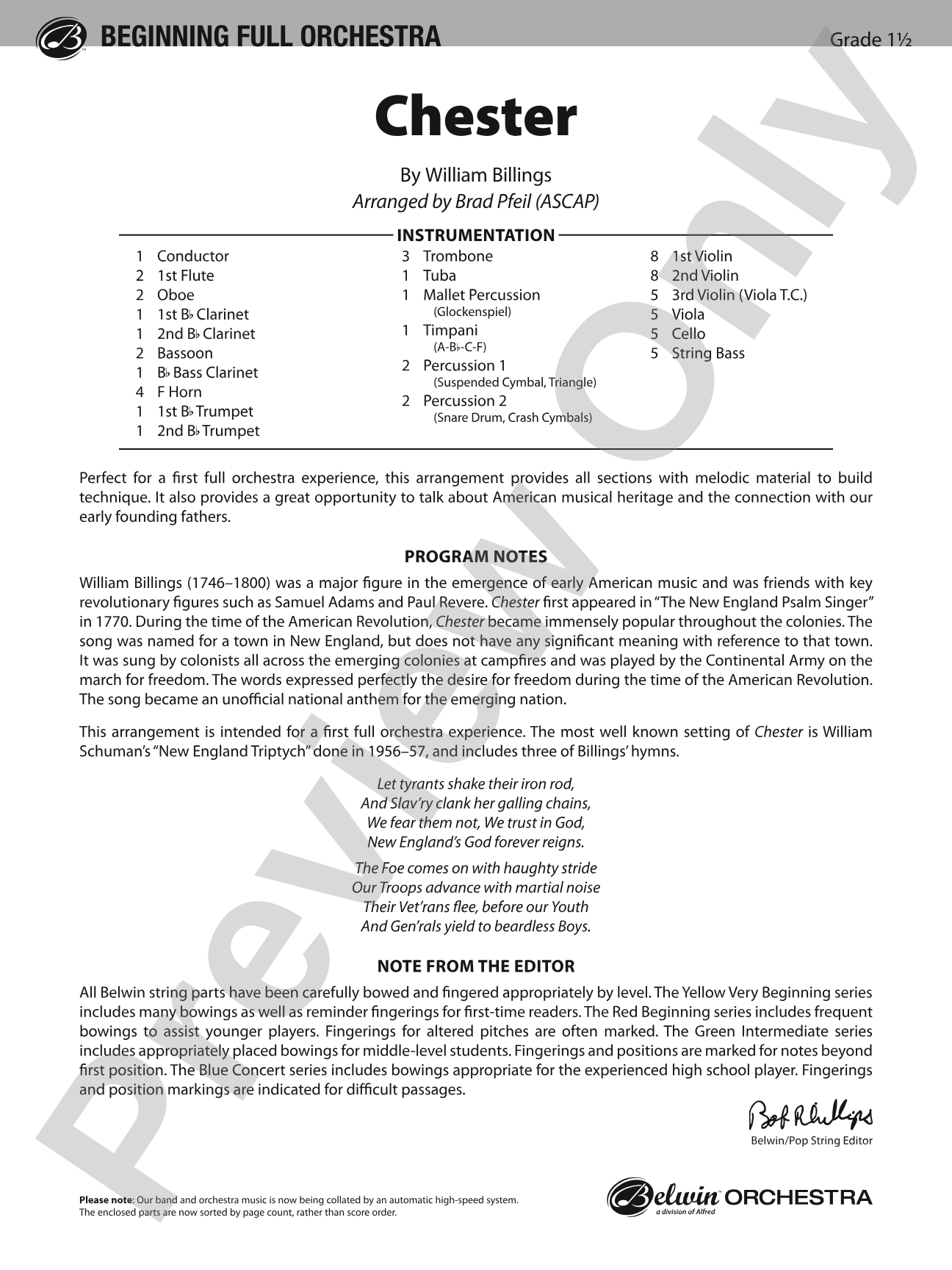
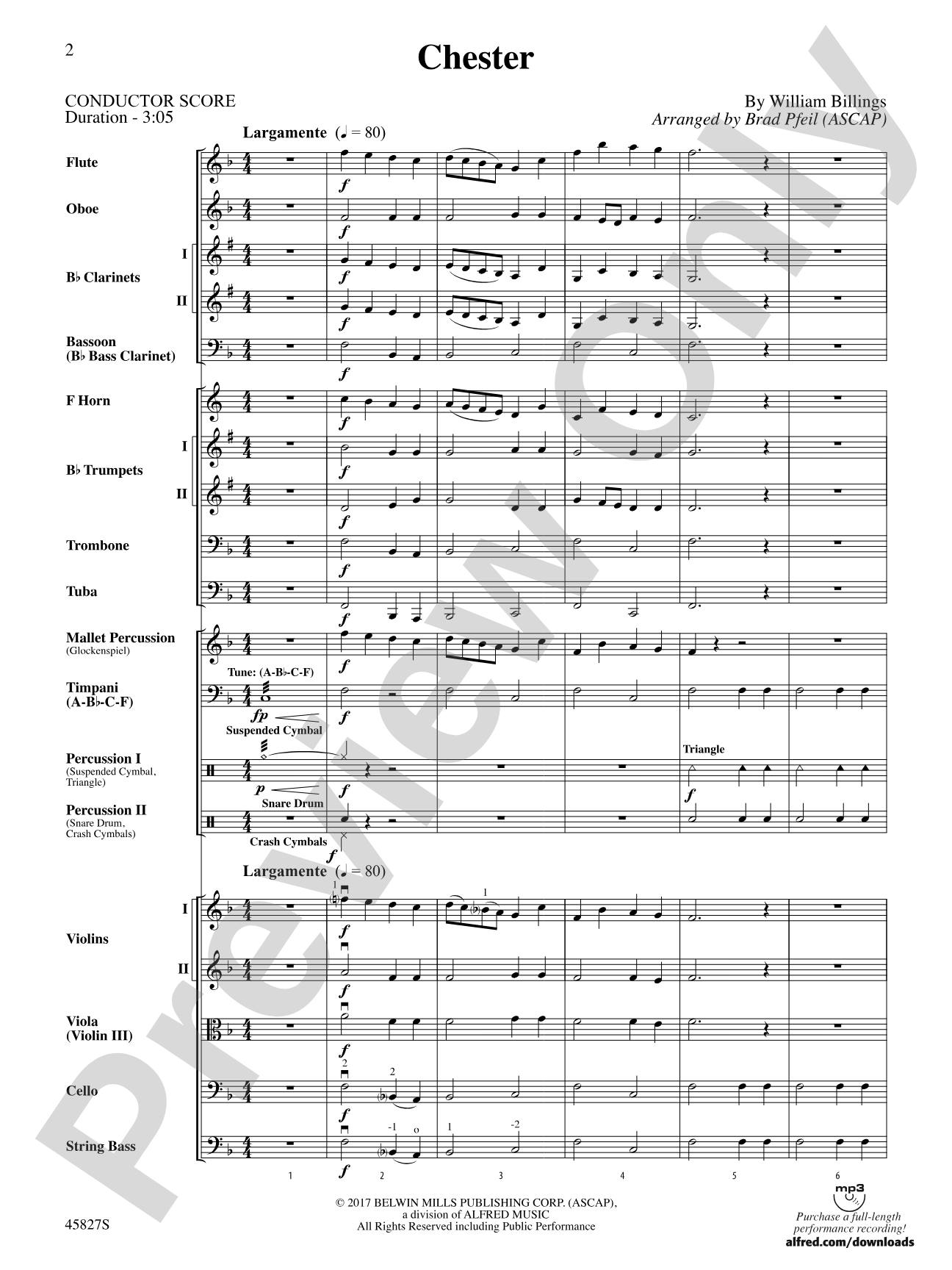
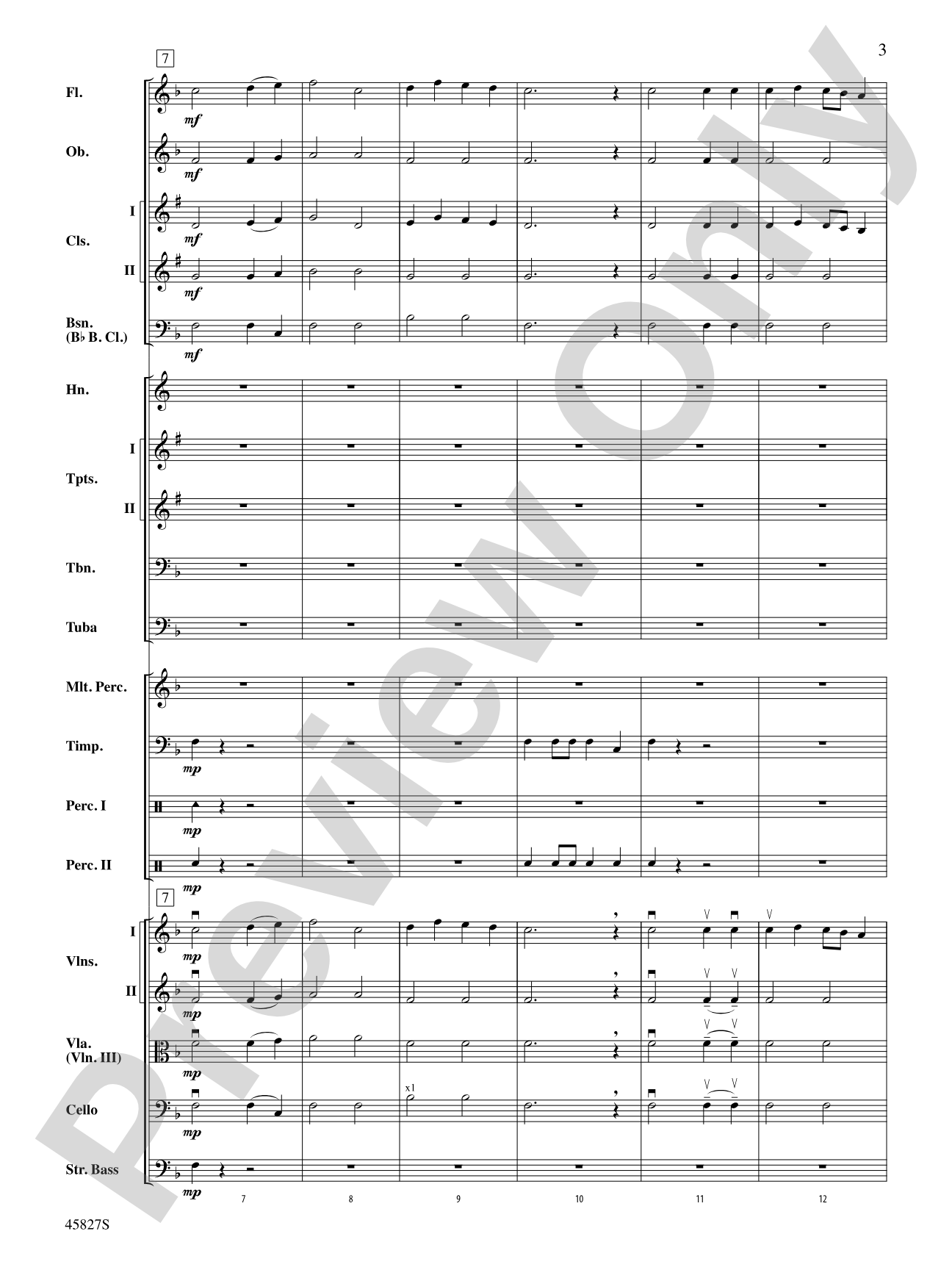
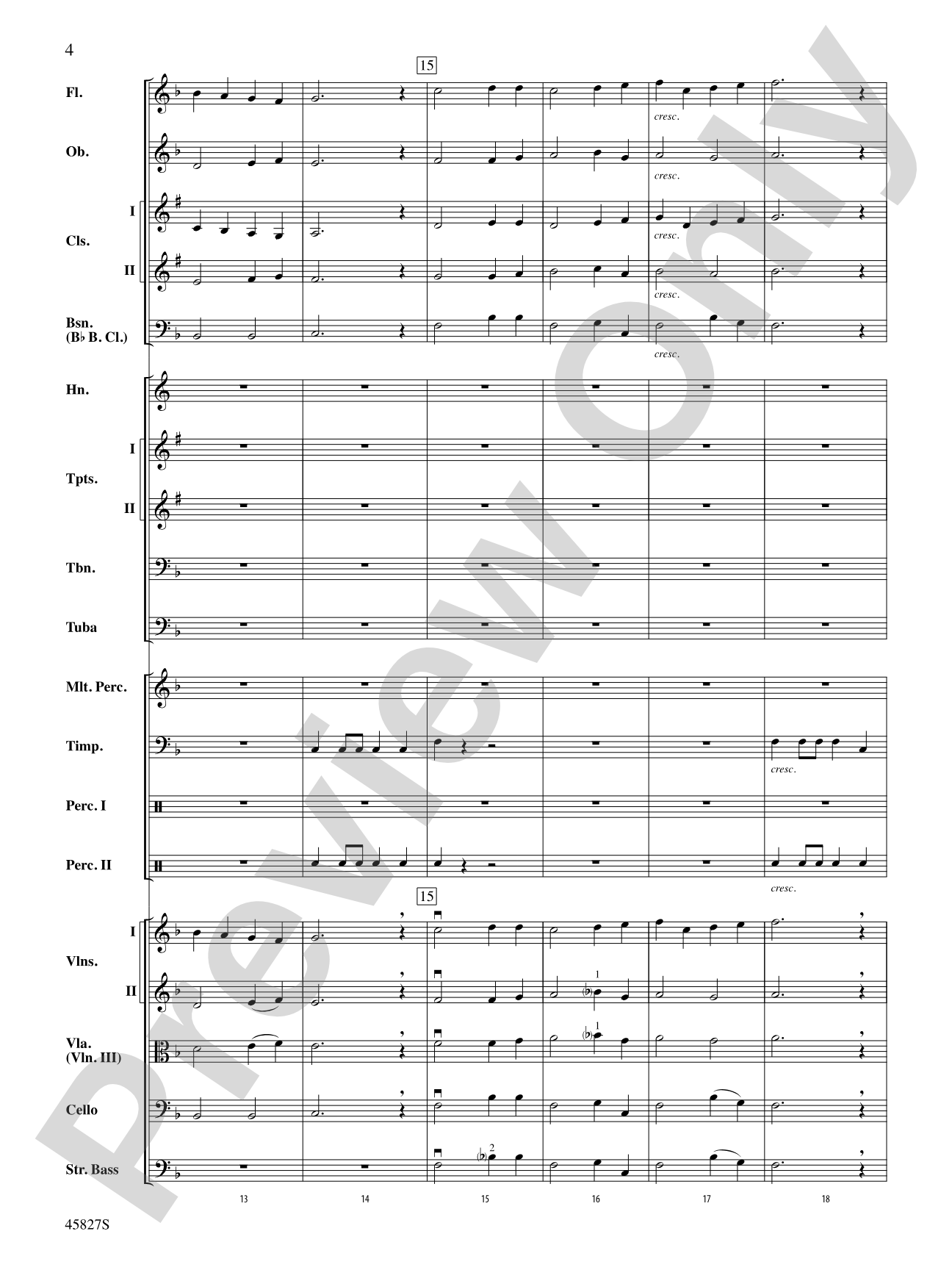
Perfect for a first full orchestra experience, this arrangement of "Chester" by William Billings and arranged by Brad Pfeil provides all sections with melodic material to build technique. It also provides a great opportunity to talk about American musical heritage and the connection with our early founding fathers. (3:05)


Don't just read it, hear it, play along with it, and watch your students grow with it. In MakeMusic Cloud, Chester: Full Orchestra Conductor Score & Parts comes alive with professional accompaniment, adjustable tempo, and built-in practice tools that turn solo practice into real progress.
Open in the Player
Jump straight in and assign it today.
Start Your Free Trial
Open this title and explore the full library in minutes.
Sample Audio
1
Audio File
--:--
0:00
0:00
Sample Video
Additional Details
Series:
Belwin Beginning Full Orchestra
Publisher:
Alfred Music
Page Count:
122
SKU:
00-PK-0007336
More about this title
About the Composer: William Billings
William Billings (1746-1800) was an American composer, singing master, and music publisher who shaped the sound of early American sacred and secular music. Working primarily in Boston, he established himself as a distinctive voice in colonial music by writing pieces that reflected the musical tastes and values of ordinary American citizens rather than imitating European models exclusively. His compositions became central to the singing school movement and continue to represent a vital strand of American musical identity.
Why we love this
Brad Pfeil's arrangement opens the full orchestra literature to younger ensembles by distributing Billings' sturdy melody across all sections without sacrificing musical substance. The piece carries genuine historical weight—it connects students directly to American founding ideals through music—while remaining accessible enough to feel like a real orchestral achievement rather than a simplified exercise.
What to expect
Sturdy and dignified, with a straightforward melodic character that feels both grounded and purposeful. The harmonic language is transparent enough for young players to hear their part's function, yet the piece carries real weight and sincerity that commands respect in performance.
Who it's for
Beginning to early-intermediate full orchestras ready to move beyond simple arrangements into pieces with historical and cultural significance. This score works well for orchestras with developing wind sections and string players still building confidence with vibrato and tone production.
How to get the most out of it
- Balance the melody across woodwinds, brass, and strings so the tune remains clear; avoid letting any section overshadow the others even when they share the main line.
- Shape phrases with a gentle forward momentum; Billings' hymn-tune style benefits from consistent breath support from the winds and sustained resonance from the strings rather than rigid pulse.
- Use the natural fermatas as moments for the ensemble to breathe together and reset intonation before moving forward.
How to use it
Program this as an opening work on a concert celebrating American music or heritage themes, where it can anchor a set of patriotic or early American pieces. Its modest length (3:05) makes it ideal as a transition piece or as part of a themed program exploring the musical lives of the founding era.
Skills your students will build
- Balancing independent melodic lines across instrument families
- Sustaining long phrases with consistent tone and intonation
- Reading and executing fermatas and breath marks in ensemble context
- Understanding sectional coordination and transparent orchestration at Grade 1.5 level