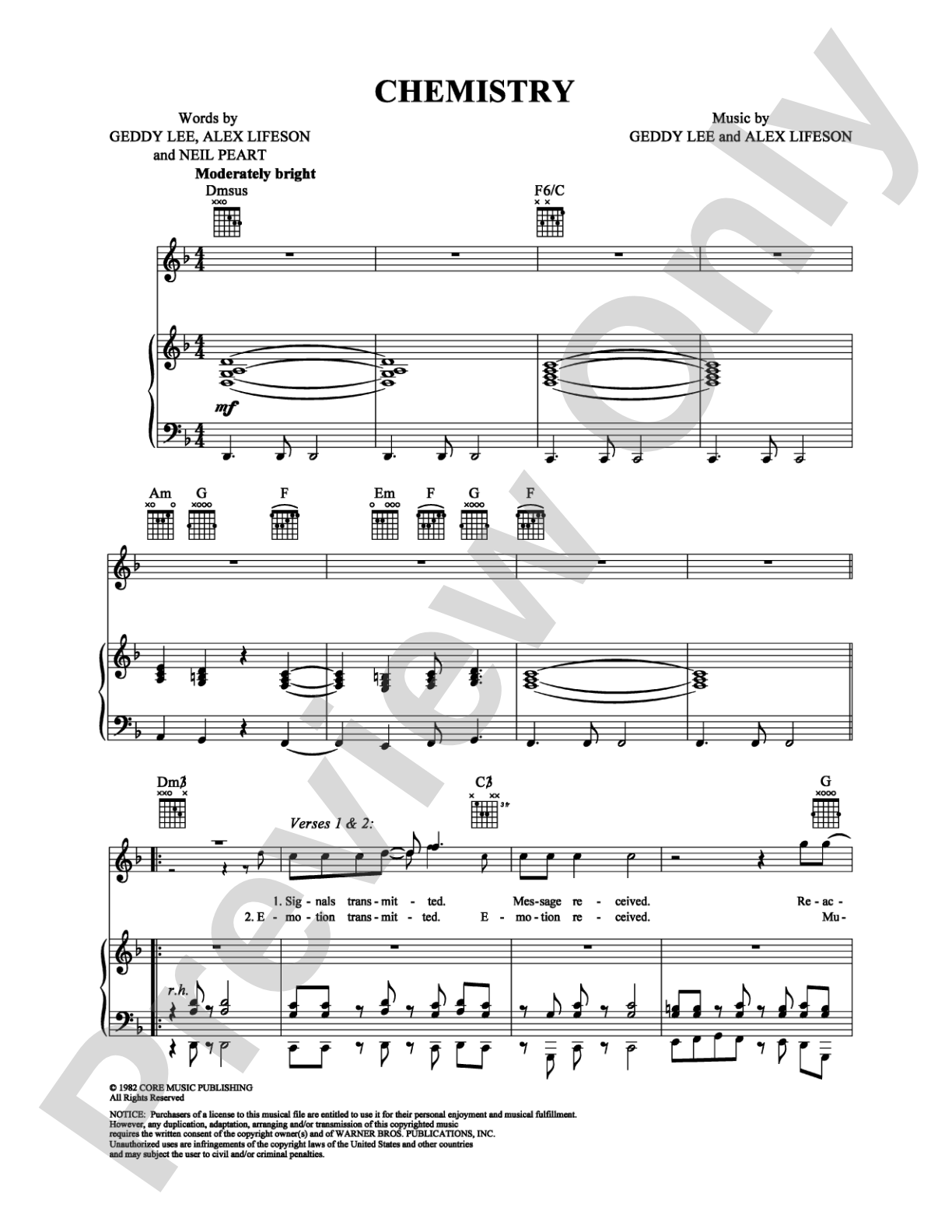
Chemistry: Piano/Vocal/Chords Digital Sheet Music

Chemistry: Piano/Vocal/Chords Digital Sheet Music

Rush, Geddy Lee, Alex Lifeson

Item: 00-PS-0006338

Digital Download
$3.99
Description

Chemistry: Piano/Vocal/Chords Digital Sheet Music isn't in MakeMusic Cloud just yet...but it could be. Let us know you'd like to see it, and you'll help shape what comes next. In the meantime, start a free trial and dive into thousands of interactive titles your students can play along with today.

Sample Audio
No sample audio found.
Sample Video
Additional Details
SKU: 00-PS-0006338

More about this title

About the Artist: Rush

Rush is a Canadian rock band formed in Toronto in 1968, known for their technical virtuosity and progressive rock compositions. The trio of Geddy Lee (vocals, keyboards, bass pedals), Alex Lifeson (guitar), and Neil Peart (drums, lyrics) became influential figures in rock music, combining complex time signatures, intricate instrumental arrangements, and thoughtful lyricism across a career spanning five decades.

Why we love this

Chemistry is a chance to bring a Rush classic into the rehearsal room with serious musicianship demands. The piano/vocal/chords format opens this song to pianists and singers who want to explore Rush's harmonic sophistication and vocal melody without needing the full band arrangement, making it accessible for recitals, concerts, and studio work.

What to expect

Chemistry pulses with the cerebral intensity Rush is known for, where melody and harmony interlock with precision. The song carries emotional weight beneath its technical surface, creating space for interpretation and expression alongside the rigorous musicianship the arrangement demands.

Who it's for

Pianists and vocalists with intermediate to advanced technique who want to explore rock repertoire with real harmonic and rhythmic complexity. Solo singers preparing a recital or audition piece will find the piano/vocal format ideal for rehearsal and performance.

How to get the most out of it

  • Anchor the harmonic progression by playing through the chords several times before adding the vocal line; Rush's chord voicings reward deliberate attention to voice leading.
  • Mark all tempo or dynamic changes in both the piano and vocal parts so ensemble stays locked together, especially through any transitions or key moments.
  • Balance the vocal melody against the piano accompaniment so lyrics remain intelligible while the instrumental texture stays full and engaging.

How to use it

Feature this in a showcase concert pairing classical and contemporary repertoire, or use it as a vocal recital anchor piece that signals artistic range. The piano/vocal format also works well for collaborative studio recordings or accompaniment auditions.

Skills your students will build

  • Reading and performing complex harmonic progressions with non-diatonic chords
  • Coordinating vocal melody against sophisticated piano accompaniment
  • Interpreting Rush's rhythmic language and phrasing in a simplified ensemble context
  • Building stamina and musical communication in a duo partnership

You May Also Like