
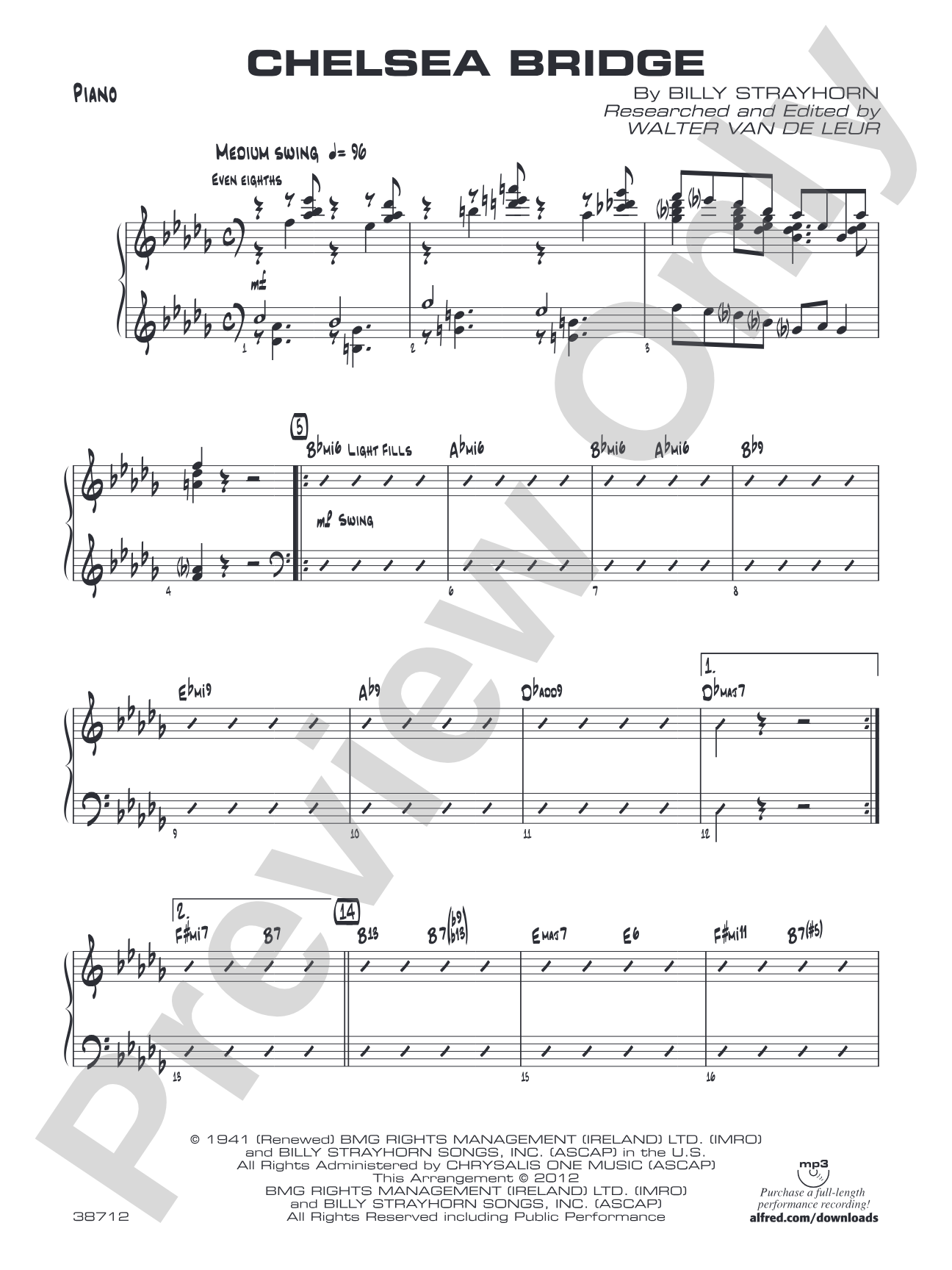

Chelsea Bridge: Piano Accompaniment
By Billy Strayhorn / ed. Walter van de Leur
Grade: 5 (Advanced / Difficult)
Item: 00-PC-0017239_K
$3.00
Pickup currently not available
Description
The brilliant composer/arranger Billly Strayhorn created this gorgeous melody and lush arrangement---this is the authentic version by Strayhorn himself. Recorded by Duke Ellington, the suggested tempo is a medium swing around 96 BPM. Features include a tenor 2 melody bridge solo, tenor 1 has a clarinet double, a sax section soli, a trombone 3 melody solo, and lead trumpet range is to written high C above the staff. (4:10)


Don't just read it, hear it, play along with it, and watch your students grow with it. In MakeMusic Cloud, Chelsea Bridge: Piano Accompaniment comes alive with professional accompaniment, adjustable tempo, and built-in practice tools that turn solo practice into real progress.
Open in the Player
Jump straight in and assign it today.
Start Your Free Trial
Open this title and explore the full library in minutes.
Sample Audio
No sample audio found.
Sample Video
No sample videos found.
Additional Details
Series:
Belwin Jazz Legend Series
Publisher:
Alfred Music
Page Count:
52
SKU:
00-PC-0017239_K
More about this title
About the Composer: Billy Strayhorn
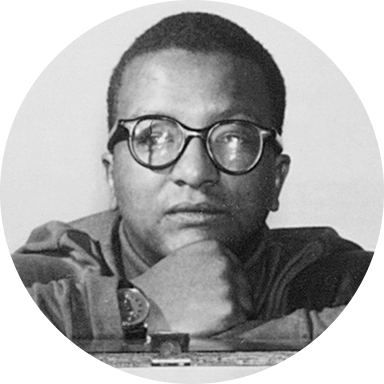
Billy Strayhorn (1915-1967) stands as one of the most prolific and harmonically sophisticated voices in jazz history, yet spent much of his career in the shadow of his most famous collaborator, Duke Ellington. Beginning in 1939, Strayhorn became Ellington's essential partner, composing and arranging hundreds of works that defined the orchestra's sound for three decades. His harmonic language was unusually advanced for jazz, blending classical sophistication with blues sensibility in ways that influenced generations of musicians.
Strayhorn's catalog includes standards that have become touchstones for jazz singers and instrumentalists: "Take the 'A' Train" (composed at age 23), which became the Ellington Orchestra's theme and an anthem of the Harlem Renaissance; "Lush Life," written while he was still a teenager and now considered one of jazz's most challenging ballads; and "Chelsea Bridge," a gorgeous meditation on tone and space. Despite the visibility of his work through countless recordings by artists from Nat King Cole to John Coltrane, Strayhorn himself remained publicly understated, a choice shaped partly by his identity as an openly gay Black man in mid-century America. His music, however, speaks for itself: harmonically rich, emotionally direct, and endlessly recorded.
Why we love this
This is the authentic Strayhorn arrangement, not a secondary adaptation, which means your ensemble gets the exact harmonic language and orchestration choices that made this piece legendary. The writing balances technical demand with genuine lyricism; your lead trumpet player will feel the weight of that high C, but the tenor 2 melody solo and trombone 3 feature give other voices room to shine. Medium swing at 96 BPM sits perfectly in the wheelhouse for ensemble control while maintaining the relaxed elegance the piece demands.
What to expect
Chelsea Bridge is lush and introspective, a piece that listens to itself as much as it speaks. The melody sits warmly in the middle register; solos emerge like conversations rather than declarations. There is space here, and restraint, qualities that make the piece timeless.
Who it's for
Jazz ensemble directors working with advanced players (Grade 5) who understand swing articulation, section precision, and the difference between technical facility and musical maturity. This score demands lead trumpet players who can deliver high passages with control and soloists who can phrase with singers' sensibility.
How to get the most out of it
- Treat the bridge section as a miniature ballad within the swing context; the tenor 2 melody solo needs space and vocal quality, not rhythmic aggressiveness. Let the rhythm section float slightly rather than lock into a strict grid.
- Balance the sax section soli so it reads as a unified voice; these moments are about blend and section precision, not individual showmanship. Spend rehearsal time locking the internal phrasing of all three saxes together.
- Build the lead trumpet range gradually across the chart. The written high C above the staff appears in context, not as a surprise stunt; make sure your trumpet player understands the architecture leading into it.
- Shape the melody through dynamic contrast rather than tempo change. A gorgeous ballad-like passage followed by swinging sections works better when the pulse stays consistent and the articulation and phrasing do the emotional work.
How to use it
Position this as a second-half centerpiece in a concert that needs emotional weight and sophistication. It works beautifully alongside uptempo swingers or other Strayhorn standards, and it gives audiences a moment of beauty without resorting to ballad cliches. This is the piece that reminds listeners why they came to hear jazz.
Skills your students will build
- Swing feel and articulation at medium tempo
- Section blend and ensemble precision in soli passages
- Phrasing and dynamic shaping in ballad-like contexts
- Solo development with harmonic awareness
- Range extension (trumpet to high C) with musical purpose