Chelsea Bridge Cover Image

Chelsea Bridge: Jazz Ensemble Conductor Score

$10.00 USD
Sale price  $10.00 USD Regular price 
Skip to product information
Chelsea Bridge Cover Image

Chelsea Bridge: Jazz Ensemble Conductor Score

By Billy Strayhorn / arr. Greg Yasinitsky

Grade: 4 (Medium Advanced / Difficult)

Item: 00-33350S

$10.00
Shipped

One moment…

Description
Chelsea Bridge is a level 4 Premier Jazz Series piece designed for high school and college bands. Full instrumentation includes 5 saxophones, 8 brass, and 4 rhythm parts. Background parts are provided behind improvised solos and guitar chord frames are provided to assist young guitarists.

Chelsea Bridge: Jazz Ensemble Conductor Score isn't in MakeMusic Cloud just yet...but it could be. Let us know you'd like to see it, and you'll help shape what comes next. In the meantime, start a free trial and dive into thousands of interactive titles your students can play along with today.

Sample Pages

No sample pages found.

Sample Audio
No sample audio found.
Sample Video
Additional Details
Series: Premier Jazz Series
Publisher: Alfred Music
Page Count: 16
UPC: 038081375168
SKU: 00-33350S

More about this title

About the Composer: Billy Strayhorn
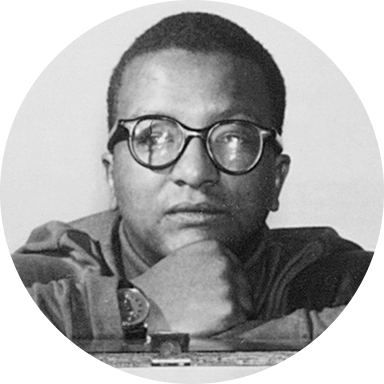
Billy Strayhorn

Billy Strayhorn (1915-1967) shaped the sound of American jazz through his partnership with Duke Ellington, beginning in 1939. His harmonic sophistication and melodic gift produced standards that remain central to the jazz repertoire: "Take the 'A' Train" became the Ellington Orchestra's signature theme and an emblem of the Swing era, while "Lush Life," written when he was just 16 years old, stands as one of jazz's most challenging and rewarding ballads for singers and musicians alike.

Despite composing many of the 20th century's most recorded and performed jazz standards, Strayhorn remained largely anonymous during his lifetime. His decision to live openly as a Black gay man in a segregated America contributed to decades of public obscurity, even as his music was performed by virtually every major jazz artist of his era. Historians now recognize him as one of America's greatest composers, a figure whose influence on jazz harmony and orchestration remains immeasurable.

Why we love this

Greg Yasinitsky's arrangement honors Strayhorn's sophisticated harmonic language while making it fully accessible to high school and college ensembles. The inclusion of background parts behind improvised solos keeps younger players engaged and moving forward, and the guitar chord frames provide crucial support for rhythm section players still developing their comping skills. This is a piece that teaches jazz vocabulary and ensemble listening at a serious level without losing the joy that makes jazz ensemble playing irresistible.

What to expect

Elegant, urbane, and swinging. Chelsea Bridge carries the sophisticated lyricism Strayhorn was known for, with rich harmonies that reward careful listening and ensemble balance. There's an inherent glamour to the piece that makes students feel like they're playing something genuinely important.

Who it's for

High school and college jazz ensembles ready to tackle sophisticated harmonies and improvisation in a structured setting. This piece suits directors who want their students to learn from a master composer's voicings while maintaining the energy and ensemble discipline that grade 4 difficulty demands.

How to get the most out of it

  • Balance the soloists prominently against the background parts; the arranged backgrounds should support without overwhelming the improvisers. Encourage soloists to shape their lines with dynamics and phrasing rather than playing at a single volume throughout.
  • Work the rhythm section to lock in before running full ensemble rehearsals. The pianist and bassist must be crystal clear on the harmonic progression so they can support soloists confidently.
  • Give explicit guidance on the guitar chord frames during early rehearsals. Young guitarists often play too loud or too sparse when comping; model the sound you want by having the piano play a passage first, then have the guitarist mirror that texture and volume.
  • Attend closely to the transitions in and out of solos. Ensemble entries after improvisation passages should feel clean and together; mark these moments in individual parts and rehearse them deliberately.

How to use it

Program this as a concert centerpiece alongside lighter swing charts or uptempo charts to showcase the depth of your ensemble's musical abilities. It works especially well in concert formats that celebrate compositional craft, or as a feature for a strong soloist or section you want to highlight.

Skills your students will build

  • Reading and executing Strayhorn's complex jazz voicings and harmonic progressions
  • Supporting improvised solos with arranged background parts while maintaining ensemble cohesion
  • Jazz comping and chord-reading for young guitarists and pianists
  • Listening and responding to soloists in real time within a large ensemble context
  • Swing phrasing and rhythmic precision at medium-advanced tempos

You May Also Like