
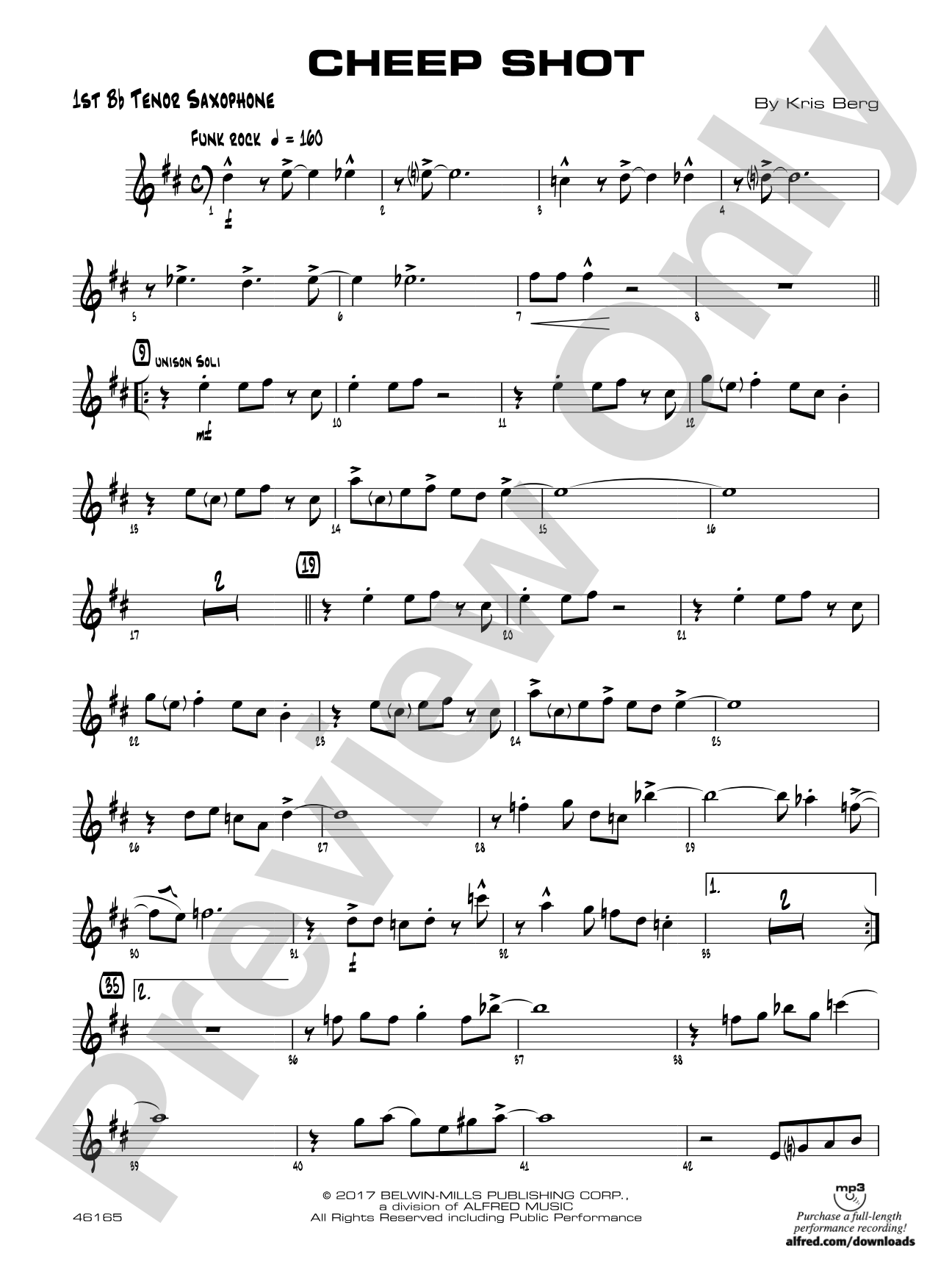

Cheep Shot: B-flat Tenor Saxophone
By Kris Berg
Grade: 3.5 (Medium)
Item: 00-PC-0017757_TX1
$3.00
Pickup currently not available
Description
We're back with another chicken-titled funk chart! Written solos are provided for trumpet and tenor but you could add guitar if desired. Lead trumpet range is too written B-flat above the staff with optional high C. The chart is played around 160 BPM and has a great bass part and a sweet drum backbeat too. (4:35)


Don't just read it, hear it, play along with it, and watch your students grow with it. In MakeMusic Cloud, Cheep Shot: B-flat Tenor Saxophone comes alive with professional accompaniment, adjustable tempo, and built-in practice tools that turn solo practice into real progress.
Open in the Player
Jump straight in and assign it today.
Start Your Free Trial
Open this title and explore the full library in minutes.
Sample Audio
1
Audio File
--:--
0:00
0:00
Sample Video
Additional Details
Series:
Jazz Band Series
Publisher:
Alfred Music
Page Count:
102
SKU:
00-PC-0017757_TX1
More about this title
About the Composer: Kris Berg
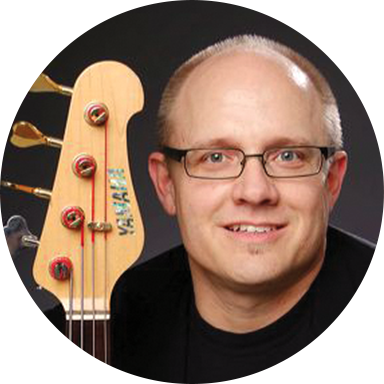
Kris Berg leads the jazz studies program at Collin County Community College in Texas, where he earned both his bachelor's and master's degrees in jazz studies from the University of North Texas. His work as a composer and arranger has circulated globally, and he maintains an active presence as a clinician and artist for Yamaha Corporation. Berg has shared the stage with distinguished musicians including Kurt Elling, Randy Brecker, Peter Erskine, Bob Mintzer, and Clark Terry, among many others.
Beyond his performance and teaching roles, Berg has shaped the regional jazz community through founding and directing the Collin Jazz Fest and the Texas All-Star Jazz Camp. His arrangements for Belwin Jazz have become standards in the big band repertoire, and he authored the widely used Bass Lines in Minutes. Under his direction, Collin County's jazz ensembles have earned multiple invitations to perform at the Montreux Jazz Festival.
Why we love this
Berg writes charts that sound immediately professional and energetic without sacrificing playability at the medium level. The written solos for trumpet and tenor give students a genuine framework for jazz phrasing while leaving room for personalization, and the rhythm section feels genuinely groovy enough to anchor a strong performance. This is the kind of chart that works equally well in a contest setting or a packed concert hall.
What to expect
Funky, grounded, and unapologetically swinging. The backbeat has a modern edge while the horn lines and solos sit comfortably in the jazz tradition. Running just under four and a half minutes, the tune moves with momentum and attitude.
Who it's for
Jazz ensembles at the intermediate level looking for a funk chart with real substance and replay value. The written solos suit musicians developing jazz phrasing skills, while the rhythm section demands solid timekeeping from your drum kit and bass player.
How to get the most out of it
- Lock the hi-hat and kick drum into a tight pocket at 160 BPM; the groove hangs on that relationship, so spend rehearsal time isolating the rhythm section before bringing in the horns.
- Have your lead trumpet mark the optional high C passage and make a deliberate choice about whether to use it. The written B-flat sits solidly, and the C works best when the player commits to it rather than reaching.
- Balance the trumpet and tenor solos equally in the mix. Both parts are written with intention, so neither should disappear into the ensemble.
- Emphasize the bass part's role as a harmonic anchor. A clear, driving bass line lifts the entire chart and gives soloists something solid to push against.
How to use it
Program this as a closing number or showcase item on a jazz concert where you want to show energy and precision without veering into novelty territory. The contest festival designation means it holds its own in competitive settings, though it's equally at home on a community concert where the audience wants to hear something that grooves.
Skills your students will build
- Jazz solo phrasing and interpretation from written trumpet and tenor parts
- Funk and shuffle rhythm subdivision at moderate tempo
- Ensemble balance between solo voices and supporting harmony
- Tight rhythm section interlock, particularly between drums and bass
- Lead trumpet range extension and stamina in the upper register