
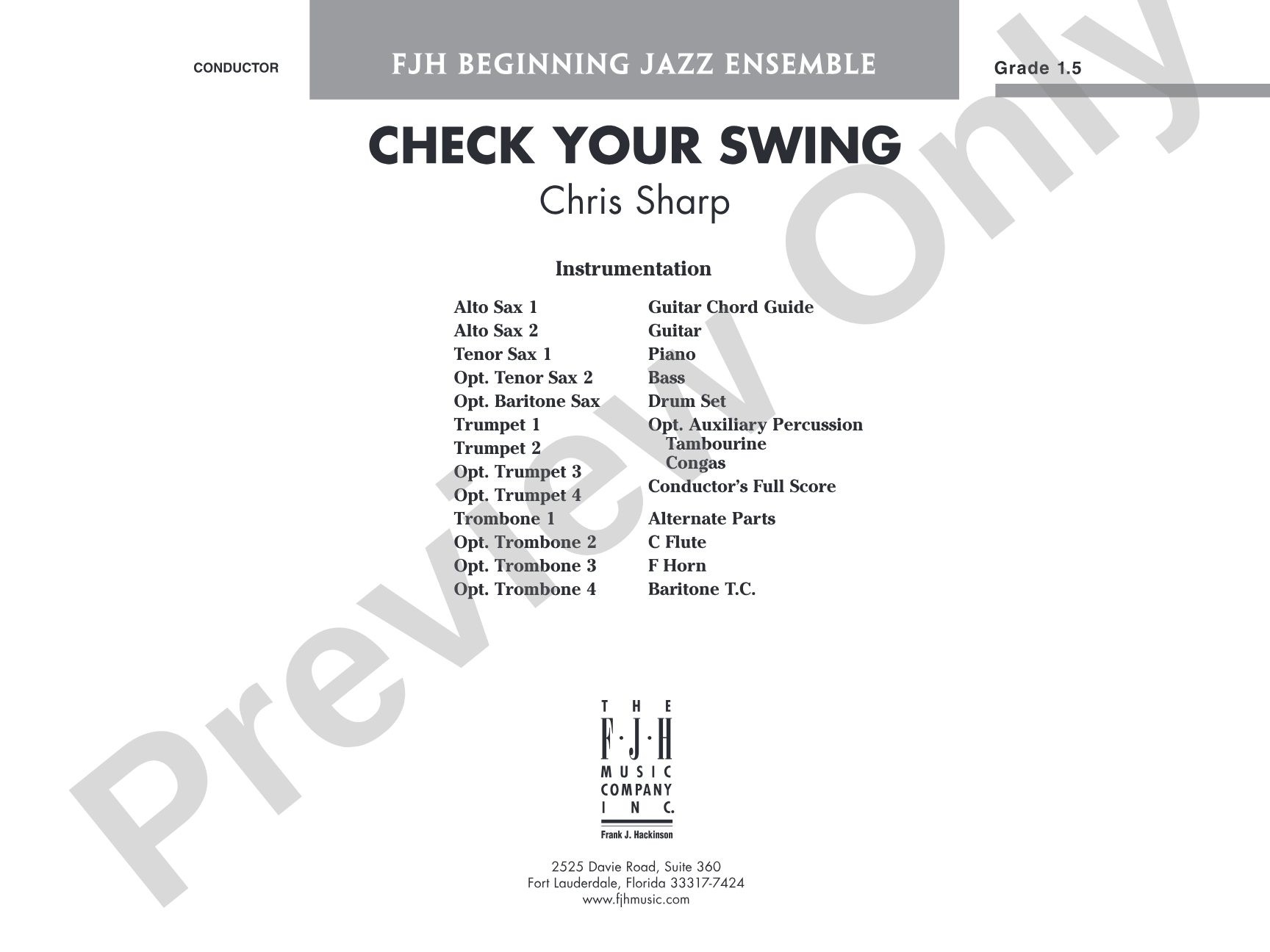
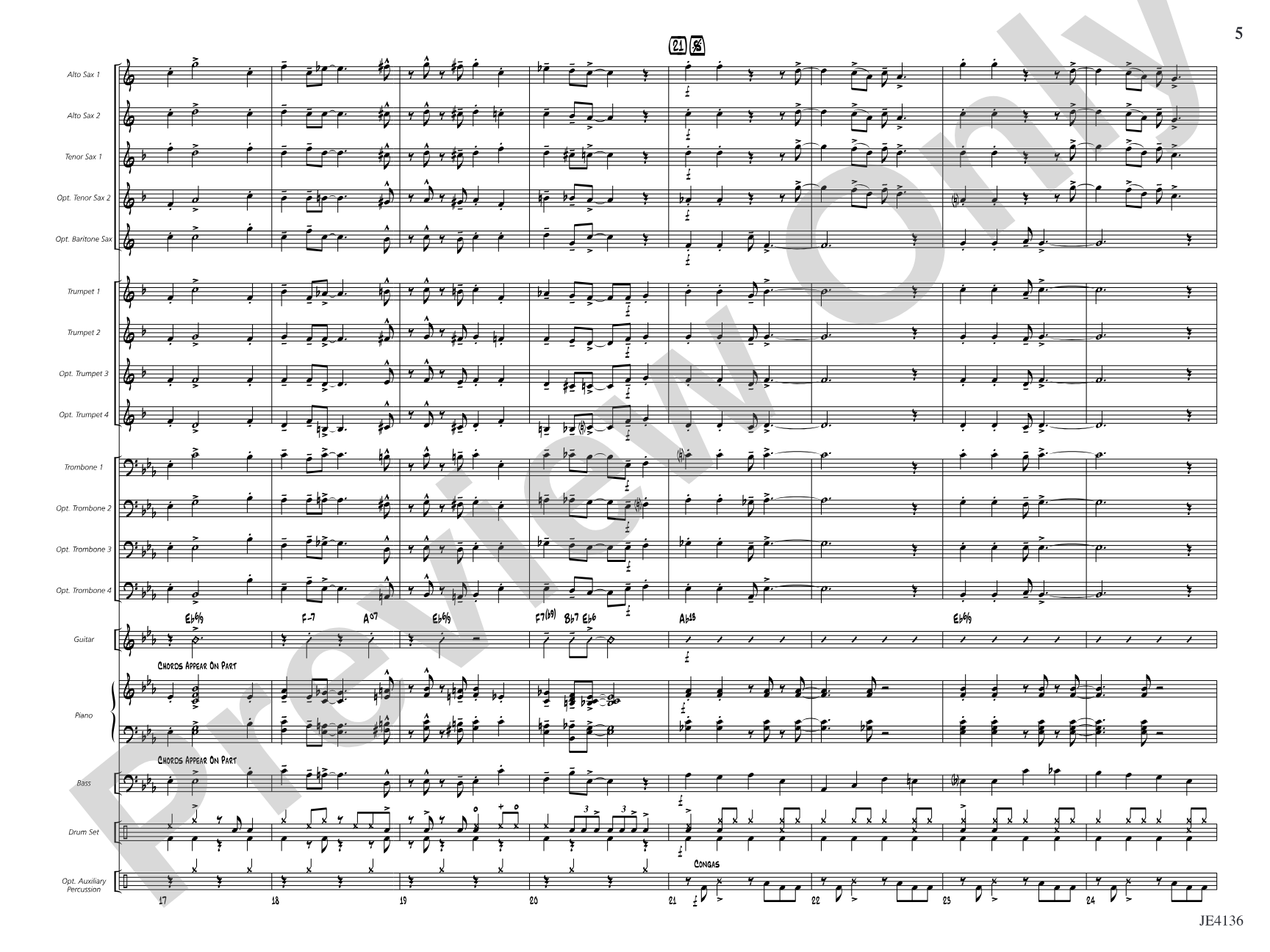
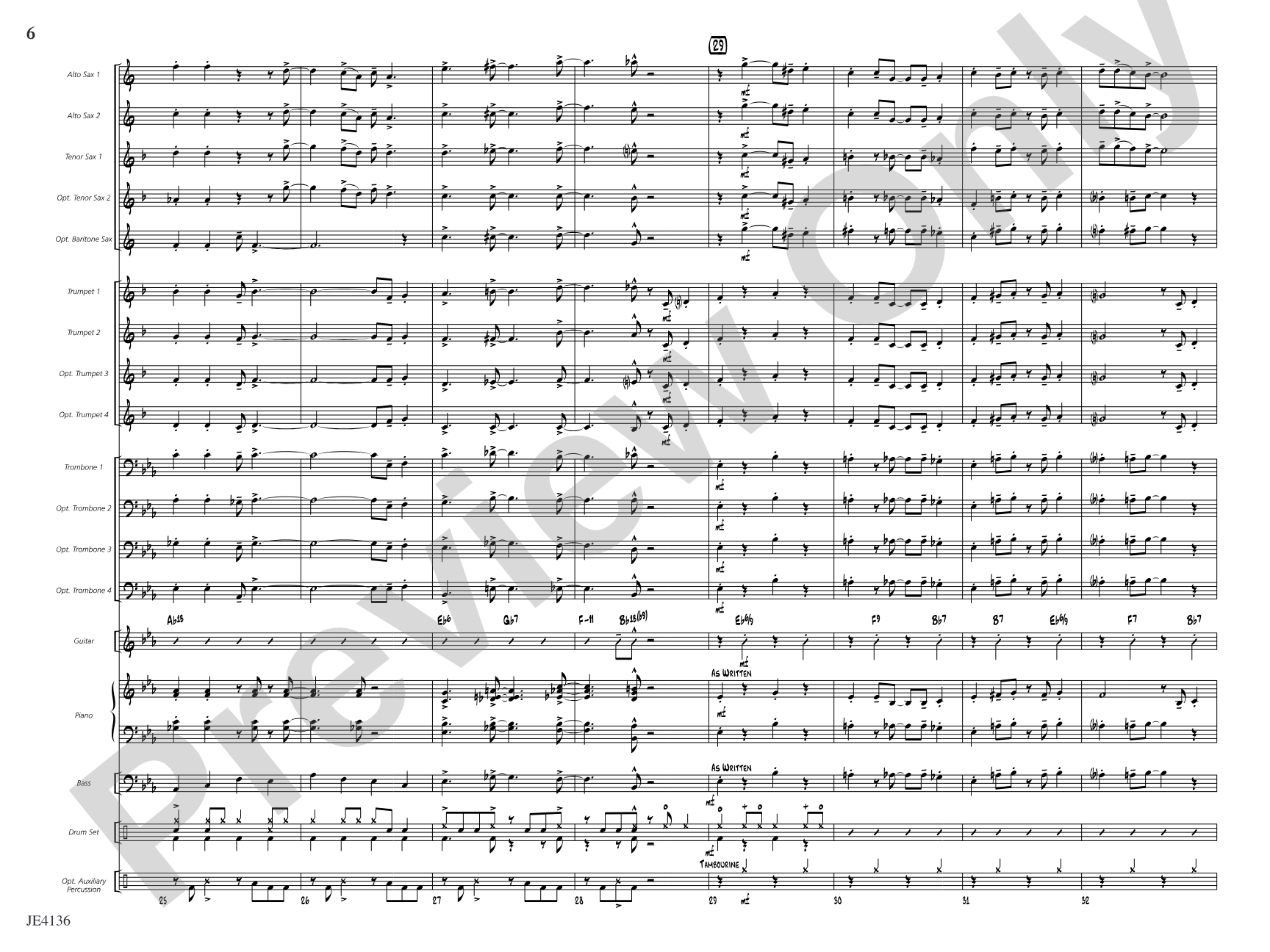
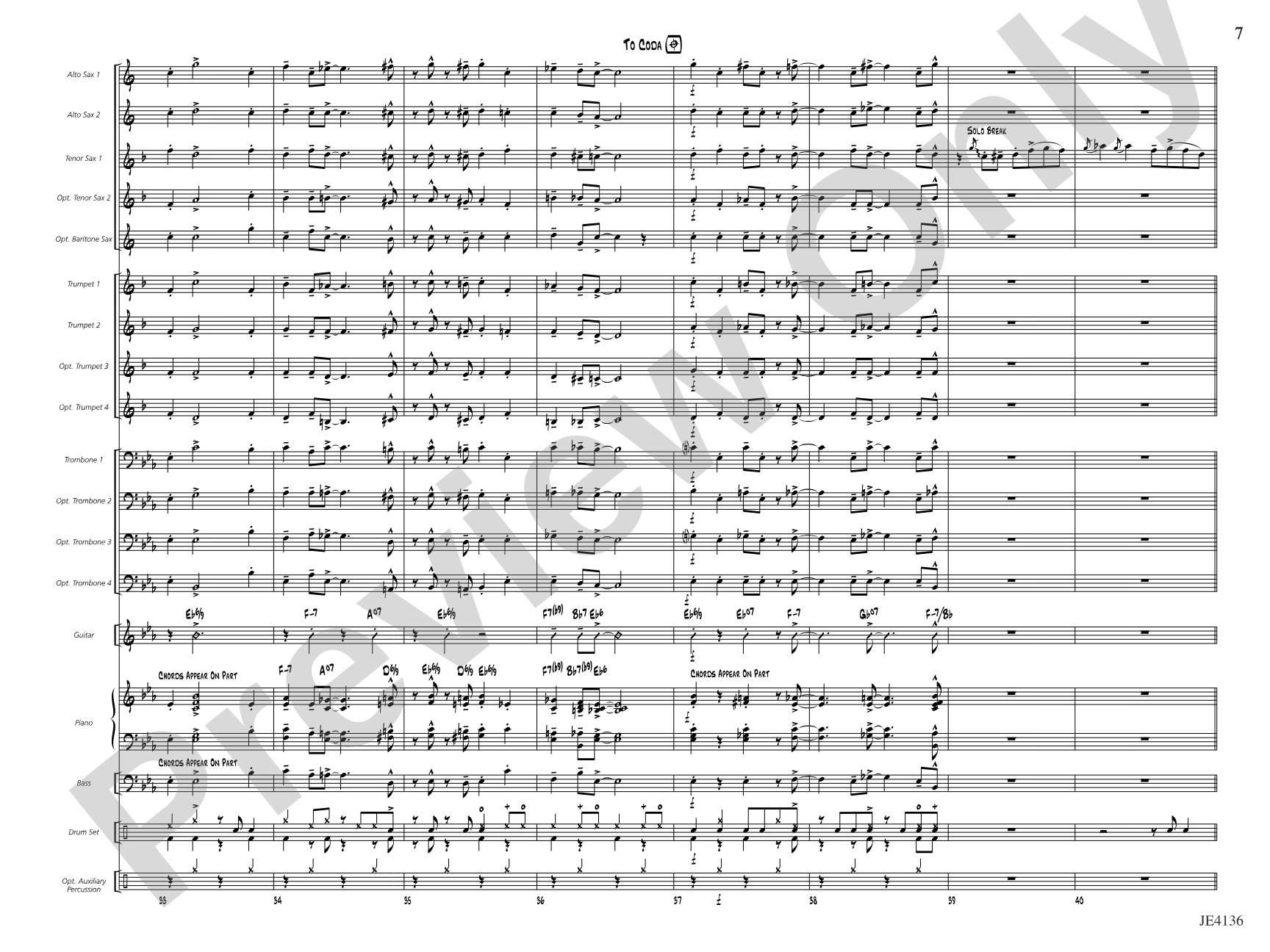
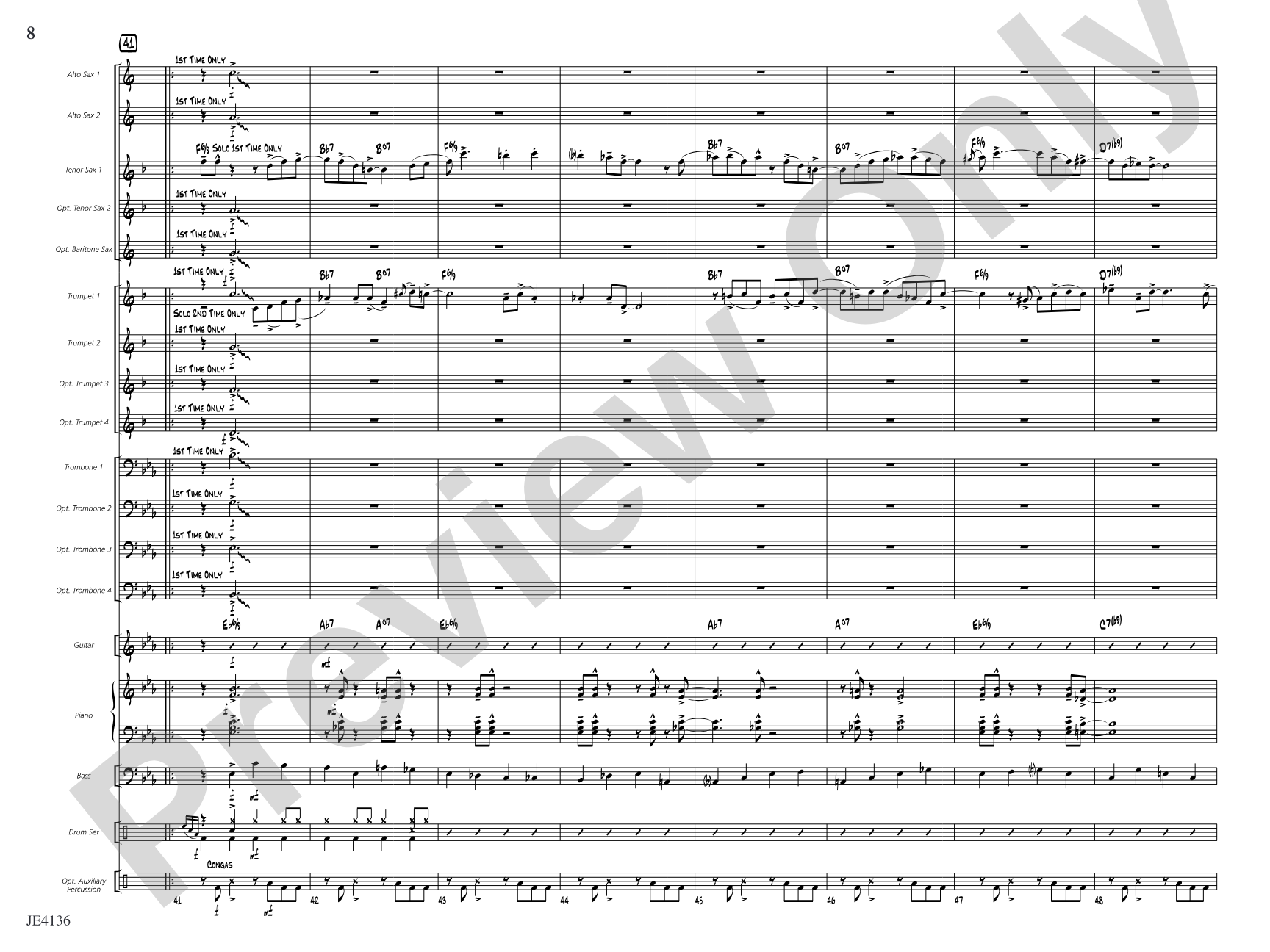

Check Your Swing: Jazz Ensemble Conductor Score & Parts
By Chris Sharp
Grade: 1.5
Item: 98-DJE4136
$45.00
Pickup currently not available
Buy Extra Parts (Digital PDF Download)
| Product | Price | Quantity |
|---|---|---|
| Check Your Swing: Score | $5.00 | |
| Check Your Swing: Alto Sax 1 | $7.00 | |
| Check Your Swing: Alto Sax 2 | $7.00 | |
| Check Your Swing: Tenor Sax 1 | $7.00 | |
| Check Your Swing: Opt. Tenor Sax 2 | $7.00 | |
| Check Your Swing: Opt. Baritone Sax | $7.00 | |
| Check Your Swing: Trumpet 1 | $7.00 | |
| Check Your Swing: Trumpet 2 | $7.00 | |
| Check Your Swing: Opt. Trumpet 3 | $7.00 | |
| Check Your Swing: Opt. Trumpet 4 | $7.00 | |
| Check Your Swing: Trombone 1 | $7.00 | |
| Check Your Swing: Opt. Trombone 2 | $7.00 | |
| Check Your Swing: Opt. Trombone 3 | $7.00 | |
| Check Your Swing: Opt. Trombone 4 | $7.00 | |
| Check Your Swing: Guitar Chord Guide | $7.00 | |
| Check Your Swing: Guitar | $7.00 | |
| Check Your Swing: Piano | $7.00 | |
| Check Your Swing: Bass | $7.00 | |
| Check Your Swing: Drum Set | $7.00 | |
| Check Your Swing: Opt. Auxiliary Percussion | $7.00 | |
| Check Your Swing: Alternate C Flute | $7.00 | |
| Check Your Swing: Alternate F Horn | $7.00 | |
| Check Your Swing: Alternate Baritone T.C. | $7.00 |
Parts Added to Cart!
Description
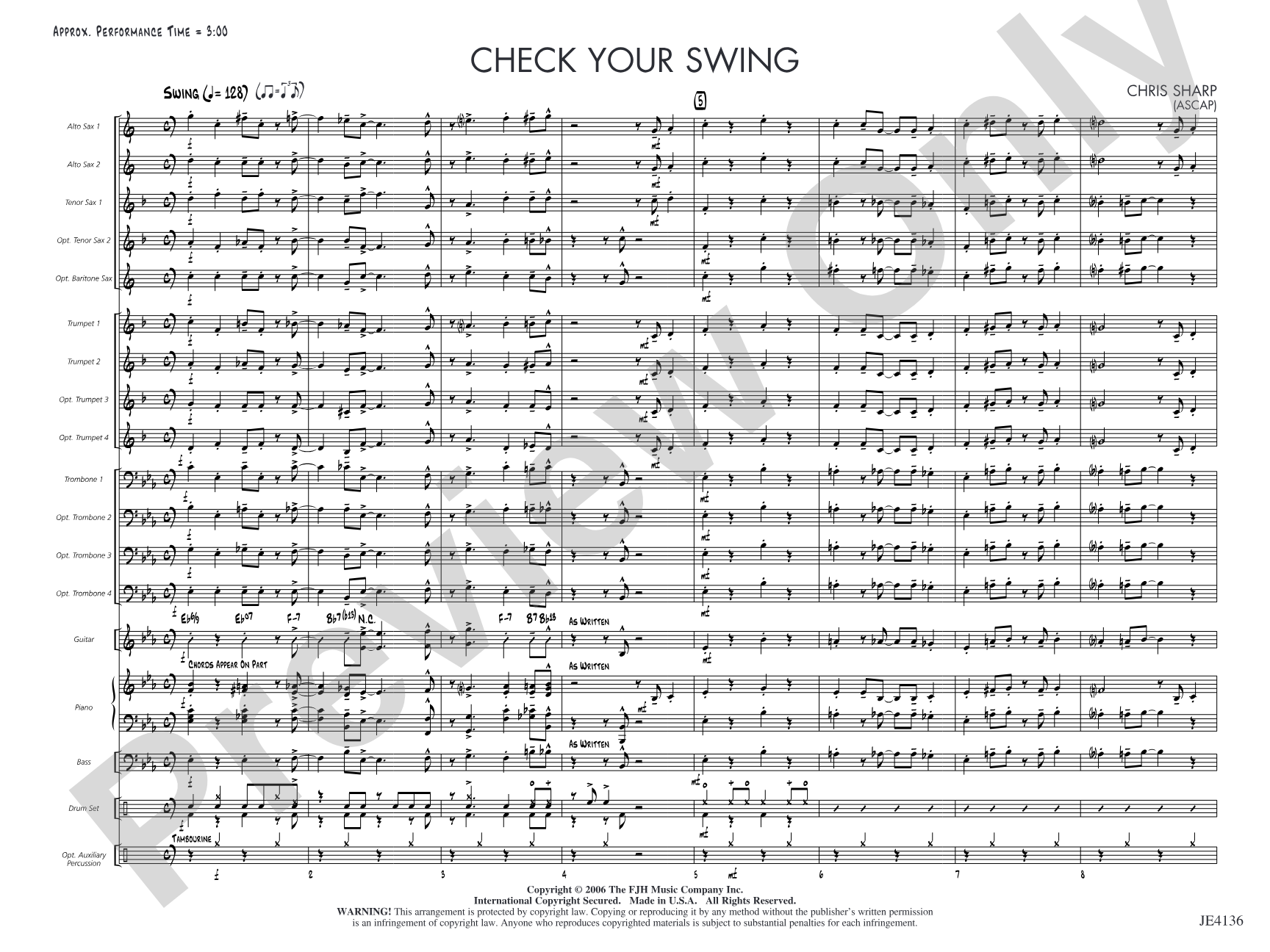
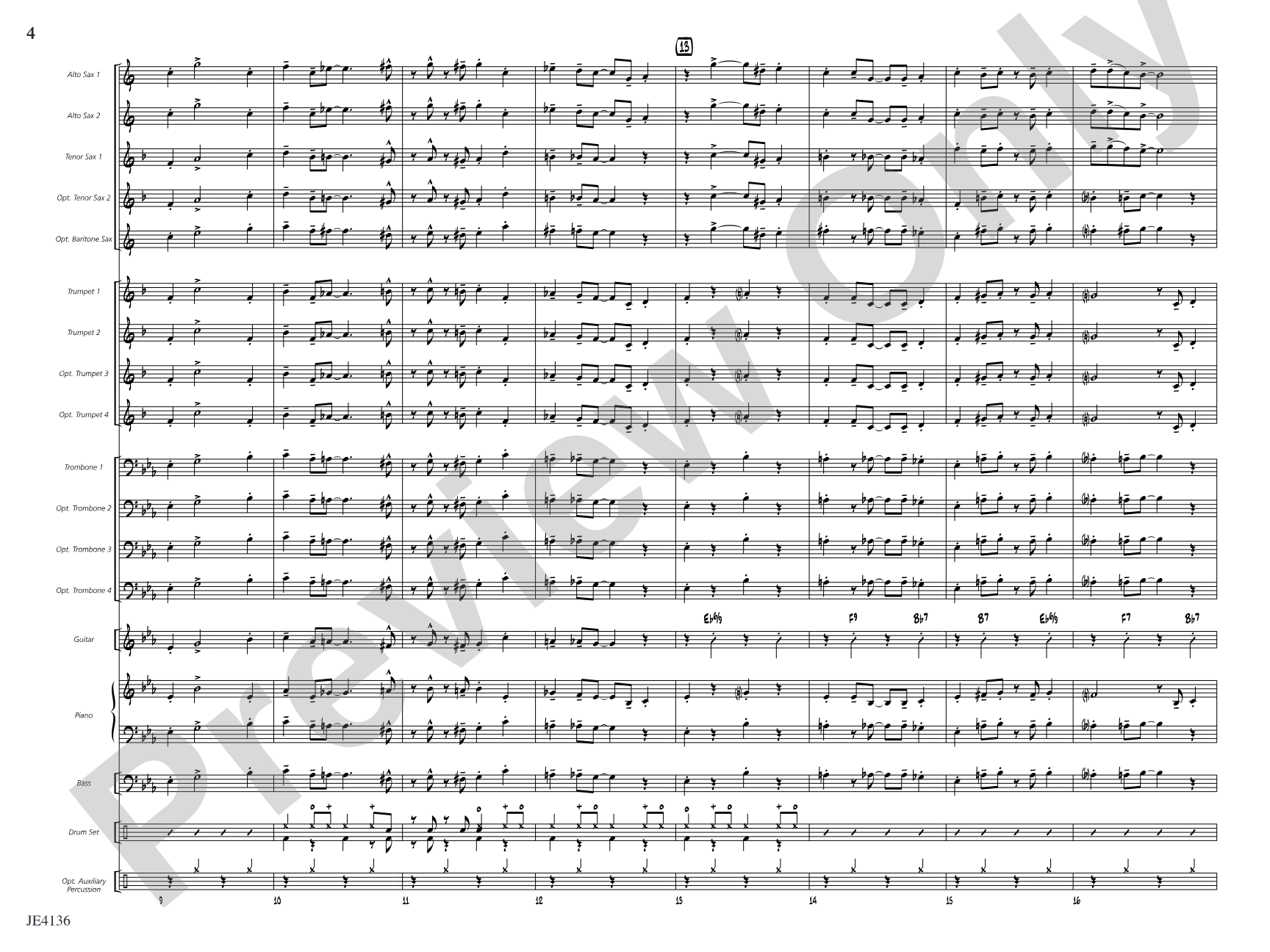
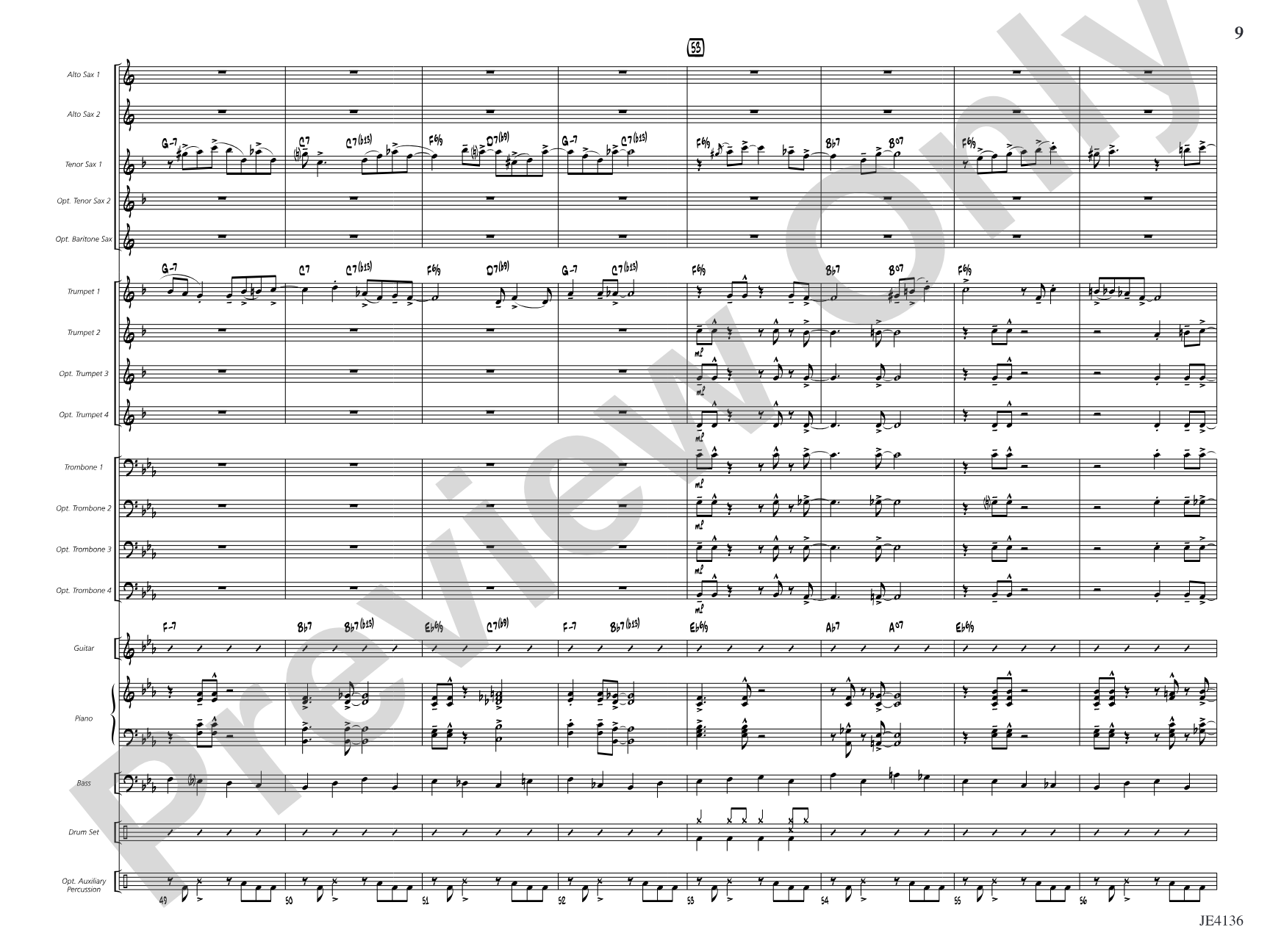
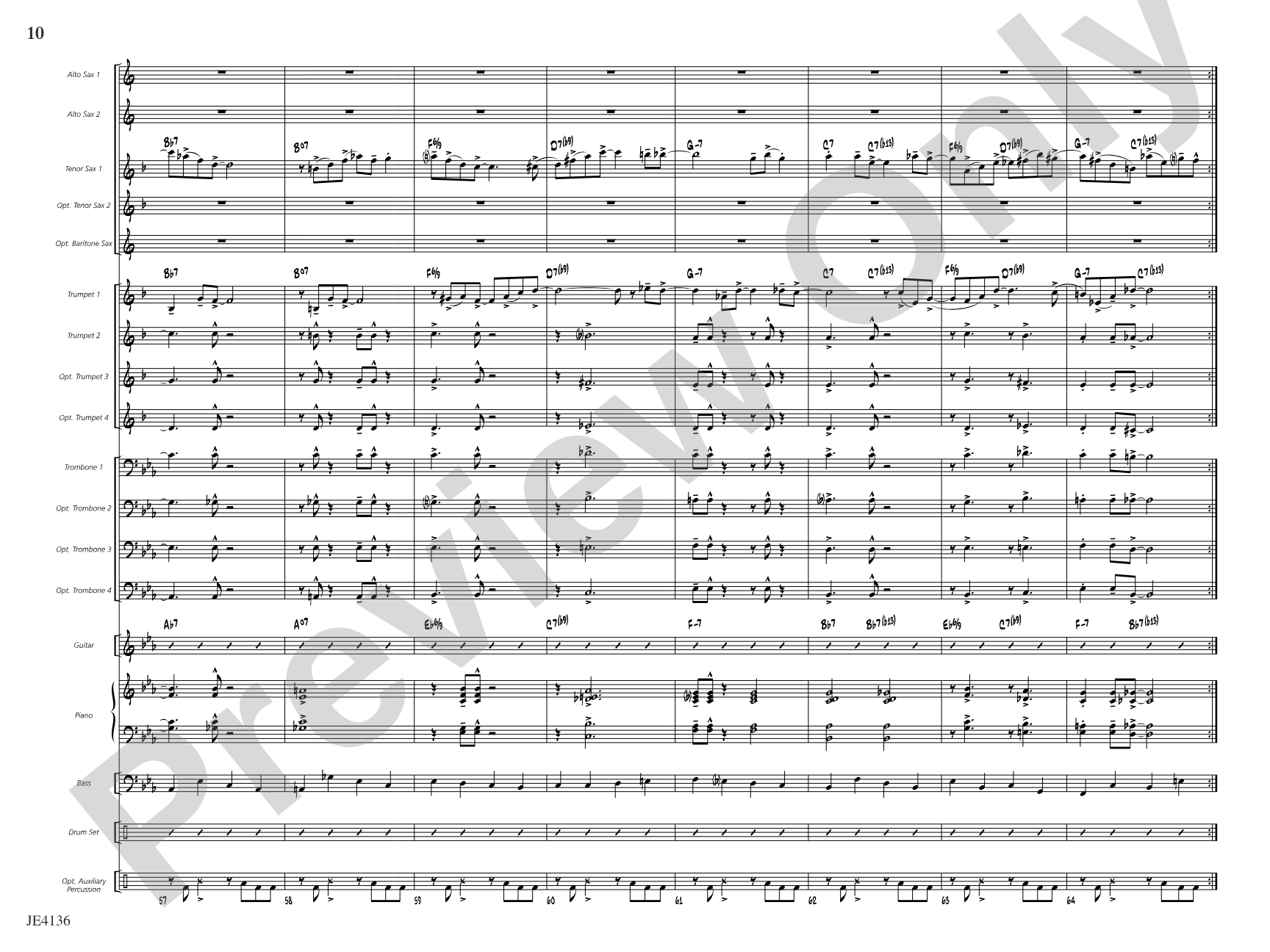
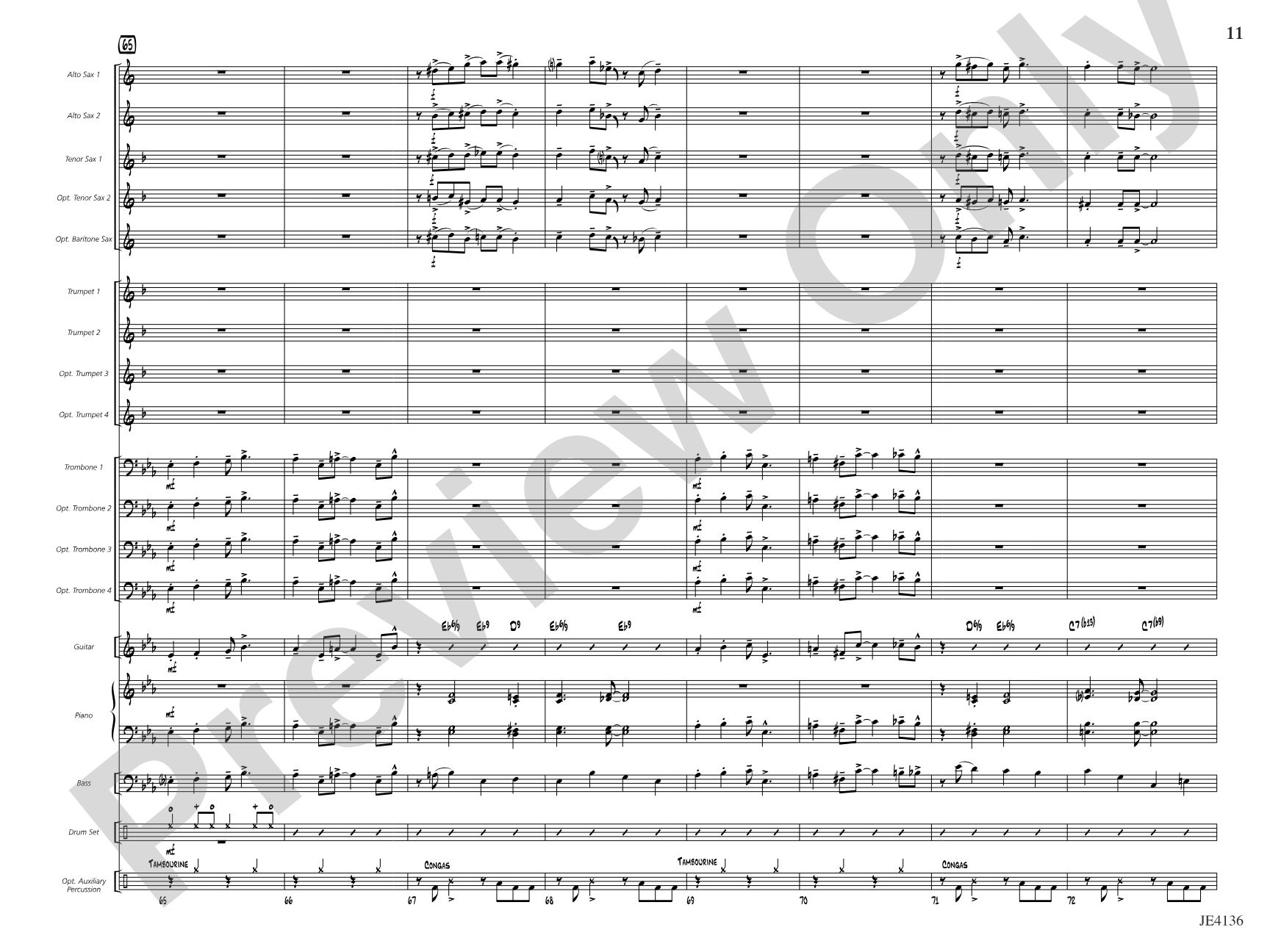
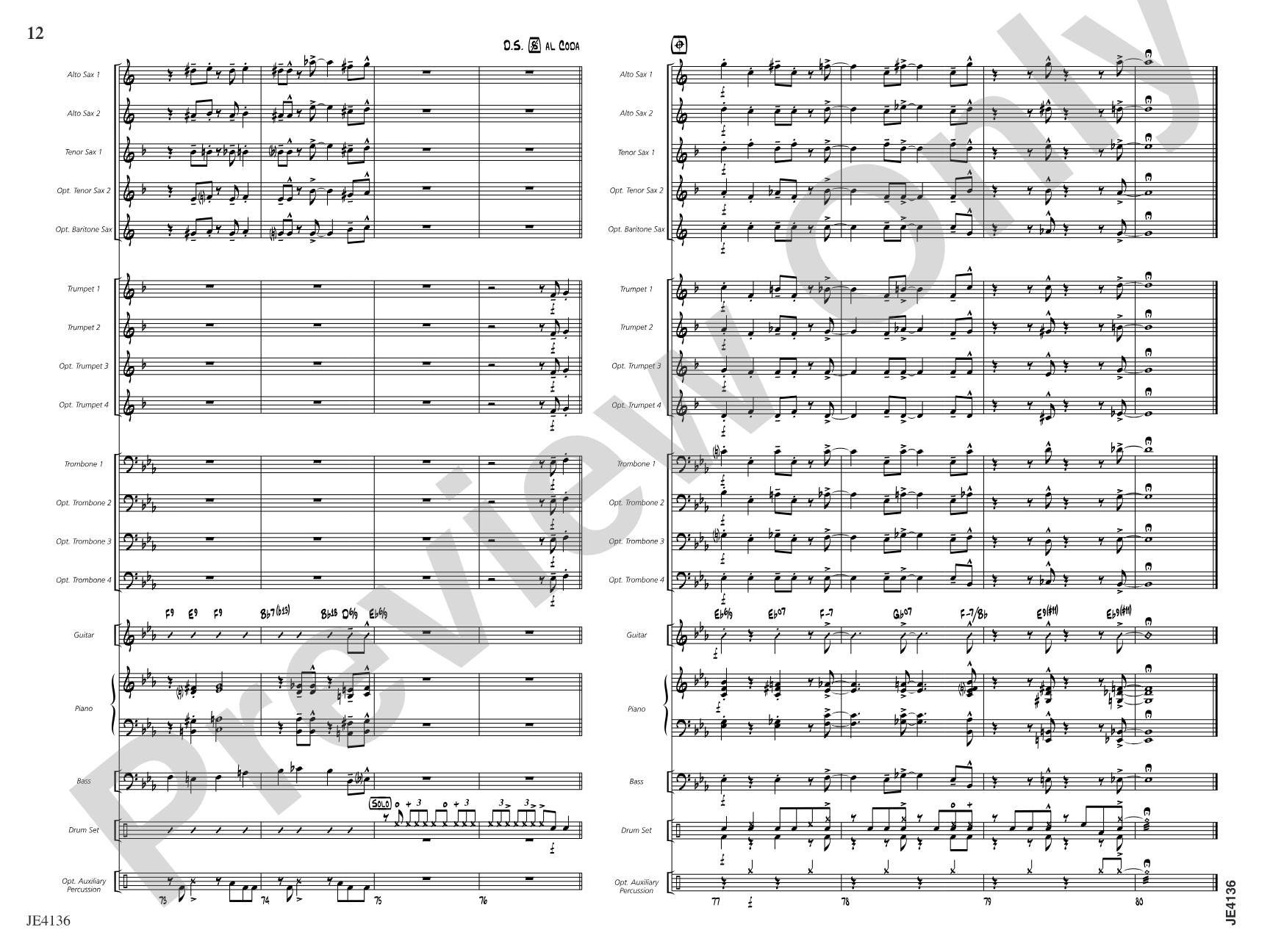
Introduce your students to swing without the complicated rhythms. This laid-back chart features a catchy melody that lets the ensemble focus on great style and intonation. Written-out solos are provided for tenor and trumpet to help build confidence, and fully realized rhythm section parts help guide less experienced players.


Check Your Swing: Jazz Ensemble Conductor Score & Parts isn't in MakeMusic Cloud just yet...but it could be. Let us know you'd like to see it, and you'll help shape what comes next. In the meantime, start a free trial and dive into thousands of interactive titles your students can play along with today.
Request This Title
Tell us you want it.
Start Your Free Trial
Explore everything that's ready to play right now.
Sample Audio
1
Audio File
--:--
0:00
0:00
Sample Video
No sample videos found.
Additional Details
Series:
FJH Beginning Jazz Ensemble
Publisher:
The FJH Music Company, Inc.
SKU:
98-DJE4136
More about this title
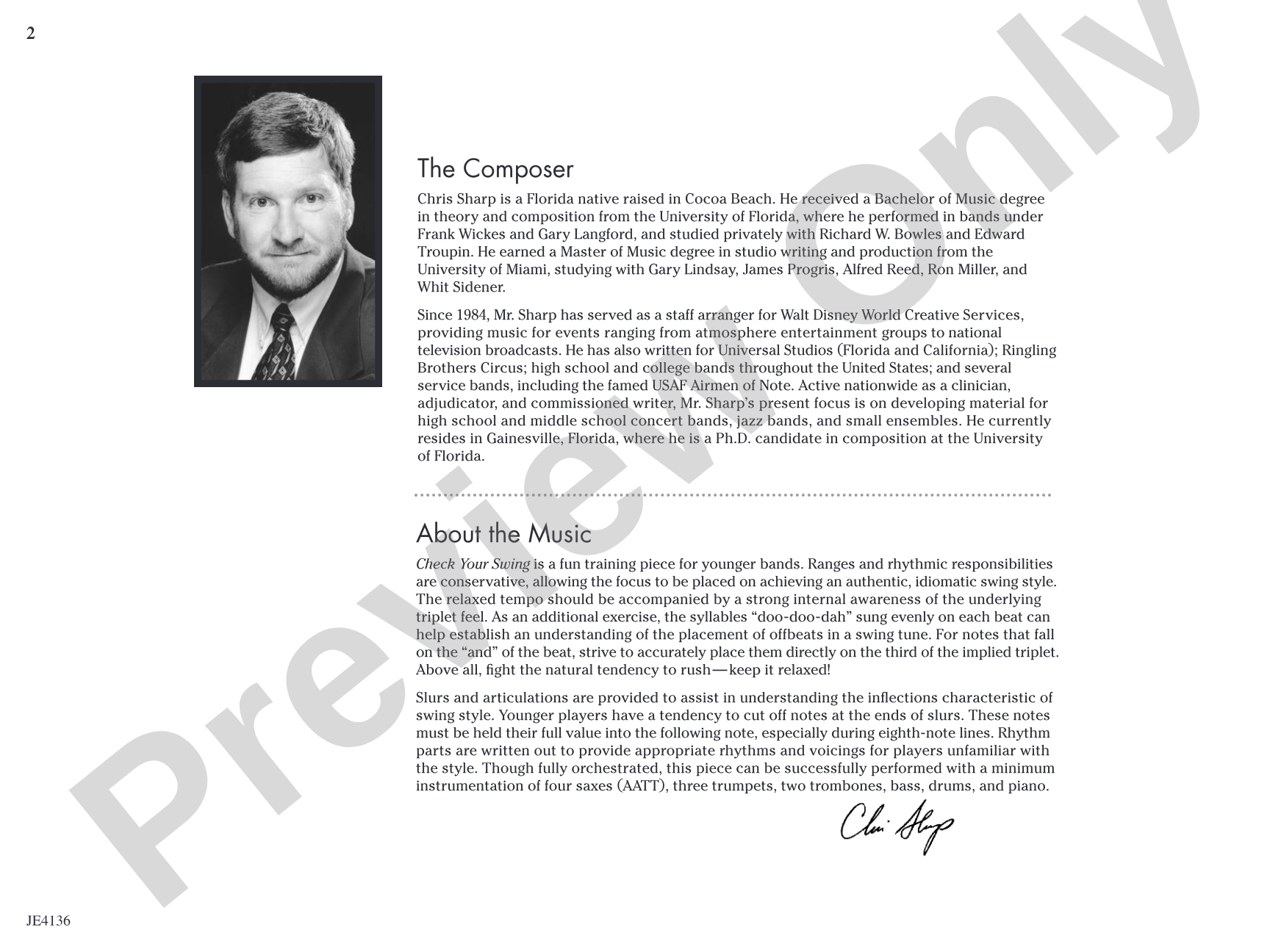
About the Composer: Chris Sharp

Chris Sharp holds a Ph.D. and has built a career moving fluidly between performance, composition, and education. As a trombonist, he spent eleven years as a performing musician and bandleader at Walt Disney World, then transitioned into arranging and orchestration for Disney parks globally, creating music for shows, recordings, and television broadcasts since 1984.
Beyond the theme parks, Sharp has composed and arranged for the Boston Pops, Universal Studios, the Dallas Brass, and the USAF Airmen of Note. His work has earned multiple ASCAP Plus awards and regular performances at the Midwest Clinic. Today he directs bands at Polk State College while teaching theory, technology, and arranging, and he regularly serves as a clinician and adjudicator for organizations including Bands of America and Drum Corps International.
Why we love this
Sharp knows exactly what beginning jazz ensembles need: accessible swing that doesn't hide behind complex rhythmic notation. The written-out solos remove the intimidation factor for young improvisers, while the fully realized rhythm section parts mean your less experienced players stay locked in without requiring constant intervention. You get authentic swing sound with real teaching efficiency.
What to expect
Relaxed and swinging without pretension. The melody sits in a comfortable range where it can breathe naturally, and the rhythm section support creates that laid-back groove that makes students actually want to come to rehearsal. It feels like watching experienced musicians play for the joy of it.
Who it's for
This chart works perfectly for ensembles new to swing idiom who need a confidence builder. Directors introducing jazz band to middle schoolers or early high school students will find the straightforward melody and written solos remove common barriers to entry.
How to get the most out of it
- Treat the written solos as learning templates rather than fixed arrangements. Once your players gain confidence, encourage them to paraphrase the melody while keeping the harmonic structure intact.
- Spend rehearsal time on the rhythm section foundation first. Get your bass and drums grooving naturally before adding horns; the chart is built to support this approach.
- Balance the melody so the ensemble sound feels relaxed rather than precise. Swing intonation lives slightly ahead of the beat in the upper voices, so let that breathe.
- Have your tenor and trumpet soloists listen to classic swing recordings in the same style. Hearing authentic phrasing and articulation choices will shape their interpretation far more than written instructions.
How to use it
Open a jazz concert with this after a brief explanation of swing style to an audience unfamiliar with the genre. It also works beautifully as a mid-year morale booster when your ensemble needs a break from more demanding literature and wants to hear themselves sounding genuinely musical.
Skills your students will build
- Swing articulation and phrasing
- Interpreting jazz rhythmic notation (swung eighth notes without complex subdivisions)
- Listening and locking into groove as an ensemble
- Building confidence in solo passages through written examples
- Balancing blend and intonation in a jazz voicing