Chausson: Thirty-Three Songs (French) Sheet Music Preview

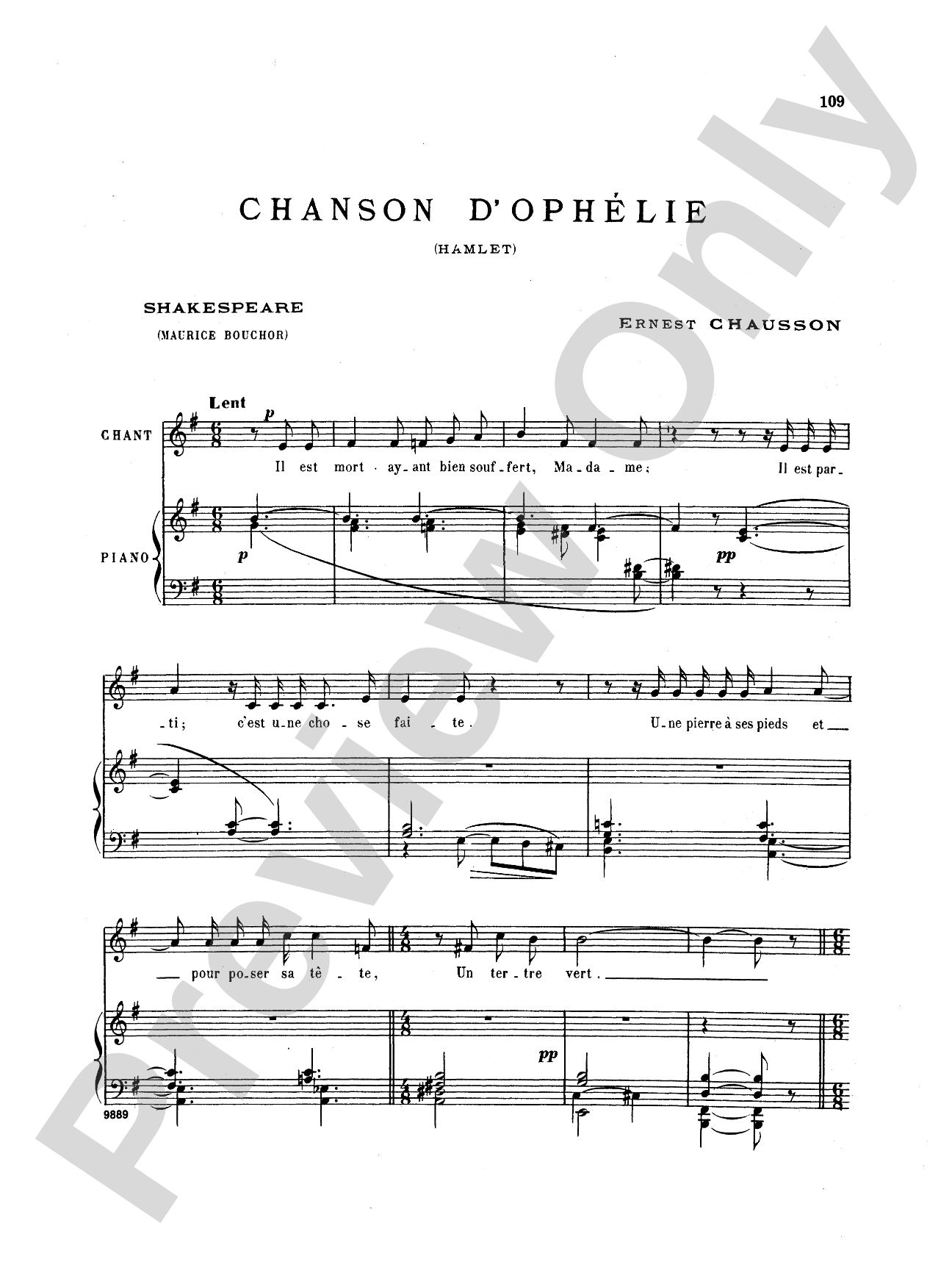
Chausson: Thirty-Three Songs (French)

By Ernest Chausson

Item: 00-PC-0013786

Digital Download
$0.99
Description
Expertly arranged Vocal Collection by Ernest Chausson from the Kalmus Edition series. This is from the Impressionistic and Romantic eras.

Don't just read it, hear it, play along with it, and watch your students grow with it. In MakeMusic Cloud, Chausson: Thirty-Three Songs (French) comes alive with professional accompaniment, adjustable tempo, and built-in practice tools that turn solo practice into real progress.

Sample Audio
No sample audio found.
Sample Video
Additional Details
Series: Kalmus Edition
Publisher: Alfred Music
Page Count: 152
SKU: 00-PC-0013786

More about this title

About the Composer: Ernest Chausson

Ernest Chausson (1855-1899) was a French composer whose brief life produced an outsized legacy in art song. A student of Massenet and Jules Franck at the Paris Conservatoire, Chausson synthesized the harmonic language of Wagner and Franck with French lyric tradition, creating songs of remarkable intimacy and harmonic richness. His output, though small, earned him respect among musicians during his lifetime and lasting influence on vocal music after his death.

Chausson's greatest gift was his ability to match sophisticated piano writing with vocal lines that feel natural and singable, never sacrificing musical substance for ease. His songs explore the texts of major French poets with sensitivity to language and emotional nuance, making them essential repertoire for singers seeking to deepen their command of the French vocal tradition.

Why we love this

This collection spans the breadth of Chausson's vocal output, offering singers access to some of the most rewarding art songs of the late 19th century. The harmonic language is sophisticated without being inaccessible, and each song presents a distinct poetic world, making this ideal for building a well-rounded recital program or exploring advanced French song literature.

What to expect

These songs evoke twilight emotional states: longing without desperation, beauty tinged with melancholy, moments of tenderness interrupted by restless harmony. Chausson's world is inward-looking and poetic, often introspective rather than showy, with the piano creating subtle harmonic colors that shift like light through water.

Who it's for

Advanced singers preparing recital programs, vocal students engaged in serious French song study, and teachers building curriculum around Impressionistic and Romantic vocal literature. This collection serves both the private studio and the college voice class seeking to expand beyond more commonly performed art songs.

How to get the most out of it

  • Pay close attention to the piano part as an independent voice, not accompaniment. Chausson's harmonic innovations often reside in the keyboard writing, and the vocalist must listen intently to remain integrated with its subtle shifts.
  • Shape phrases according to the text's natural syntax and meaning rather than merely following the melody's contours. French declamation in song requires balancing musical phrasing with the integrity of the language.
  • Approach dynamic and agogic changes as subtle refinements, not dramatic gestures. These songs favor restraint and psychological depth over theatrical display.
  • Study the texts thoroughly before rehearsing. Understanding the poem's context, imagery, and emotional arc will illuminate Chausson's compositional choices and prevent surface-level interpretation.

How to use it

Draw from this collection to build a recital devoted to French Romantic and Impressionistic song, or select individual songs to anchor thematic programs exploring love, nature, or loss. Several songs work well in chamber settings alongside instrumental music from the same period, and the range of texts allows you to program contrasting moods within a single evening.

Skills your students will build

  • French diction and text declamation in art song
  • Harmonic listening and following chromatic voice leading
  • Phrasing that respects both musical line and poetic text
  • Interpreting subtle dynamic and agogic markings
  • Building recital programs with thematic coherence
  • Collaborative listening with a complex piano part

You May Also Like