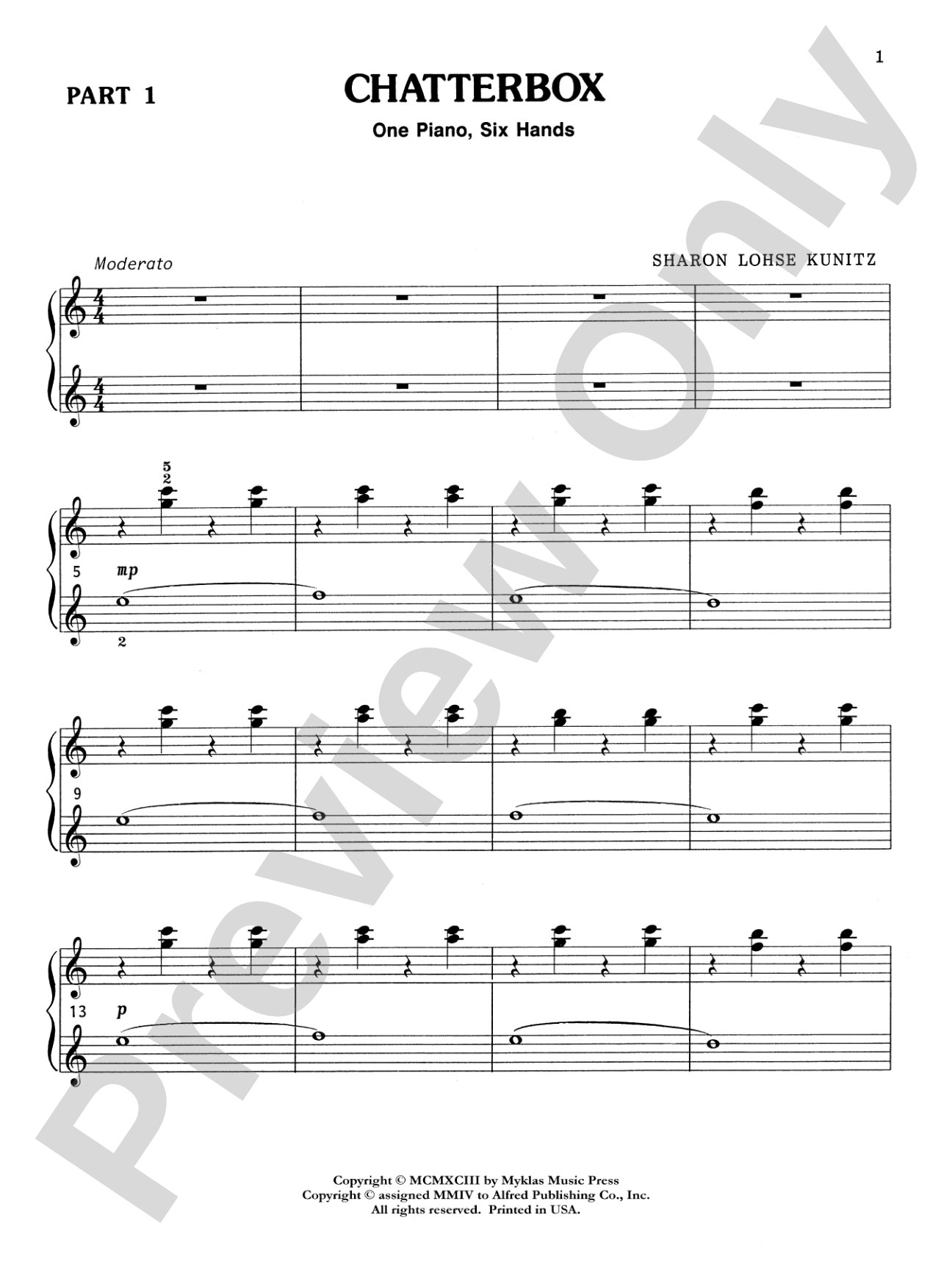
Chatterbox - Piano Trio (1 Piano, 6 Hands) Sheet Music Preview

Chatterbox - Piano Trio (1 Piano, 6 Hands): Piano

By Sharon Lohse Kunitz

Level: Late Elementary

Item: 00-PB-0000669

Digital Download
$5.50
Description
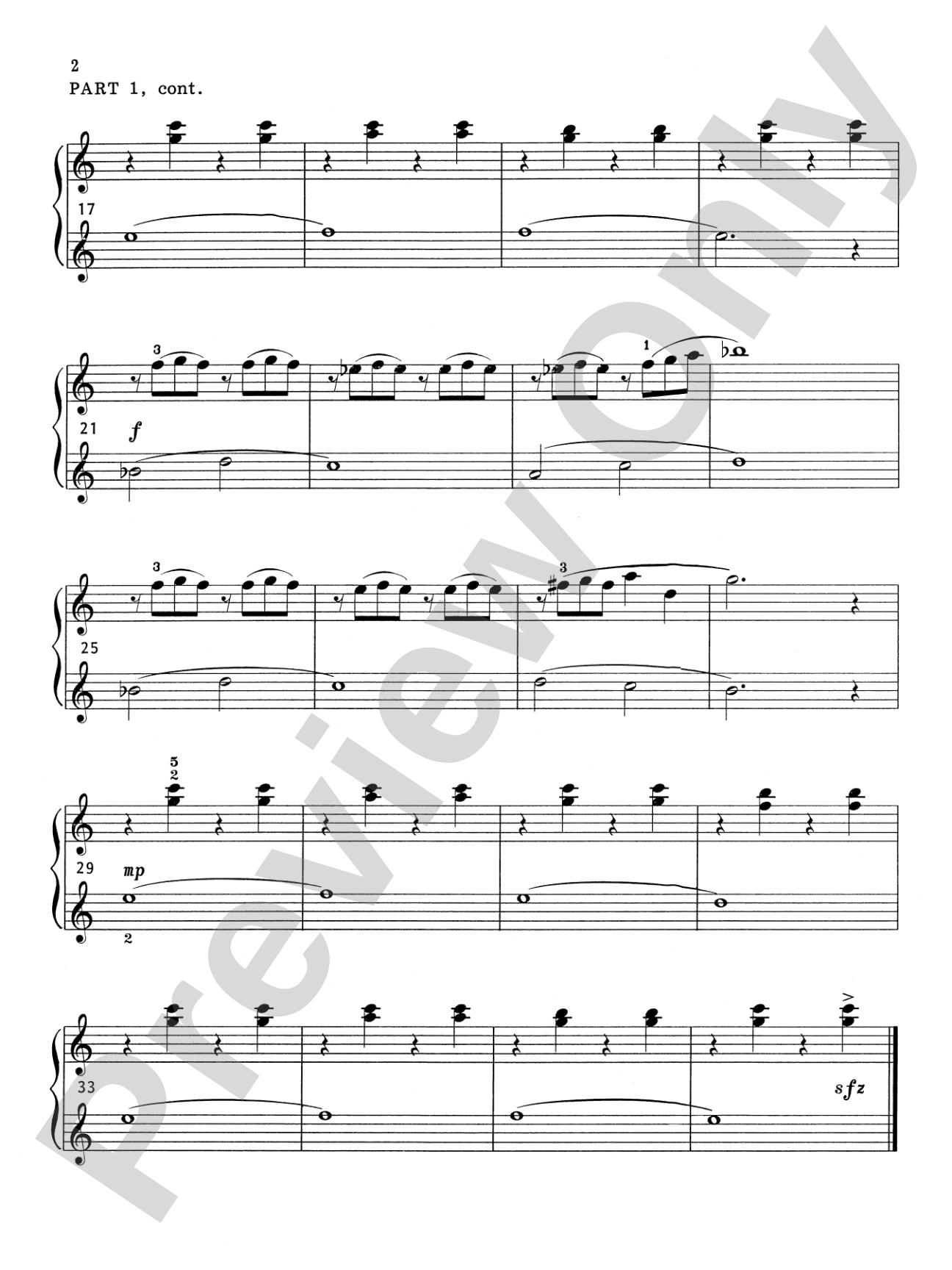
The full score of this late elementary piano trio for one piano, six hands is printed on the inside cover, with the three separate parts contained within. This two-page piece in the key of C explores the blues scale and a syncopated accompaniment and ends with a flourish on a sforzando C minor chord. A Federation Festivals 2016-2020 selection. A Federation Festivals 2020-2024 selection.

Chatterbox - Piano Trio (1 Piano, 6 Hands): Piano isn't in MakeMusic Cloud just yet...but it could be. Let us know you'd like to see it, and you'll help shape what comes next. In the meantime, start a free trial and dive into thousands of interactive titles your students can play along with today.

Sample Audio
No sample audio found.
Sample Video
Additional Details
Series: The Myklas Trio Series
Publisher: Alfred Music
Page Count: 10
SKU: 00-PB-0000669

More about this title

About the Composer: Sharon Lohse Kunitz

Sharon Lohse Kunitz has built a reputation for creating accessible yet musically substantial works for young pianists. Her pieces balance technical clarity with genuine compositional interest, making them favorites in festival selections and studio teaching.

Why we love this

Six hands on one piano creates natural collaboration without requiring three separate instruments, making this genuinely practical for festivals and recitals. The blues scale gives late elementary students real harmonic color while the syncopated accompaniment keeps the texture lively and engaging throughout.

What to expect

Energetic and conversational, like three voices trading musical ideas around a single keyboard. The blues inflections give it character and swagger; by the end, that sforzando C minor chord lands with satisfying force.

Who it's for

Piano students at the late elementary level who are ready for ensemble experience without needing to wrangle multiple instruments. This works equally well for studio lessons, festival preparation, or small group showcases.

How to get the most out of it

  • Separate rehearsals for each hand part build security before combining. The middle player especially needs solid command of their role since they often anchor the rhythmic foundation.
  • The sforzando C minor ending demands crisp coordination across all six hands. Work backward from that final chord, ensuring all three players strike together with equal weight.
  • Let the blues scale passages breathe. Avoid rushing through the chromatic notes; they're the color of the piece, not obstacles to overcome.
  • The syncopated accompaniment patterns benefit from counting out loud in early rehearsals. Once internalized, that rhythmic pocket becomes the glue holding the texture together.

How to use it

Pair it with other chamber works to highlight your students' collaborative skills, or feature it as a novelty that shows audiences what's possible with creative arrangement. Its two-page length makes it perfect for a festival program where rehearsal time is precious.

Skills your students will build

  • Reading and performing the blues scale with idiomatic phrasing
  • Syncopated rhythm patterns in ensemble contexts
  • Coordinating three independent lines on a single instrument
  • Listening and responding to other ensemble members in real time
  • Dynamic control, particularly the sforzando impact at climactic moments

You May Also Like