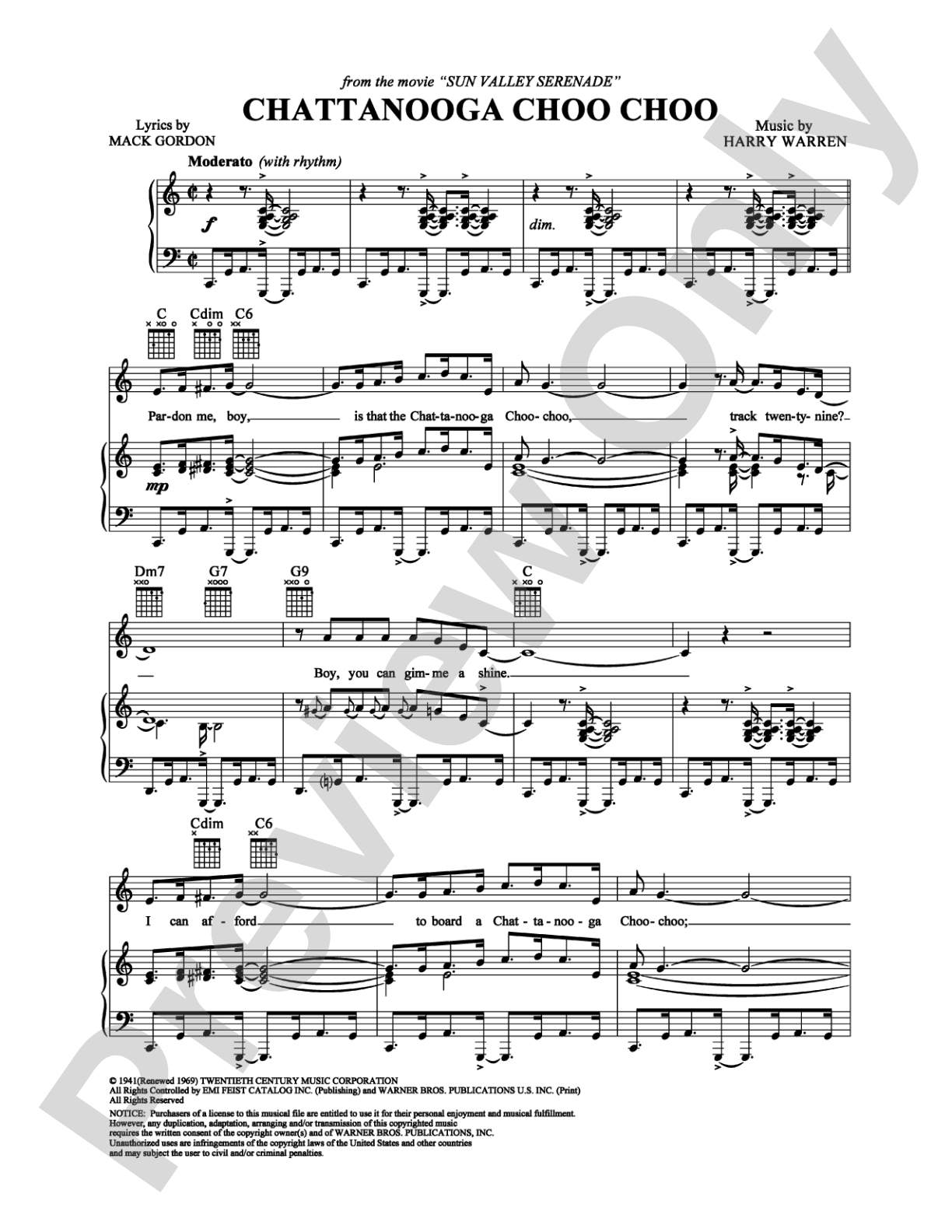
Chattanooga Choo Choo: Piano/Vocal/Chords Digital Sheet Music

Chattanooga Choo Choo: Piano/Vocal/Chords Digital Sheet Music

Harry Warren

Item: 00-PS-0004312

Digital Download
$3.99
Description

Chattanooga Choo Choo: Piano/Vocal/Chords Digital Sheet Music isn't in MakeMusic Cloud just yet...but it could be. Let us know you'd like to see it, and you'll help shape what comes next. In the meantime, start a free trial and dive into thousands of interactive titles your students can play along with today.

Sample Audio
No sample audio found.
Sample Video
Additional Details
SKU: 00-PS-0004312

More about this title

About the Creator

Harry Warren and Mack Gordon created "Chattanooga Choo Choo" for the 1941 film "Sun Valley Serenade," where it became an instant standard. Warren's gift for memorable melody combined with Gordon's witty, accessible lyrics produced one of the most recorded songs of the swing era, earning the first-ever gold record for a single in 1942.

Why we love this

This arrangement captures the infectious swing energy of a golden-age standard while keeping the vocal line accessible and the piano part manageable for intermediate players. It's an ideal choice when you need genuine entertainment value paired with legitimate musical content, steering clear of oversimplified jingles without requiring professional jazz accompaniment skills.

What to expect

Bright, buoyant, and unapologetically cheerful. The piece radiates the optimism of a bygone era when a song about trains and travel could anchor an entire production number, all locomotive motion and swing-era confidence.

Who it's for

Pianists and singers looking for repertoire that delivers immediate appeal without sacrificing musicality. This works equally well for studio recitals, informal performances, or as a palate cleanser in a concert program featuring more serious material.

How to get the most out of it

  • Keep the tempo rolling with forward momentum; this tune lives in its rhythmic swing, not in rubato. The chords support a steady groove rather than dramatic pulls.
  • Balance the vocal line above the piano texture so the lyrics land clearly. The accompaniment should propel rather than overshadow the singer.
  • Lean into the rhythmic syncopation in both voice and piano; that's where the tune's personality emerges. Avoid playing it straight.

How to use it

Program this where you want to shift the room's energy without breaking the musical thread of your concert. It pairs naturally with other standards-era material or can stand alone as the one crowd-pleasing moment in a recital built around classical or contemporary work.

Skills your students will build

  • Reading piano/vocal score layout and coordinating hands with sung melody
  • Interpreting chord symbols and understanding harmonic progression in a swing context
  • Communicating rhythmic style through piano accompaniment while supporting a vocalist
  • Balancing accompaniment texture with vocal prominence

You May Also Like