
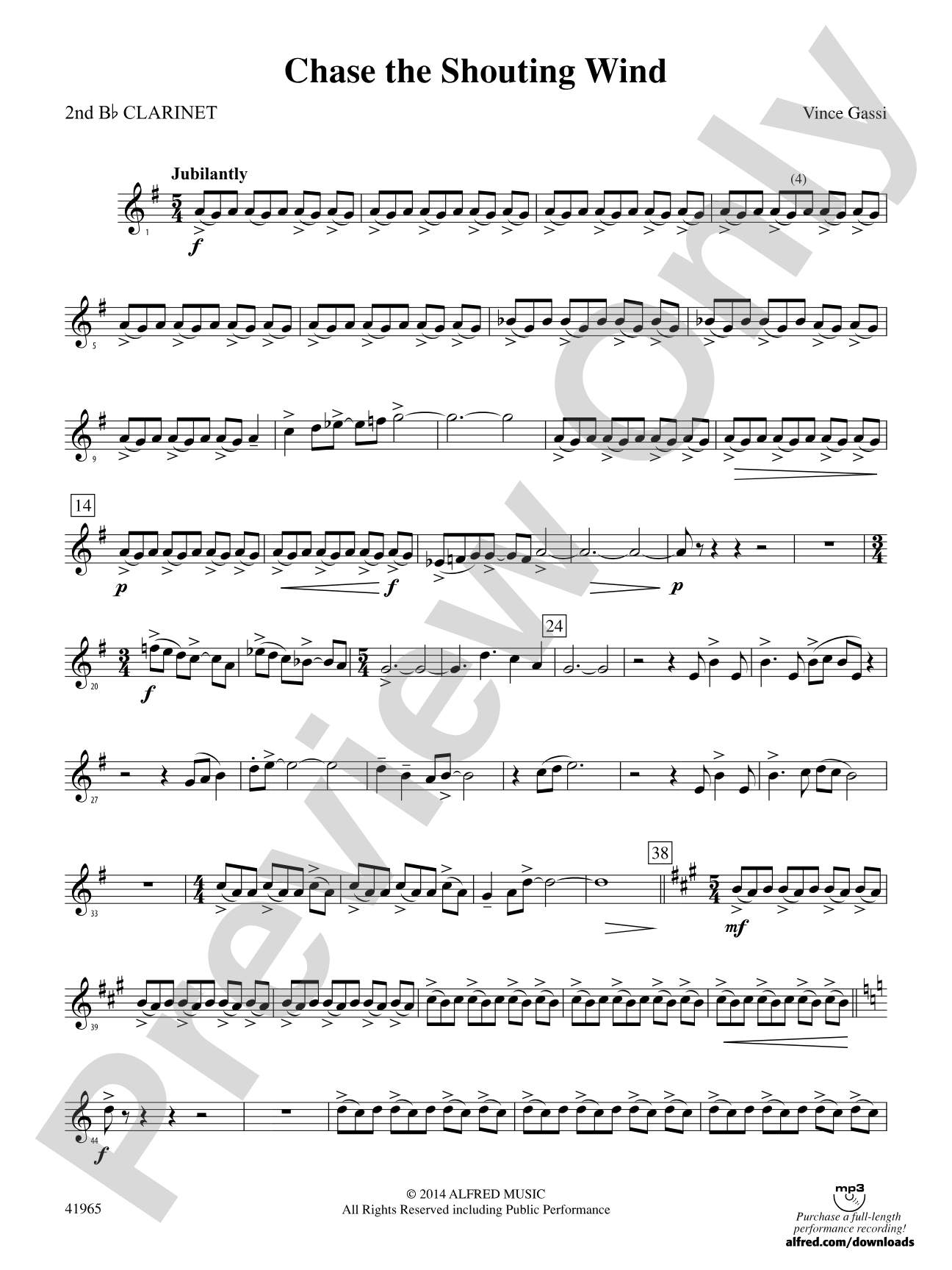

Chase the Shouting Wind: 2nd B-flat Clarinet
By Vince Gassi
Grade: 4 (Medium Difficult)
Item: 00-PC-0016447_C2
$3.00
Pickup currently not available
Description
Inspired by the poem, "High Flight," by American WWII pilot, John Gillespie Magee, Jr., this energetic work calls to mind the thrill and freedom of flight. Opening with rhythmic energy in the winds and rich harmonic statements in the brass, the mood gives way to a sensitive lyrical section. A dynamic development of the opening statement leads, ultimately, to a powerful and climactic ending. An excellent contest piece, this selection will enhance any program. (3:40) This title is available in MakeMusic Cloud.


Don't just read it, hear it, play along with it, and watch your students grow with it. In MakeMusic Cloud, Chase the Shouting Wind: 2nd B-flat Clarinet comes alive with professional accompaniment, adjustable tempo, and built-in practice tools that turn solo practice into real progress.
Open in the Player
Jump straight in and assign it today.
Start Your Free Trial
Open this title and explore the full library in minutes.
Sample Audio
1
Audio File
--:--
0:00
0:00
Sample Video
No sample videos found.
Additional Details
Series:
Alfred Concert Band
Publisher:
Alfred Music
Page Count:
276
SKU:
00-PC-0016447_C2
More about this title
About the Composer: Vince Gassi
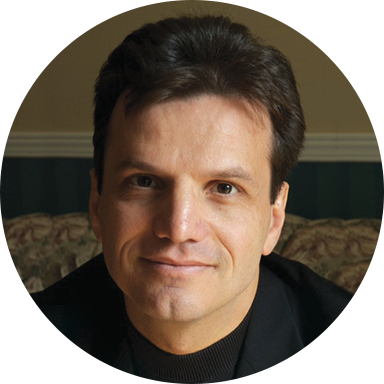
Vince Gassi has built a distinctive voice in concert band composition through a combination of rigorous training and two and a half decades in the classroom. A graduate of the University of Western Ontario with additional study in composition and arranging at the Dick Grove School of Music, he completed his Ph.D. at York University in Toronto. His output of over 100 published works reflects both his understanding of what young musicians can achieve and his commitment to writing music that stretches them musically.
Gassi's reputation extends far beyond his own classroom. He serves regularly as a guest conductor, adjudicator, and clinician across North America, and his pieces appear frequently on festival and contest programs internationally. His workshops on creative engagement and digital workflows have influenced how many directors approach rehearsal and score preparation. His compositions have been performed across North America, Europe, and Japan, with regular performances at the prestigious Midwest Clinic in Chicago.
Why we love this
Gassi has crafted a piece that balances immediate appeal with substantive musical development. The opening energy grabs attention and engages younger players right away, but the sensitive middle section and the carefully proportioned climax prevent this from feeling like mere bombast. At Grade 4, it sits at that sweet spot where bands have enough technical facility to execute real contrasts without requiring virtuosity, making it genuinely rewarding to conduct and teach.
What to expect
The piece captures the exhilaration of flight with rhythmic vitality and bright harmonic language. Beneath the surface energy lies a genuine lyrical sensitivity that surfaces midway through, creating a musical journey that feels honest rather than superficial. The final push toward climax honors both the opening's joy and the middle section's reflection, landing with real impact.
Who it's for
Concert bands at the Grade 4 level will find this piece both musically fulfilling and technically accessible. It works equally well for ensembles preparing for contest or seeking a programmatic work with genuine emotional arc for a concert setting.
How to get the most out of it
- Establish the rhythmic integrity of the opening section in the winds before layering in the brass; clarity here will carry through the entire form.
- Shape the lyrical section with awareness of where the harmonic motion wants to breathe; resist the urge to rush the sensitivity.
- Use the 3 minute 40 second duration as a rehearsal target; this piece benefits from clear pacing that lets each section register distinctly.
- Balance ensemble sound during the development so that the return to the opening feels like a genuine recapitulation rather than a simple repeat.
How to use it
This works beautifully as an opener that establishes energy and engagement for your audience, or as a centerpiece that demonstrates your band's range from athletic rhythmic clarity to lyrical control. Its connection to "High Flight" and aviation history also provides a natural programming partner with patriotic or historical themes, should your concert season benefit from that framing.
Skills your students will build
- Balancing rhythmic precision with expressive phrasing in contrasting sections
- Maintaining ensemble unity through harmonic changes and dynamic shifts
- Shaping a longer musical form through clear sectional transitions
- Executing rapid dynamic contrasts from energetic passages to sensitive writing
- Reading and performing programmatic music that requires emotional investment alongside technical accuracy