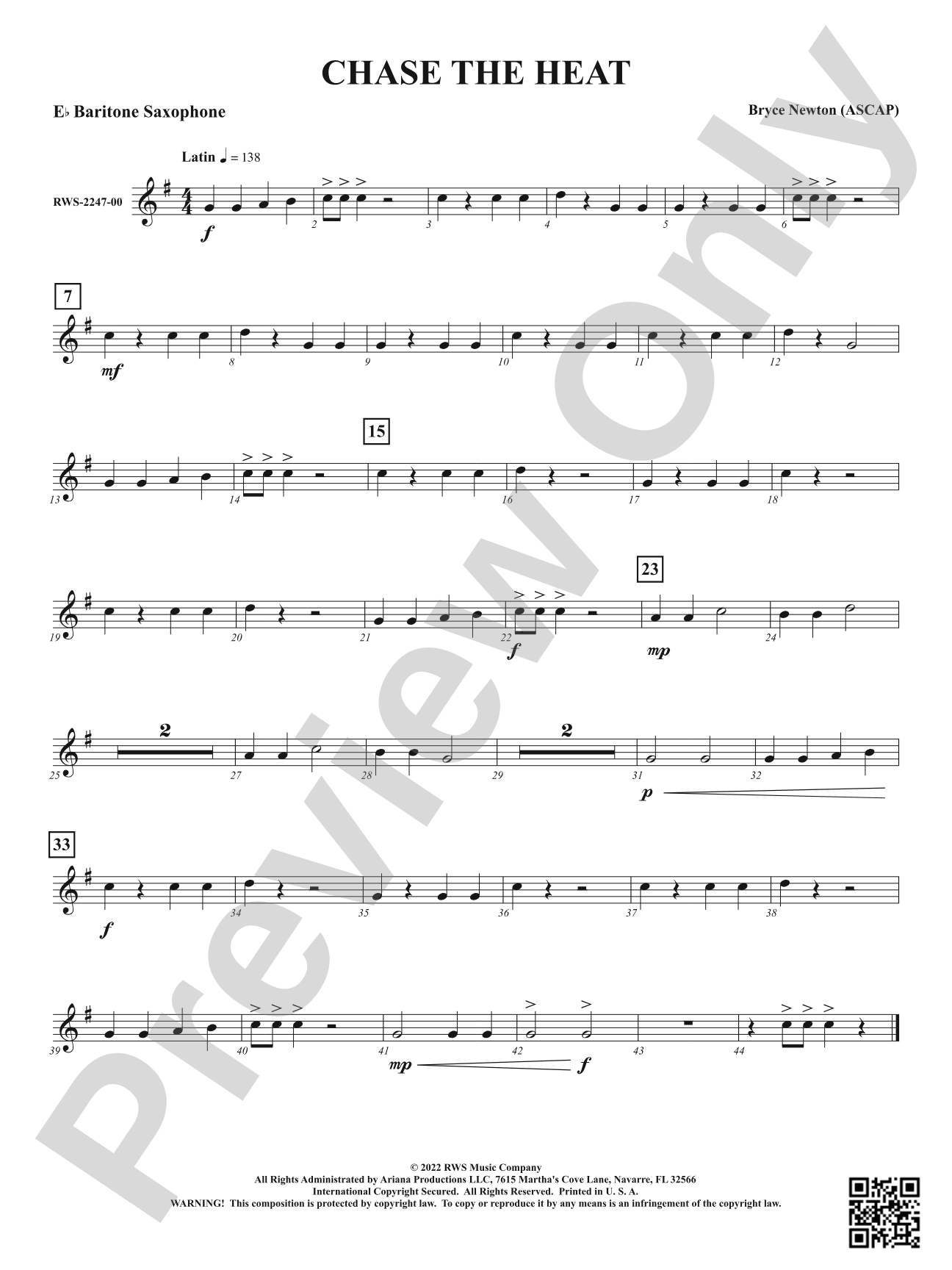
Chase the Heat: E-flat Baritone Saxophone Sheet Music Preview

Chase the Heat: E-flat Baritone Saxophone

By Bryce Newton

Level:.5

Item: 98-PC-RWS2247_BTX

Digital Download
$3.99
Description
"Chase the Heat" is sure to spice up your next performance! Featuring active, playable percussion writing, as well as modest ranges for the youngest players, your students will be asking to play this one again. A great introduction to Latin styles.

Original Item#: RWS-2247-00

Chase the Heat: E-flat Baritone Saxophone isn't in MakeMusic Cloud just yet...but it could be. Let us know you'd like to see it, and you'll help shape what comes next. In the meantime, start a free trial and dive into thousands of interactive titles your students can play along with today.

Sample Audio
0:00
0:00
Sample Video
Additional Details
Series: RWS - Very Beginning Band
Publisher: RWS Music Company
SKU: 98-PC-RWS2247_BTX

More about this title

Why we love this

Newton writes for beginning bands with real musicality and energy, never talking down to young players. The Latin styling here gives students genuine genre exposure rather than generic band fare, and the percussion writing is genuinely fun to play, not an afterthought.

What to expect

Bright, infectious, and playful. The Latin rhythm gives it a warm, tropical character that immediately lifts the energy of any concert. It's the kind of piece that makes audiences smile and students actually want to rehearse.

Who it's for

Beginning concert bands ready to explore style and texture beyond traditional march or hymn-based literature. This works equally well for elementary and middle school ensembles that need an engaging, accessible introduction to Latin groove without excessive technical demands.

How to get the most out of it

  • Lock the rhythm section early in rehearsals. The Latin groove depends on solid coordination between percussion and low brass, so isolate those voices before adding the full ensemble.
  • Keep the energy level consistent throughout. This piece thrives on momentum, so avoid letting tempo drag during ensemble moments; a steady, confident conductor pulse makes all the difference.
  • Balance the active percussion parts carefully. These students are learning to play rhythmically interesting material, so give them space to shine without overwhelming the melodic voices.

How to use it

Program this as a second-half opener to shift the mood after more formal concert repertoire, or use it as a season-building confidence piece for groups early in their development. It pairs naturally with other light concert fare and gives young ensembles a memorable moment without the technical risk of more demanding material.

Skills your students will build

  • Reading and performing Latin rhythmic patterns (clave, tumbao)
  • Coordinating syncopated passages within an ensemble
  • Balancing active percussion parts with harmonic accompaniment
  • Maintaining steady tempo and groove over repeated rhythmic figures
  • Playing within modest ranges appropriate to developing instrumentalists

You May Also Like