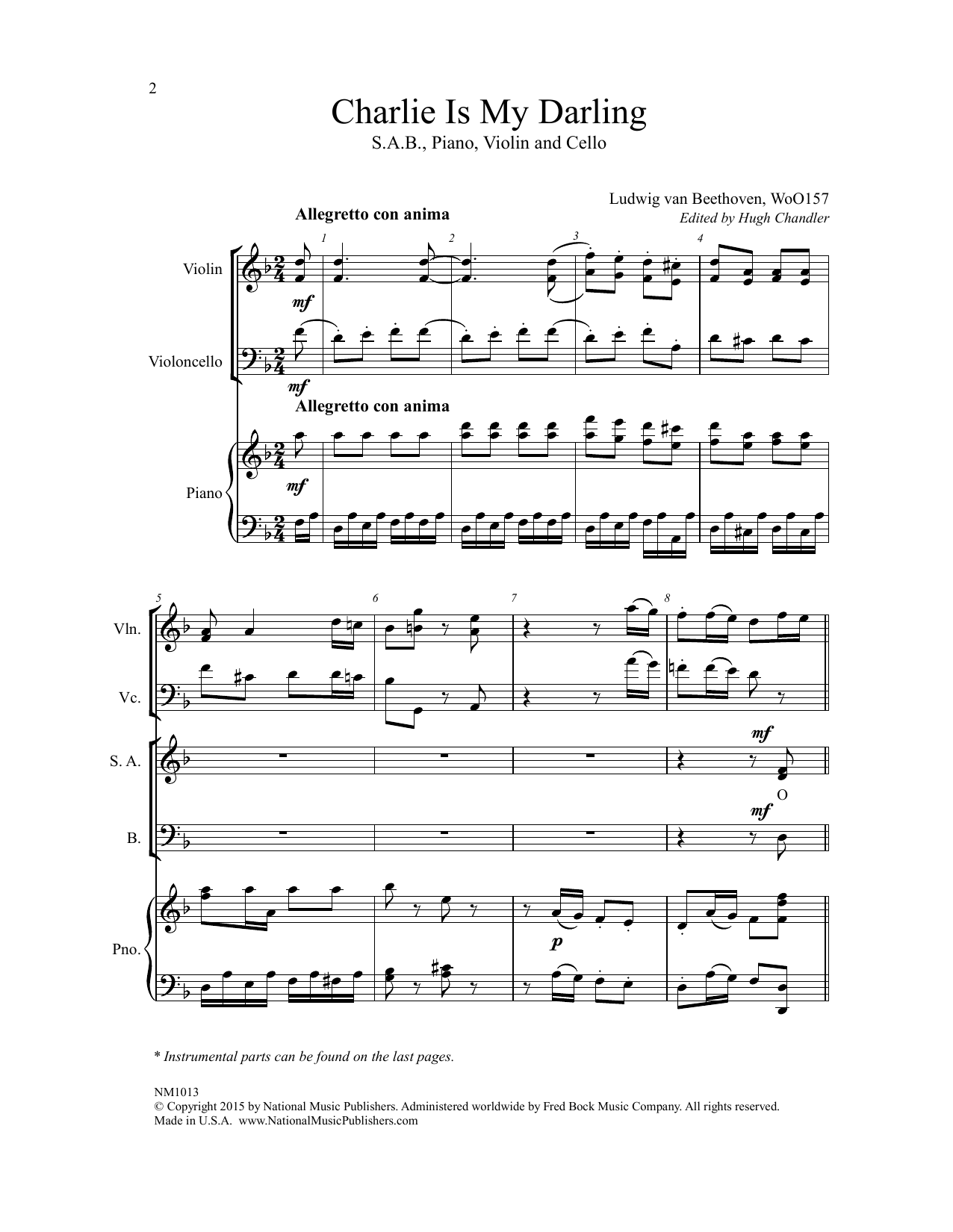
Charlie Is My Darling (ed. Hugh Chandler) Sheet Music Preview

Charlie Is My Darling (ed. Hugh Chandler): SAB Choral Octavo

By Ludwig Van Beethoven / Edited by Hugh Chandler

Item: 35-DS00450686

Digital Download
$2.99
Description

Charlie Is My Darling (ed. Hugh Chandler): SAB Choral Octavo isn't in MakeMusic Cloud just yet...but it could be. Let us know you'd like to see it, and you'll help shape what comes next. In the meantime, start a free trial and dive into thousands of interactive titles your students can play along with today.

Sample Audio
No sample audio found.
Sample Video
Additional Details
Publisher: Hal Leonard
Page Count: 7
SKU: 35-DS00450686

More about this title

About the Composer: Ludwig Van Beethoven

Beethoven's arrangements of folk melodies represent a fascinating chapter in his output, one often overshadowed by his symphonies and sonatas. Late in his life, he accepted commissions to harmonize Scottish, Irish, and Welsh songs, bringing his harmonic sophistication to material rooted in oral tradition. These works reveal his deep respect for folk music and his belief that popular melodies deserved serious compositional treatment.

Why we love this

Beethoven's setting transforms a traditional Scottish tune into something both elegant and accessible, giving SAB choirs a legitimate classical work that doesn't talk down to them. The harmonies are sophisticated enough to hold a conductor's interest while remaining singable for singers still developing range and confidence. It's the kind of piece that performs beautifully at a spring concert and reminds audiences that folk material, when treated by a master, becomes timeless.

What to expect

Warm and intimate, with the quality of a melody remembered fondly and handled with care. The arrangement has an autumnal gentleness to it, neither bombastic nor overly sentimental, that sits comfortably between folk simplicity and classical dignity.

Who it's for

SAB choirs looking to program a classical work that sounds substantial without requiring advanced sight-reading skills. This is ideal for middle school through community choir settings where you want to build musicianship while honoring the composers your singers study in music history.

How to get the most out of it

  • Shape the melody with long lines rather than articulating each phrase endpoint; Beethoven's harmonic language carries the form, so let it breathe across the barlines.
  • Balance the parts carefully in the homophonic sections so the text remains clear without one voice drowning out the others.
  • Find the emotional core of the lyric to inform your tempo choice; this is a tender text and hurrying it diminishes its effect.

How to use it

Pair this with other Beethoven-era art songs or folk arrangements to create a thematic concert section exploring how classical composers engaged with vernacular music. It also serves well as a concert opener that establishes an elegant tone without requiring major production.

Skills your students will build

  • Part independence in SAB texture
  • Sustaining legit tone across longer phrase shapes
  • Blending voice parts in straightforward harmonic progressions
  • Interpreting text with musical sensitivity rather than dramatic excess

You May Also Like