
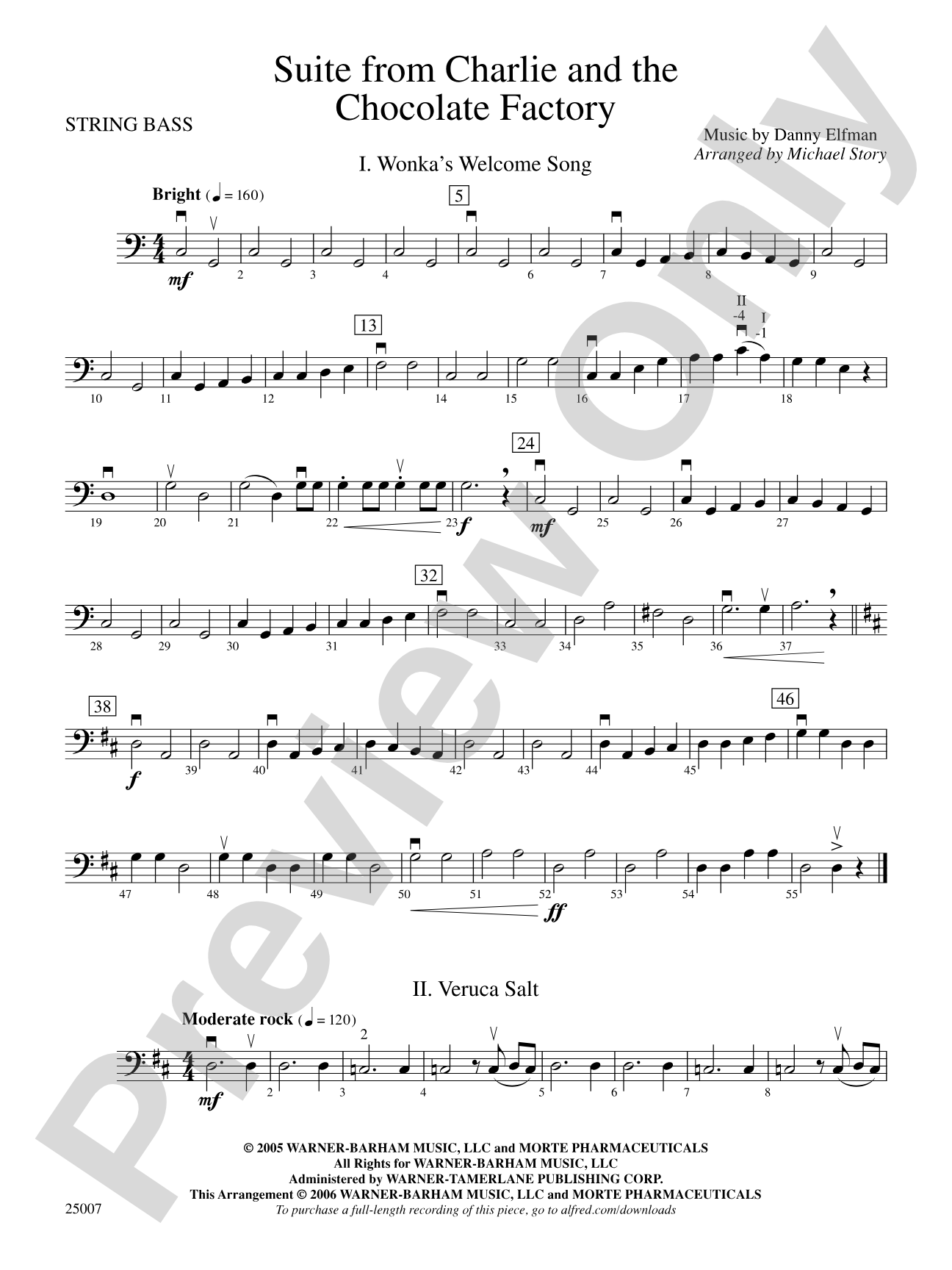

Charlie and the Chocolate Factory, Suite from: String Bass
By Danny Elfman / arr. Michael Story
Grade: 2
Item: 00-PC-0015652_SB
$5.99
Pickup currently not available
Description
"Wonka's Welcome Song," "Veruca Salt" and "Augustus Gloop" are included in this exciting arrangement. The essence of the themes from the Danny Elfman score of the hit movie, Charlie and the Chocolate Factory™, are made available to your beginners by Michael Story.


Don't just read it, hear it, play along with it, and watch your students grow with it. In MakeMusic Cloud, Charlie and the Chocolate Factory, Suite from: String Bass comes alive with professional accompaniment, adjustable tempo, and built-in practice tools that turn solo practice into real progress.
Open in the Player
Jump straight in and assign it today.
Start Your Free Trial
Open this title and explore the full library in minutes.
Sample Audio
1
Audio File
--:--
0:00
0:00
Sample Video
No sample videos found.
Additional Details
Series:
Pop Beginning String Orchestra
Publisher:
Alfred Music
Page Count:
160
SKU:
00-PC-0015652_SB
More about this title
About the Composer: Danny Elfman
Danny Elfman has composed for more than 50 feature films, earning multiple Academy Award nominations and a devoted following among musicians and audiences alike. His film scores combine orchestral sophistication with melodic accessibility, making them ideal models for music education. Elfman's work on Charlie and the Chocolate Factory showcases his gift for creating character themes that are both whimsical and emotionally precise, qualities that shine through even in simplified arrangements.
Why we love this
Michael Story's Grade 2 arrangement captures the theatrical energy of Elfman's original score while keeping technical demands manageable for developing string players. Three distinct character themes give your orchestra variety and memorable melodies to sink their teeth into, and the movie connection generates genuine student enthusiasm. This suite proves that film music can be both crowd-pleasing and musically substantive at the beginning level.
What to expect
You're walking through a candy factory filled with wonder and mischief. Wonka's welcome brims with infectious charm and theatrical warmth, while Veruca's bratty theme crackles with comic malice. Augustus's sluggish, gluttonous march lumbers along with deliberate heaviness, creating sharp contrasts that keep the ear engaged throughout.
Who it's for
This suite works perfectly for beginning string orchestras looking for material with genuine musical personality and student appeal. Directors programming concert or festival performances will appreciate music that engages audiences while keeping the technical bar appropriate for Grade 2 ensembles.
How to get the most out of it
- Shape each character theme with clear articulation and dynamic contrast. Wonka's music should feel magical and inviting; Veruca's theme needs a bratty edge; Augustus requires a heavier, more sluggish quality. Let your section leaders model these character voices first.
- Balance the melody across your violin sections rather than piling all the top line in Violin I. This distributes the technical demands and ensures the themes remain audible even when multiple parts carry fragments of the tune.
- Use light, bouncy bowing for the lighter moments (especially Wonka's theme) and heavier, more grounded strokes for Augustus. Experiment with how much bow pressure changes the character without sacrificing clarity.
- Attend to tempo consistency between sections. These themes work best when they maintain a steady pulse that doesn't drag; students often want to slow down during softer passages, so mark tempos clearly and use a metronome in rehearsal.
How to use it
This suite fits beautifully into a concert that mixes pop culture with classical or contemporary repertoire, or as a lighter section within a program of longer works. The three movements allow flexibility: program all three for a complete suite, or select individual character themes to anchor a thematic concert about music from film.
Skills your students will build
- Playing scalar passages and arpeggios in first and second positions
- Sustaining long tones with consistent bow control and intonation
- Responding to character and expression cues through articulation and dynamics
- Balancing melody and accompaniment across multiple violin and viola parts
- Maintaining rhythmic precision in ensemble while attending to phrasing and musical intent