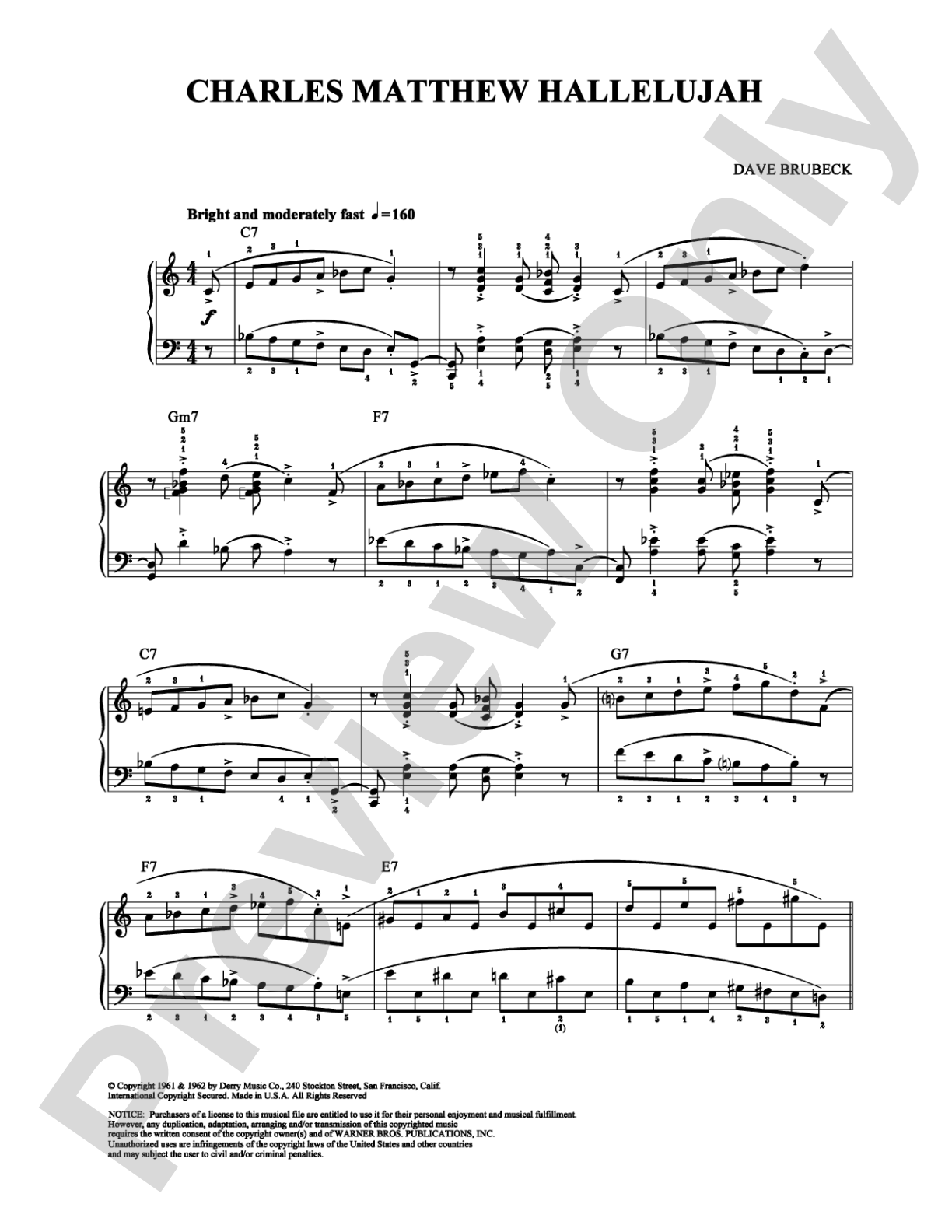
Charles Matthew Hallelujah: Piano Digital Sheet Music

Charles Matthew Hallelujah: Piano Digital Sheet Music

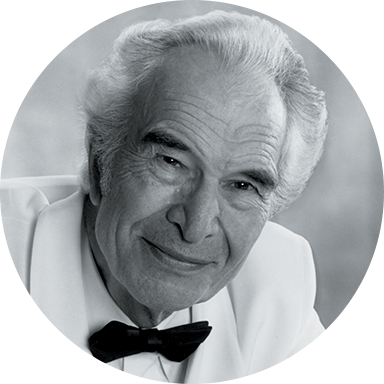
Dave Brubeck

Item: 00-PS-0000828

Digital Download
$3.99
Description

Charles Matthew Hallelujah: Piano Digital Sheet Music isn't in MakeMusic Cloud just yet...but it could be. Let us know you'd like to see it, and you'll help shape what comes next. In the meantime, start a free trial and dive into thousands of interactive titles your students can play along with today.

Sample Audio
No sample audio found.
Sample Video
Additional Details
SKU: 00-PS-0000828

More about this title

About the Artist: Dave Brubeck

Dave Brubeck

Dave Brubeck shaped modern jazz through his fusion of improvisational innovation and rigorous compositional craft. Beyond his iconic recordings, he composed across nearly every musical form: masses, oratorios, chamber works, orchestral pieces, and solo repertoire that demonstrated his belief that jazz and classical language could enhance each other. He studied with Darius Milhaud at Mills College, whose encouragement to blend jazz vernacular with European formal techniques became central to Brubeck's artistic identity.

Brubeck's cultural impact extended beyond music; he was a pioneering force against racial segregation in mid-20th-century America, using his platform to advance integration during a pivotal historical moment. His album "Time Out" became the first jazz recording to sell over a million copies, while works like "Take Five" entered the popular imagination. Honors accumulated throughout his life: a Grammy Lifetime Achievement Award, the Presidential Medal of the Arts, induction into the American Classical Music Hall of Fame, and recognition from institutions worldwide including the London Symphony Orchestra.

Why we love this

This piece captures Brubeck's gift for writing music that feels both intellectually substantial and emotionally direct. A pianist performing "Hallelujah" encounters the same harmonic sophistication and improvisational openness that defined his recorded work, making it an excellent addition to programs seeking jazz repertoire with serious compositional foundation.

What to expect

The piece carries the contemplative warmth suggested by its title while maintaining the harmonic sophistication Brubeck developed through decades of bandstand experience and formal study. It invites both quiet reverence and the subtle swing that comes from a composer who thought equally in terms of hymnal sincerity and jazz inflection.

Who it's for

Pianists comfortable with jazz harmony and interested in exploring how a major composer navigated between notated composition and improvisational tradition. This work suits intermediate to advanced players seeking substantive solo material that connects to the broader jazz canon.

How to get the most out of it

  • Let the harmonic language breathe; Brubeck's voicings often contain jazz inflections and extended chords that require time to register with listeners
  • Balance notated passages with interpretive freedom where the score permits, honoring Brubeck's belief that jazz composition and spontaneity are partners
  • Shape phrases with the lyrical quality the title suggests, avoiding the trap of playing jazz repertoire with purely rhythmic emphasis

How to use it

Position this as a solo moment in a concert that explores American sacred or spiritual music through jazz, or pair it with other Brubeck compositions to highlight his range as a writer. It also works effectively in recitals where a pianist wants to acknowledge the jazz tradition without leaving the classical concert framework.

Skills your students will build

  • Reading and interpreting jazz harmony and extended chord voicings
  • Balancing composed structure with improvisational sensibility
  • Applying swing feel and jazz articulation to a hymn-influenced melody
  • Shaping rubato and phrasing in music that bridges multiple traditions

You May Also Like