

Character Pieces in Romantic Style, Book 1: 12 Short Piano Solos: Piano
12 Short Piano Solos
By Martha Mier
Level: Late Elementary / Early Intermediate
Item: 00-PB-0000530

$8.99
Pickup currently not available
Related Items
Character Pieces in Romantic Style, Book 1: Piano Book |
$8.99
|
View |
Description
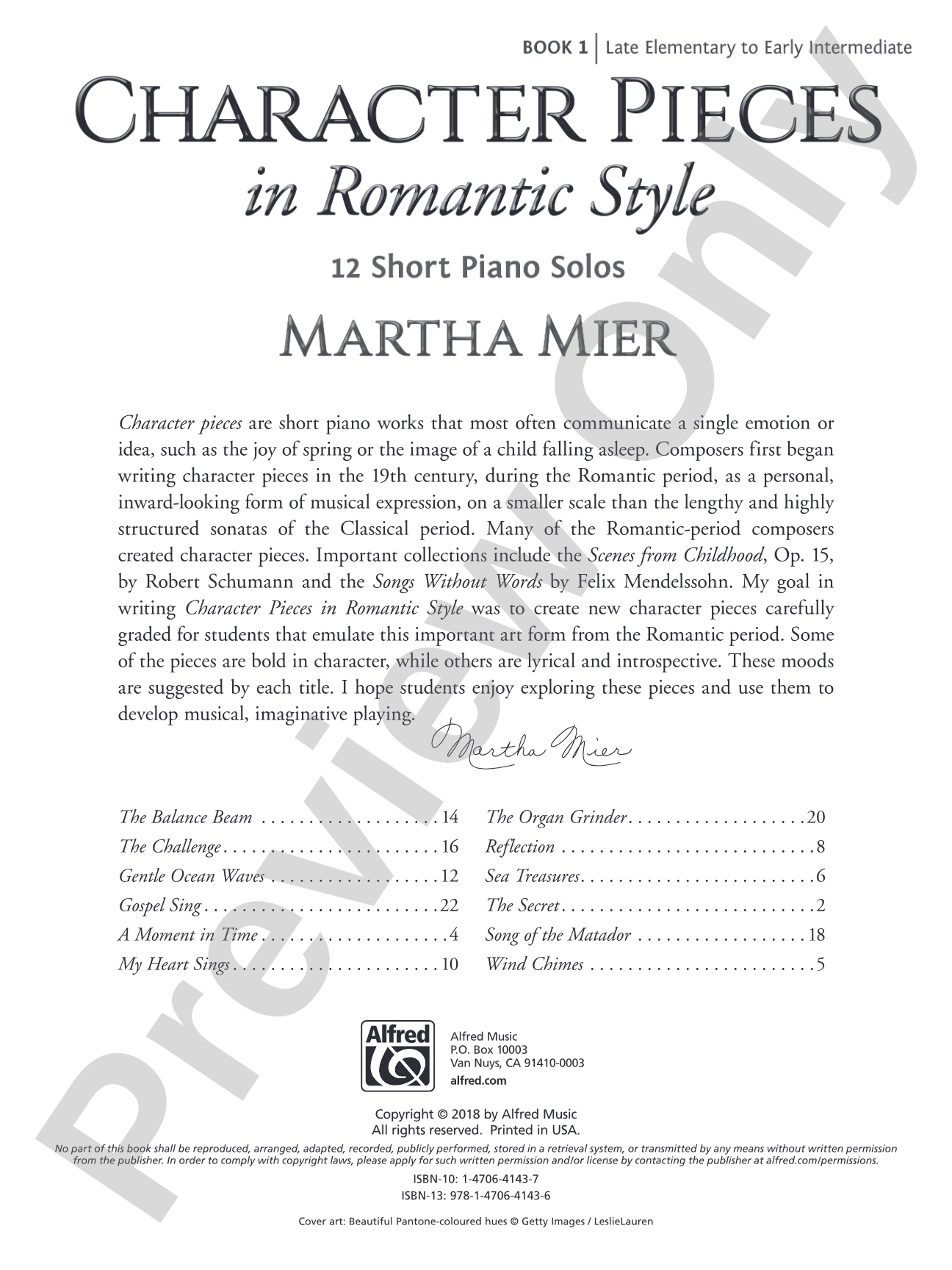
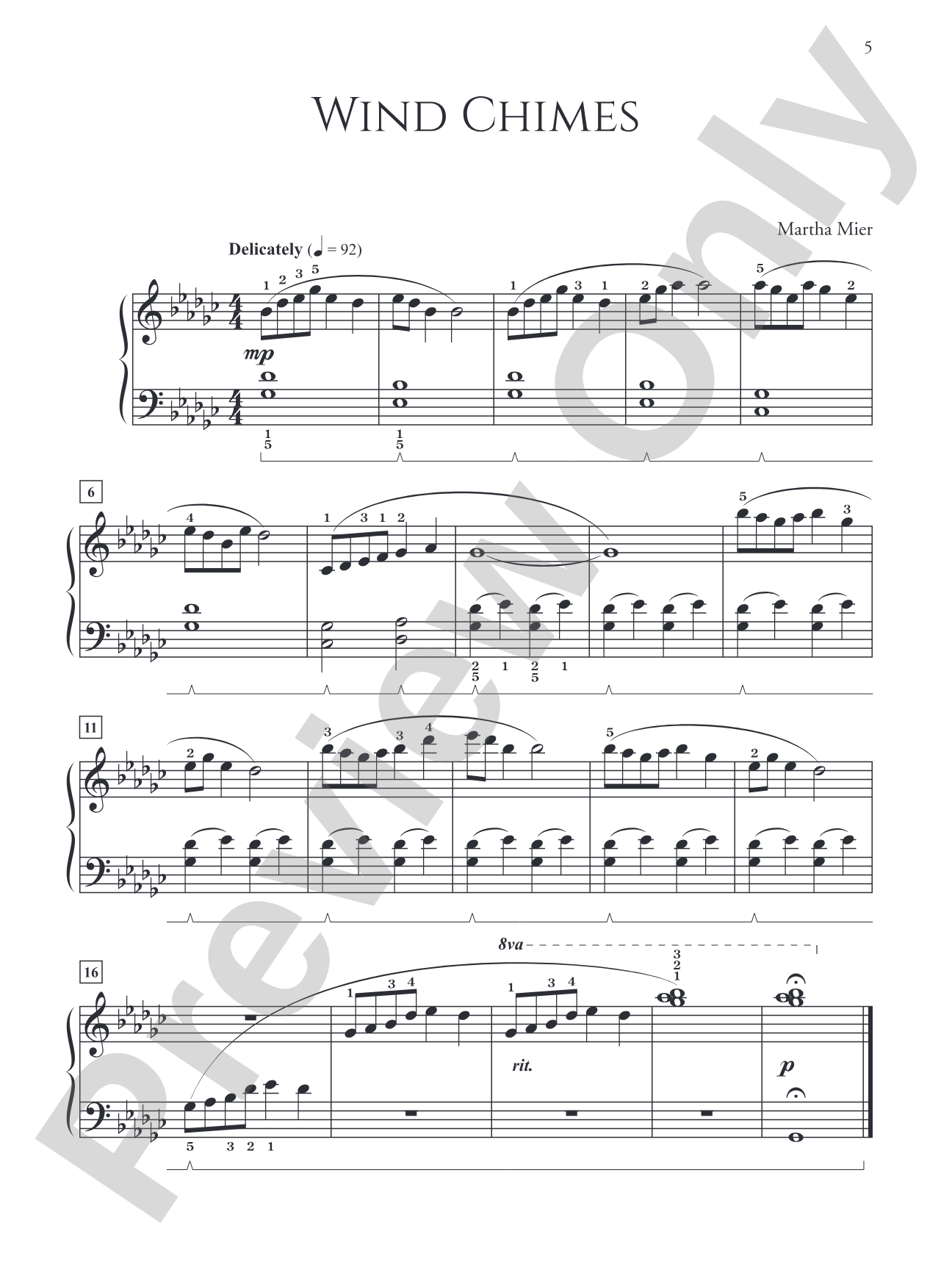
Composers first began writing character pieces in the Romantic period as a personal, inward-looking form of musical expression, on a smaller scale than sonatas of the Classical period. These new character pieces emulate this important art form and are carefully graded for students at the late elementary to early intermediate level. Some are bold in character, while others are lyrical and introspective. These moods are suggested by each title. Titles: The Balance Beam * The Challenge * Gentle Ocean Waves * Gospel Sing * A Moment in Time * My Heart Sings * The Organ Grinder * Reflection * Sea Treasures * The Secret * Song of the Matador * Wind Chimes A Federation Festivals 2020-2024 selection. A Federation Festivals 2024-2028 selection.


Don't just read it, hear it, play along with it, and watch your students grow with it. In MakeMusic Cloud, Character Pieces in Romantic Style, Book 1: 12 Short Piano Solos: Piano comes alive with professional accompaniment, adjustable tempo, and built-in practice tools that turn solo practice into real progress.
Open in the Player
Jump straight in and assign it today.
Start Your Free Trial
Open this title and explore the full library in minutes.
Sample Audio
1
02 - The Secret
--:--
2
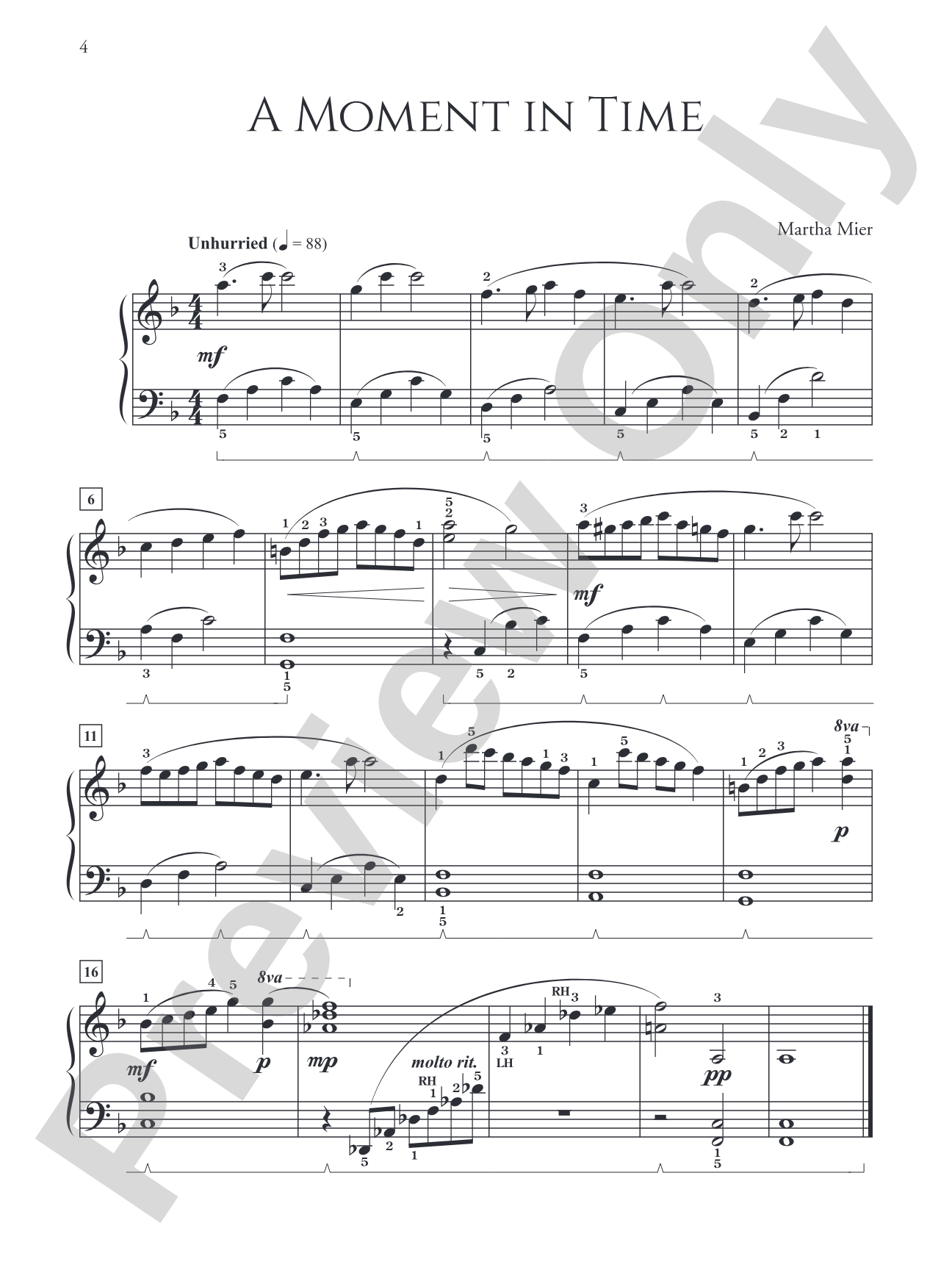
04 - A Moment in Time
--:--
3
05 - Wind Chimes
--:--
4
06 - Sea Treasures
--:--
5
08 - Reflection
--:--
6
10 - My Heart Sings
--:--
7
12 - Gentle Ocean Waves
--:--
8
14 - The Balance Beam
--:--
9
16 - The Challenge
--:--
10
18 - Song of the Matador
--:--
11
20 - The Organ Grinder
--:--
12
22 - Gospel Sing
--:--
13
Sea Treasures
--:--
14
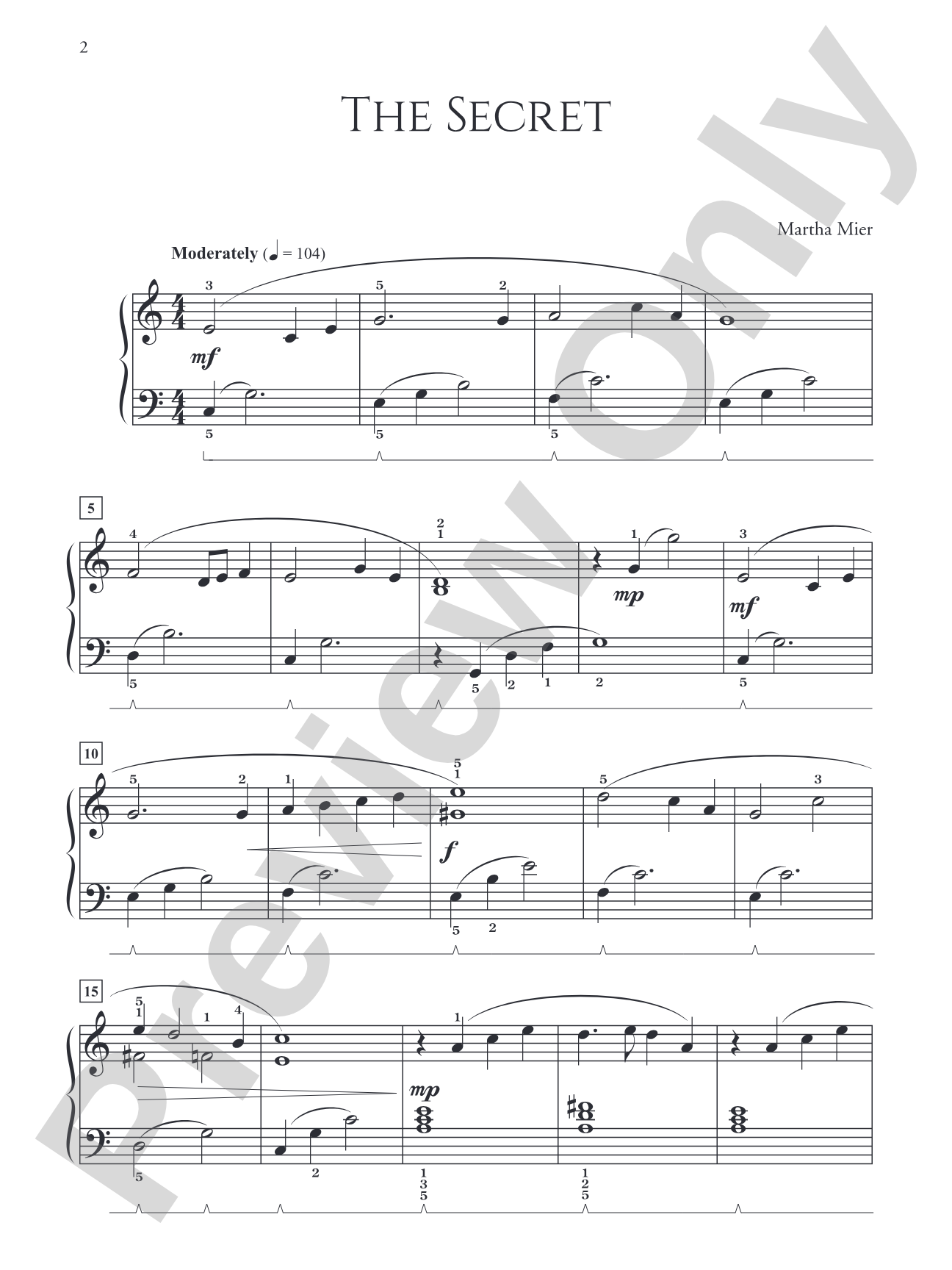
The Secret
--:--
02 - The Secret
0:00
0:00
Sample Video
1 / 12
Additional Details
Series:
Character Pieces in Romantic Style
Publisher:
Alfred Music
Page Count:
24
SKU:
00-PB-0000530
More about this title
About the Composer: Martha Mier

Martha Mier has shaped piano pedagogy for decades through her gift for writing music that students actually want to play. Since joining Alfred Music in 1989, she has published over 200 educational works across all levels, earning international recognition as both a composer and clinician. Her Jazz, Rags & Blues series and Romantic Impressions collection have become staples in studios worldwide.
Mier's background as a piano studio owner in Lake City, Florida, combined with her certification through the Music Teachers National Association and the National Guild of Piano Teachers, grounds her work in real teaching practice. She has presented workshops internationally and adjudicated at major conferences including the World Piano Pedagogy Conference and the Music Teachers National Association Conference. Her selections for the National Federation of Music Clubs Junior Festival Bulletin reflect her standing among peers in the music education community.
Why we love this
Each piece in this collection has distinctive character without overshooting the late elementary/early intermediate range. Students encounter genuine Romantic aesthetics, introspection, lyricism, dramatic contrast, through accessible harmonic language and manageable technical demands, which means they're building musicality, not just fluency.
What to expect
This collection captures intimate moments: the quiet surprise of finding treasures by the shore, the internal strength to meet a personal challenge, the simple joy of a song rising from your own heart. Alongside gentler reflective pieces sit bolder miniatures that ask students to embody character, playfulness, dignity, storytelling, transforming technical work into genuine musical expression.
Who it's for
Late elementary through early intermediate pianists ready to move beyond etude-style pieces and encounter expressive variety within an achievable technical framework. Teachers seeking recital material that develops interpretive skills alongside technical growth will find these selections approachable for a range of student abilities.
How to get the most out of it
- Study the mood suggested by each title before touching the keyboard. Let the title guide your interpretation of tempo, dynamics, and touch rather than treating it as background information.
- Experiment with the pedal sparingly in pieces like 'Gentle Ocean Waves' and 'Reflection' to enhance resonance without muddying the texture, especially in late elementary hands.
- In the bolder character pieces like 'The Challenge' and 'Song of the Matador,' lock the rhythmic gesture into your body first; this prevents the energy from scattering.
- Record yourself playing these solos at different tempos and listen back to identify which pace reveals the emotional content most clearly.
How to use it
These pieces work beautifully as recital openers and closers when you want to showcase student musicianship across different moods. Several titles align with seasonal programming (think 'Gospel Sing' for holiday concerts or 'Wind Chimes' for spring) without requiring thematic programming, so you can select individual solos to balance heavier classical or contemporary works on a mixed concert.
Skills your students will build
- Phrase shaping in slow lyrical writing
- Pedal technique appropriate to texture and sonority
- Expressive interpretation based on mood and character
- Rhythmic clarity in varied harmonic contexts
- Dynamic contrast and control across the range of the keyboard
- Reading and performing Romantic-era musical conventions