Chant de l'alouette (Encore Plus, Book 3) Sheet Music Preview

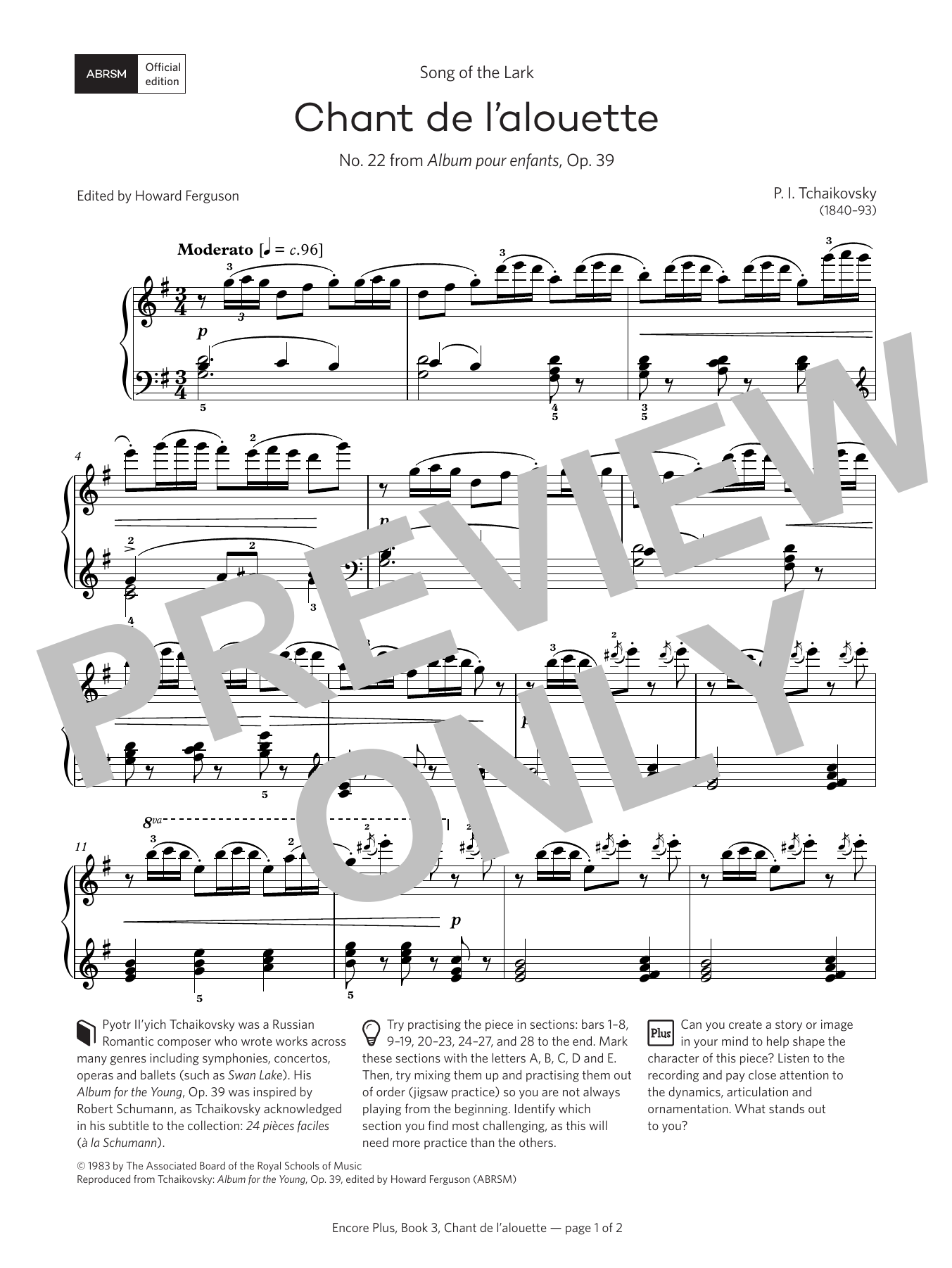
Chant de l'alouette (Encore Plus, Book 3): Piano Solo

By Pyotr Il'yich Tchaikovsky

Grade: 5

Item: 35-DS01989528

Digital Download
$3.99
Description

Discover MakeMusic Cloud: thousands of interactive titles your students can play along with today.

Sample Audio
No sample audio found.
Sample Video
Additional Details
Publisher: Hal Leonard
Page Count: 2
SKU: 35-DS01989528

More about this title

About the Composer: Pyotr Il'yich Tchaikovsky

Tchaikovsky (1840-1893) was a Russian composer whose gift for melody shaped the Romantic era. His works for piano range from grand concertos to intimate character pieces, many designed to develop technique while maintaining musical substance. Teachers value his output because he understood what students need to hear and play at each stage of their development.

Chant de l'alouette (The Lark's Song) exemplifies Tchaikovsky's approach to intermediate repertoire: a short form with genuine emotional content, a memorable melodic line, and technical demands that serve the music rather than exist for their own sake. The piece demonstrates why his piano works remain essential to any serious student's foundation.

Why we love this

This piece sits at that rare intersection where Grade 5 students find themselves capable of real musicianship rather than just note-reading. The melody is expansive and lyrical, rewarding players who can shape phrases with intention. The two-page format makes it achievable without feeling patronizing to students ready for something substantial.

What to expect

Gentle and contemplative, like observing a bird in flight from a distance. The piece captures something delicate and alive without sentimentality. Its modest scale and intimate voice create space for students to discover their own musicianship rather than navigate through complexity.

Who it's for

Grade 5 pianists ready to move beyond technical exercises into pieces with genuine musical character. This works equally well for students in classical training sequences and for ensemble pianists who need intermediate solo repertoire. It also serves as a natural bridge for students preparing for Grade 6 material.

How to get the most out of it

  • Establish a singing tone from the opening phrase. The lark's song demands resonance in the middle register, not bright or thin articulation.
  • Shape the melody in short breathing units even though it flows continuously. This prevents the line from becoming monotonous and mirrors how a vocalist would approach it.
  • Maintain steady accompaniment texture underneath expressive moments. Let the right hand float while the left hand provides harmonic stability.
  • Pay attention to dynamic shaping at the piece's apex. Identify where the melody reaches its peak and build toward that moment rather than hitting it abruptly.

How to use it

Program it as a solo item on a studio recital where students perform shorter, character-driven works. It also pairs well on a concert with other Romantic miniatures, creating a thematic program around nature imagery or vocal lyricism. Consider it for spring or early summer performances when audiences appreciate its light, songlike quality.

Skills your students will build

  • Sustaining a singing melodic line while accompanying it independently
  • Phrase shaping and breath control adapted for piano
  • Dynamic control across the middle and upper registers
  • Steady pedal work that enhances rather than blurs harmonic changes
  • Interpreting Romantic-era expressive markings with specificity

You May Also Like