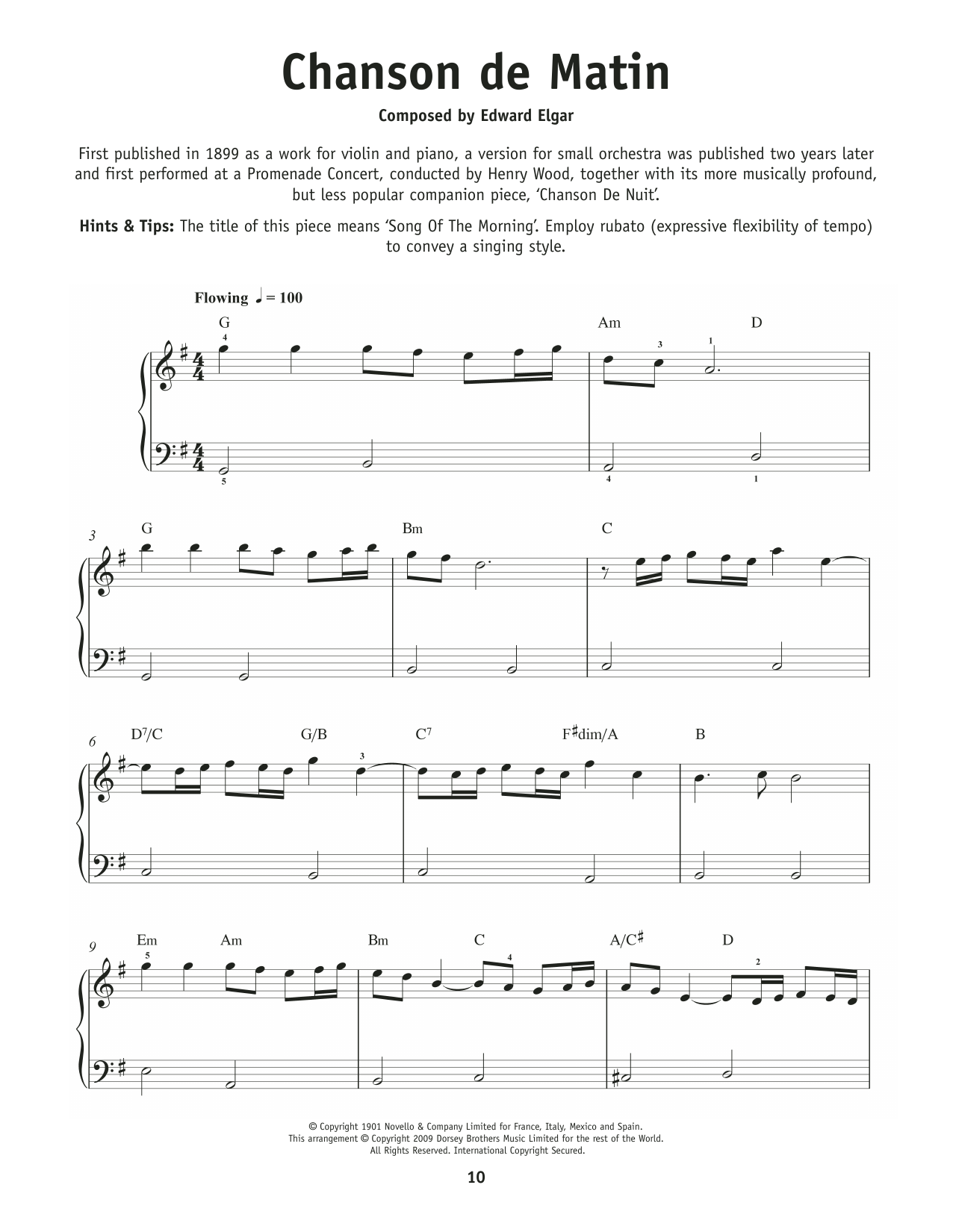
Edward Elgar (1857–1934) stands as England's most significant composer of the late Romantic era, revered for his orchestral works, concertos, and the iconic Pomp and Circumstance marches. Though largely self-taught, he developed a distinctive voice that blended German Romantic tradition with English musical sensibility, earning him international recognition and a lasting place in the concert repertoire. His gift for lyrical melody and sophisticated harmonic language made him a natural voice for both grand ceremonial works and intimate character pieces.
Why we love this
Elgar's gift for memorable, singable melody shines in this compact piece, giving students a taste of his sophisticated harmonic language without the technical demands of his larger works. The two-page format makes it an ideal recital opener or encore that audiences recognize and love immediately.
What to expect
A morning song suffused with gentle optimism and graceful simplicity. The melody unfolds with the unhurried confidence of a well-loved theme, accompanied by warm harmonic support that feels both traditional and distinctly Elgarian. It captures a moment of quiet contentment, inviting performers and listeners into an intimate musical conversation.
Who it's for
Students seeking appealing Romantic repertoire that demonstrates elegant phrasing and lyrical writing without excessive technical difficulty. Pianists at the intermediate level and musicians preparing solo recital material will find this charming and gratifying.
How to get the most out of it
Shape the main melody with long, sustained phrases; resist the urge to breathe every bar. Elgar builds emotional weight through phrase architecture.
Balance accompaniment texture carefully so the accompaniment never overwhelms the singing line, even in passages of fuller harmony.
Explore the dynamic range from the opening soft statement through moments of broader expression. The piece rewards attention to subtle color shifts.
Pay close attention to pedal markings and harmonic intent; they shape the warmth and resonance that defines this piece's character.
How to use it
Place this near the beginning of a recital program to establish warmth and elegance, or use it as a closing encore for a chamber concert. It pairs naturally with other late Romantic character pieces or other short works by Elgar, making it useful for building a thematic program around English Romantic miniatures.
Skills your students will build
Singing long phrases with clear harmonic awareness
Balancing melody and accompaniment texture in a simple setting
Interpreting dynamic and expressive markings to shape emotional intent
Reading and responding to pedal indications for tonal color
You May Also Like
Scan to Complete Your Purchase
Use your phone's camera to scan the code below
You'll log in on your phone and the order will be added to your account