Chanson D'Amour Sheet Music Preview

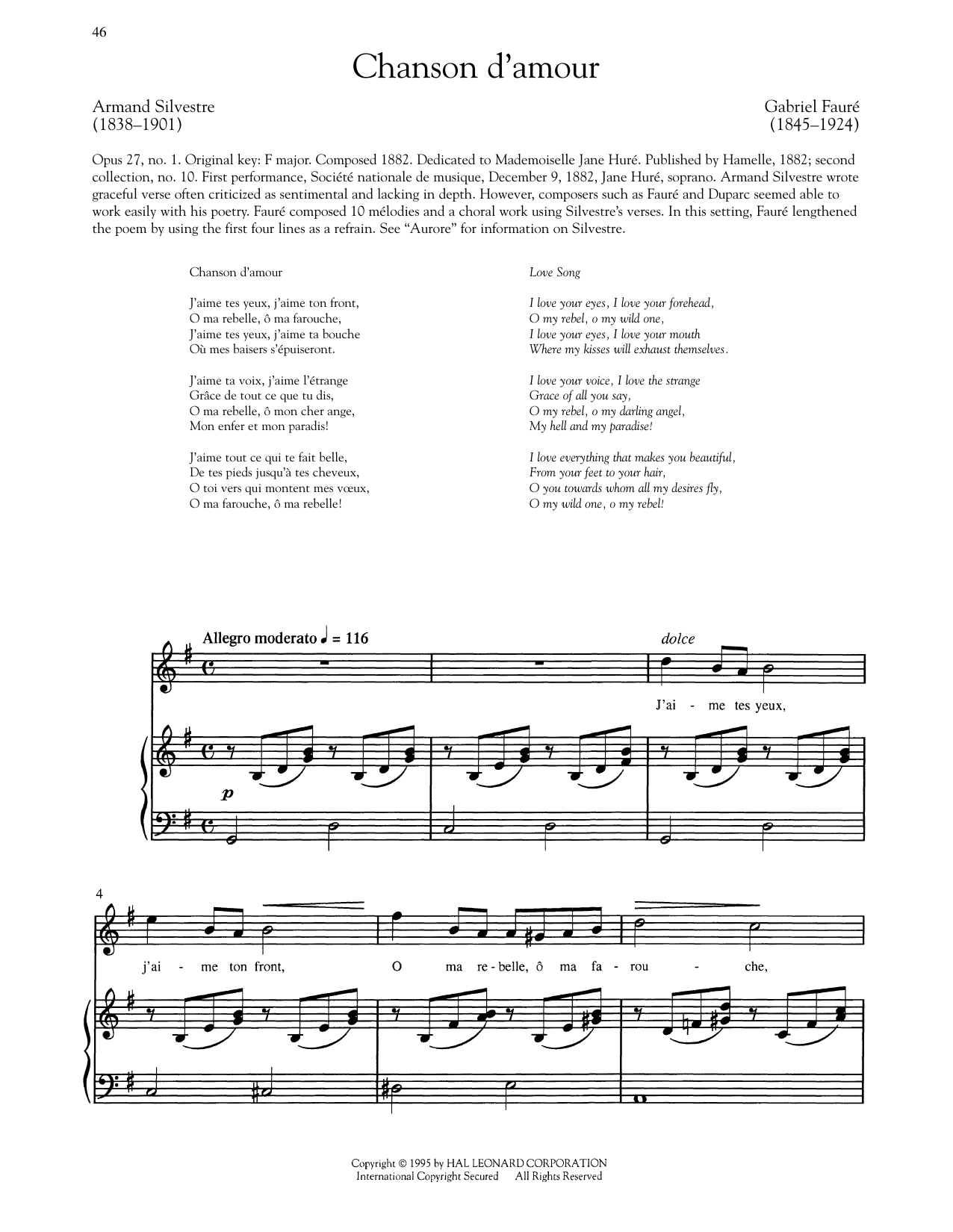
Chanson D'Amour: Piano Vocal

By Gabriel Fauré / As performed by Gabriel Faure

Item: 35-DS01819443

Digital Download
$5.99
Description

Chanson D'Amour: Piano Vocal isn't in MakeMusic Cloud just yet...but it could be. Let us know you'd like to see it, and you'll help shape what comes next. In the meantime, start a free trial and dive into thousands of interactive titles your students can play along with today.

Sample Audio
No sample audio found.
Sample Video
Additional Details
Publisher: Hal Leonard
Page Count: 4
SKU: 35-DS01819443

More about this title

About the Composer: Gabriel Fauré

Gabriel Fauré stands among the most refined composers of the French Romantic tradition, and his vocal music reveals why he remains central to art song repertoire. Working across the late 19th and early 20th centuries, Fauré developed a harmonic language of extraordinary subtlety, blending impressionistic textures with Classical restraint in ways that influenced generations of composers after him.

His songs, or mélodies, prioritize the marriage of voice and text above all else. Fauré's piano parts are never mere accompaniment; they contain independent musical ideas that dialogue with the voice, creating complete artistic statements in miniature. This approach makes his work invaluable for singers learning how words, melody, and harmony can achieve profound expression together.

Why we love this

Fauré's harmonic vocabulary here rewards singers and pianists who listen closely to every vertical sonority. The piece sits comfortably for high voices without sacrificing the emotional weight that makes it a perennial recital favorite. It's the kind of four-page score that teaches more about musical communication per measure than much longer works.

What to expect

Elegance tinged with melancholy defines this piece. The musical character unfolds with quiet intensity, favoring intimacy over display, and the harmony moves with a kind of floating inevitability that can feel both timeless and deeply personal.

Who it's for

This suits advanced high school singers, college students, and professional vocalists preparing art song repertoire. Pianists benefit equally; the accompaniment demands both technical fluency and interpretive maturity. It works well for teachers introducing students to French vocal traditions and the mélodies that shaped modern song writing.

How to get the most out of it

  • Shape the melody with subtle dynamic contours rather than aggressive phrasing; Fauré's lyricism lives in restraint and control
  • Notice how the piano's figuration shifts between supporting the voice and carrying its own musical argument; allow these moments to breathe independently
  • Treat the French text as an equal partner to the melody, letting natural speech inflections inform your interpretive choices
  • Explore the harmonic colors with your pianist before rehearsal; Fauré's chromatic movement and voice leading create specific sonorities that require coordination

How to use it

Place this in a recital devoted to French art song, or pair it with other Fauré settings to showcase the breadth of his vocal writing. It also serves as a gateway piece for introducing serious singers to the harmonic language they'll encounter in 20th-century repertoire.

Skills your students will build

  • Sustaining legit high voice tone through chromatic and modulatory passages
  • Reading French diction and shaping phrasing around textual meaning rather than melodic convenience
  • Coordinating with a pianist on harmonic and rhythmic nuance, especially through sections where the accompaniment moves independently
  • Understanding how Romantic harmonic language departs from functional tonality while maintaining emotional coherence

You May Also Like