Christopher Norton is a British composer and educator whose output spans classical, jazz, and popular idioms. His pedagogical works have shaped instrumental instruction across decades, grounded in his conviction that technique and musicality develop together through repertoire that engages rather than lectures.
Why we love this
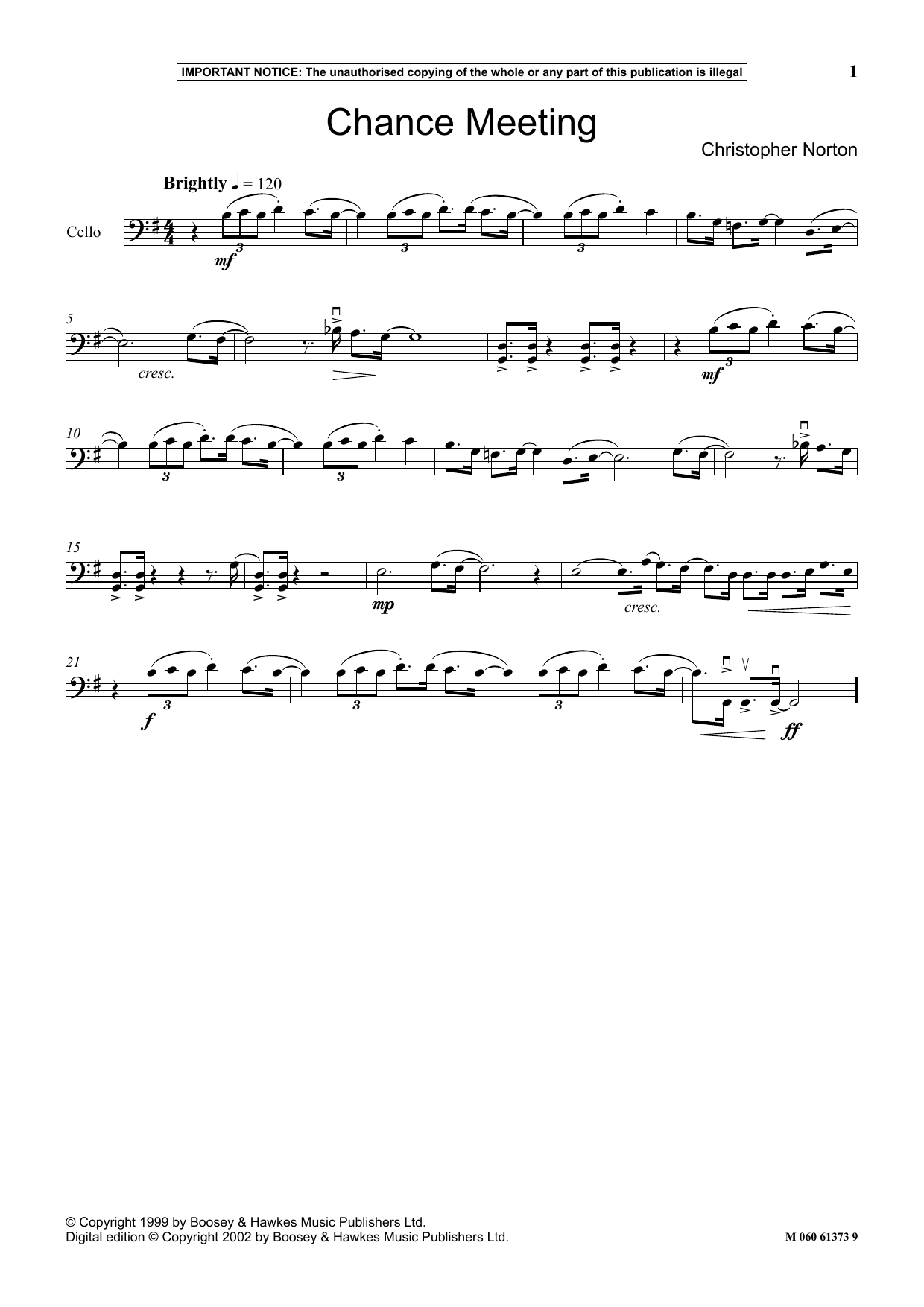
Norton writes solo piano with an ear for what actually sounds good in a practice room. 'Chance Meeting' avoids the empty minimalism that plagues contemporary pedagogical work; instead, it builds character through harmonic movement and conversational phrasing that rewards attention to shape.
What to expect
A quiet encounter that unfolds gradually. The music never rushes; instead it lingers over details, suggesting mood through chord quality and spacing rather than dramatic gestures. There's a reflective quality that invites the player to listen as much as to perform.
Who it's for
Intermediate pianists comfortable with moderate hand independence and willing to work with harmonic color rather than flashy figuration. This fits naturally into a lesson sequence after foundational Hanon and Czerny work.
How to get the most out of it
Treat the piece as a dialogue between two voices rather than a single narrative. Listen for moments where one hand leads while the other responds.
Shape the phrase endings softly. Resistance to the natural pull toward silence reveals Norton's harmonic intentions.
Maintain consistent voicing in the accompanying hand so that thematic material stands clearly without dynamic exaggeration.
How to use it
Solo recitals benefit from this piece as a palette cleanser between heavier works, or as a thoughtful opening that draws audiences into careful listening. It also works well as a sight-reading or sightreading stretch piece for intermediate ensemble musicians.
Skills your students will build
Voice leading across changing harmonic contexts
Pedal control for harmonic color
Maintaining independence between hands while preserving phrase coherence
Interpretive choices through tempo flexibility and rubato
Reading and playing from score notation with strategic marking
You May Also Like
Scan to Complete Your Purchase
Use your phone's camera to scan the code below
You'll log in on your phone and the order will be added to your account