
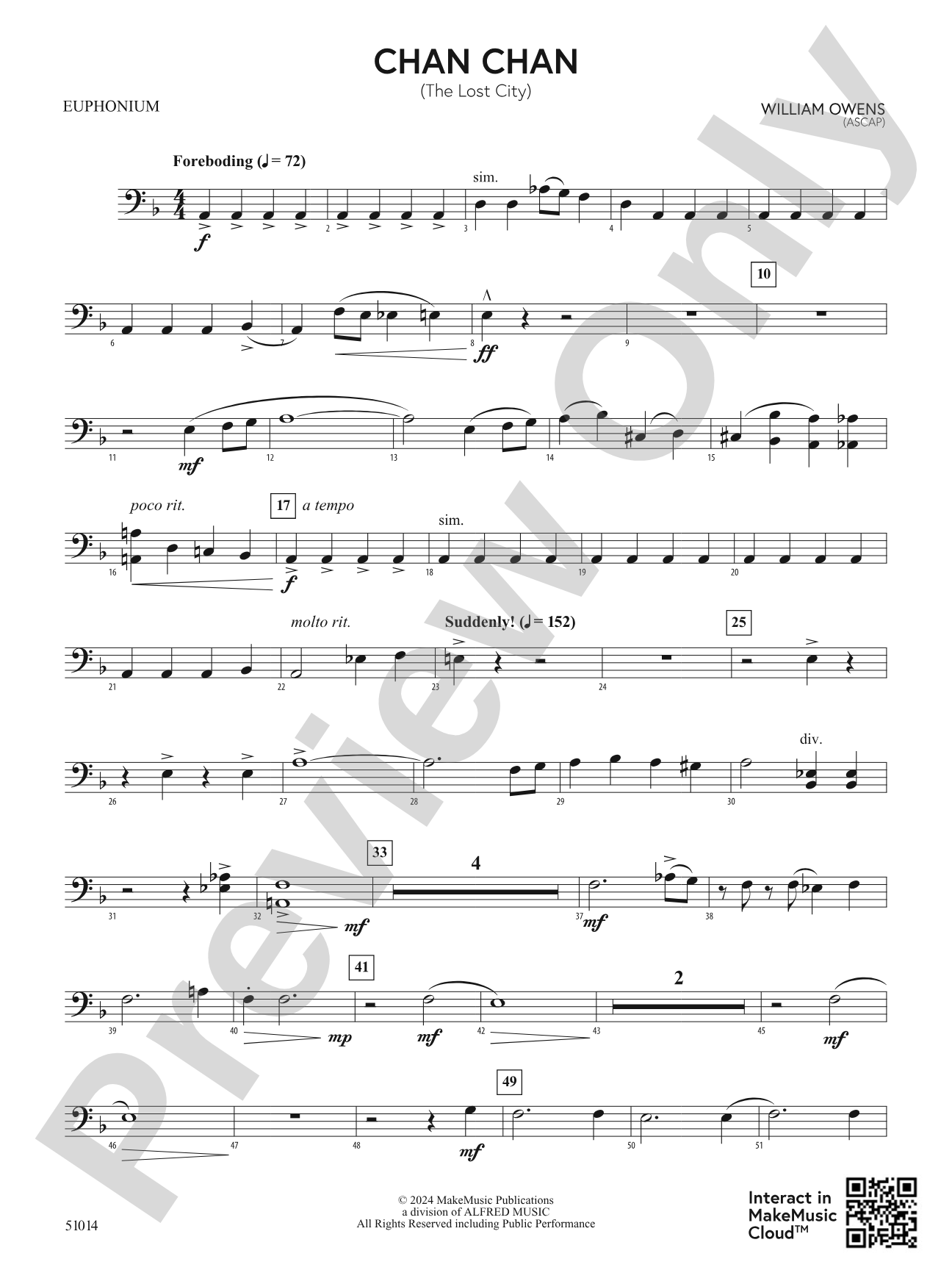

Chan Chan: Baritone B.C.
(The Lost City)
By William Owens
Grade: 2.5
Item: 00-PC-0019227_BBC1
$5.99
Pickup currently not available
Description
Beauty and raw power collide in this contemporary work by William Owens that pays homage to Chan Chan, an ancient city in the desert of northern Peru. Engaging melodies and primal harmonies reveal both spectacle and mystery as the work unfolds. Surprisingly accessible despite its complex sound! (3:50)


Don't just read it, hear it, play along with it, and watch your students grow with it. In MakeMusic Cloud, Chan Chan: Baritone B.C. comes alive with professional accompaniment, adjustable tempo, and built-in practice tools that turn solo practice into real progress.
Open in the Player
Jump straight in and assign it today.
Start Your Free Trial
Open this title and explore the full library in minutes.
Sample Audio
1
Audio File
--:--
0:00
0:00
Sample Video
Additional Details
Series:
MakeMusic Young Band
Publisher:
MakeMusic Publications
SKU:
00-PC-0019227_BBC1
More about this title
About the Composer: William Owens
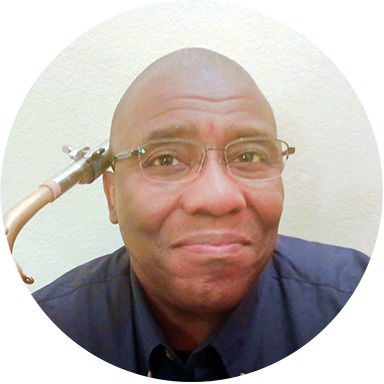
William Owens brings three decades of classroom experience to his prolific compositional output, having taught high school band in Texas before his retirement in 2014. A VanderCook College of Music graduate, he has created over 300 works for young ensembles since 1993, earning him recognition as a foundational voice in contemporary band literature through commissions from the American Bandmasters Association, Phi Beta Mu International, and regional institutions.
Owens' writing combines practical accessibility with genuine musical substance, a balance that has made his pieces standard repertoire on festivals and contest lists nationwide. His work appears in educational texts and carries multiple honors, including the Texas Bandmasters Association's Meritorious Achievement Award and distinguished alumnus status from his college. He holds memberships in ASCAP, TMEA, and Phi Beta Mu, reflecting his ongoing influence as a composer, clinician, and advocate for young band music.
Why we love this
Owens captures something rare here: a piece that sounds significantly more complex and sophisticated than its Grade 2.5 difficulty suggests. The programmatic connection to an ancient Peruvian site gives students a real cultural anchor and meaningful context beyond abstract note-reading, while the blend of engaging melodies with primal harmonies keeps the ensemble engaged without overwhelming them.
What to expect
Chan Chan unfolds like a slow reveal of ancient structures emerging from desert sand. The music balances raw, earthy sonorities with lyrical moments of surprising beauty, creating an atmosphere that feels both mysterious and grounded. Despite its modern harmonic language, the piece remains warm and accessible, drawing the listener into a landscape both foreign and strangely familiar.
Who it's for
Concert bands at the Grade 2.5 level seeking repertoire with contemporary appeal and genuine musical substance. Directors preparing for festivals, contests, or concert programs will find a piece that challenges students musically while remaining within their technical range.
How to get the most out of it
- Balance the harmonic density carefully; let the low brass and woodwinds define the grounded, mysterious foundation while higher voices float the engaging melodic lines above.
- Approach the primal harmonies as intentional color rather than dissonance to avoid. Encourage the band to listen inward and find cohesion in the unconventional sonorities.
- Shape the melodic phrases with deliberate pacing; resist rushing through the spectacle to preserve the sense of mystery Owens builds throughout.
- Use the 3:50 duration to plan rehearsal stamina; this piece requires sustained focus and energy, so place it strategically in your rehearsal sequence.
How to use it
Program this piece as a centerpiece on a concert celebrating world cultures or contemporary composers for young ensembles. Its moderate length and programmatic title make it an excellent bridge between more traditional repertoire and modern concert band writing, and it works equally well as a festival or contest selection.
Skills your students will build
- Balancing ensemble sonority across unconventional harmonic language
- Sustaining focused ensemble listening in longer, continuous phrases
- Interpreting programmatic context to inform musical phrasing and tone color
- Executing dynamic control within a Grade 2.5 technical range