
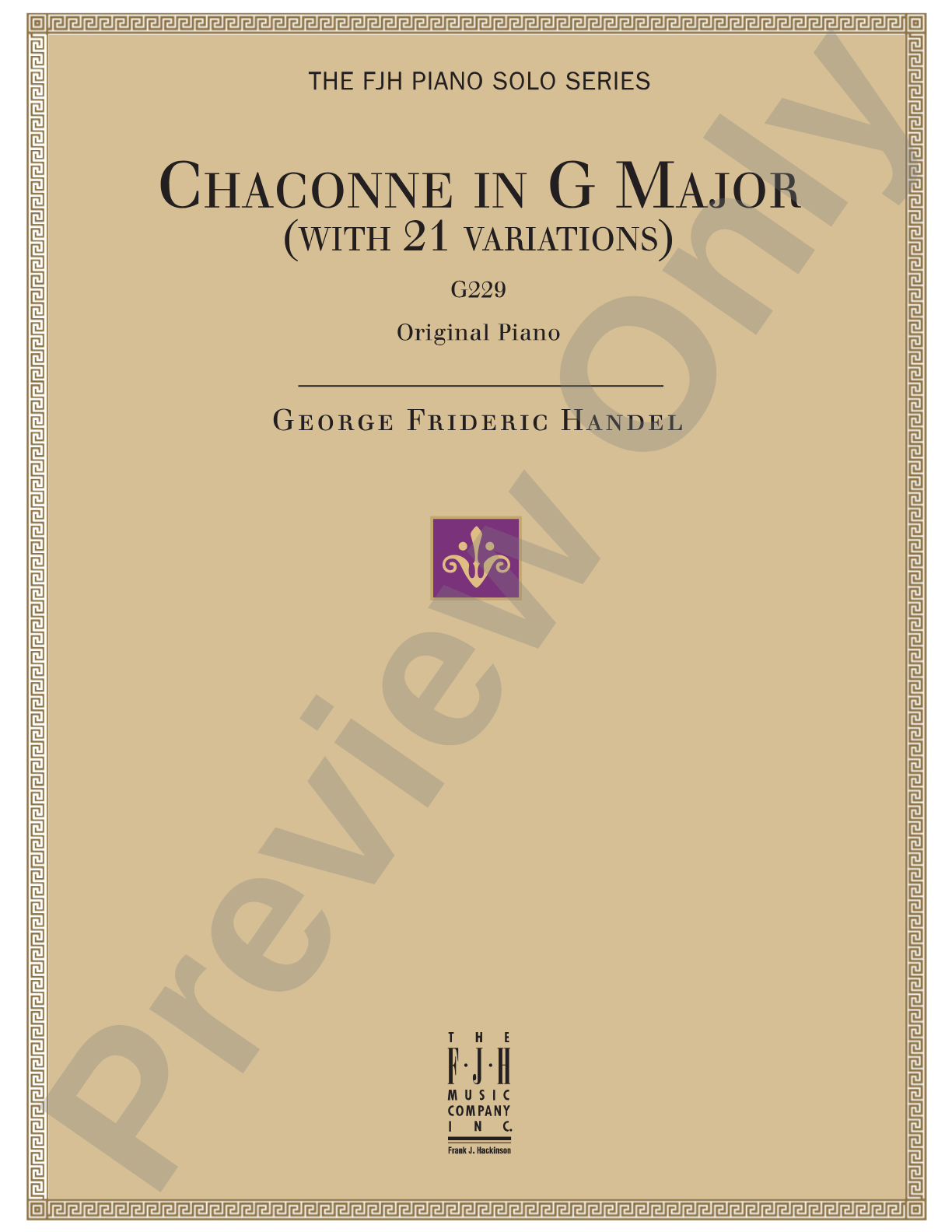

Chaconne in G Major, G 229: Piano
By George Frideric Handel / ed. Edwin McLean
Item: 98-DPS1028
$3.95
Pickup currently not available
Related Items
Chaconne in G Major, G 229: Piano Sheet |
$3.95
|
View |
Description
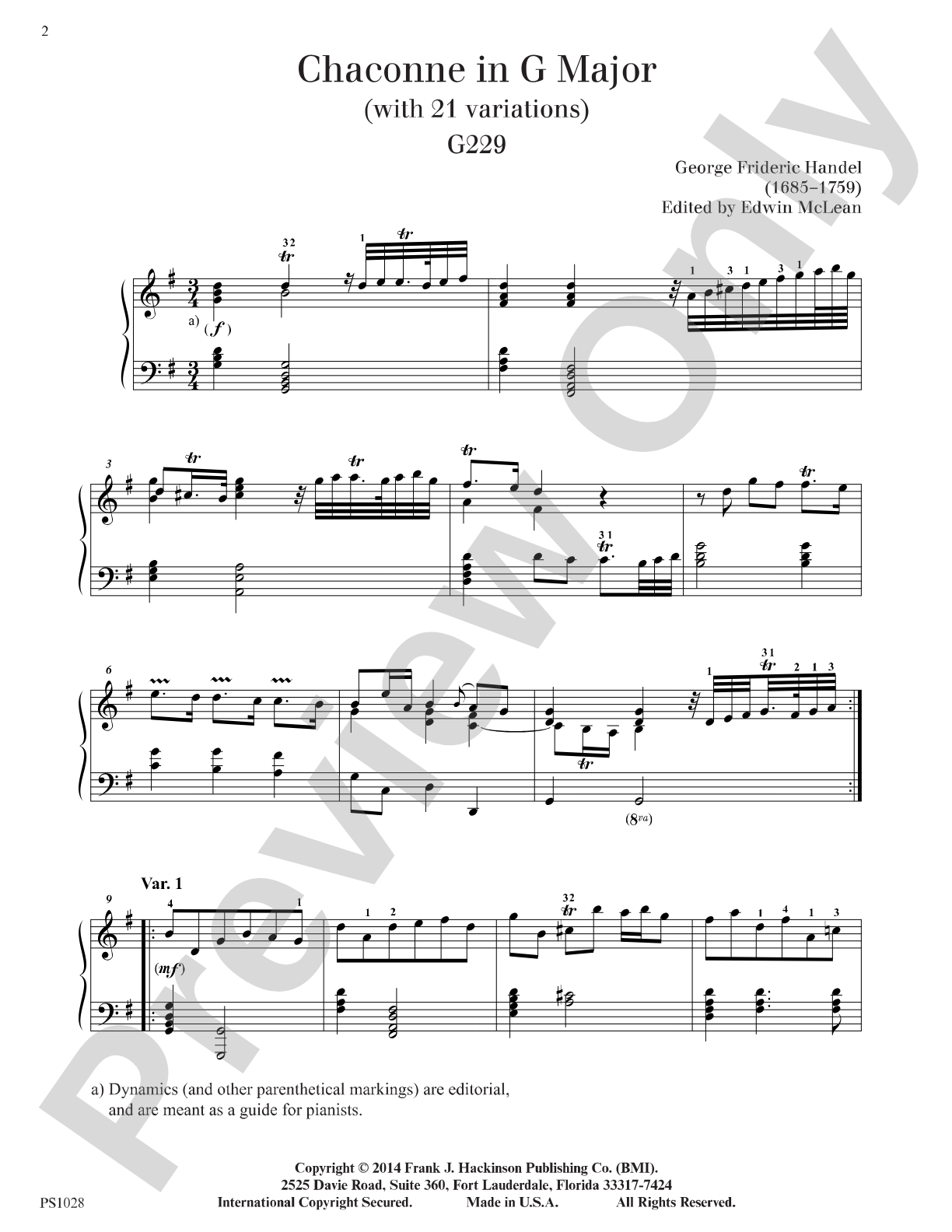
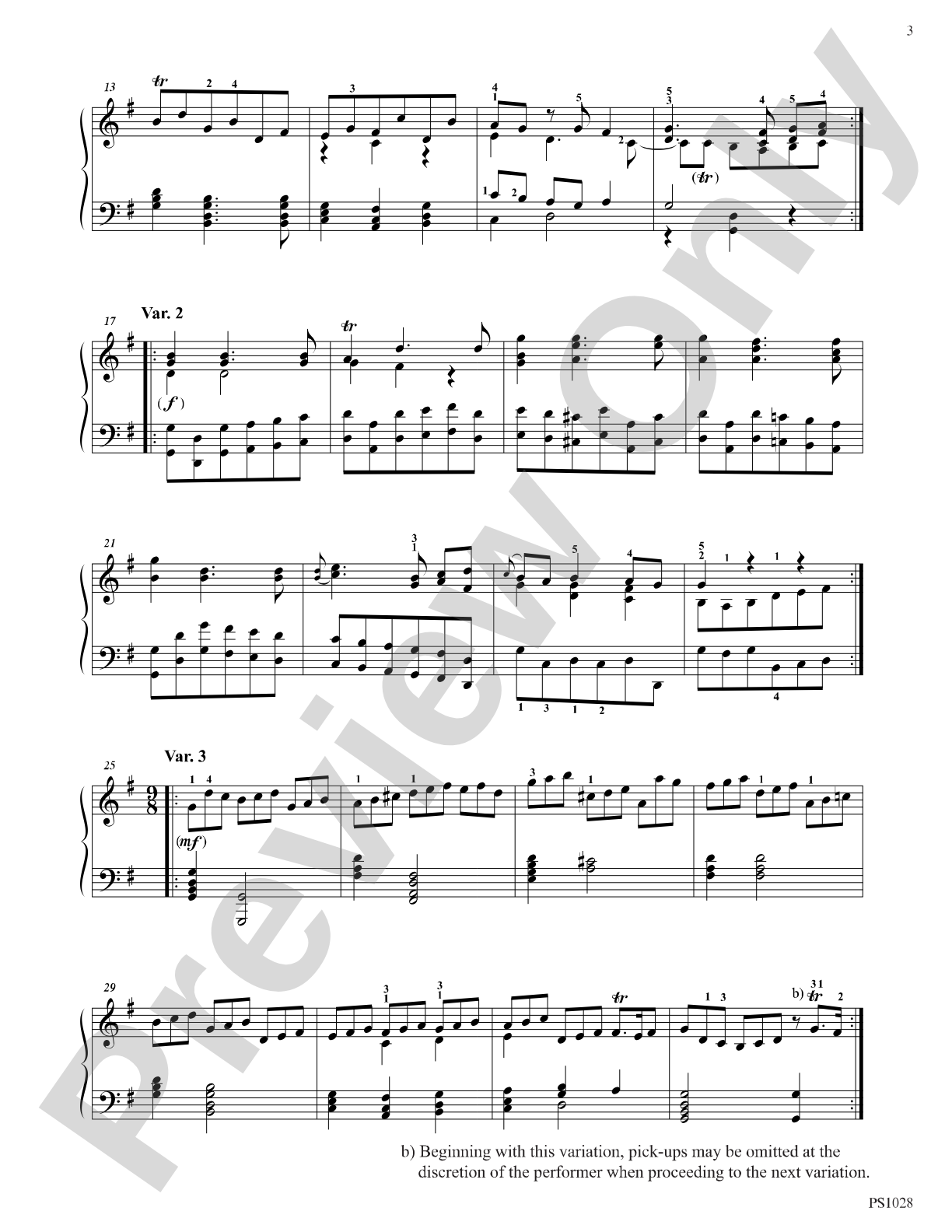
This masterpiece of the theme and variation form is one of Handel's best-known works for keyboard. It opens with a heroic theme and variations in G major, followed by a poignant, lyrical section of variations in G minor, and it concludes with a decisive return to G major.
A brilliant, yet accessible recital piece, newly edited and engraved for the modern performer.


A brilliant, yet accessible recital piece, newly edited and engraved for the modern performer.
Chaconne in G Major, G 229: Piano isn't in MakeMusic Cloud just yet...but it could be. Let us know you'd like to see it, and you'll help shape what comes next. In the meantime, start a free trial and dive into thousands of interactive titles your students can play along with today.
Request This Title
Tell us you want it.
Start Your Free Trial
Explore everything that's ready to play right now.
Sample Audio
No sample audio found.
Sample Video
No sample videos found.
Additional Details
Series:
The FJH Piano Solo Series
Publisher:
The FJH Music Company, Inc.
SKU:
98-DPS1028
More about this title
About the Composer: George Frideric Handel
George Frideric Handel (1685-1759) was a German-born composer who spent most of his career in England, where he became a central figure in the development of English Baroque music. His keyboard works emerged from a tradition of German, Italian, and French influences, yet his writing style is unmistakably his own: direct, emotionally resonant, and structurally brilliant.
Handel's keyboard compositions span harpsichord suites, organ concertos, and standalone pieces like the Chaconne in G Major. These works showcase his mastery of variation technique and his gift for memorable themes. For today's pianists, his keyboard music offers a gateway into the dramatic possibilities of the Baroque era while remaining genuinely engaging to learn and perform.
Why we love this
The Chaconne in G Major presents everything that makes Baroque keyboard writing so satisfying: a rock-solid harmonic foundation, clear sectional architecture, and genuinely expressive contrasts between the major-key heroism and the minor-key introspection. The new engraving removes editorial barriers and lets modern pianists access a work that sounds impressive in recital without demanding virtuosic fireworks.
What to expect
The opening announces itself with confidence and baroque grandeur, a theme built on certainty. As variations accumulate, the writing becomes more intricate and virtuosic, inviting you to discover the theme's hidden facets. The turn to G minor brings unexpected emotional weight and lyricism, a moment of vulnerability before the energetic return to G major restores the heroic character.
Who it's for
This edition serves intermediate to advanced pianists seeking substantial, musically rewarding Baroque repertoire for recital programming. Students ready to engage with longer-form variation structures and capable of balancing architectural clarity with expressive depth will find genuine satisfaction here.
How to get the most out of it
- Establish the harmonic pulse clearly in the theme. The chaconne's power comes from the listener feeling the ground bass, even when variations become elaborate. Avoid rushing the opening statement.
- Shape each variation as a distinct character study. The piece asks you to explore how the same harmonic framework can express different moods. Listen for moments where the texture thickens or the ornamentation intensifies, and let those shifts guide your phrasing.
- Mark the key change to G minor deliberately. This is a major emotional pivot. Give yourself time to settle into the darker color before moving through the minor-key variations.
- Use rubato sparingly in the lyrical G minor section, but use it meaningfully. The melodic lines here deserve breathing room without losing the underlying pulse.
How to use it
Position this as a centerpiece in a baroque recital program, or pair it with other keyboard works from the same era for a thematic concert. Its substantial length and emotional arc make it ideal as a solo closer or as a thoughtful bridge between contrasting works. The piece also works well in undergraduate recitals where students aim to demonstrate both technical control and interpretive maturity.
Skills your students will build
- Variation technique and the ability to sustain listener interest through harmonic repetition
- Baroque articulation and ornamentation appropriate to keyboard music
- Key modulation and the expressive contrast between major and minor tonalities
- Long-form structural awareness and phrase architecture over extended sections
- Control of tempo and rubato within a periodic harmonic framework