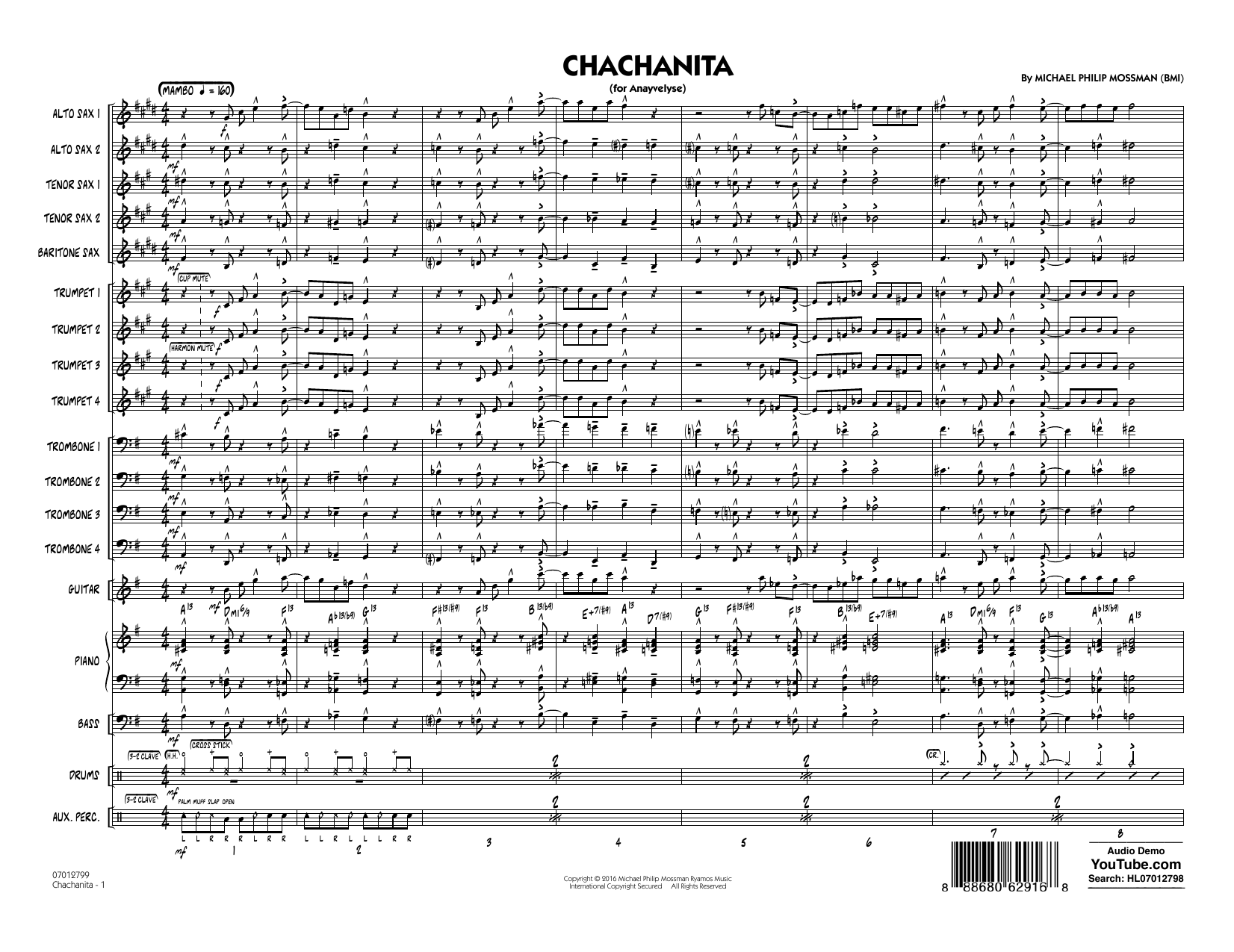
Nobody does cha-cha like Michael Mossman. This inventive original features a smooth harmonic structure and a nice blend of inventive melodies with carefully crafted accompaniment figures. The solo section is open for any player, and this is followed by a driving double time groove. Appealing and dynamic all rolled into one chart!
Discover MakeMusic Cloud: thousands of interactive titles your students can play along with today.
Michael Philip Mossman is a composer and arranger with deep roots in both classical and jazz traditions. His work for jazz ensembles balances sophisticated harmonic language with accessibility, making his pieces valuable tools for developing musicians working at the secondary and early college levels.
Why we love this
Mossman crafts this cha-cha with real musical substance. The harmonic progressions feel fresh without becoming overly complex, and the optional solo section means any player in your ensemble can step forward for their moment. The shift into double time gives you that dynamic arc that keeps audiences engaged.
What to expect
Smooth and propulsive. The cha-cha foundation gives the piece a natural groove that feels confident from the opening measures, while the careful orchestration ensures no section feels buried. When the double time hits, the energy shifts without losing elegance.
Who it's for
Grade 5 jazz ensembles with solid fundamentals looking for an original that delivers both style and substance. This works equally well for students discovering Latin jazz idioms and for players deepening their understanding of how composition and arrangement serve each other.
How to get the most out of it
Spend rehearsal time locking the rhythmic feel of the accompaniment figures before layering in the melodic voices. The cha-cha groove sits in the pocket when these figures breathe together.
Encourage your soloist to listen deeply to the harmonic motion beneath them rather than playing over it. The smooth harmonic structure gives them plenty of room to breathe.
Mark the transition into double time clearly for all sections. This shift should feel inevitable, not jarring, so bring the tempo up gradually in the measures leading into it.
How to use it
Use this as an anchor for a Latin jazz set, or program it as a contrast piece in a concert built around different rhythmic and harmonic languages. It works particularly well in the middle portion of a concert where you want to shift mood and energy without leaving the jazz vernacular.
Skills your students will build
Cha-cha rhythmic feel and articulation patterns
Reading and executing Latin jazz accompaniment figures
Listening to and improvising over chord changes
Ensemble balance when melody and rhythm figures share equal importance
Understanding how tempo modulation (double time) affects rhythmic interpretation
You May Also Like
Scan to Complete Your Purchase
Use your phone's camera to scan the code below
You'll log in on your phone and the order will be added to your account