
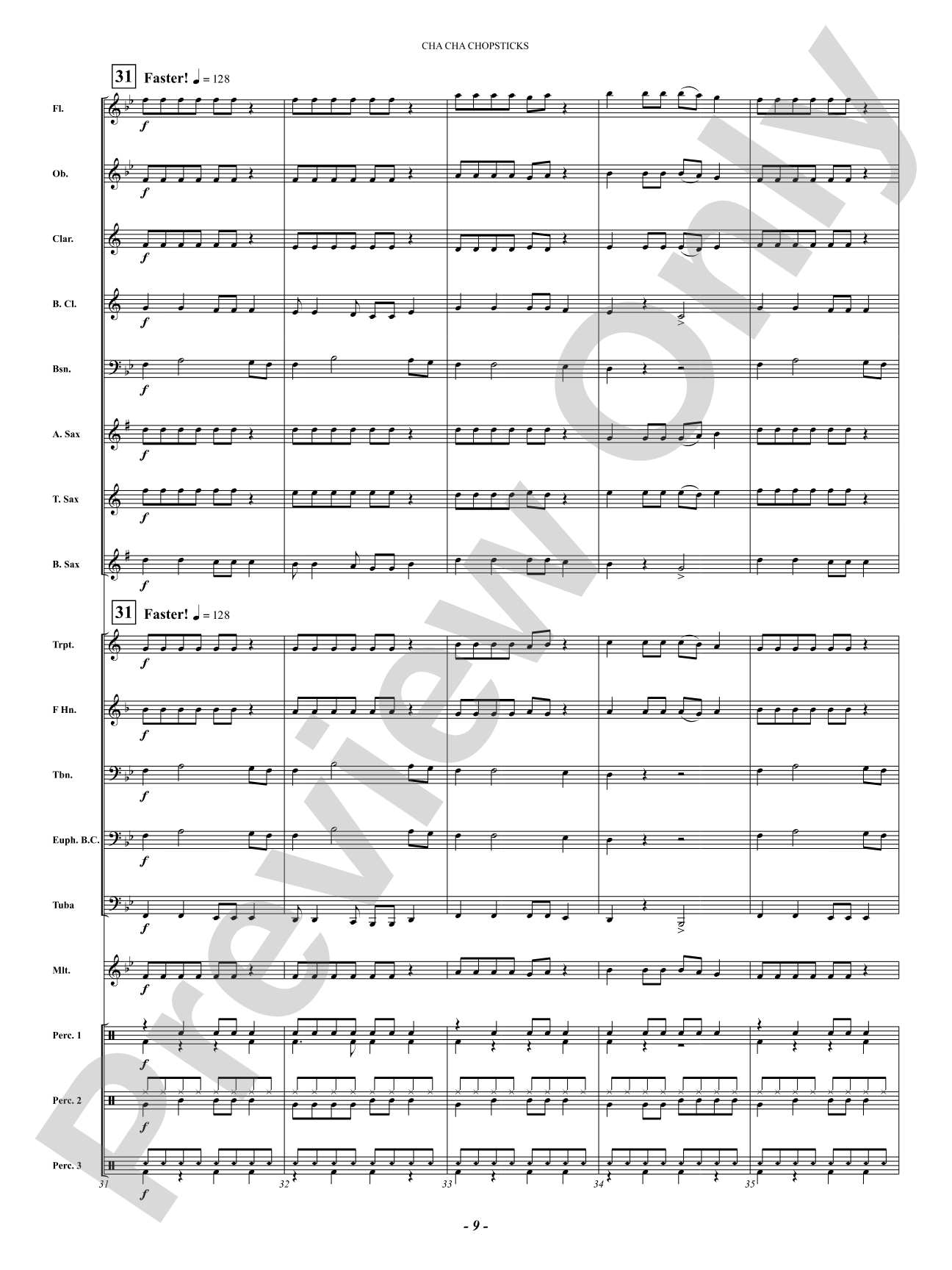
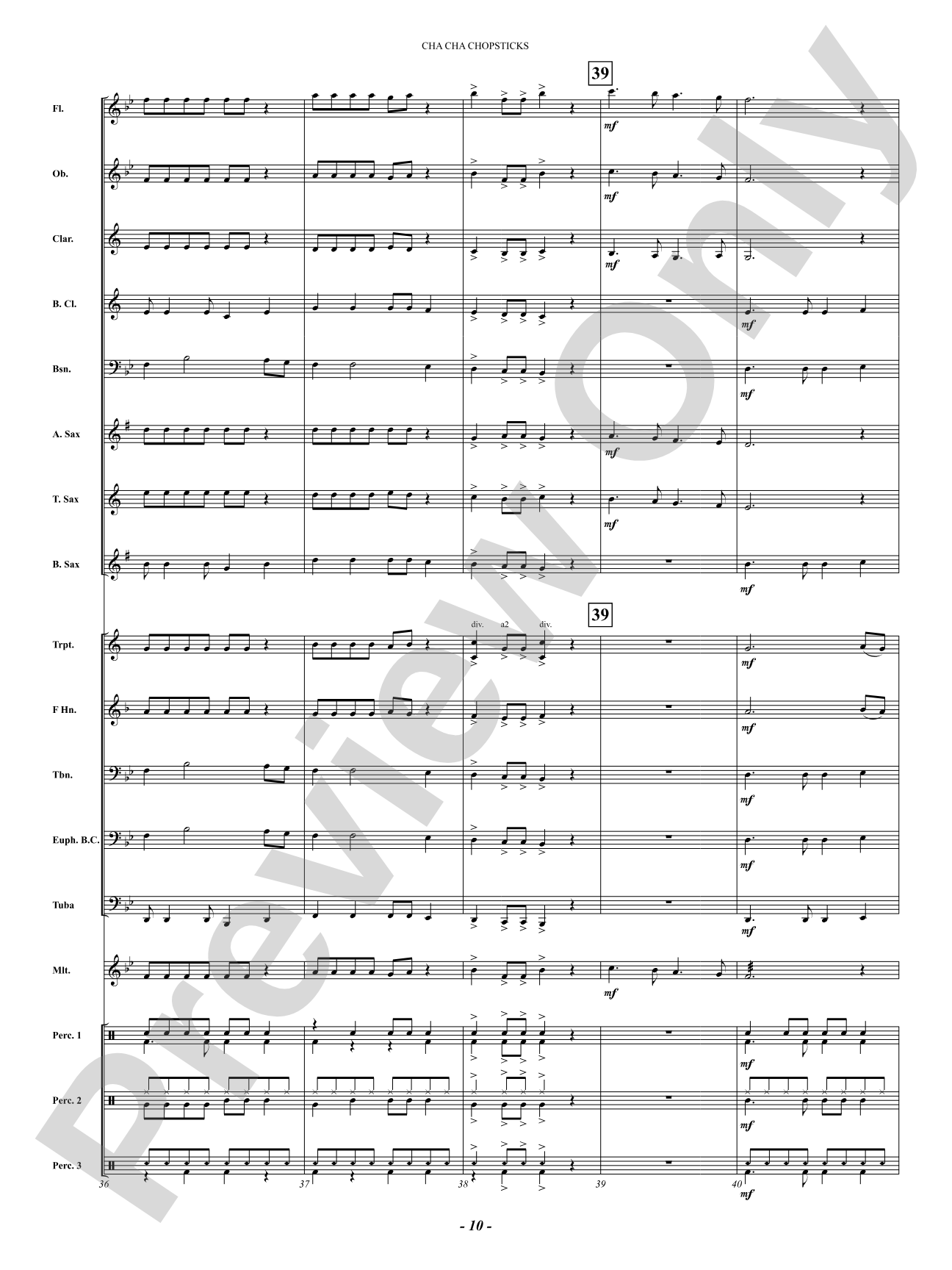
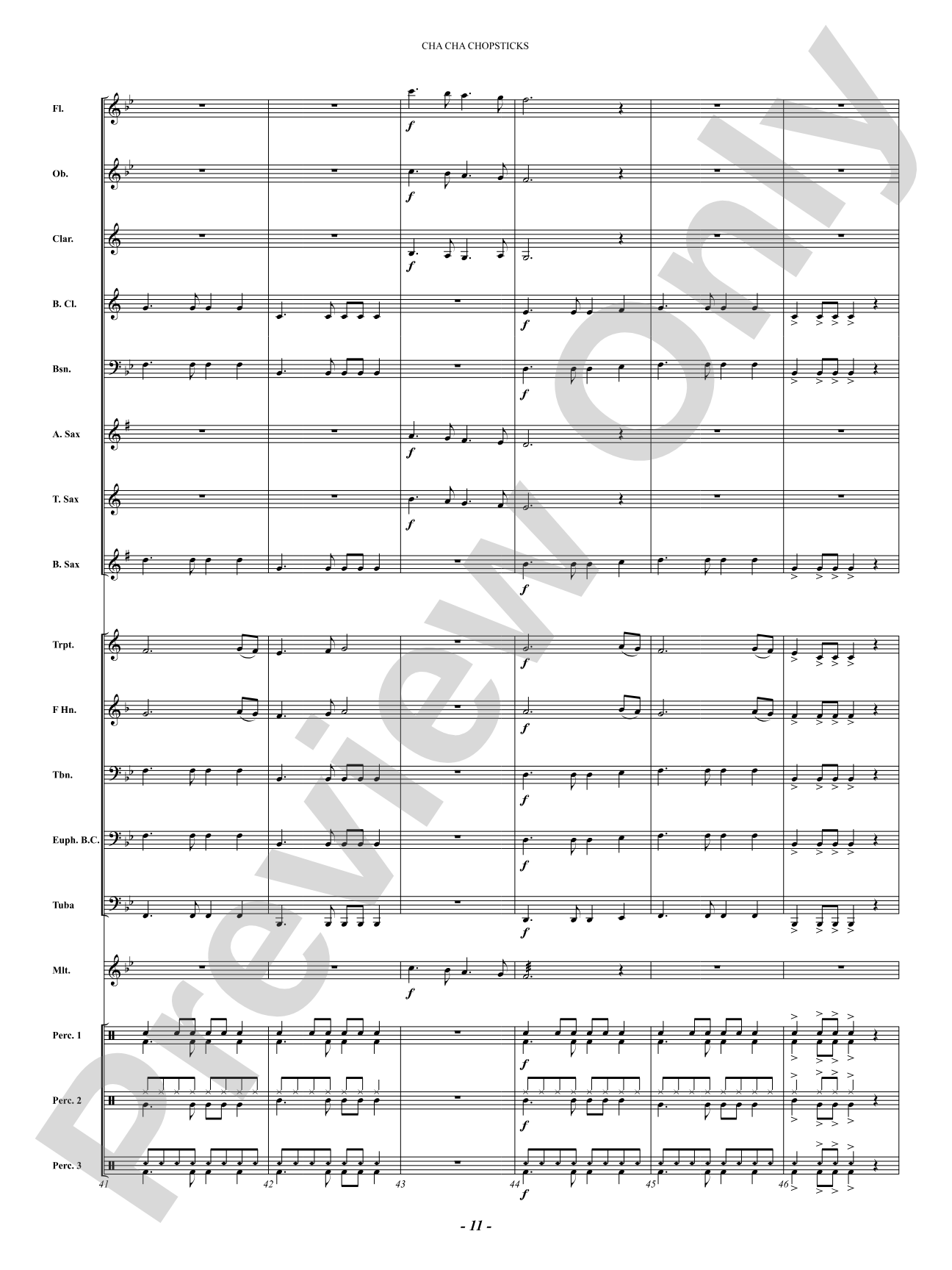
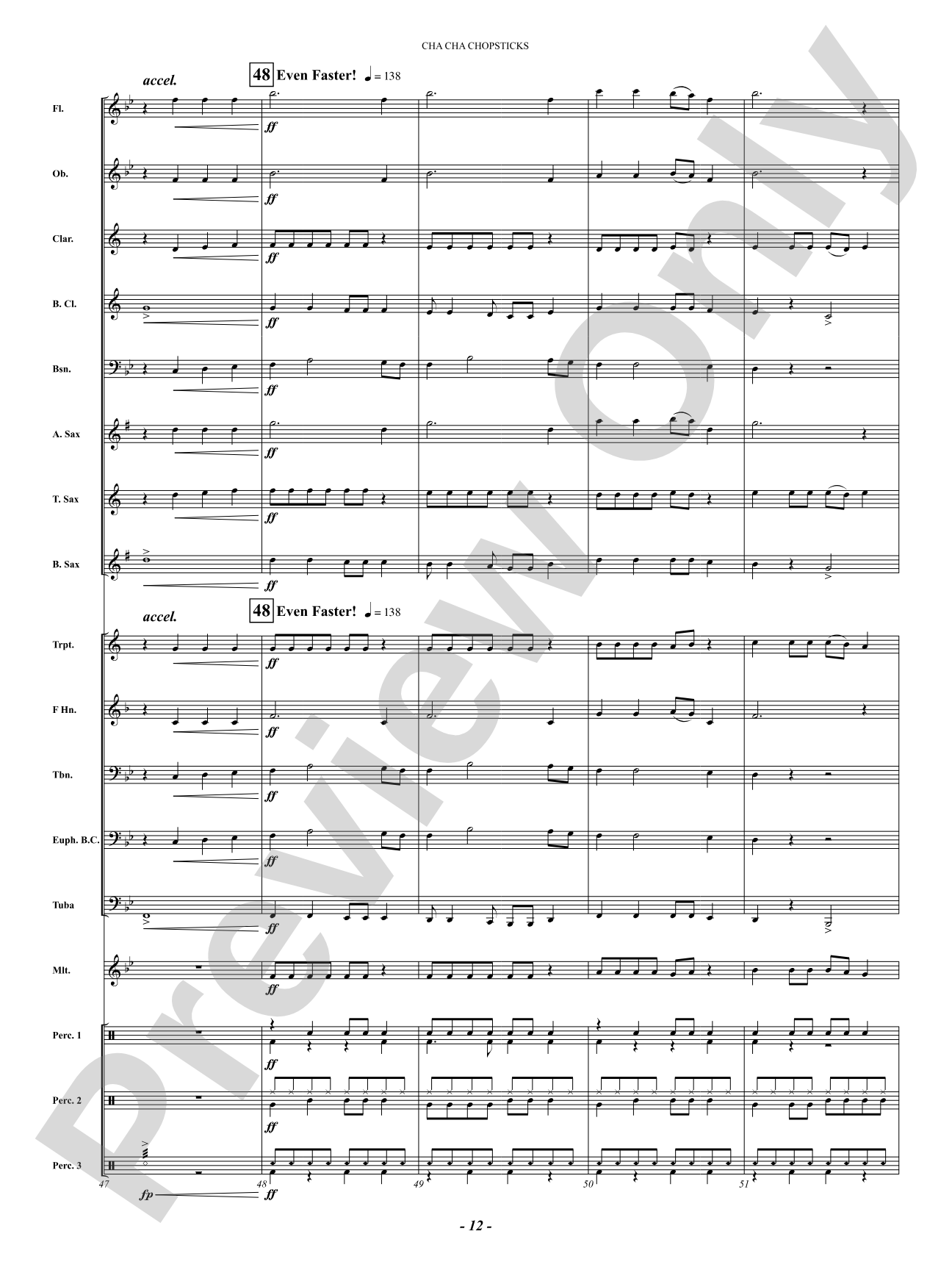
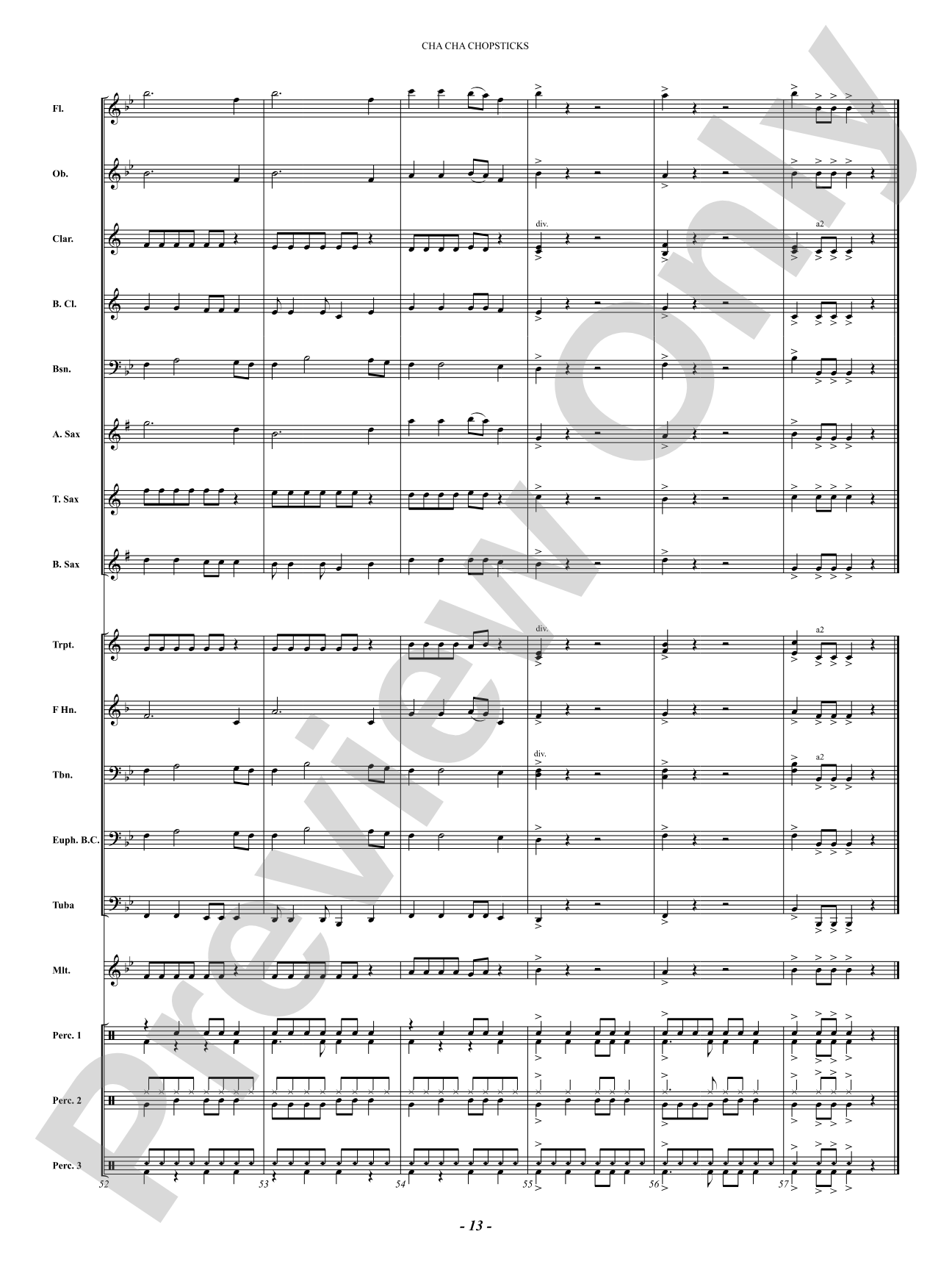

Cha Cha Chopsticks: Concert Band Conductor Score & Parts
By Heather Ellis Koehn
Grade: 1.5
Item: 98-PK-RWS2511
$58.00
Pickup currently not available
Buy Extra Parts (Digital PDF Download)
| Product | Price | Quantity |
|---|---|---|
| Cha Cha Chopsticks: Score | $10.00 | |
| Cha Cha Chopsticks: Flute | $3.99 | |
| Cha Cha Chopsticks: Oboe | $3.99 | |
| Cha Cha Chopsticks: B-flat Clarinet | $3.99 | |
| Cha Cha Chopsticks: B-flat Bass Clarinet | $3.99 | |
| Cha Cha Chopsticks: Bassoon | $3.99 | |
| Cha Cha Chopsticks: E-flat Alto Saxophone | $3.99 | |
| Cha Cha Chopsticks: B-flat Tenor Saxophone | $3.99 | |
| Cha Cha Chopsticks: E-flat Baritone Saxophone | $3.99 | |
| Cha Cha Chopsticks: B-flat Trumpet | $3.99 | |
| Cha Cha Chopsticks: F Horn | $3.99 | |
| Cha Cha Chopsticks: Trombone | $3.99 | |
| Cha Cha Chopsticks: Euphonium B.C. | $3.99 | |
| Cha Cha Chopsticks: Euphonium T.C. | $3.99 | |
| Cha Cha Chopsticks: Tuba | $3.99 | |
| Cha Cha Chopsticks: Mallet Percussion | $3.99 | |
| Cha Cha Chopsticks: 1st Percussion | $3.99 | |
| Cha Cha Chopsticks: 2nd Percussion | $3.99 | |
| Cha Cha Chopsticks: 3rd Percussion | $3.99 |
Parts Added to Cart!
Description
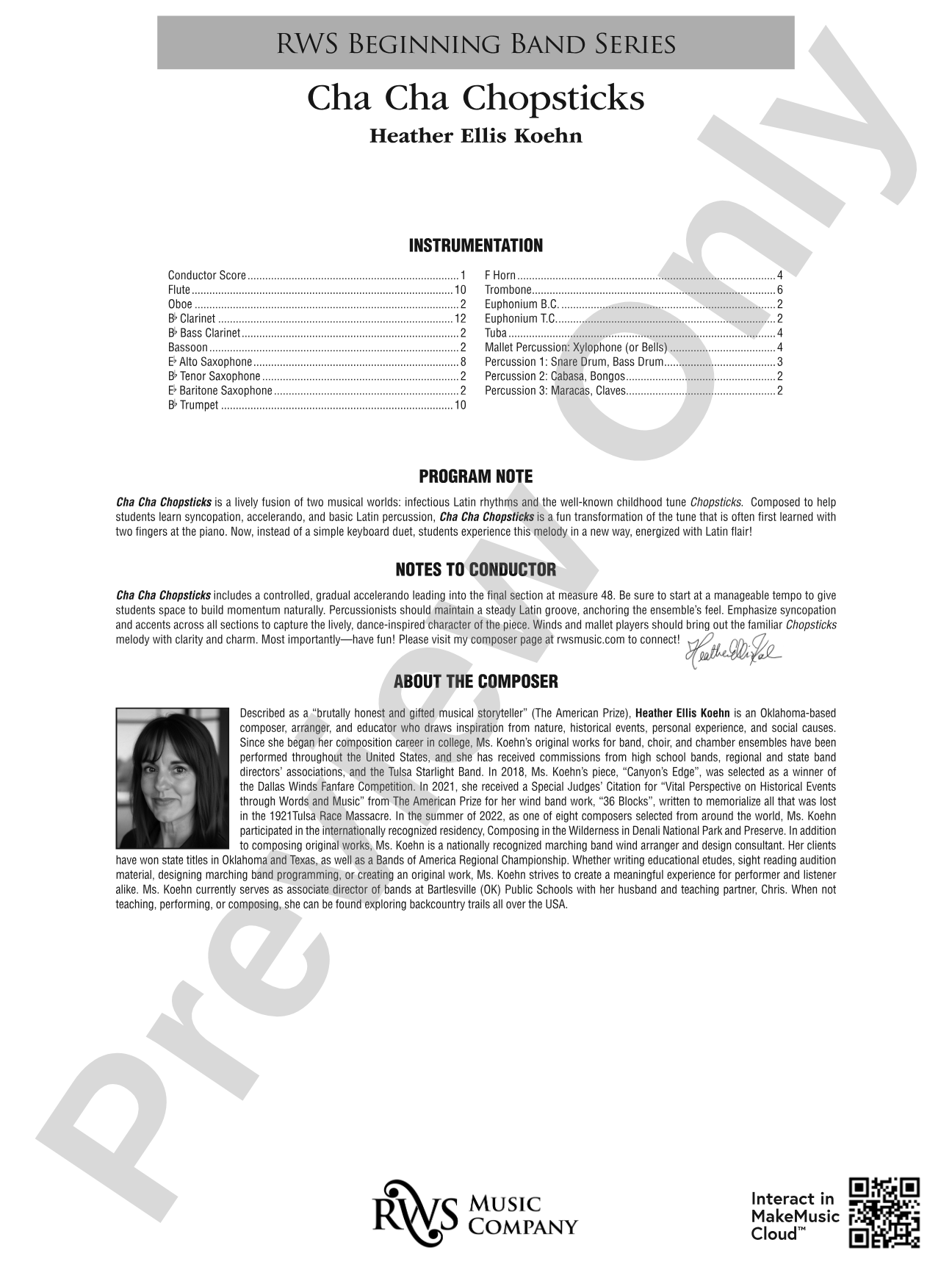
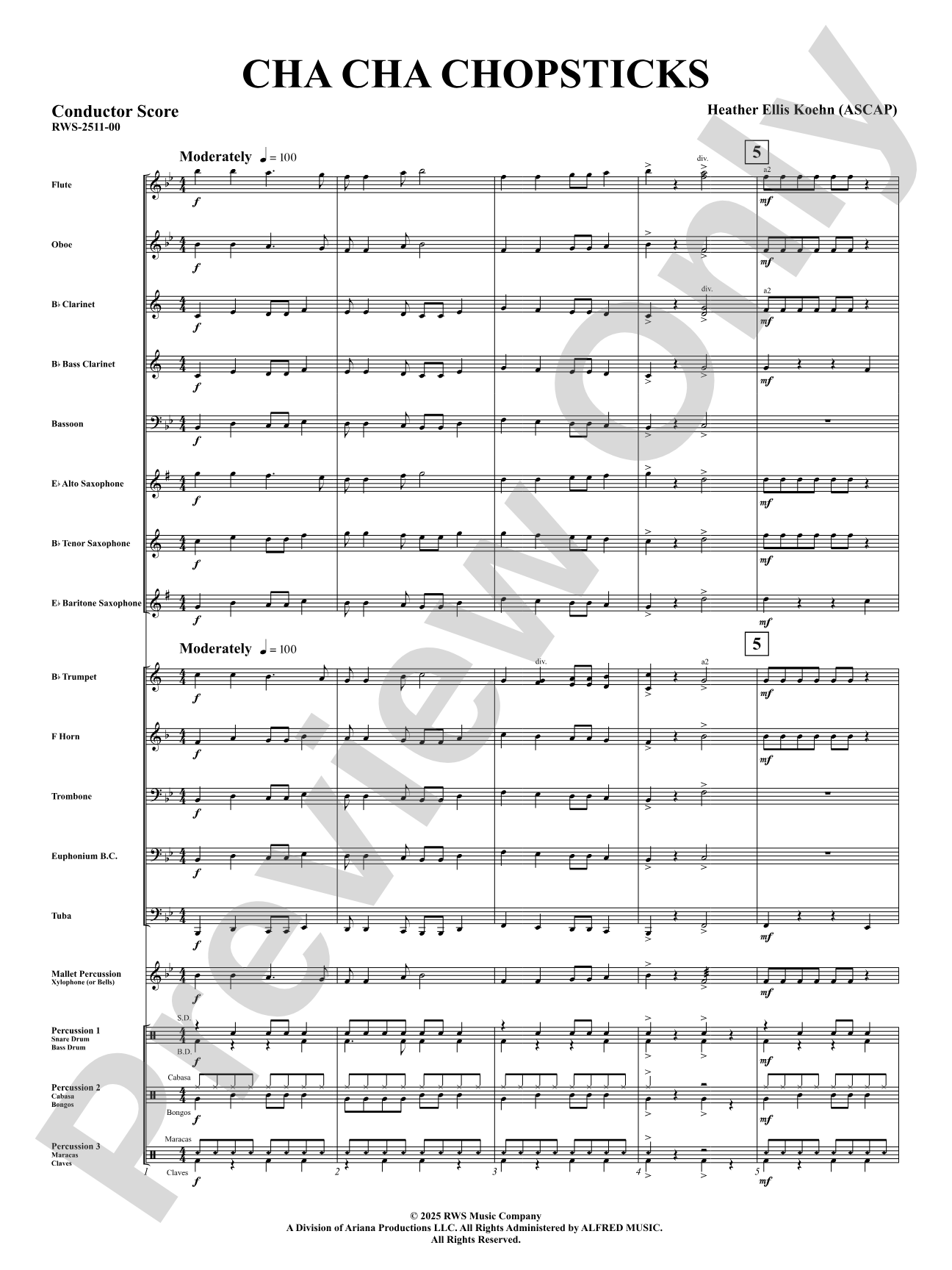
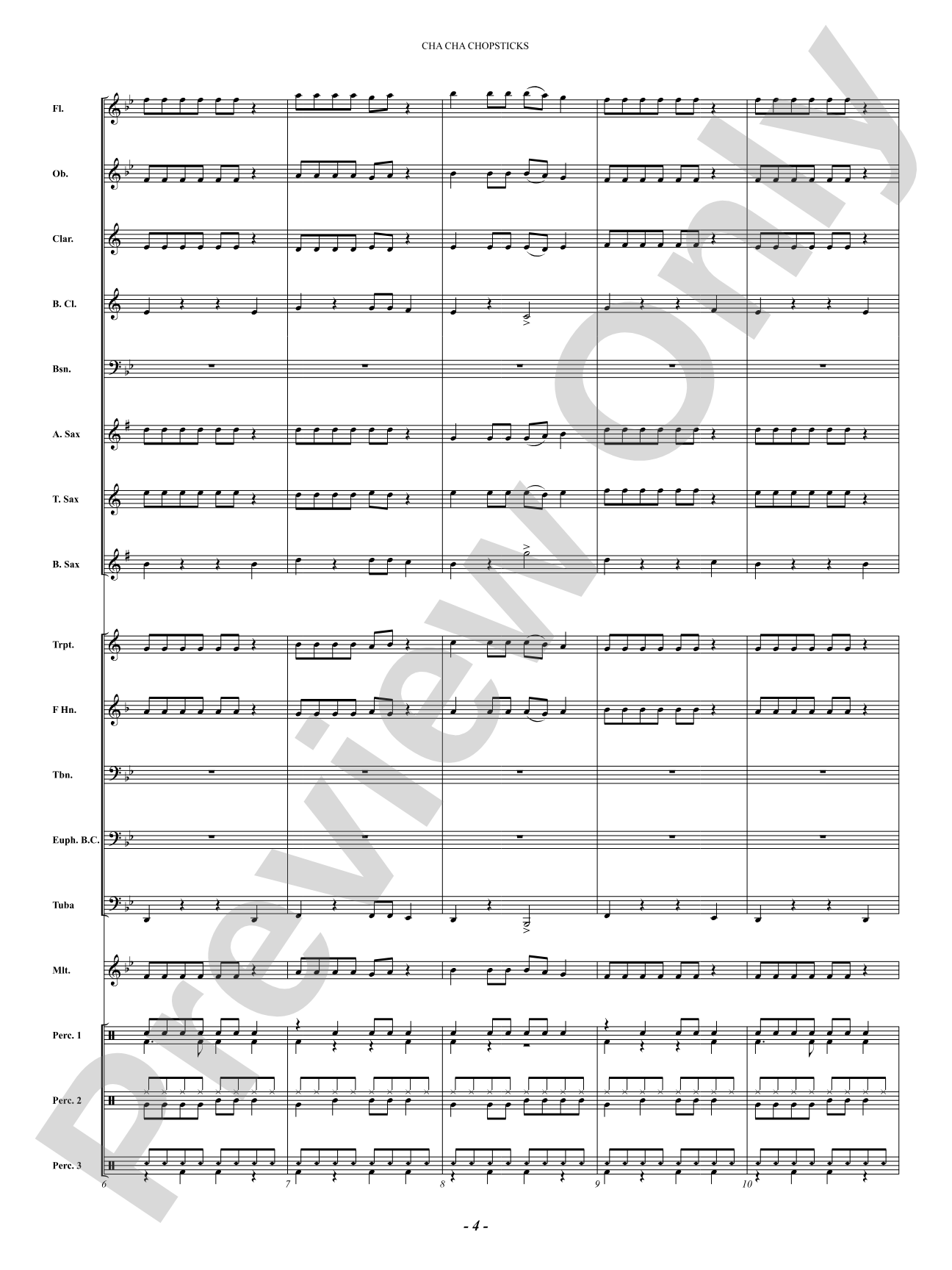
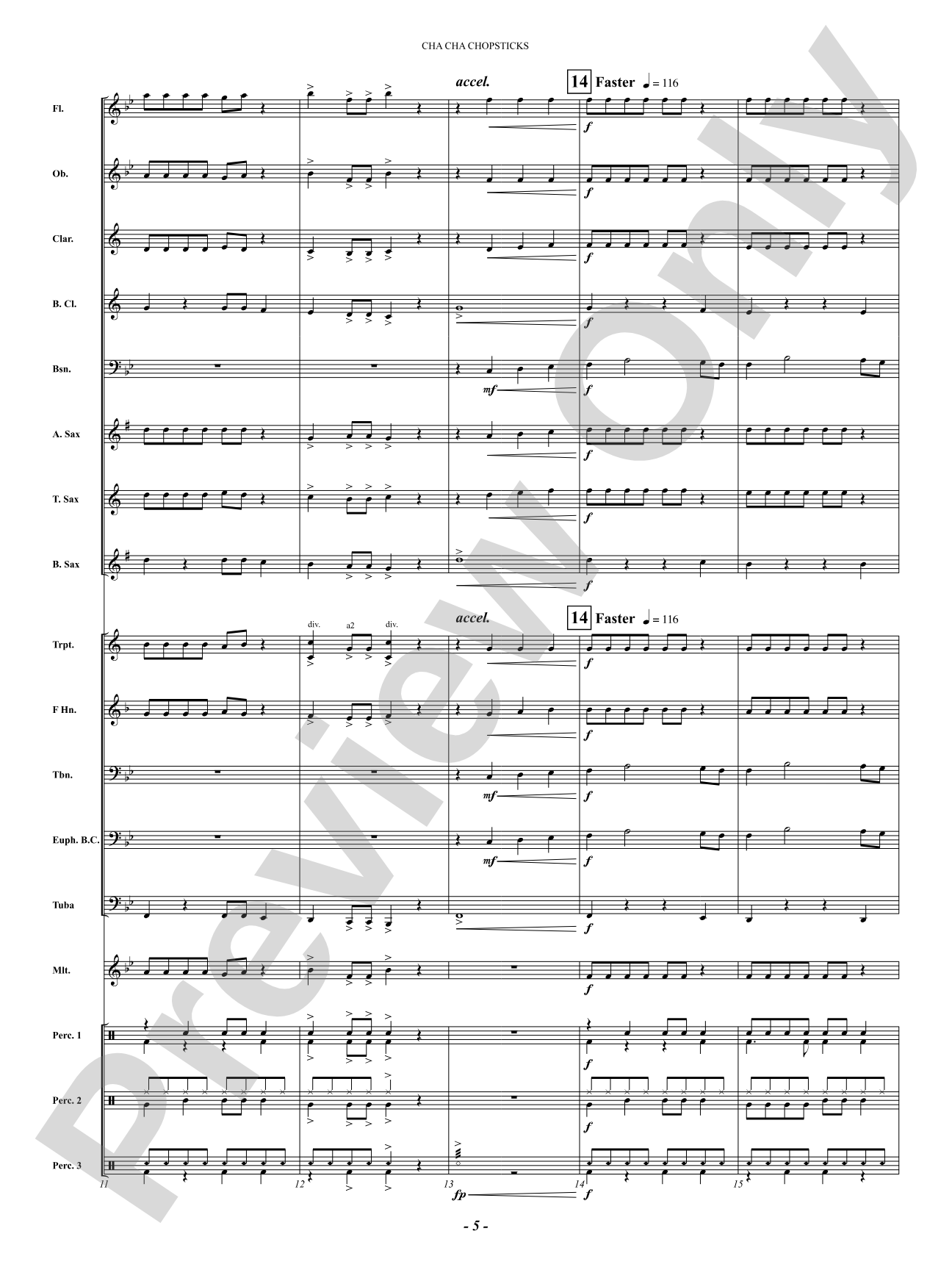
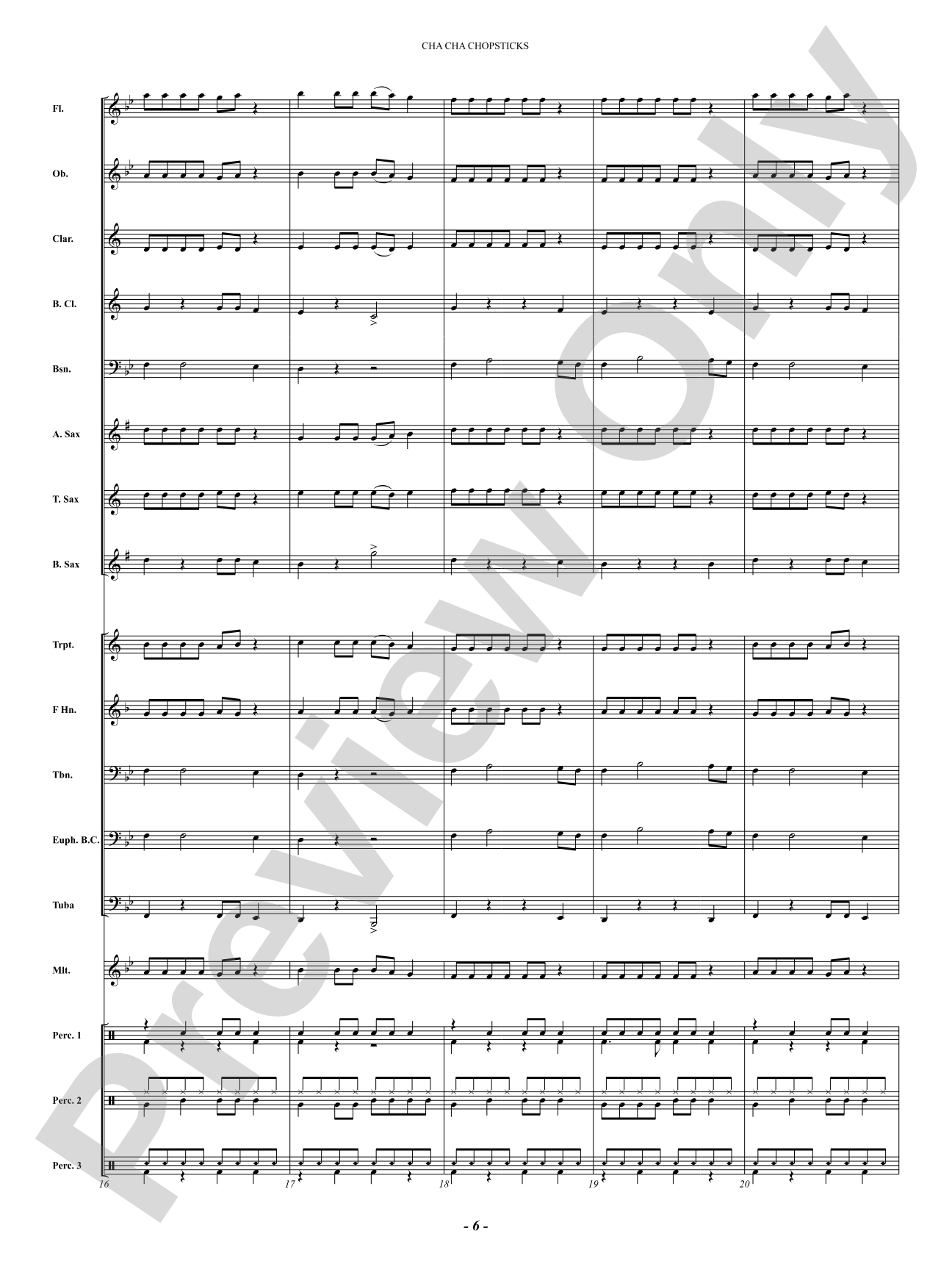
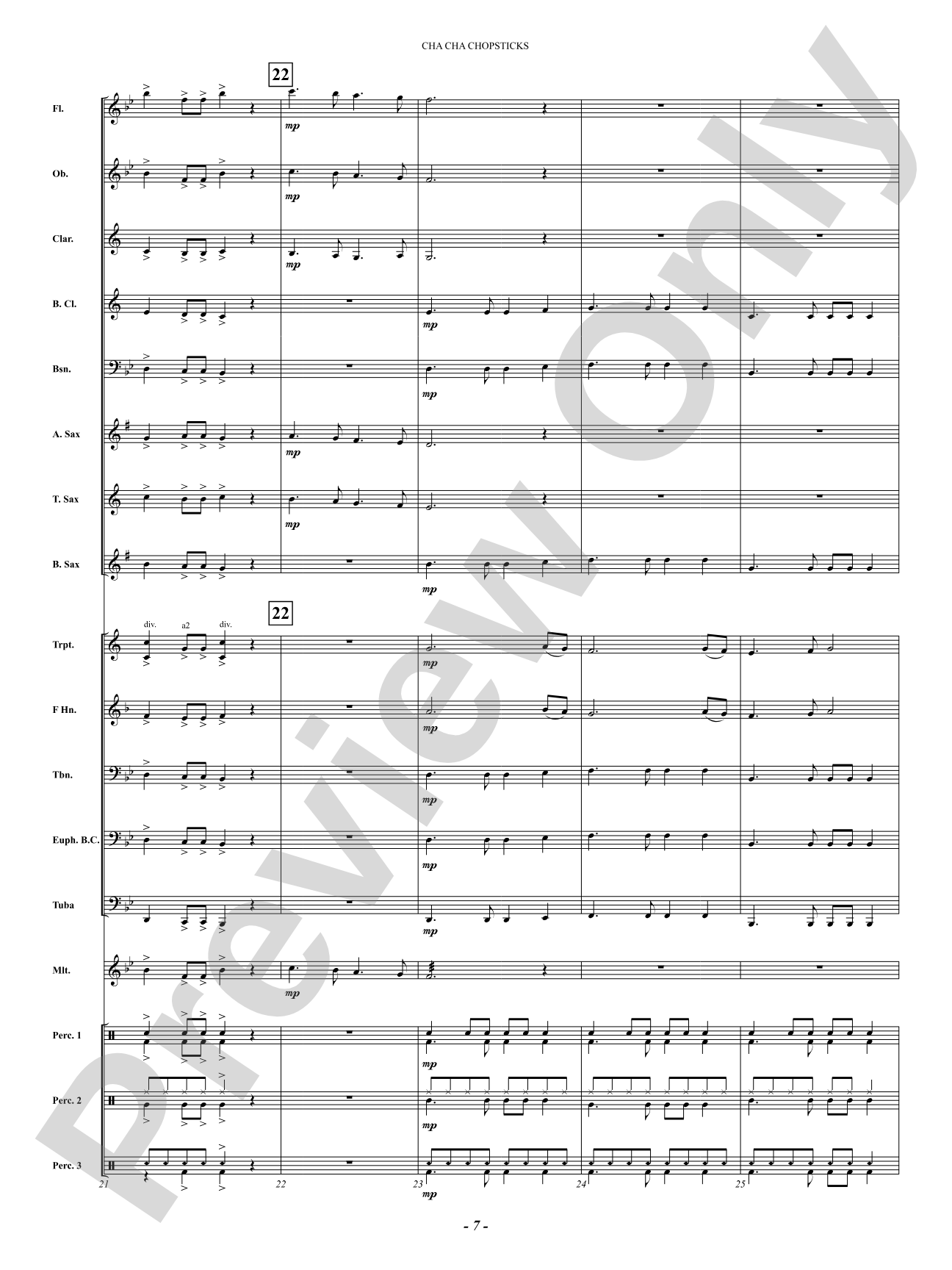
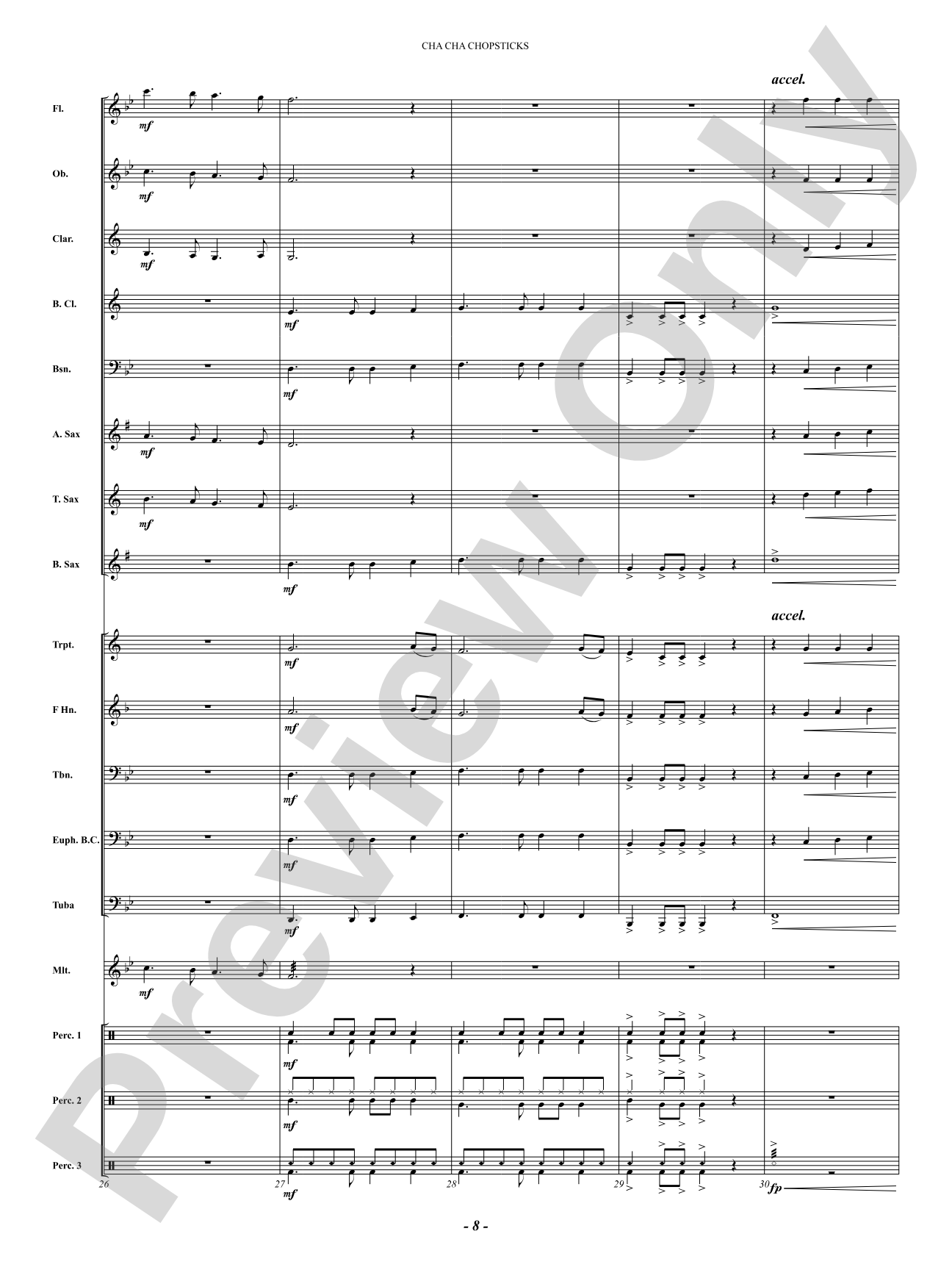
Spice up your concert with the infectious rhythms of Cha Cha Chopsticks, a fun and energetic piece by Heather Koehn based on the classic piano tune reimagined in a lively Latin style. Perfect for beginning bands, it offers a fantastic opportunity to teach syncopation and introduce percussionists to Latin instruments. A delightful crowd-pleaser that brings flair and fun to any performance!


Cha Cha Chopsticks: Concert Band Conductor Score & Parts isn't in MakeMusic Cloud just yet...but it could be. Let us know you'd like to see it, and you'll help shape what comes next. In the meantime, start a free trial and dive into thousands of interactive titles your students can play along with today.
Request This Title
Tell us you want it.
Start Your Free Trial
Explore everything that's ready to play right now.
Sample Audio
1
Audio File
--:--
0:00
0:00
Sample Video
Additional Details
Series:
RWS - Beginning Band
Publisher:
RWS Music Company
SKU:
98-PK-RWS2511
More about this title
About the Composer: Heather Ellis Koehn
Heather Ellis Koehn is a composer and arranger whose work spans educational and professional settings. Her gift for taking familiar material and reimagining it with fresh energy makes her a valued voice in beginning band literature.
Why we love this
Koehn takes a piece every musician knows and transplants it into a Latin groove that feels genuinely fresh, not gimmicky. The syncopation lands naturally in the writing, which means students learn the rhythmic concept through playing rather than fighting notation. Directors get a high-energy closer that audiences recognize instantly and bands enjoy performing.
What to expect
Instantly familiar yet propulsive, like a march through a carnival. The classic melody anchors everything while Latin percussion and syncopated rhythms give the piece genuine personality and forward motion, creating a sense of celebration that carries both players and audience.
Who it's for
Beginning bands at the late first-year to early second-year level will find this accessible and rewarding. Directors serving bands with mixed instrumentation and developing reading skills will appreciate the straightforward notation paired with sophisticated rhythmic content. It's equally valuable as a teaching tool and a morale-boosting performance piece.
How to get the most out of it
- Balance the Latin percussion parts carefully; they drive the groove but shouldn't overpower the melodic material. Let the clave and cowbell lock in with the rhythm section before adding other colors.
- Keep the tempo steady and confident. This style demands rhythmic precision, so settle on a tempo in sectionals and stick with it through performance.
- Encourage the lower woodwinds and brass to feel the syncopated rhythms in their bodies rather than counting through them. The swing comes from a relaxed, forward-moving pulse underneath the displaced accents.
- Use the tutti sections to build energy progressively. The arrangement likely includes layering moments, so shape them dynamically to create momentum toward peaks.
How to use it
This works beautifully as a concert finale or as the opening piece of a lighter second half. Its infectious energy makes it an excellent palate-cleanser between serious classical repertoire and gives audiences a tangible reminder that contemporary band music can be fun without sacrificing musicality.
Skills your students will build
- Syncopated rhythm reading and performance
- Latin percussion techniques and ensemble coordination
- Maintaining steady pulse while playing displaced accents
- Balancing multiple rhythmic layers in an arrangement
- Ensemble precision in a contemporary style context