

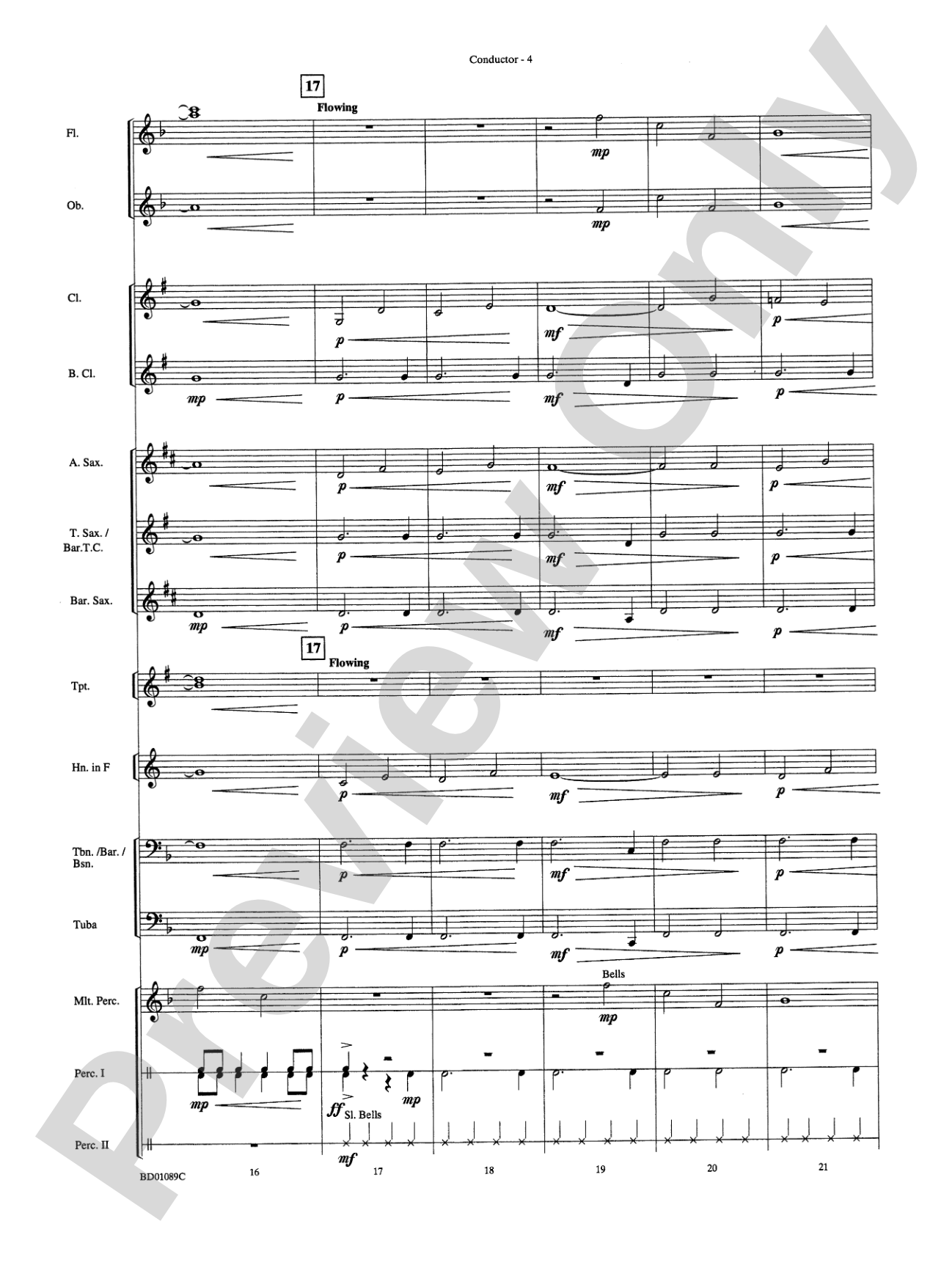
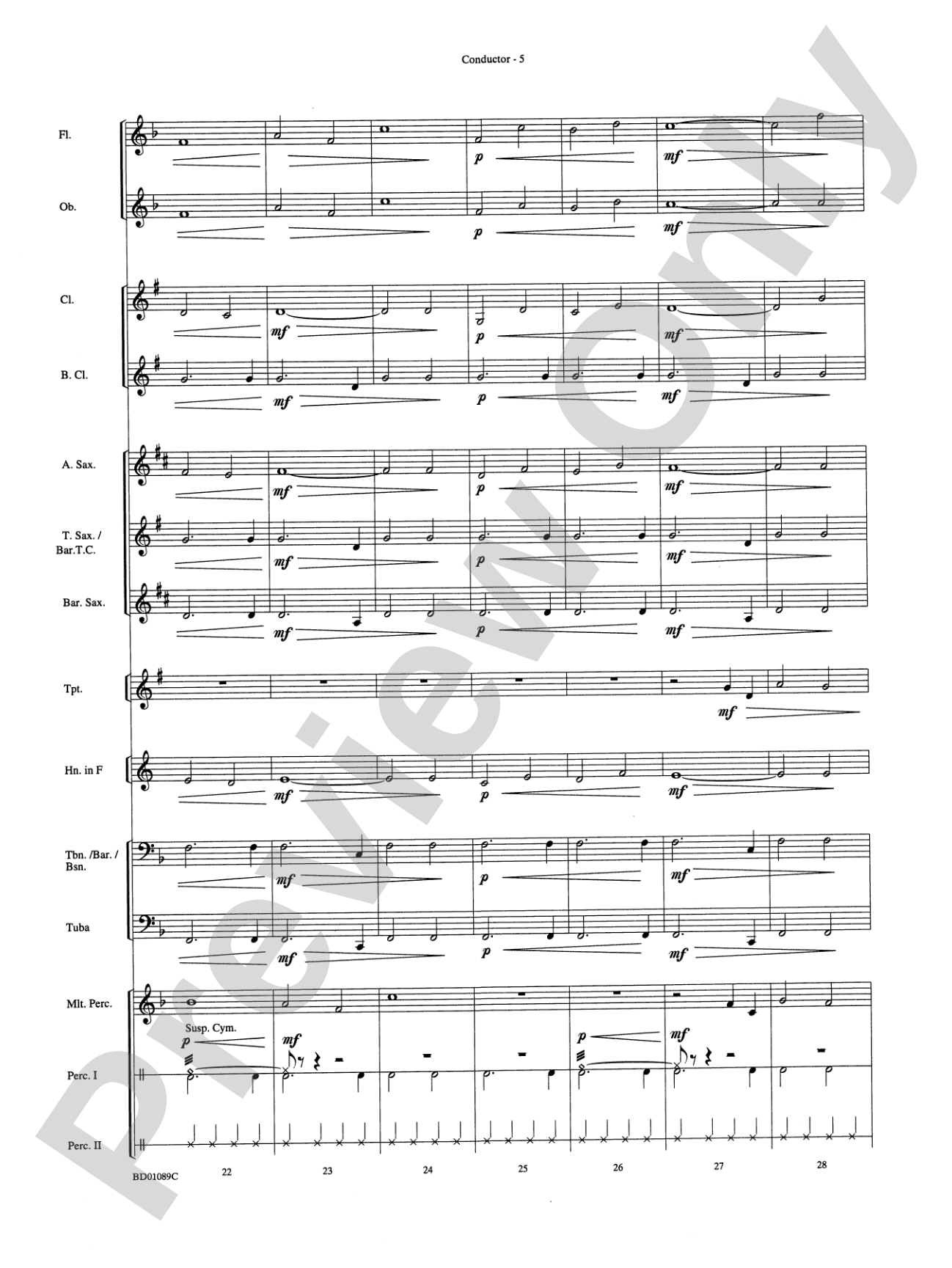
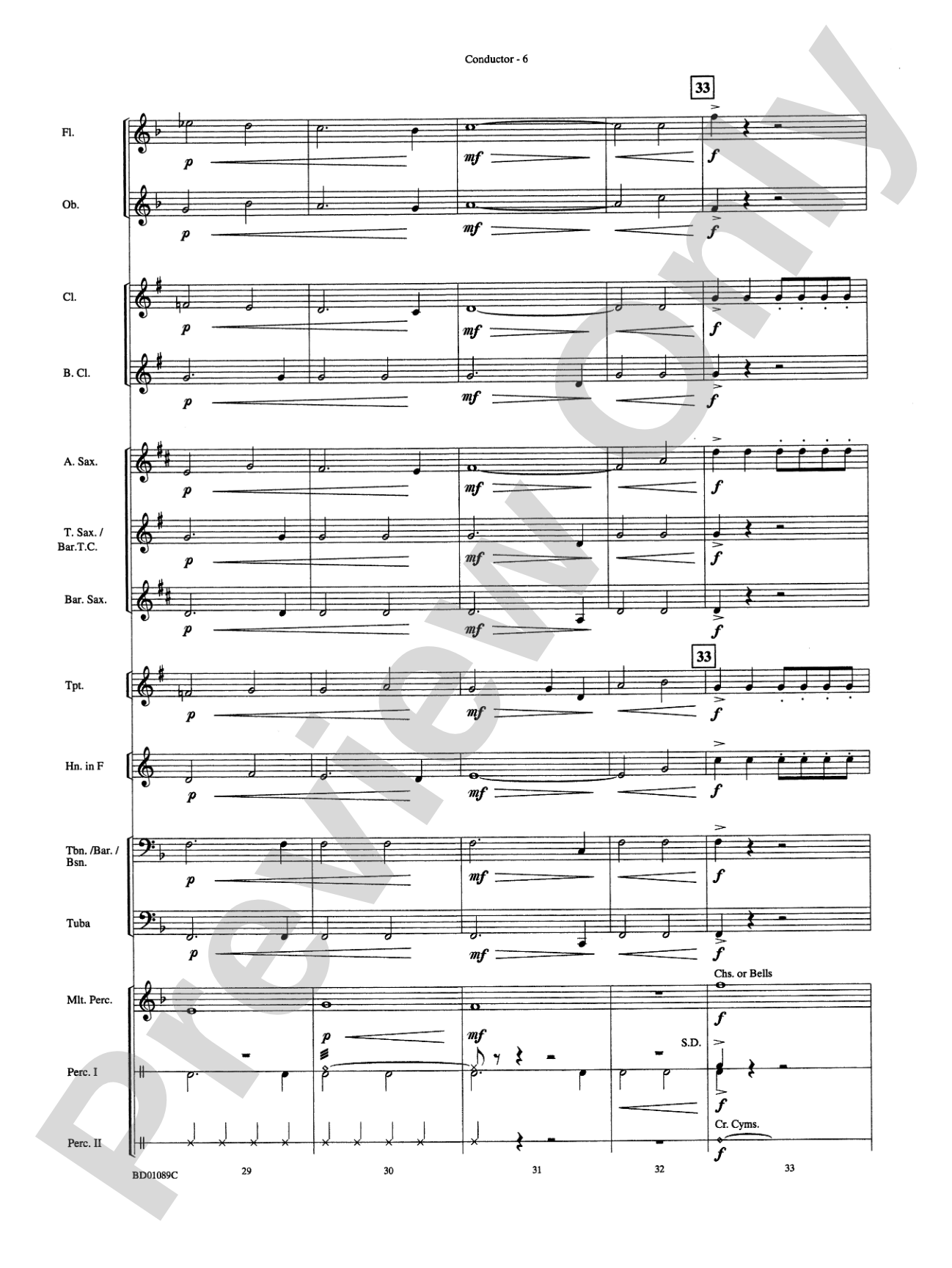
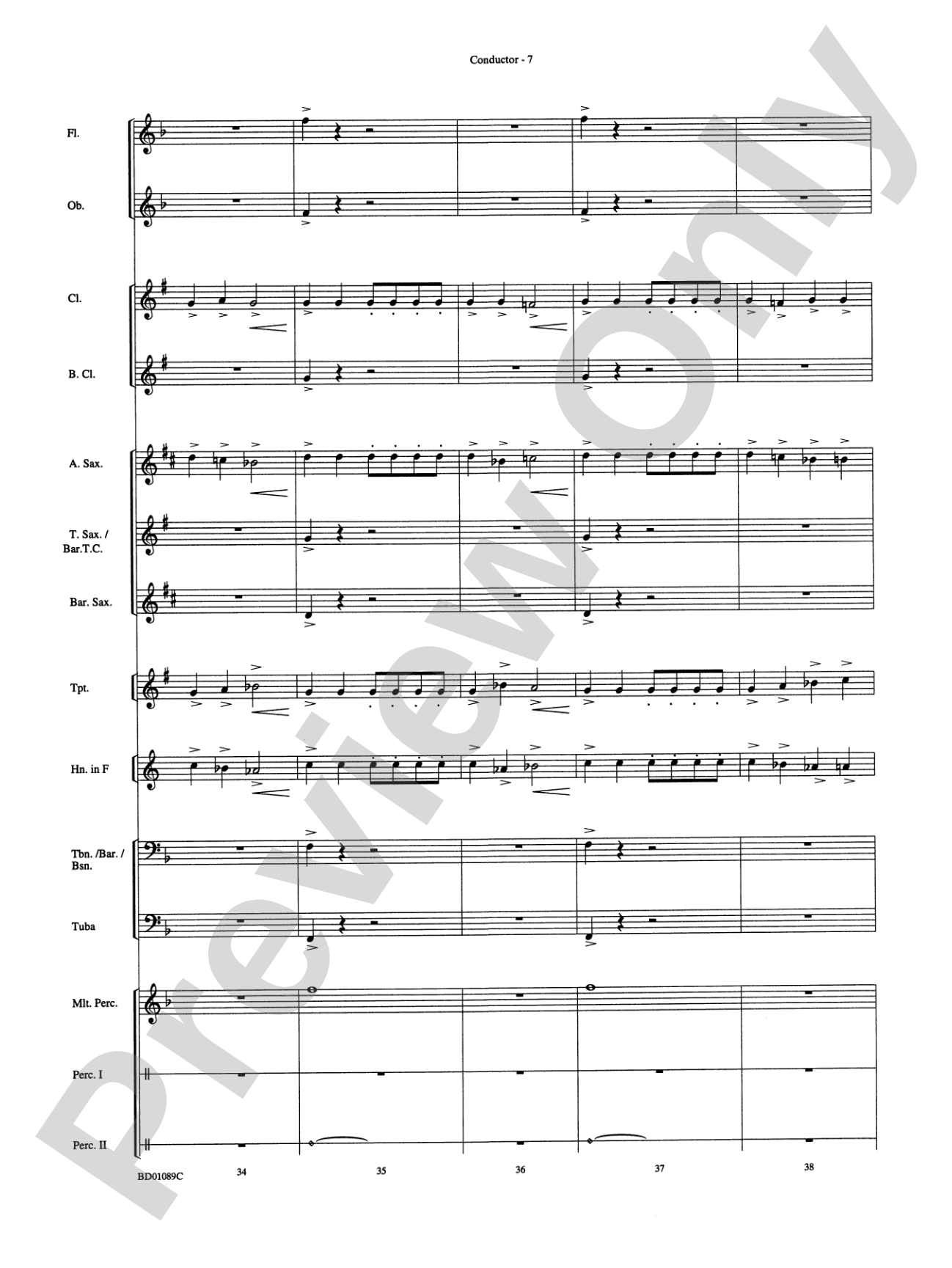
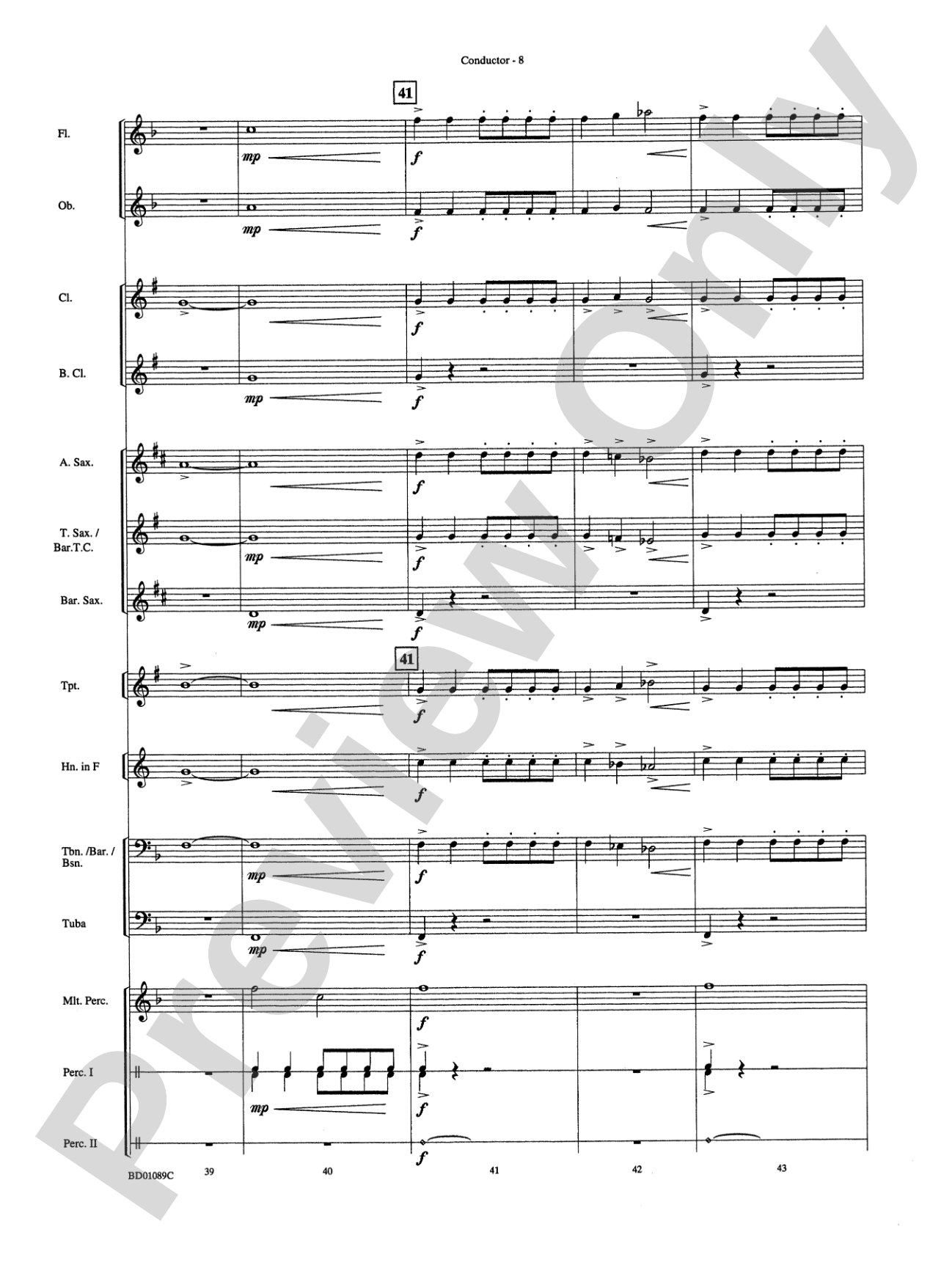
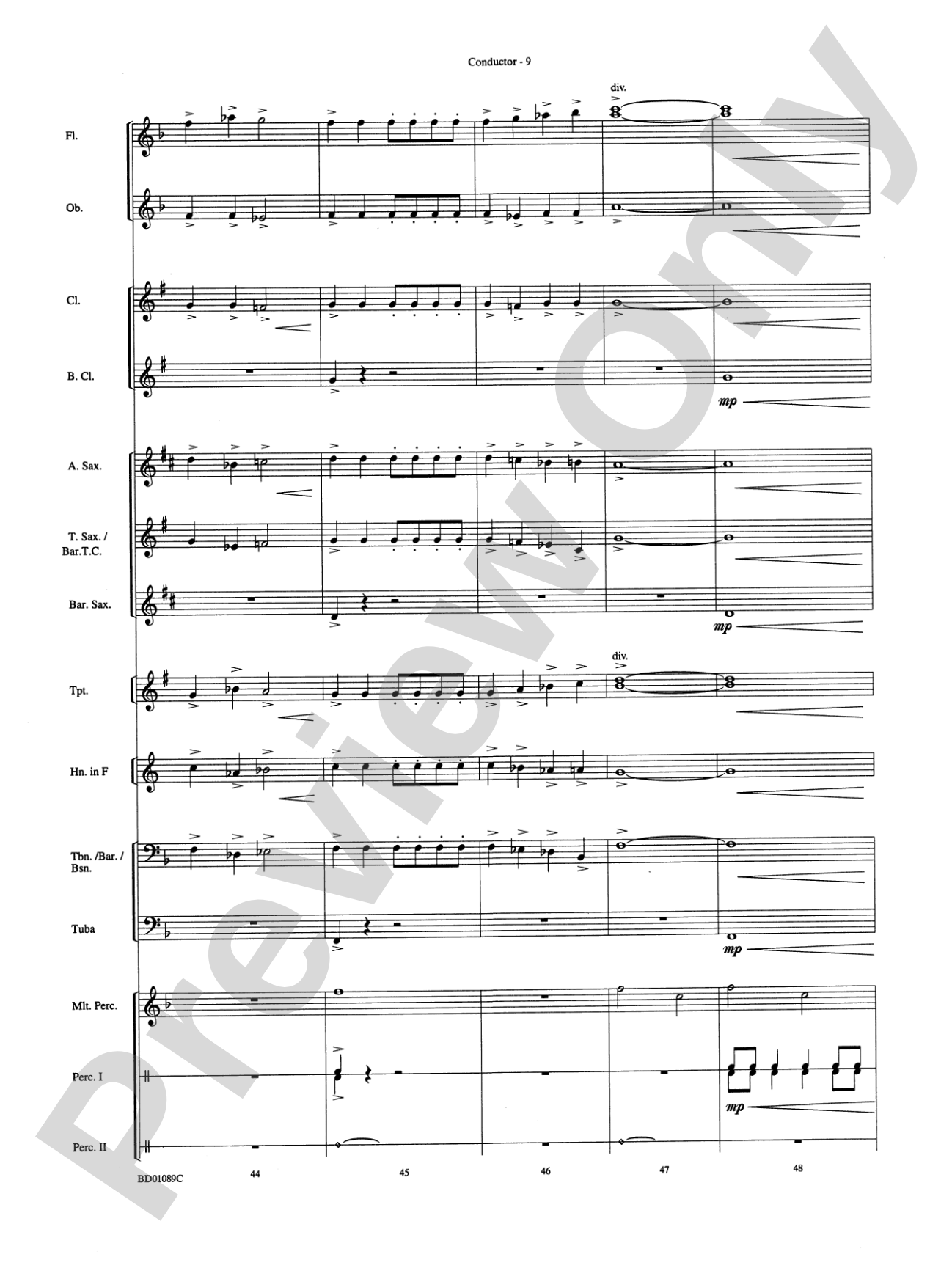
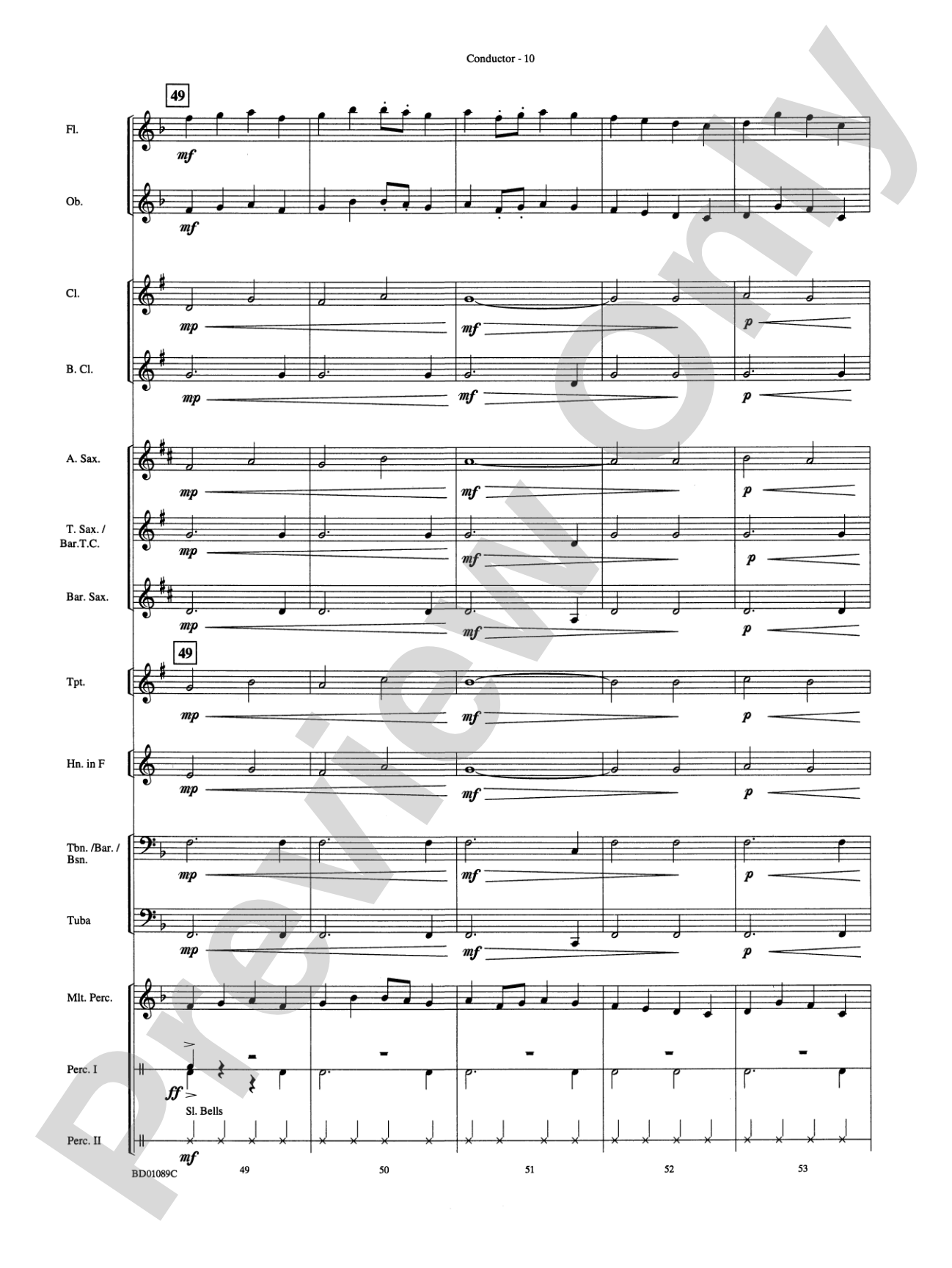
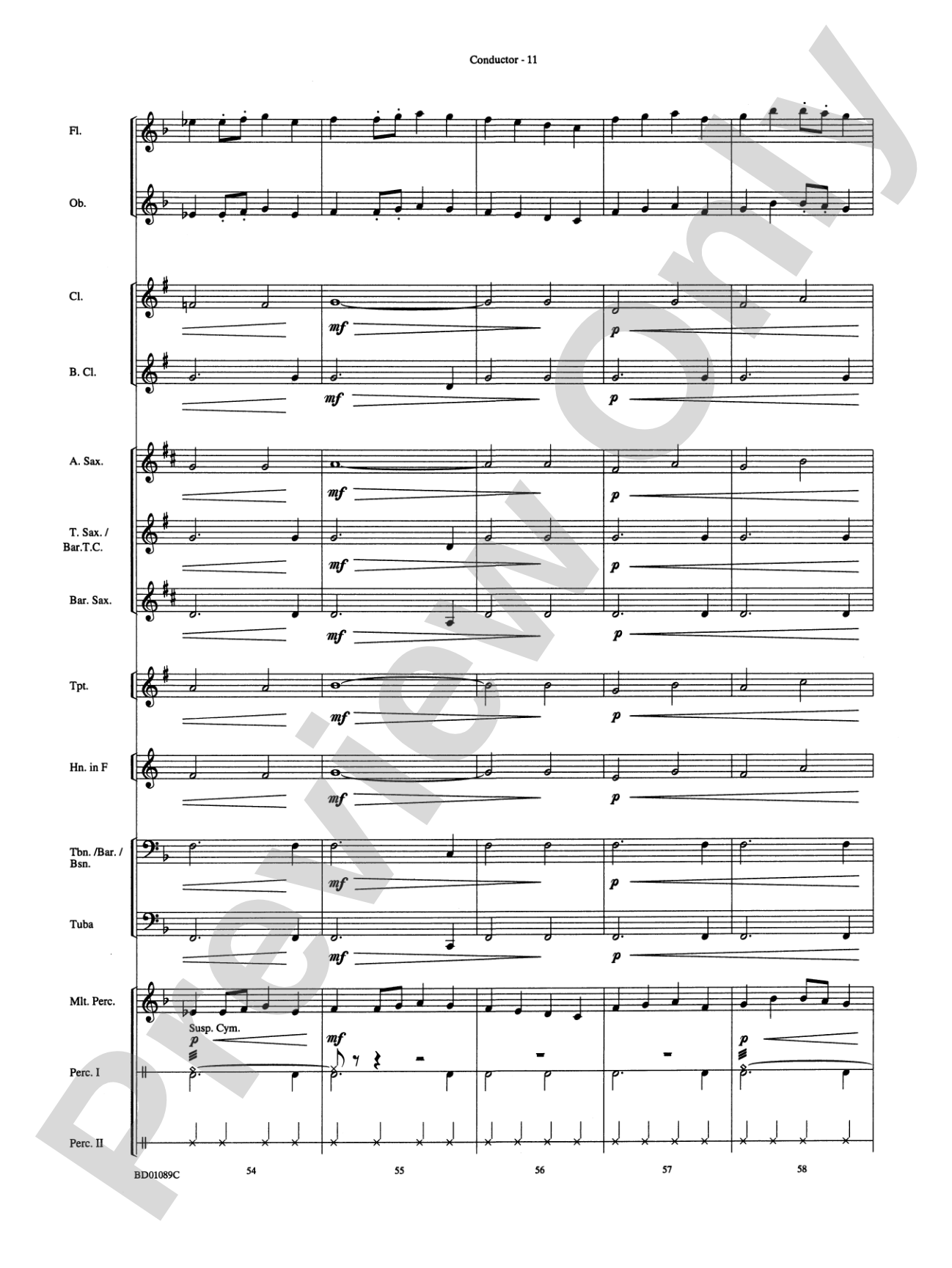
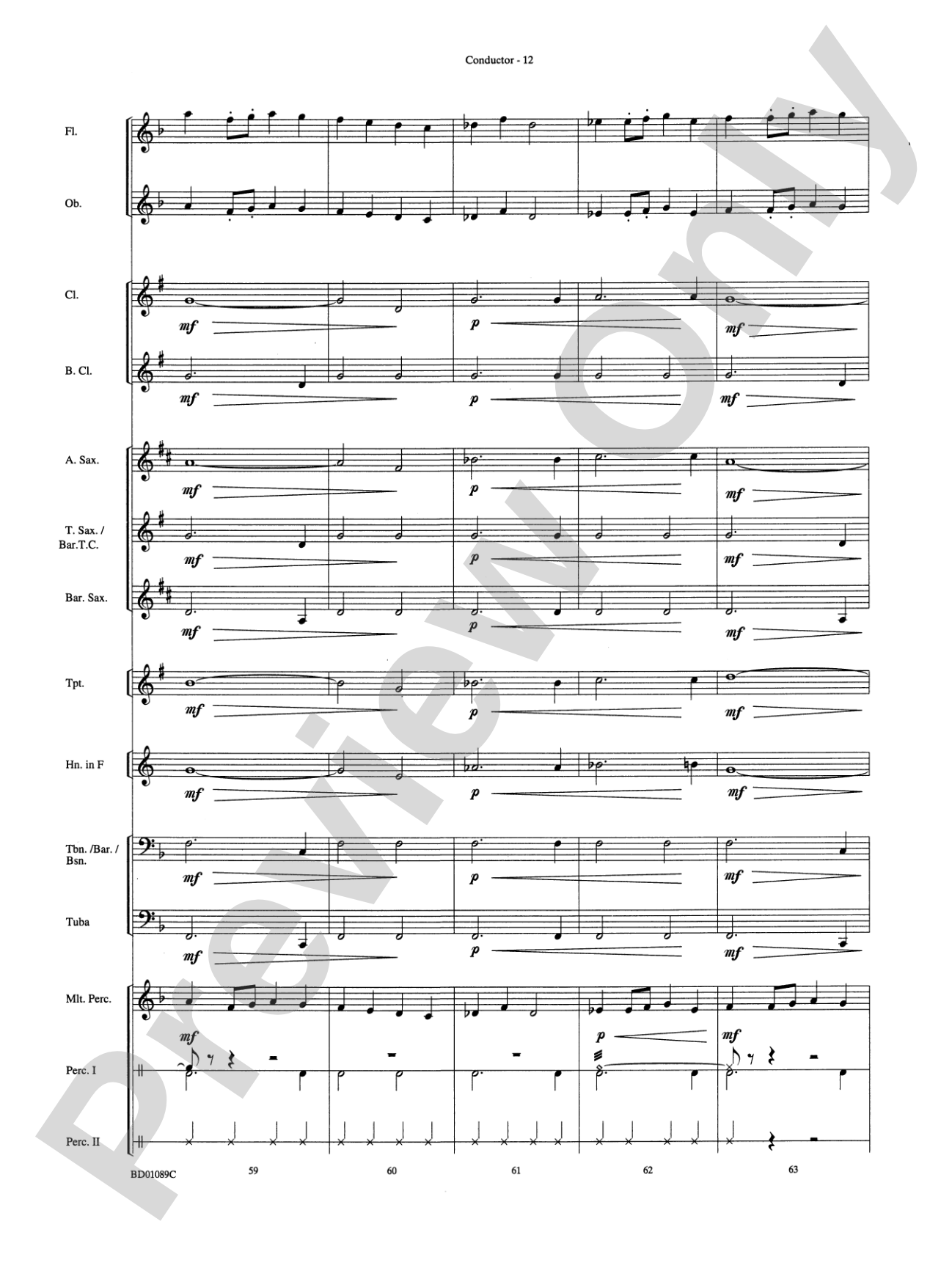
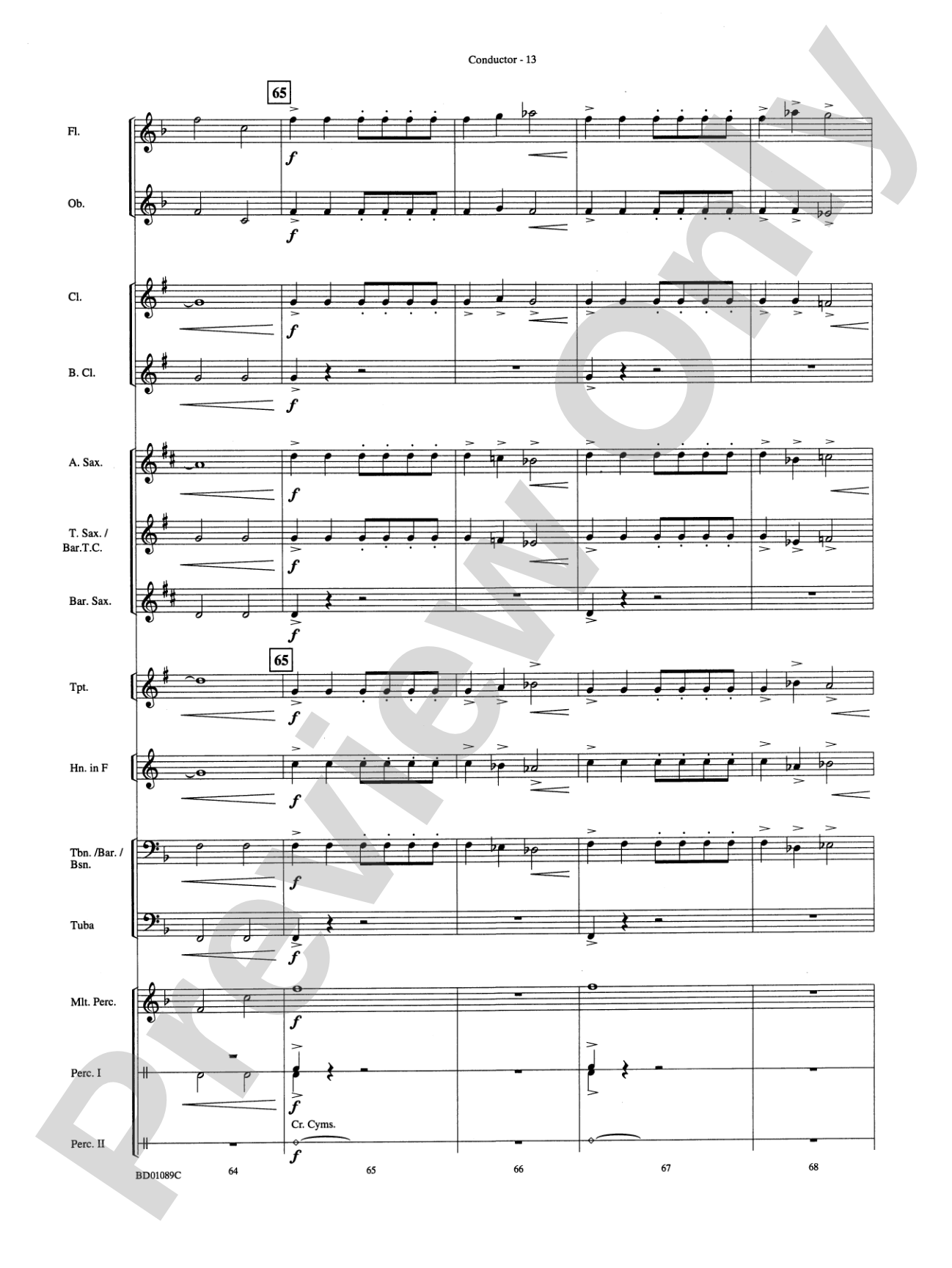
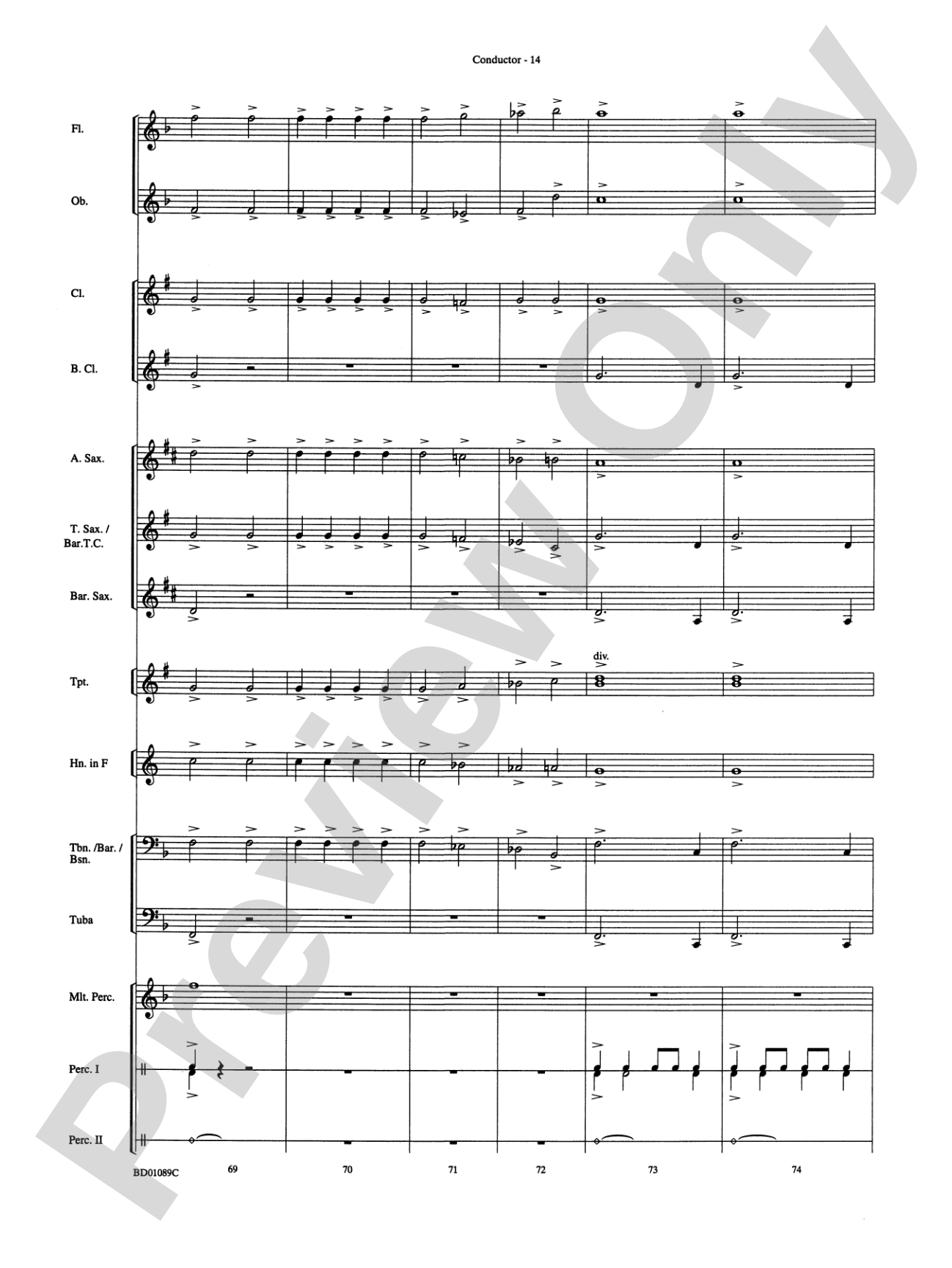
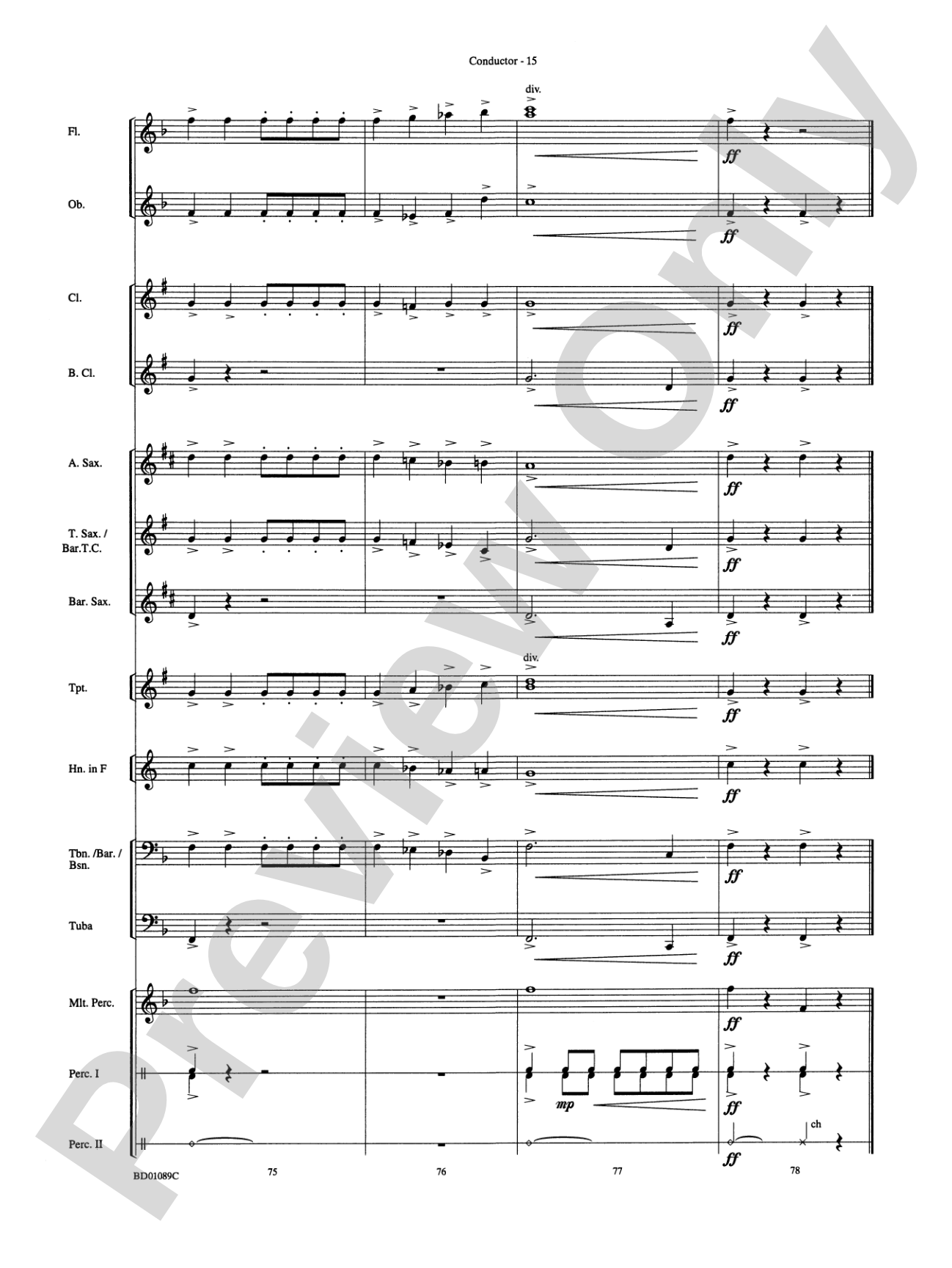



Ceremonium: Concert Band Conductor Score & Parts
By Robert W. Smith
Grade: 1 (Very Easy)
Item: 00-PK-0002022

$51.00
Pickup currently not available
Buy Extra Parts (Digital PDF Download)
| Product | Price | Quantity |
|---|---|---|
| Ceremonium: Score | $9.00 | |
| Ceremonium: Flute | $3.00 | |
| Ceremonium: Oboe | $3.00 | |
| Ceremonium: 1st B-flat Clarinet | $3.00 | |
| Ceremonium: B-flat Bass Clarinet | $3.00 | |
| Ceremonium: E-flat Alto Saxophone | $3.00 | |
| Ceremonium: B-flat Tenor Saxophone | $3.00 | |
| Ceremonium: E-flat Baritone Saxophone | $3.00 | |
| Ceremonium: 1st B-flat Trumpet | $3.00 | |
| Ceremonium: 1st F Horn | $3.00 | |
| Ceremonium: 1st Trombone | $3.00 | |
| Ceremonium: Tuba | $3.00 | |
| Ceremonium: Mallets | $3.00 | |
| Ceremonium: 1st Percussion | $3.00 | |
| Ceremonium: 2nd Percussion | $3.00 |
Parts Added to Cart!
Description
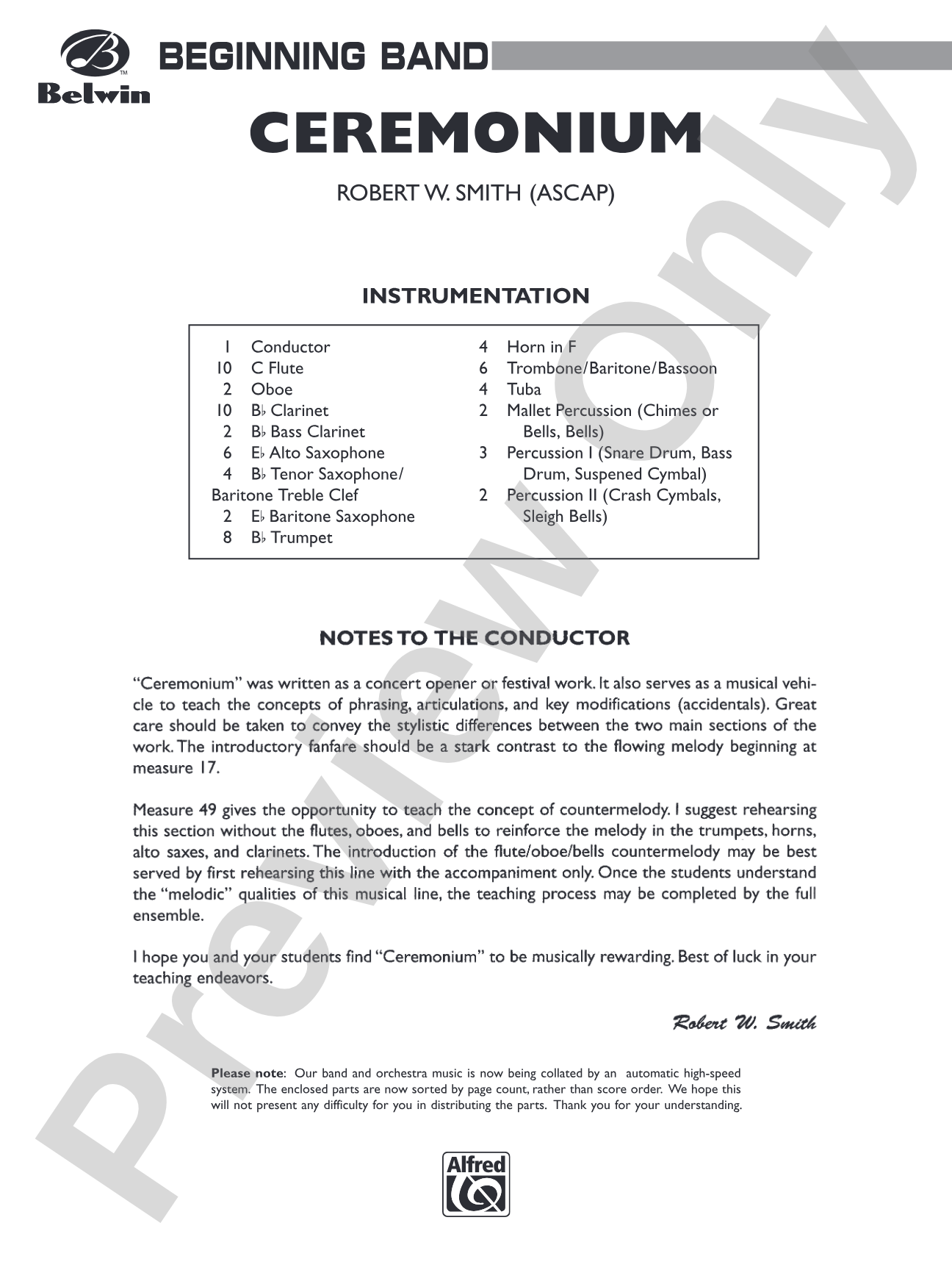
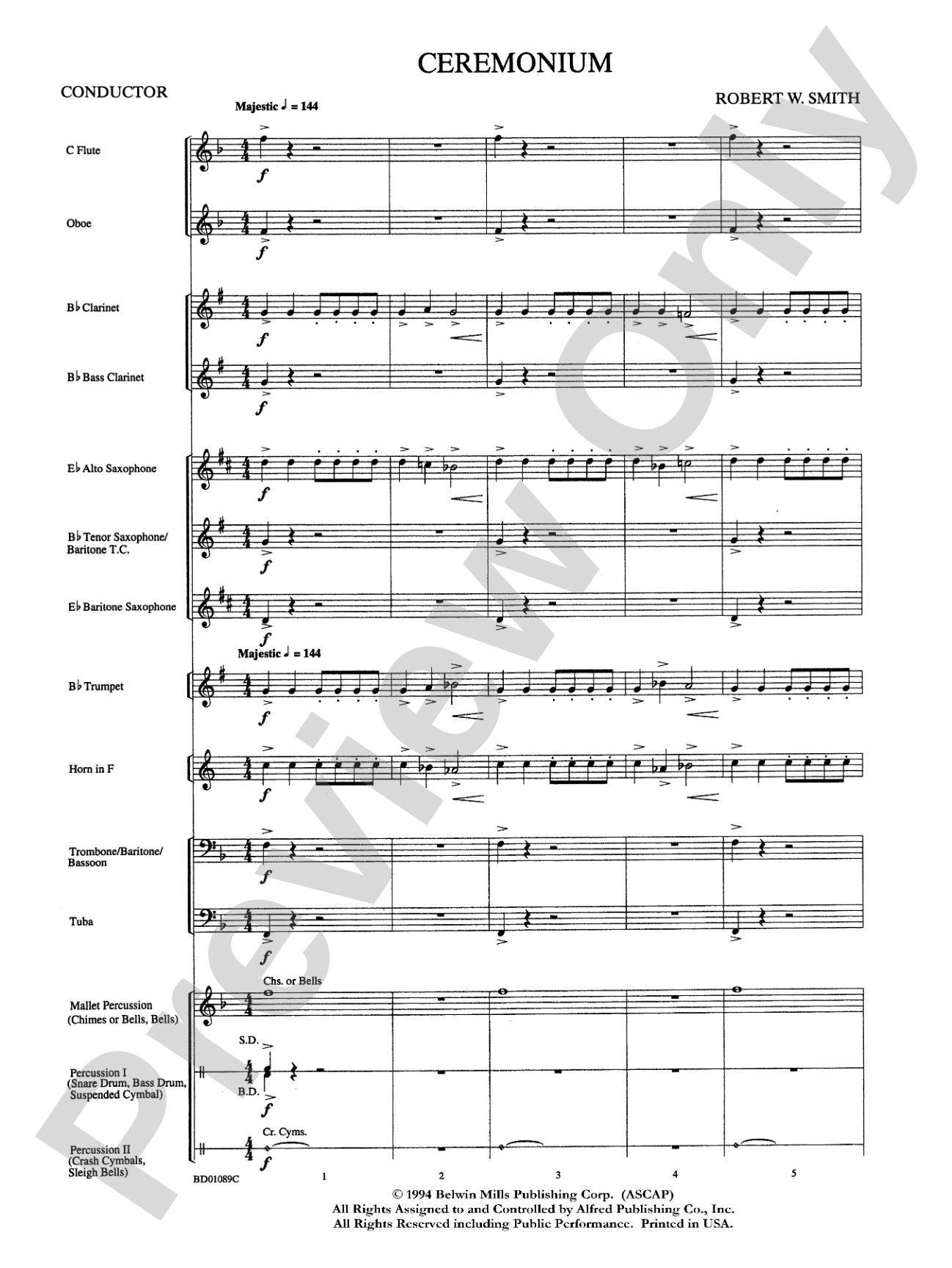
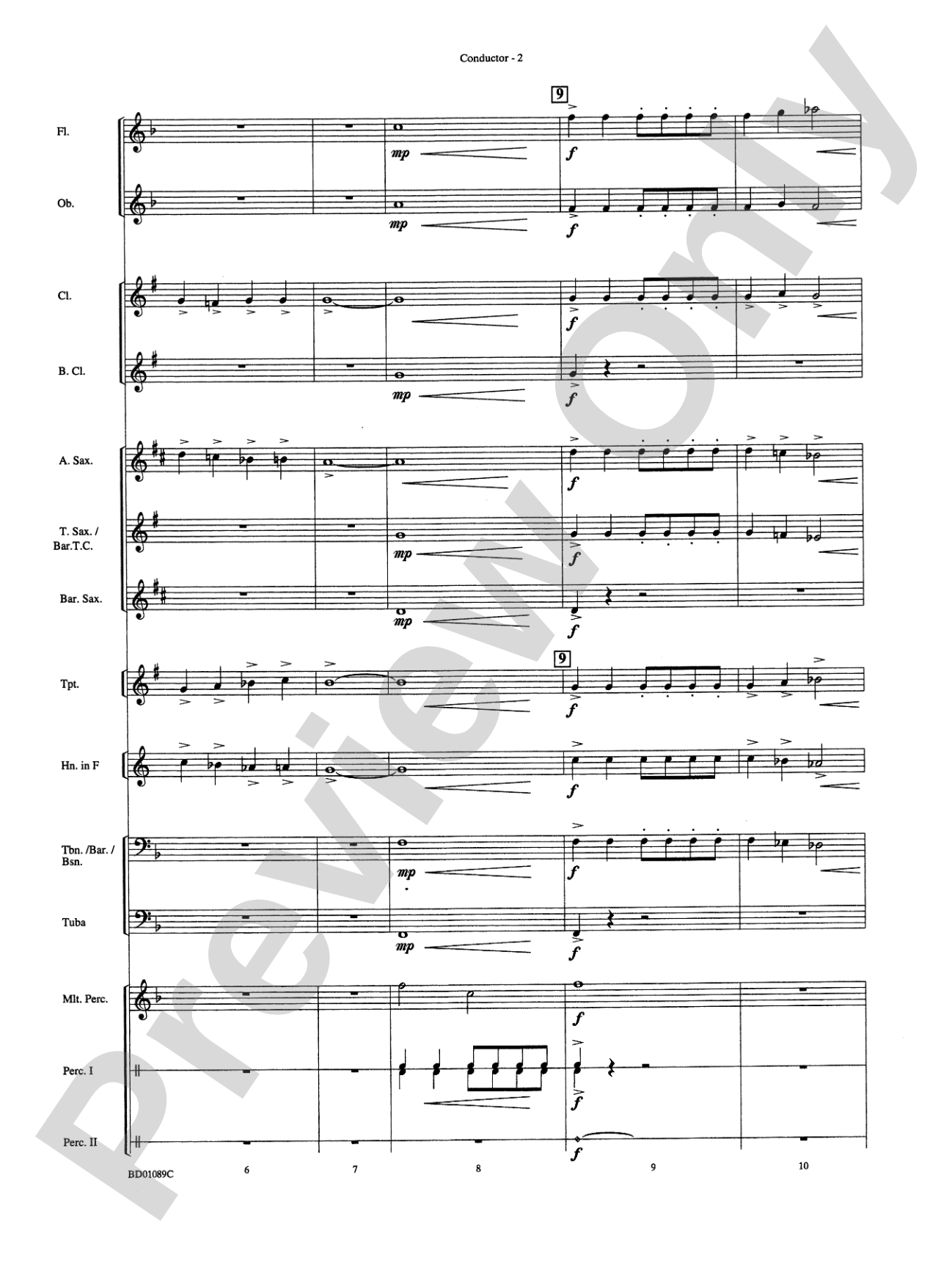
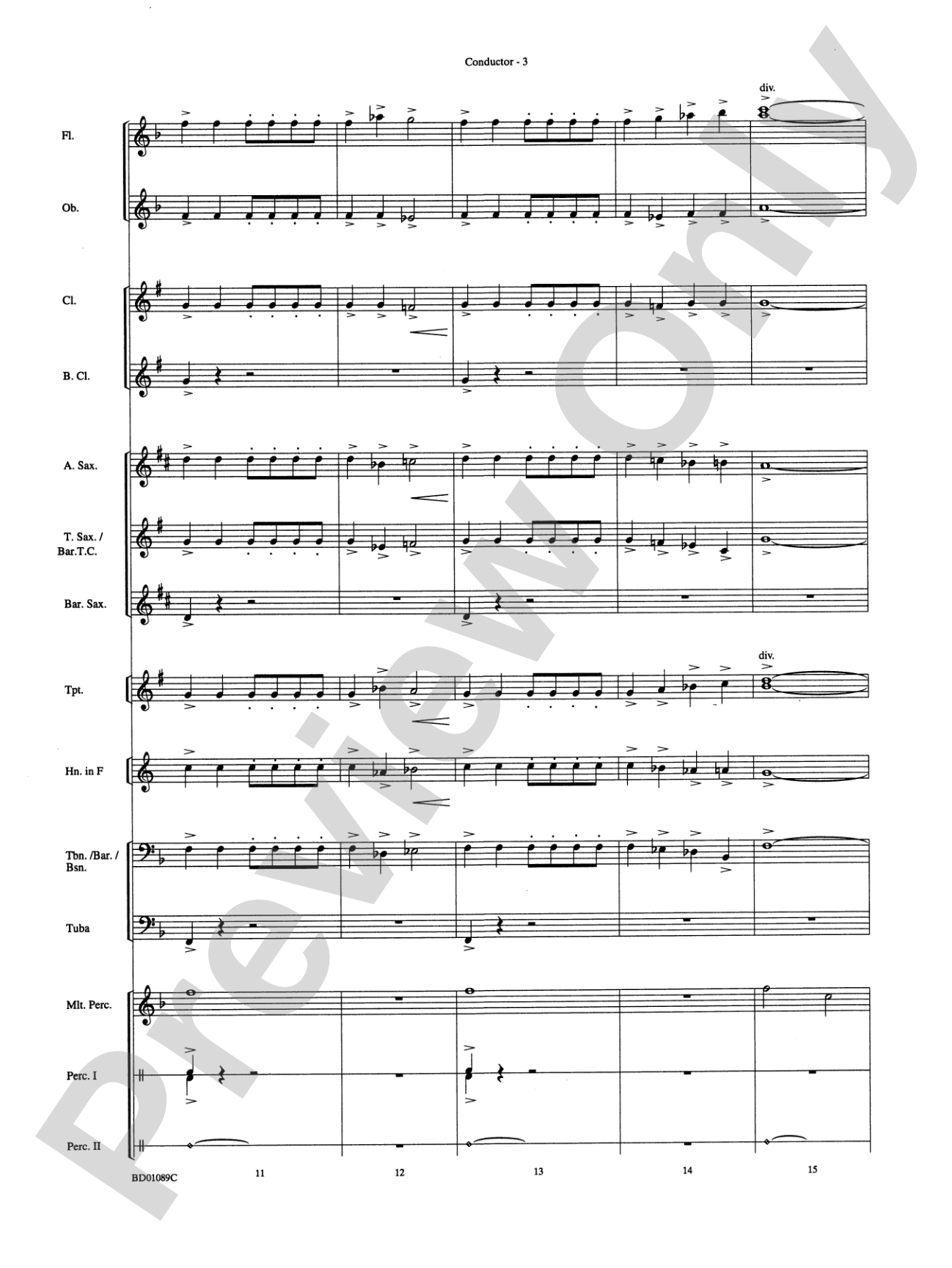
Ceremonium was written as a concert opener or festival work to give the young performing band a taste of 'real music.' It serves as an exceptional vehicle to teach the concepts of phrasing, articulation and key modification. The composer's trademark flowing melodies and countermelodies are always apparent. Vibrant, yet sophisticated!


Don't just read it, hear it, play along with it, and watch your students grow with it. In MakeMusic Cloud, Ceremonium: Concert Band Conductor Score & Parts comes alive with professional accompaniment, adjustable tempo, and built-in practice tools that turn solo practice into real progress.
Open in the Player
Jump straight in and assign it today.
Start Your Free Trial
Open this title and explore the full library in minutes.
Sample Audio
No sample audio found.
Sample Video
No sample videos found.
Additional Details
Series:
Belwin Beginning Band
Publisher:
Alfred Music
Page Count:
65
SKU:
00-PK-0002022
More about this title
About the Composer: Robert W. Smith

Robert W. Smith stands among America's most performed composers for concert band and orchestra, with over 400 published works to his name. His education in music education from Troy State University and advanced study at the University of Miami shaped a compositional voice that speaks directly to student musicians while maintaining artistic integrity. His symphonies, including The Divine Comedy and The Odyssey, have resonated with ensembles and audiences across North America, Europe, Australia, and Asia.
Beyond the concert hall, Smith's music has been heard at the Olympic Games, the Macy's Thanksgiving Day Parade broadcast, opening ceremonies honoring world leaders, and countless festival stages. His work as conductor and clinician has taken him across the United States, Canada, Japan, Australia, and Europe, where he continues to shape music education and professional performance standards.
Why we love this
Smith knows how to write for young bands without compromising musical substance. Ceremonium opens with genuine compositional craft, flowing melodies that feel substantial even at Grade 1, and opportunities to teach phrasing and articulation through music that actually rewards careful attention. It's the rare festival opener that the ensemble remembers practicing.
What to expect
Ceremonium carries the ceremonial weight its title suggests, yet stays accessible. Flowing melodies build without demanding technical showmanship, and the harmonic language feels refined without becoming heavy. It's vibrant enough to engage young players and sophisticated enough to hold the attention of experienced listeners.
Who it's for
Beginning concert bands that are ready to move beyond rudimentary material and taste real compositional thinking. This works equally well as a festival selection or as the opening statement at a concert where you want to set a sophisticated tone from measure one.
How to get the most out of it
- Shape the opening melody with clear phrase arcs; even young players can feel the difference between music that breathes and music that simply continues.
- Balance the countermelodies against the primary line so listeners follow the composer's intent without having to listen extra hard.
- Attend to the key changes with precision; this is the compositional device Smith uses to refresh the material, so mark them clearly in rehearsal.
How to use it
Begin a concert or festival appearance with this to establish ensemble musicality and confidence. Its modest difficulty frees rehearsal time for the interpretive work that makes music matter, and it serves as an ideal vehicle to establish the artistic level of your program before moving into more challenging repertoire.
Skills your students will build
- Phrasing across longer melodic lines
- Articulation clarity and consistency
- Following key modifications and harmonic movement
- Balancing melody with countermelody
- Concert-opening confidence and ensemble cohesion