
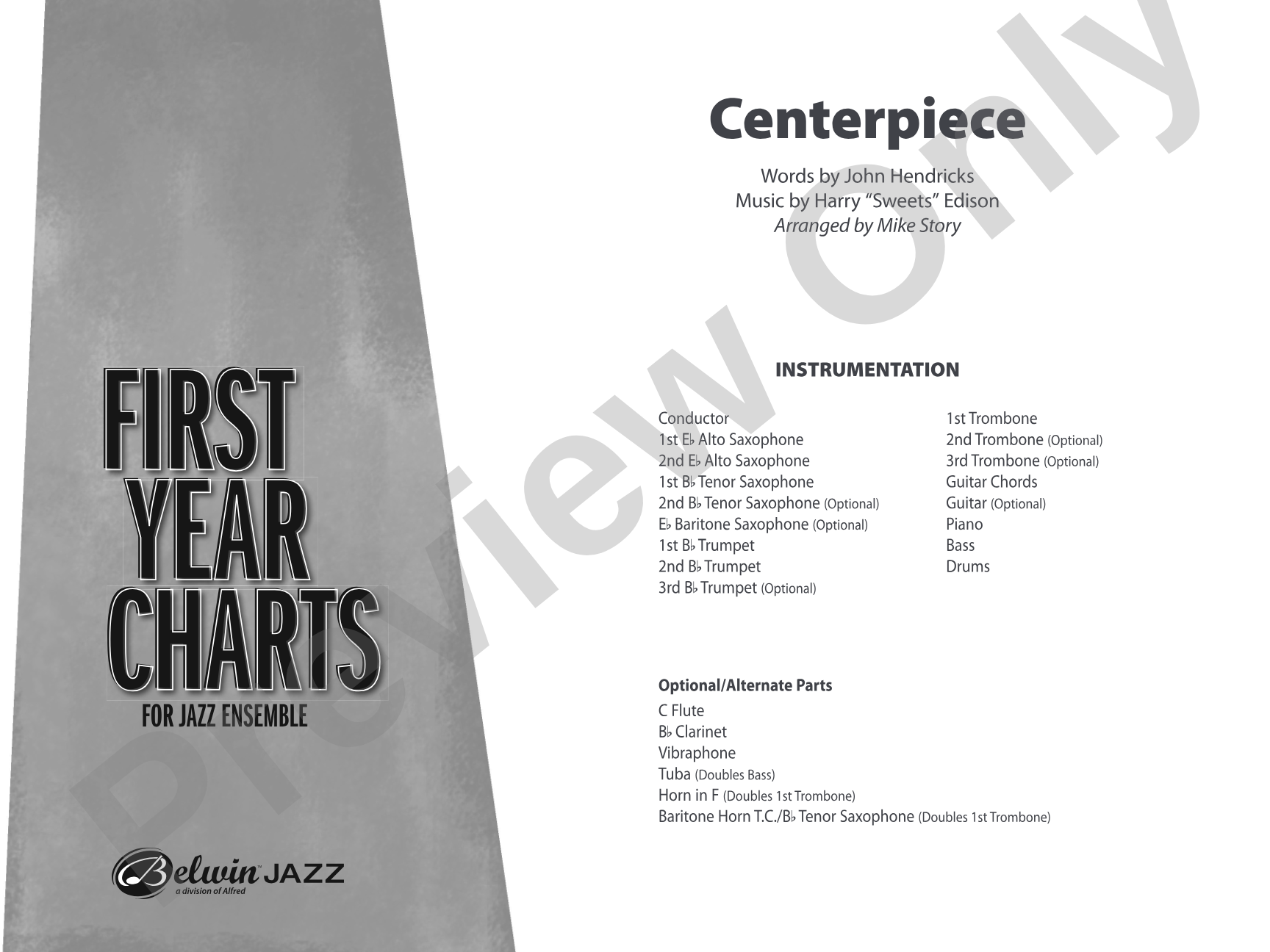
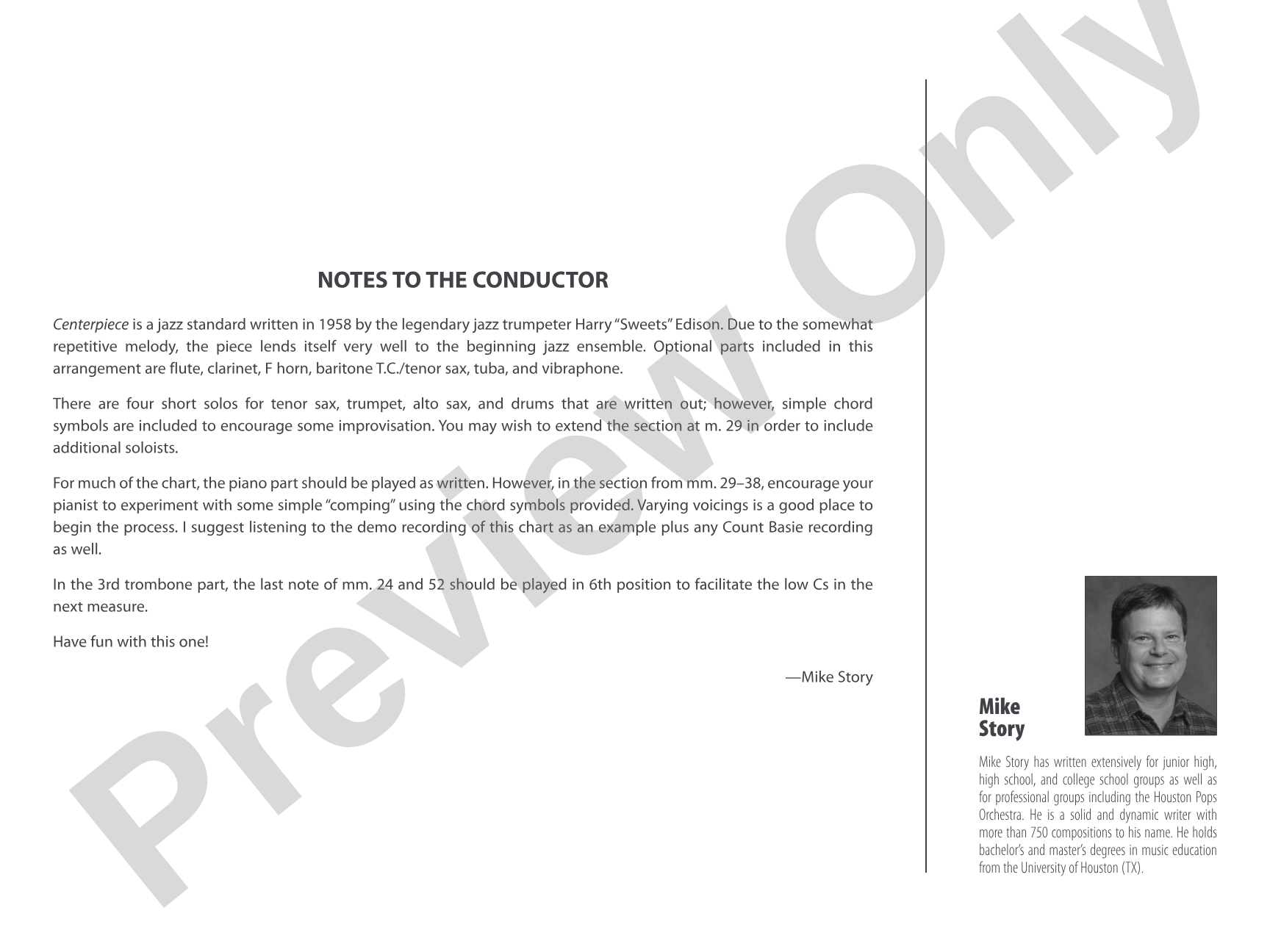
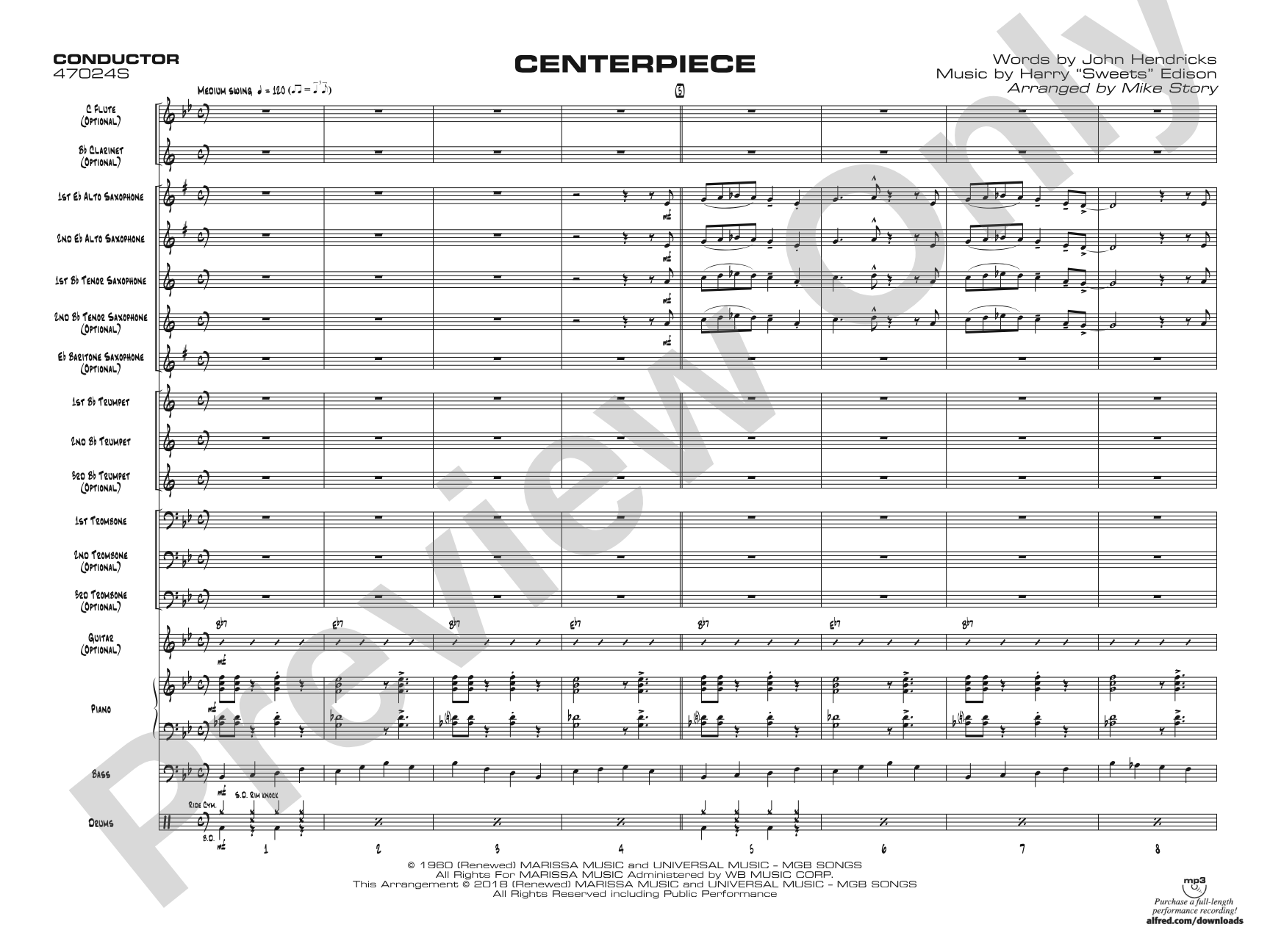
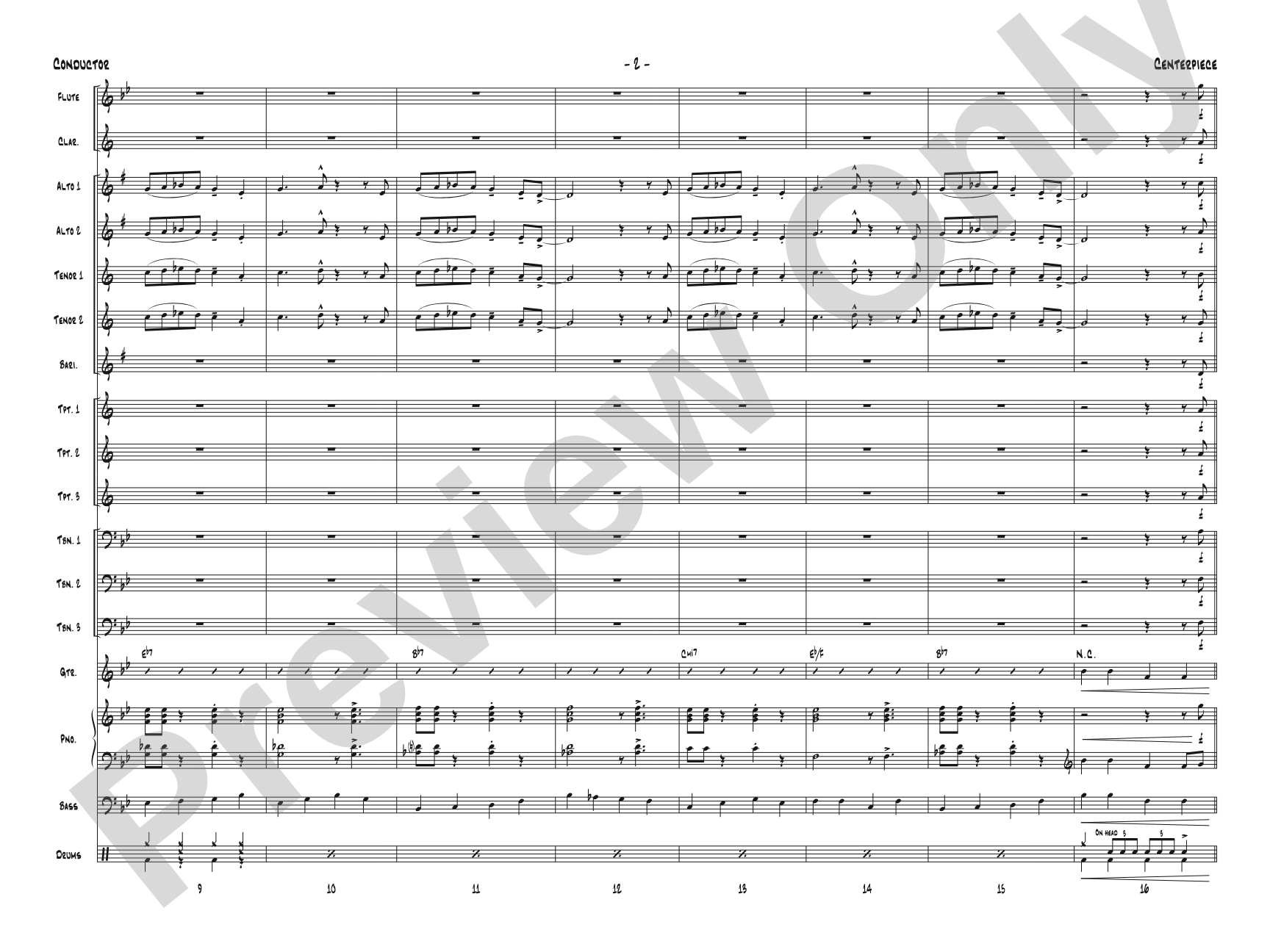
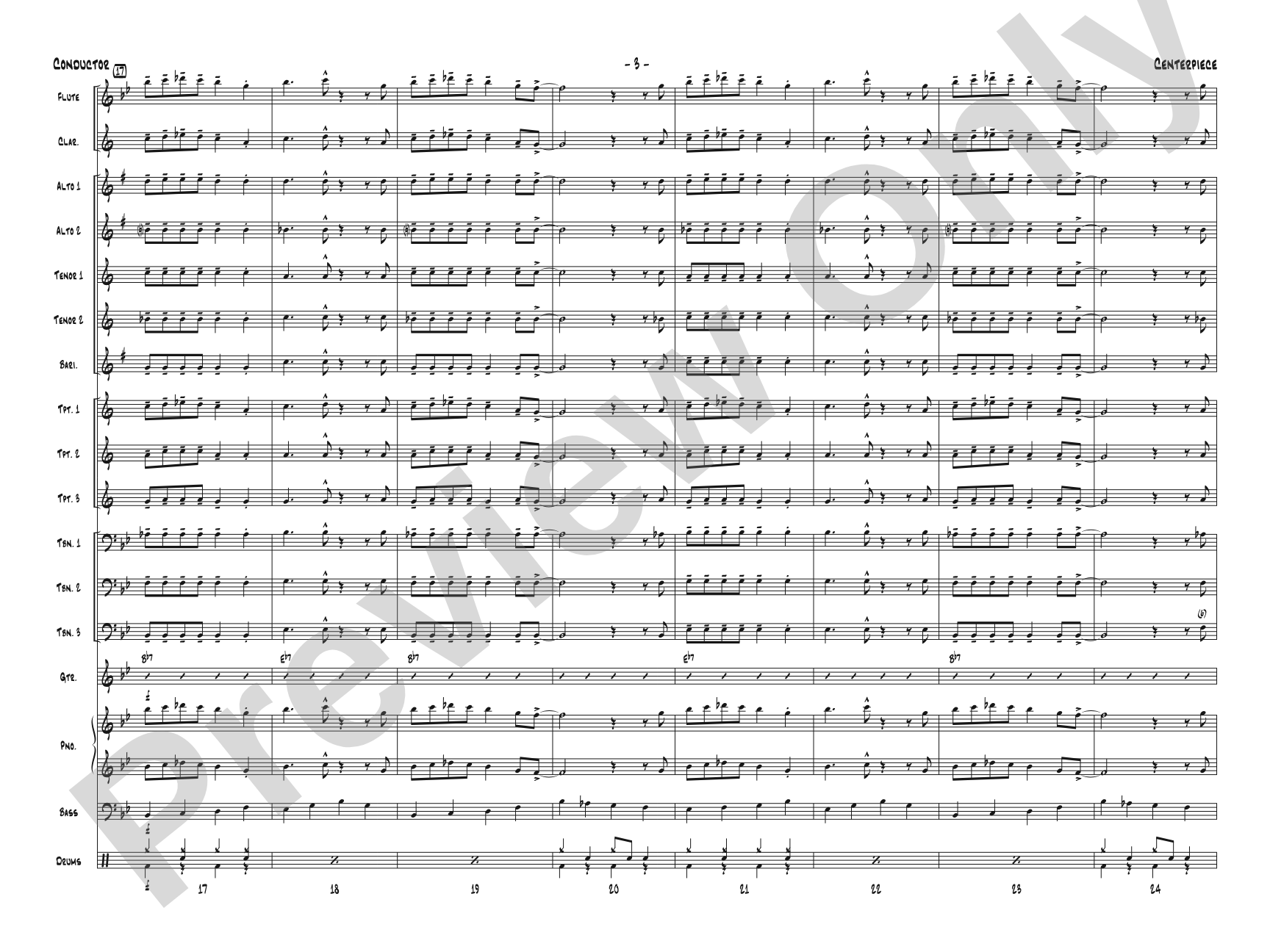
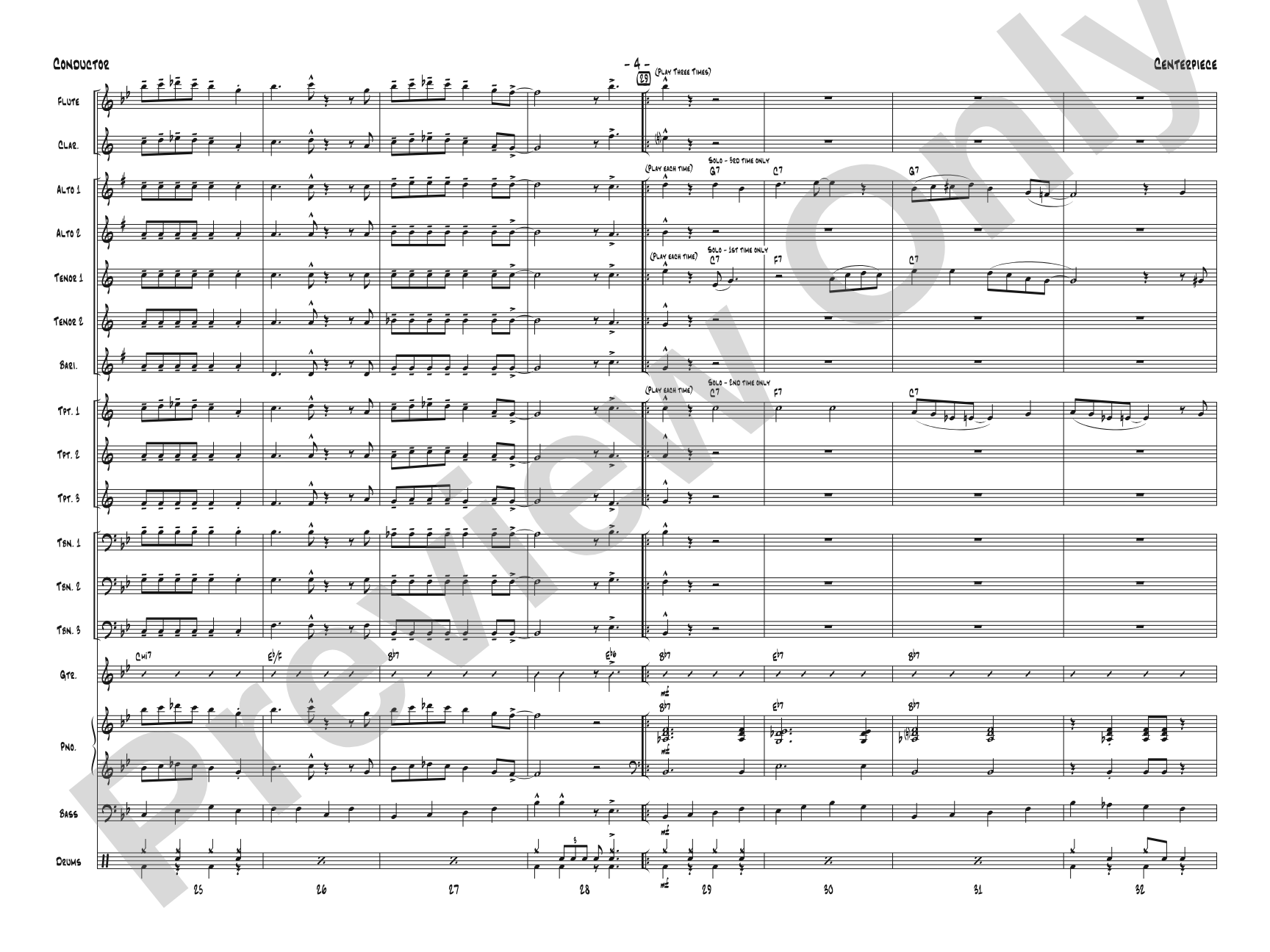
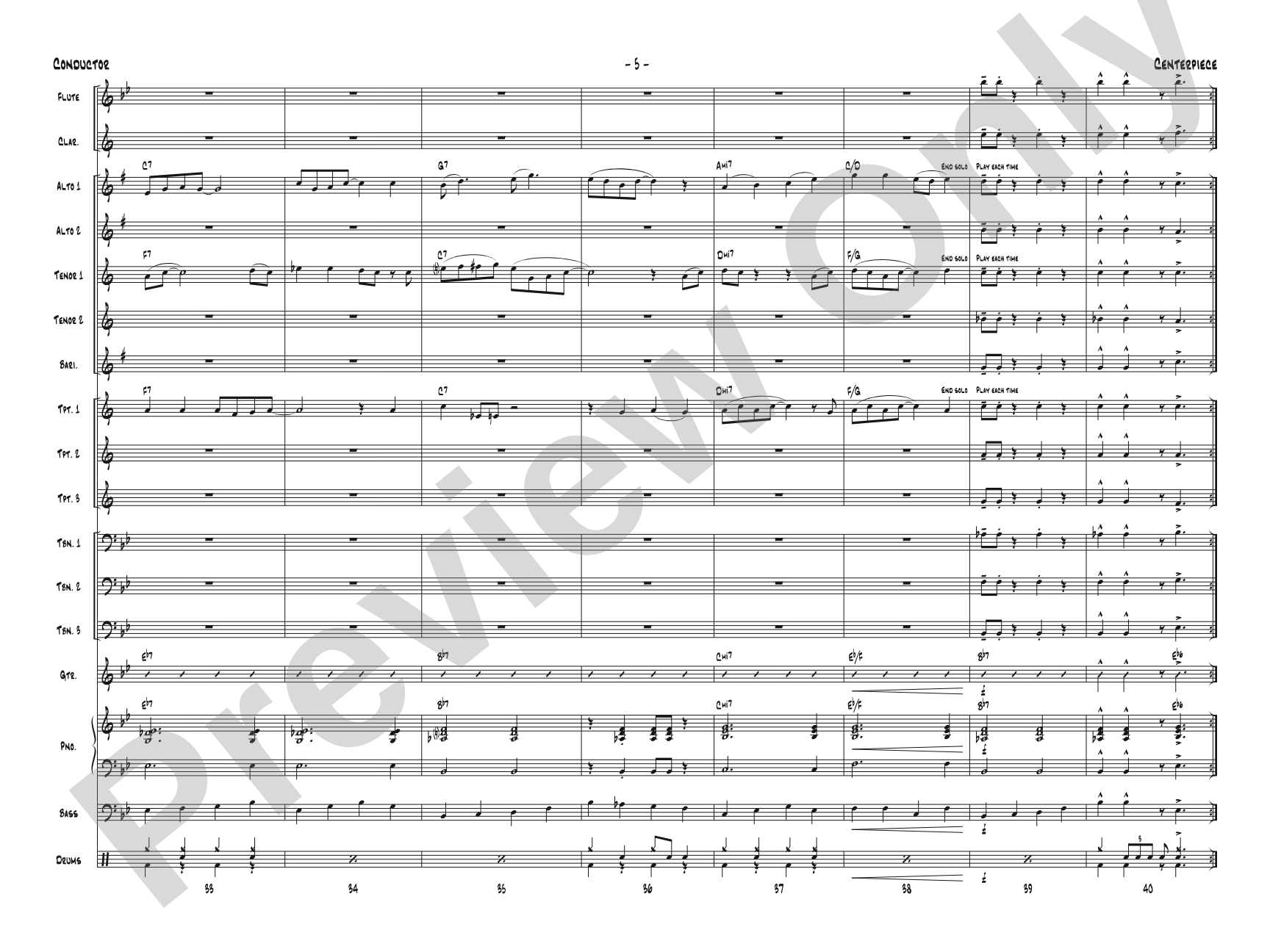
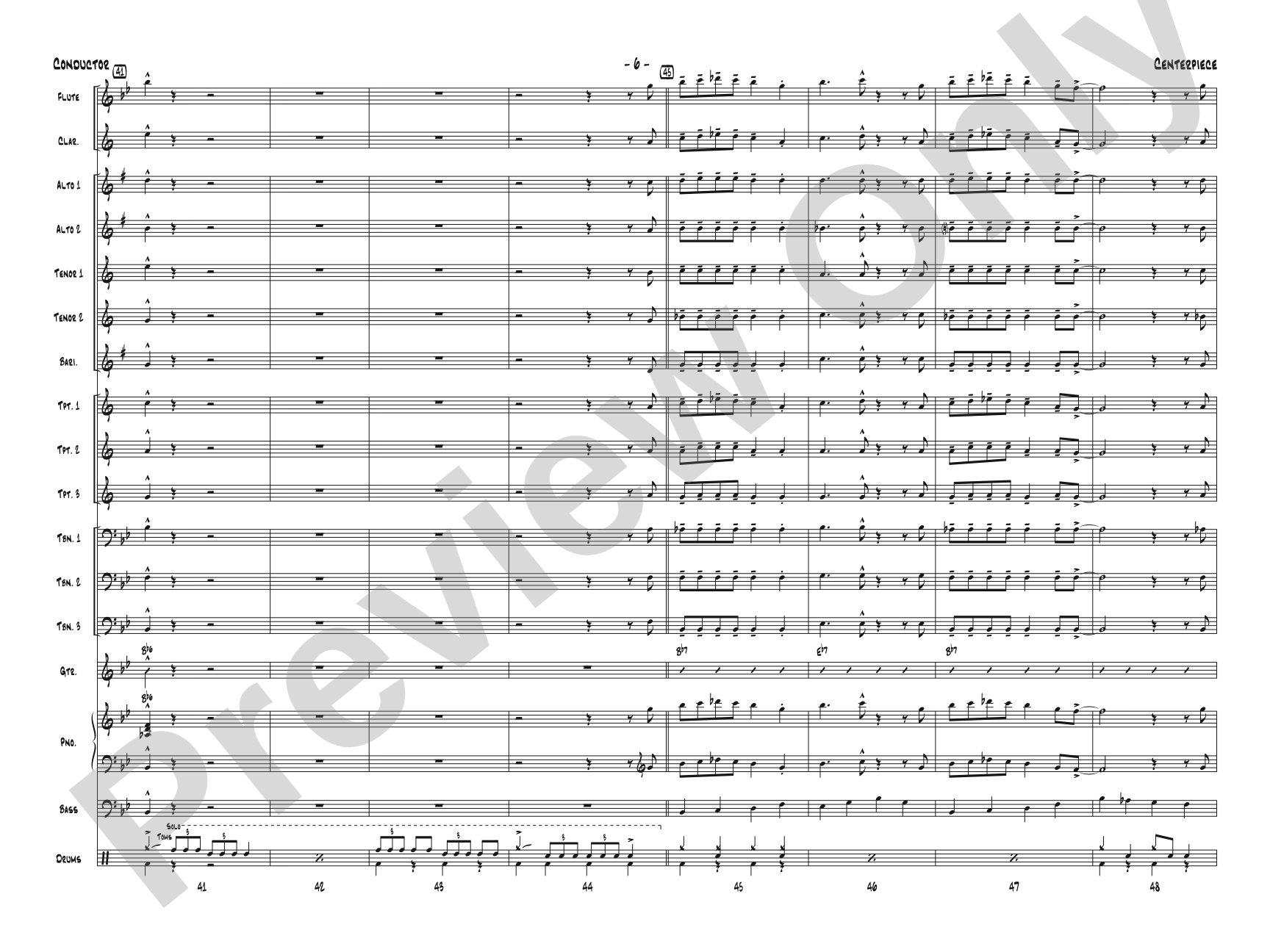
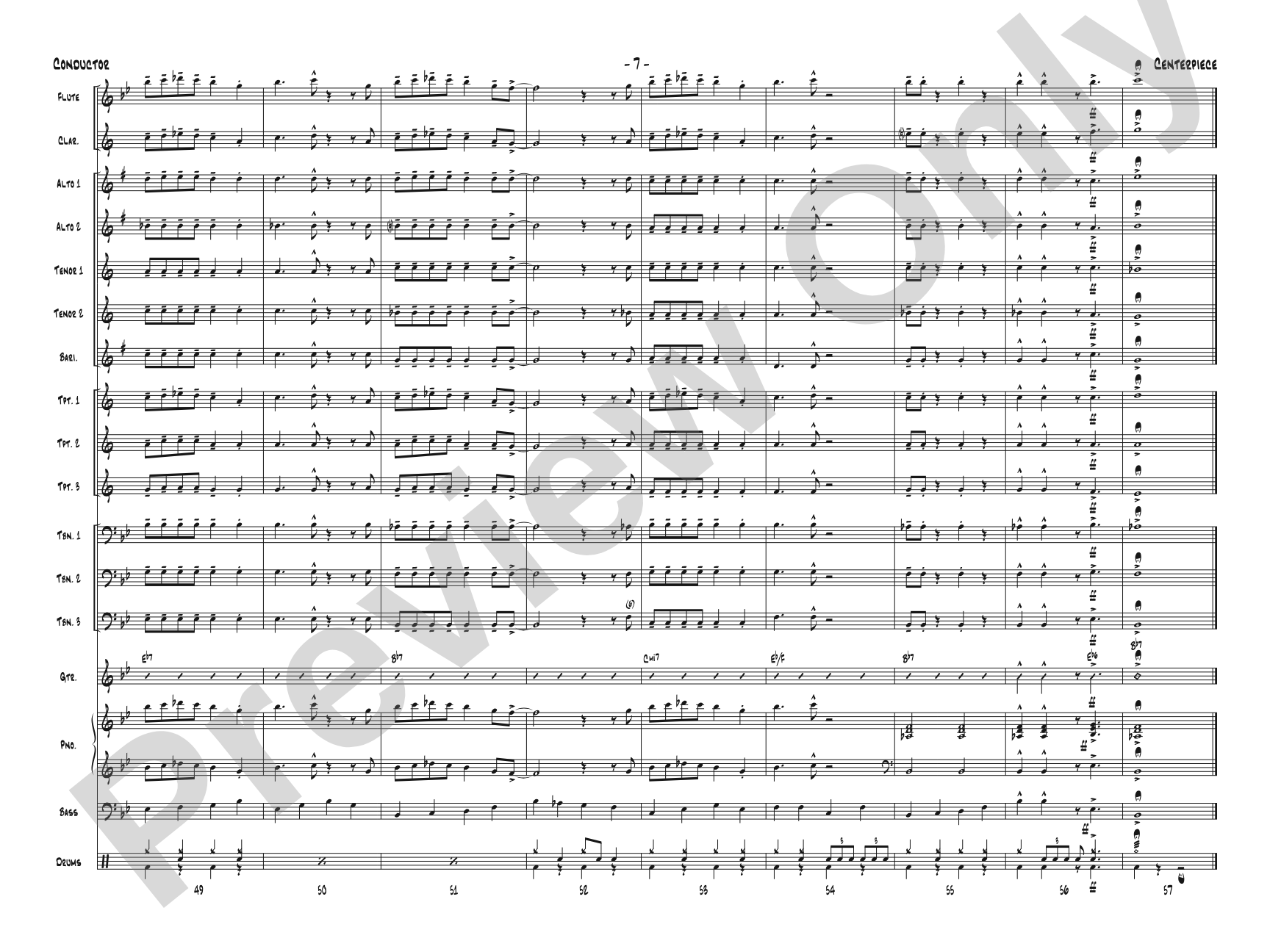

Centerpiece: Jazz Ensemble Conductor Score & Parts
Words by John Hendricks, music by Harry "Sweets" Edison / arr. Mike Story
Grade: 1 (Easy)
Item: 00-PK-0007570

$44.00
One moment…
Description
The ideal easy swing chart on a great blues melody. Accessible with easy brass ranges; a medium swing tempo of 120 BPM; and written solos for tenor, trumpet, and alto. Well-notated rhythm section parts along with all the optional parts you need to include clarinet, flute, and vibes. This great blues tune has been recorded by all the greats!


Don't just read it, hear it, play along with it, and watch your students grow with it. In MakeMusic Cloud, Centerpiece: Jazz Ensemble Conductor Score & Parts comes alive with professional accompaniment, adjustable tempo, and built-in practice tools that turn solo practice into real progress.
Open in the Player
Jump straight in and assign it today.
Start Your Free Trial
Open this title and explore the full library in minutes.
Sample Audio
1
Audio File
--:--
0:00
0:00
Sample Video
Additional Details
Series:
First Year Charts for Jazz Ensemble
Publisher:
Alfred Music
Page Count:
46
SKU:
00-PK-0007570
More about this title
About the Composer: Harry "Sweets" Edison
Harry "Sweets" Edison was a trumpet master whose warm, bluesy tone defined the sound of postwar jazz. A first-call session musician and bandleader, Edison recorded with Count Basie, Oscar Peterson, and countless blues and jazz legends throughout a career spanning from the 1940s into the 1980s. His compositions and arrangements reflect his deep understanding of ensemble playing and his gift for writing melodies that singers and soloists return to again and again.
Why we love this
Mike Story's arrangement strips away the complexity while keeping the soul intact. The written solos give students a scaffold for understanding jazz phrasing without overwhelming them, and the optional instrumentation means you're not locked into a specific instrumentation if your ensemble doesn't have all the voices. The medium swing tempo at 120 BPM sits right in the pocket for young ensembles finding their groove.
What to expect
A sunny, straightforward blues that feels like walking into a jam session. The melody is memorable enough that students will find themselves humming it, and the harmonic landscape gives soloists room to breathe without getting lost.
Who it's for
Jazz ensemble directors teaching first-year students who have solid rhythmic fundamentals but need to build their jazz language. This works especially well for groups with mixed instrumentation, since the optional parts let you adapt the chart to what you have on hand.
How to get the most out of it
- Balance the written trumpet and tenor solos with the ensemble. These voices should feel conversational, not buried under the rhythm section.
- Lock the rhythm section feel before adding the horn lines. A solid walking bass and swinging piano foundation makes everything else sit better.
- The blues changes are straightforward, but young players often rush the swing feel. Emphasize the triplet undercurrent in the eighth-note passages to keep the groove laid-back.
- If you're using the optional clarinet, flute, or vibes parts, use them to add texture in ensemble sections without cluttering the solos.
How to use it
This is a natural fit for a jazz festival or concert where you want to show contrast with a more complex chart. Place it early in your set when energy is high and young musicians are fresh, or use it as a finale to showcase how much groove they've built over the season.
Skills your students will build
- Reading and executing medium swing feel at 120 BPM
- Understanding 12-bar blues harmony and changes
- Trading solos and accompanying written jazz lines
- Interpreting lead sheets and written trumpet and tenor solos
- Balancing ensemble texture with featured solo voices
- Using optional instrumentation to expand arrangement possibilities