
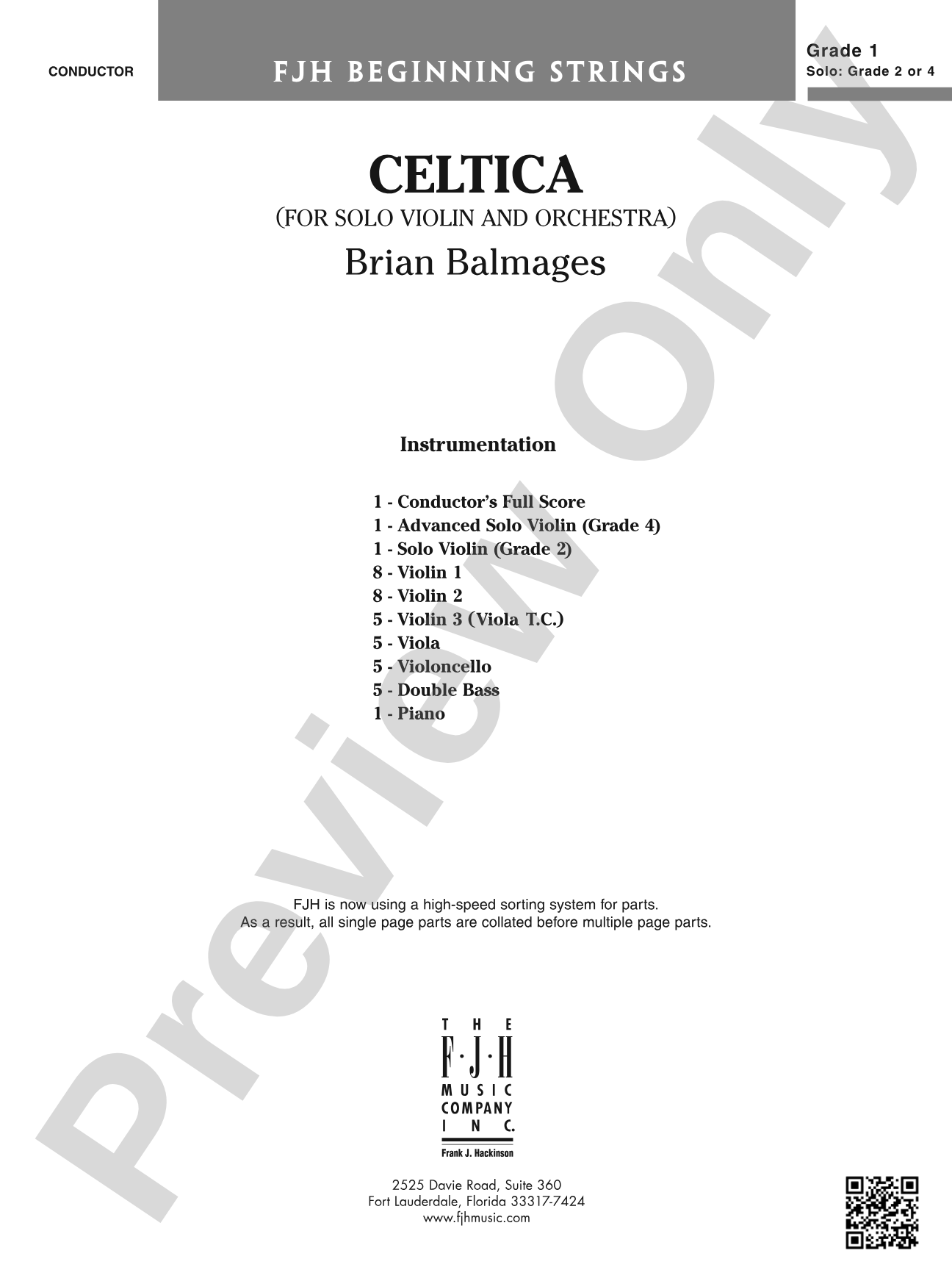
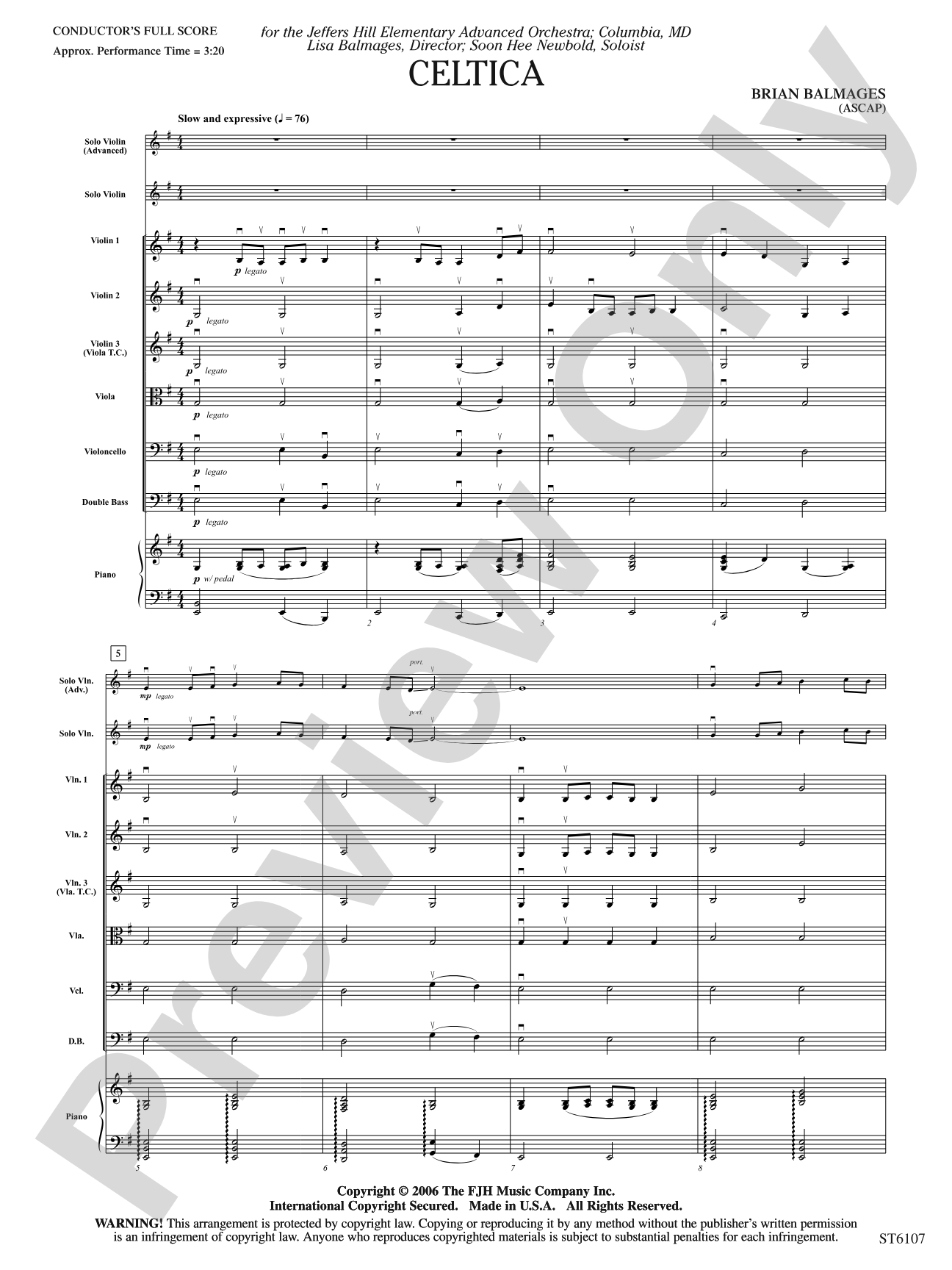
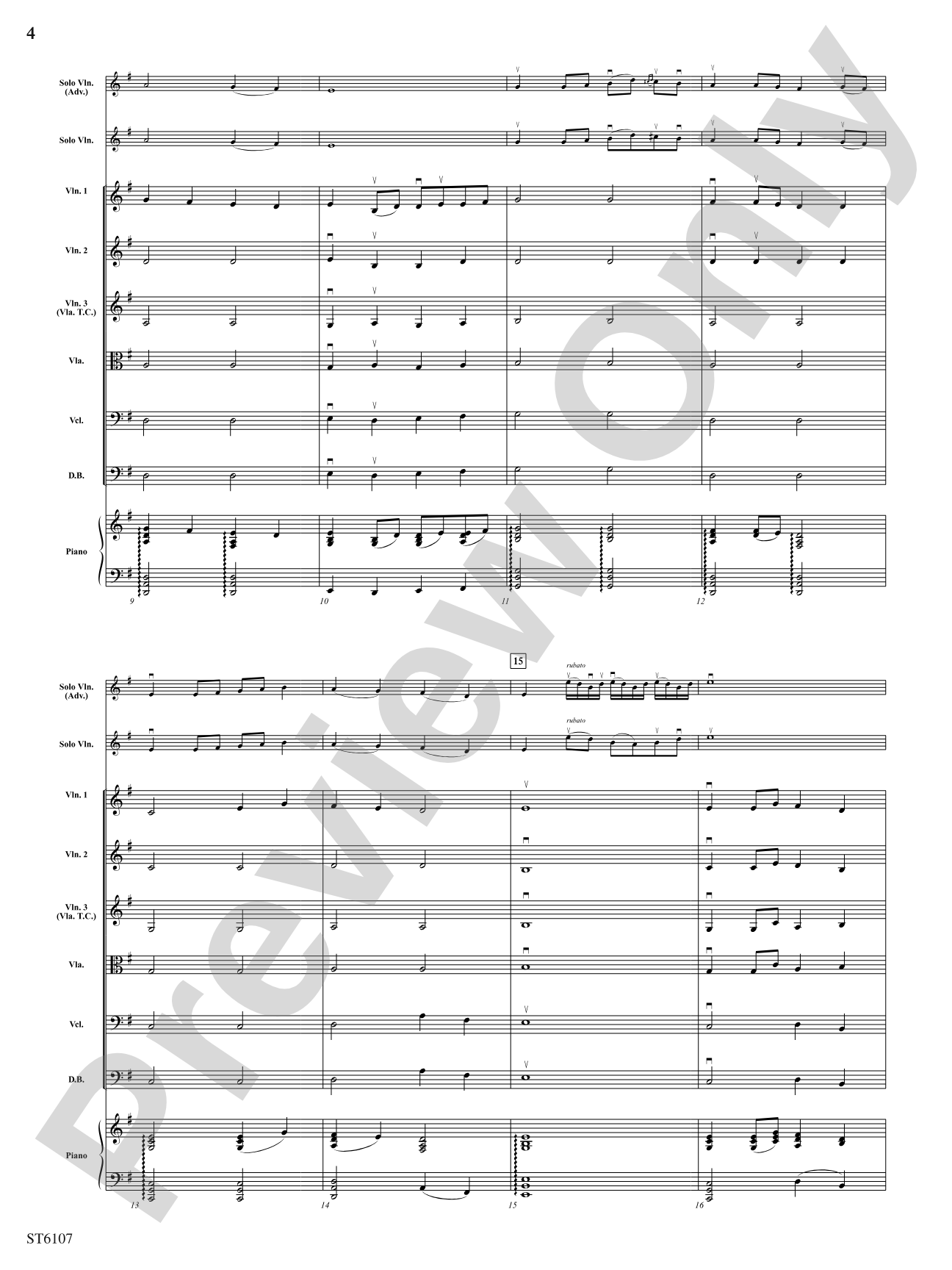
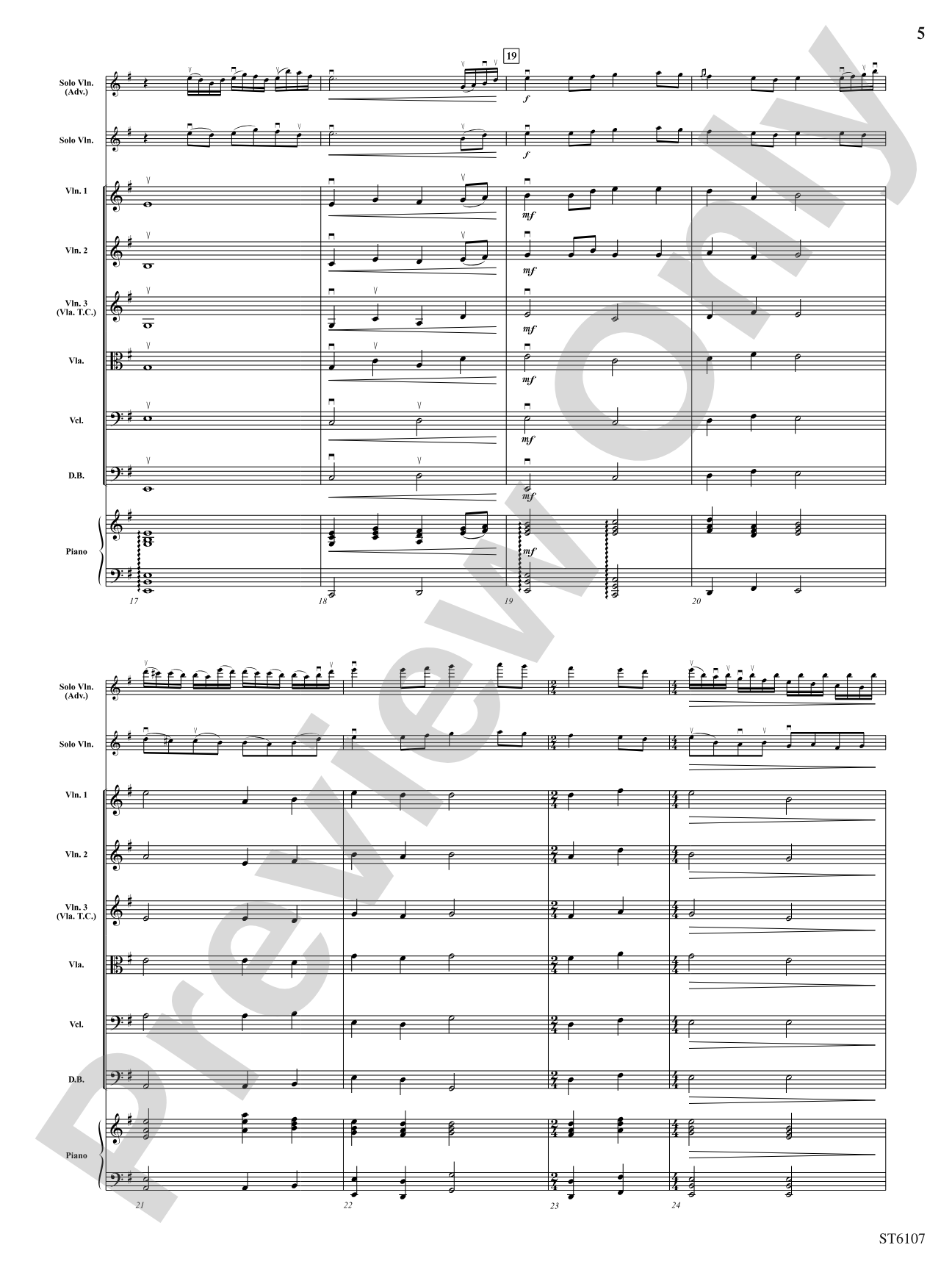
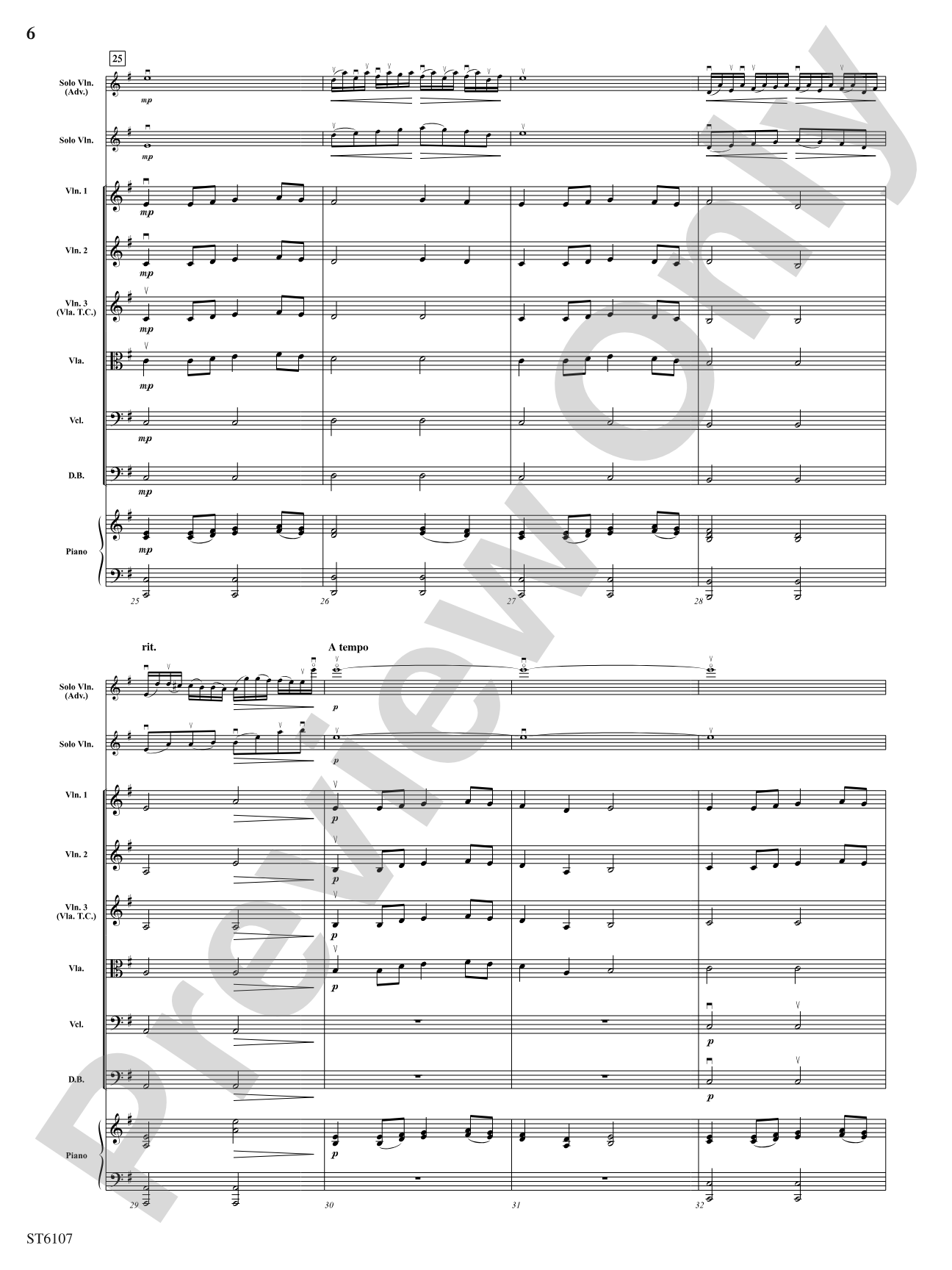
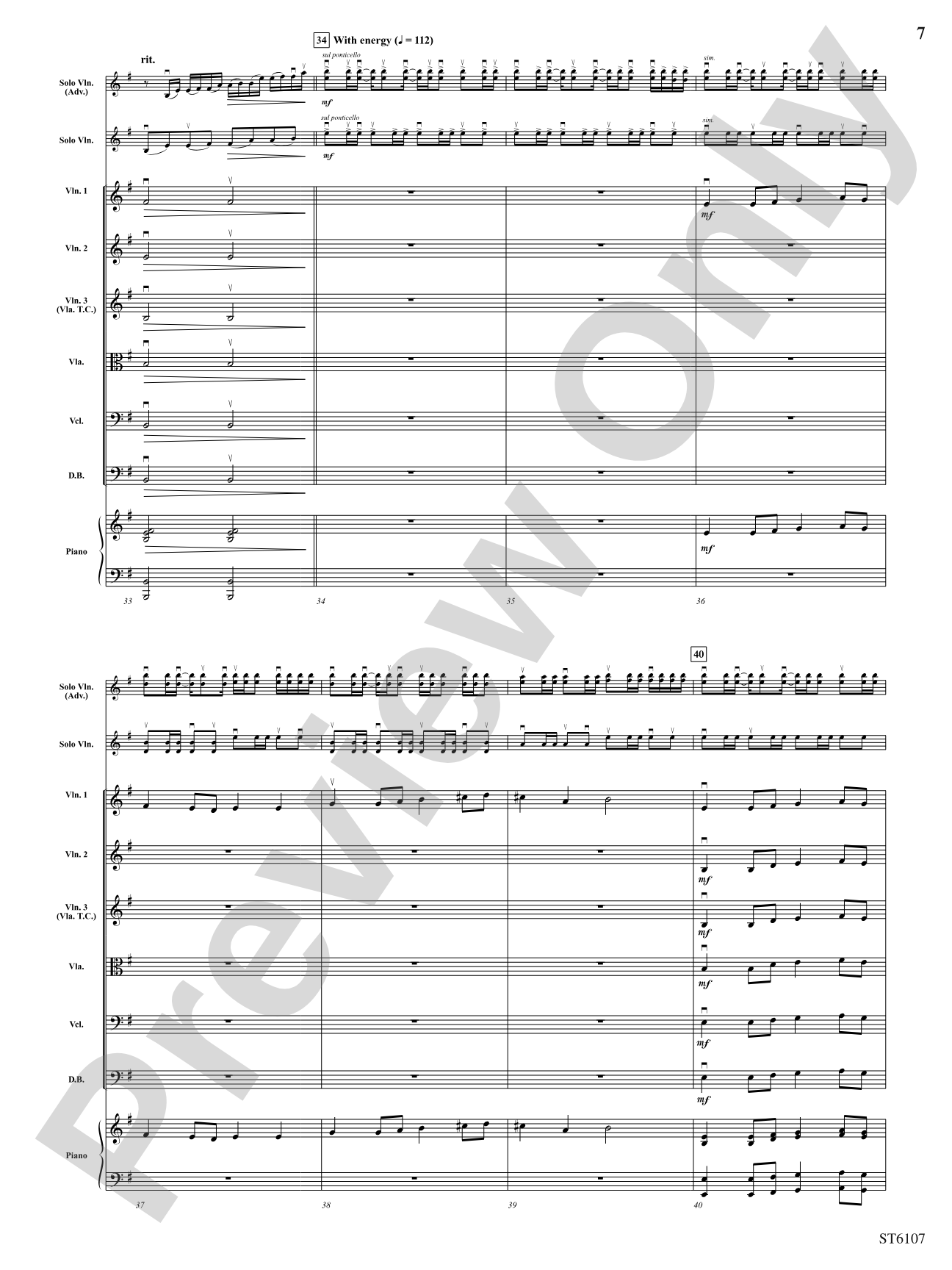
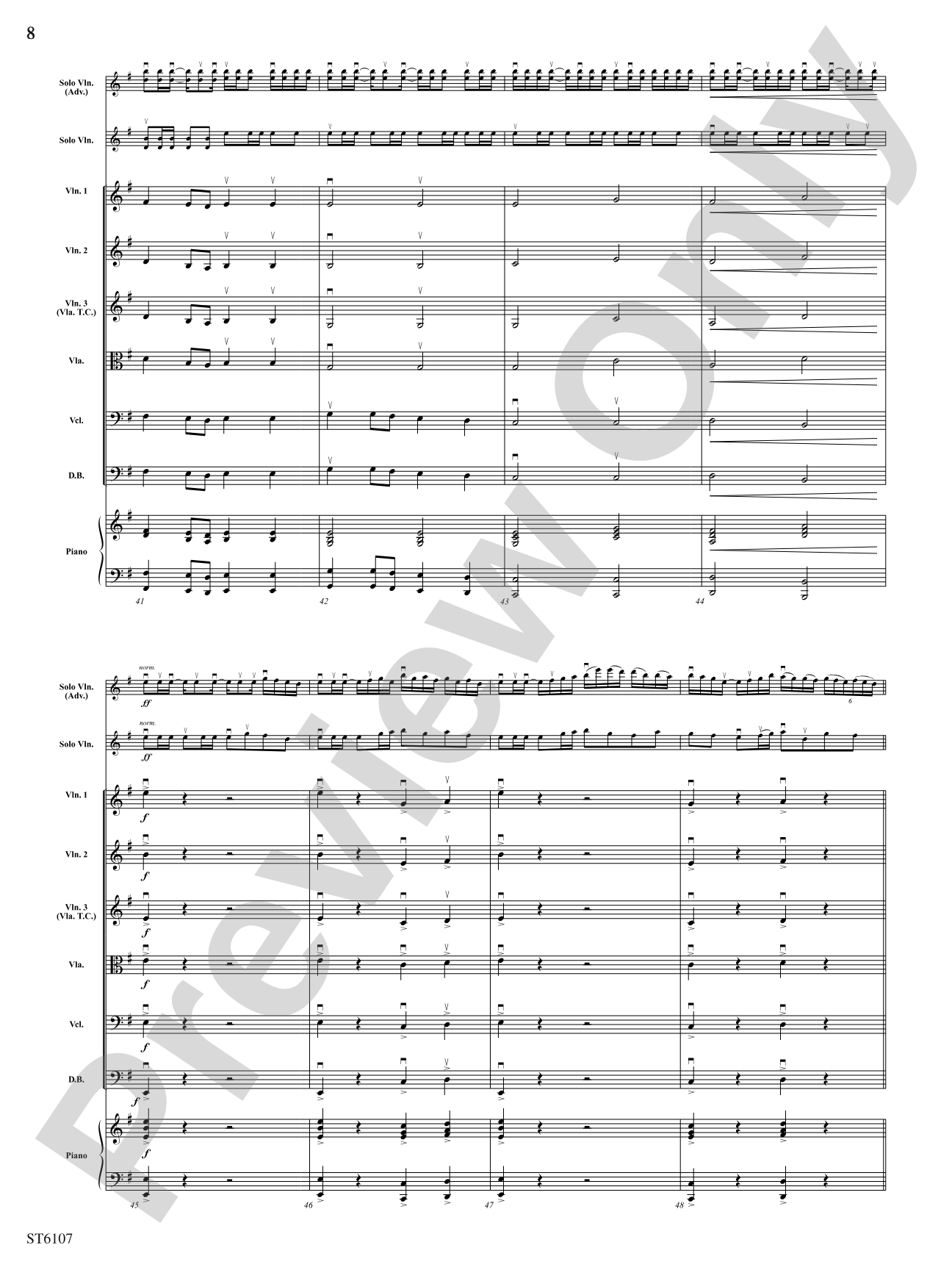

Celtica (for Solo Violin and String Orchestra): Score
for Solo Violin and String Orchestra
By Brian Balmages
Grade: 1
Item: 98-DST6107S
$11.00
Pickup currently not available
Description
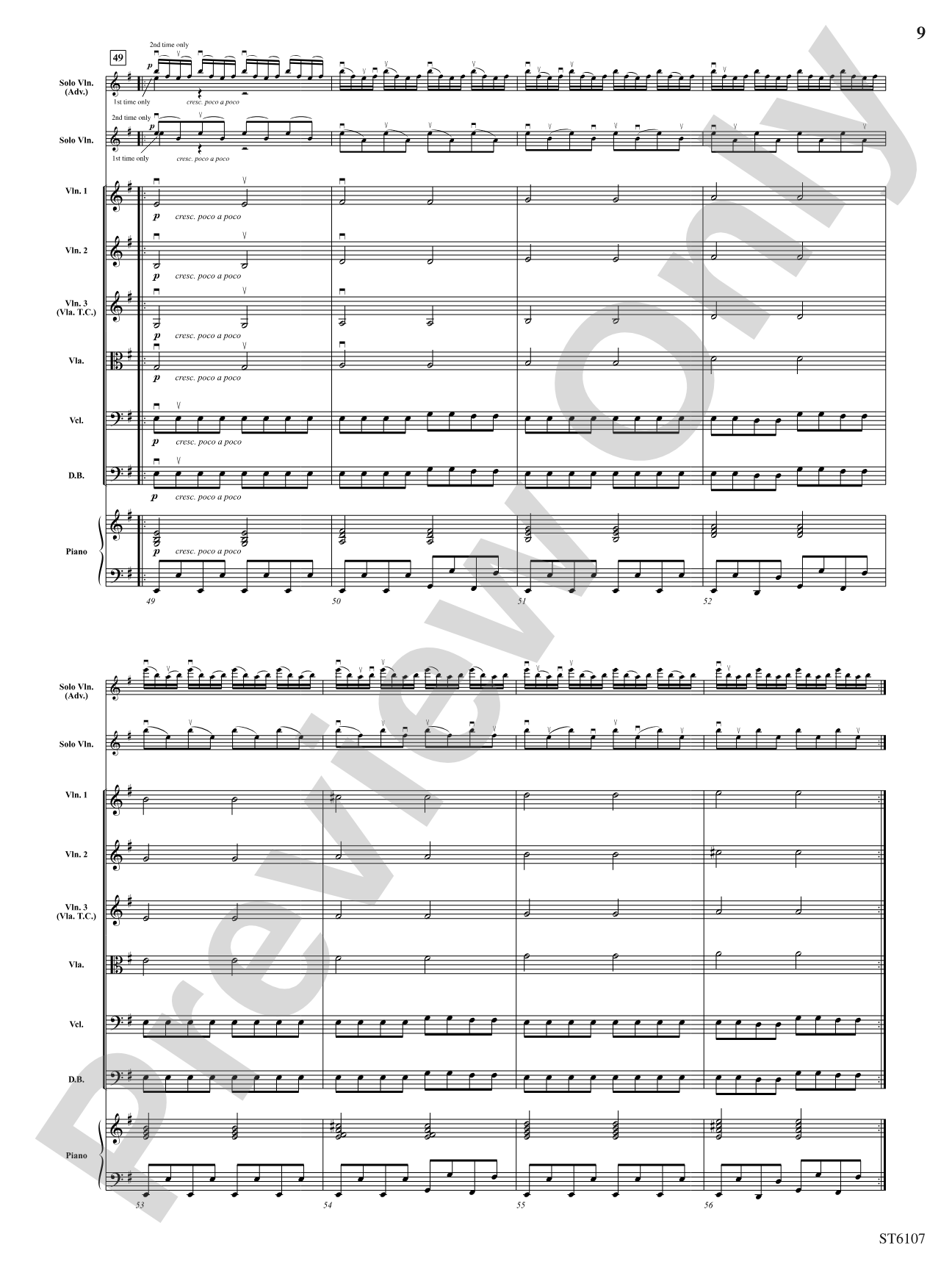
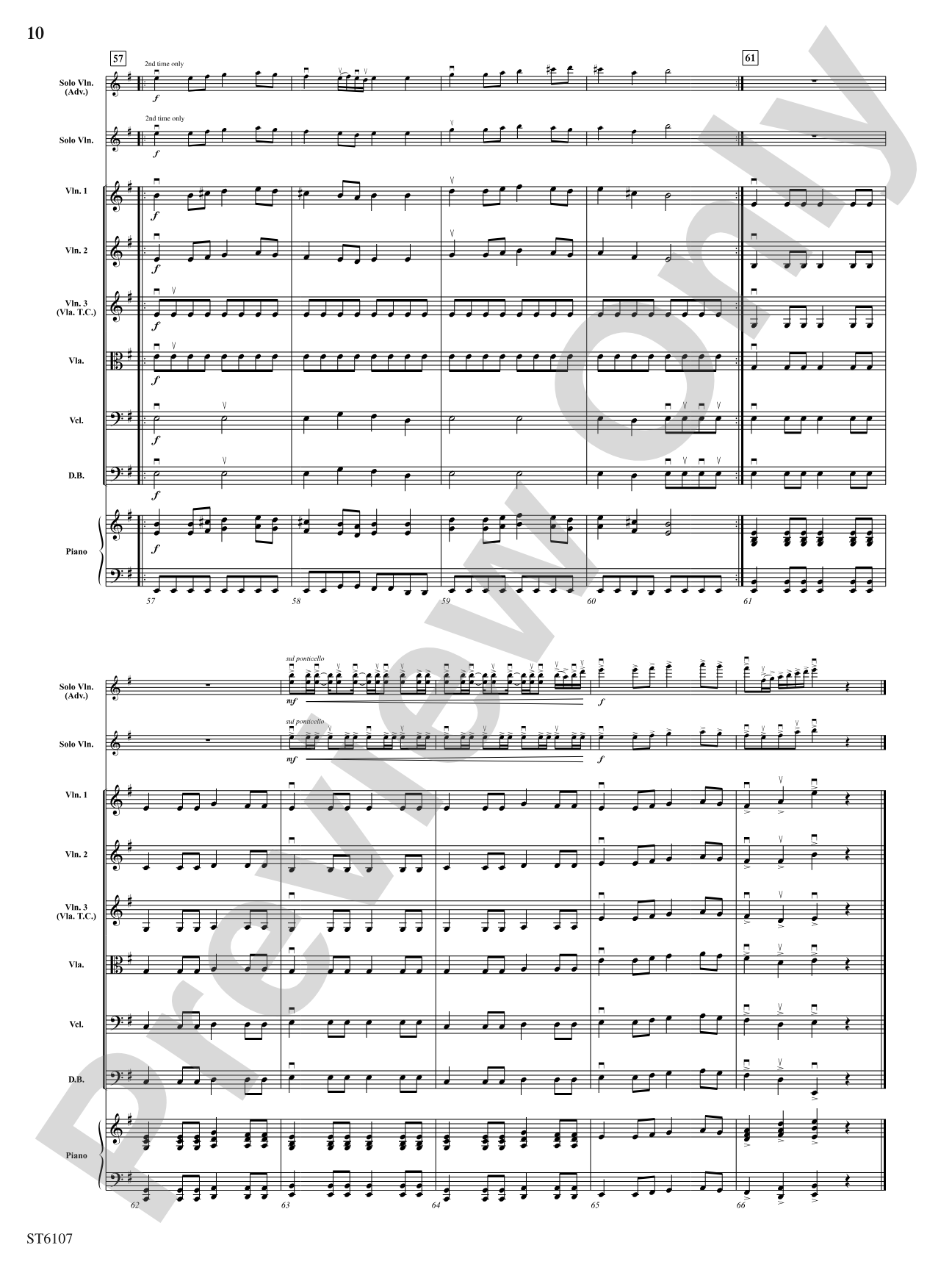
Celtica was conceived as a piece for young orchestras that wish to feature an advanced violinist within the orchestra or invite a guest soloist. The work finds its inspiration in the beautiful, lyrical lines and powerful, driving rhythms of Celtic music.


Celtica (for Solo Violin and String Orchestra): Score isn't in MakeMusic Cloud just yet...but it could be. Let us know you'd like to see it, and you'll help shape what comes next. In the meantime, start a free trial and dive into thousands of interactive titles your students can play along with today.
Request This Title
Tell us you want it.
Start Your Free Trial
Explore everything that's ready to play right now.
Sample Audio
1
Audio File
--:--
0:00
0:00
Sample Video
No sample videos found.
Additional Details
Series:
FJH Beginning Strings
Publisher:
The FJH Music Company, Inc.
SKU:
98-DST6107S
More about this title
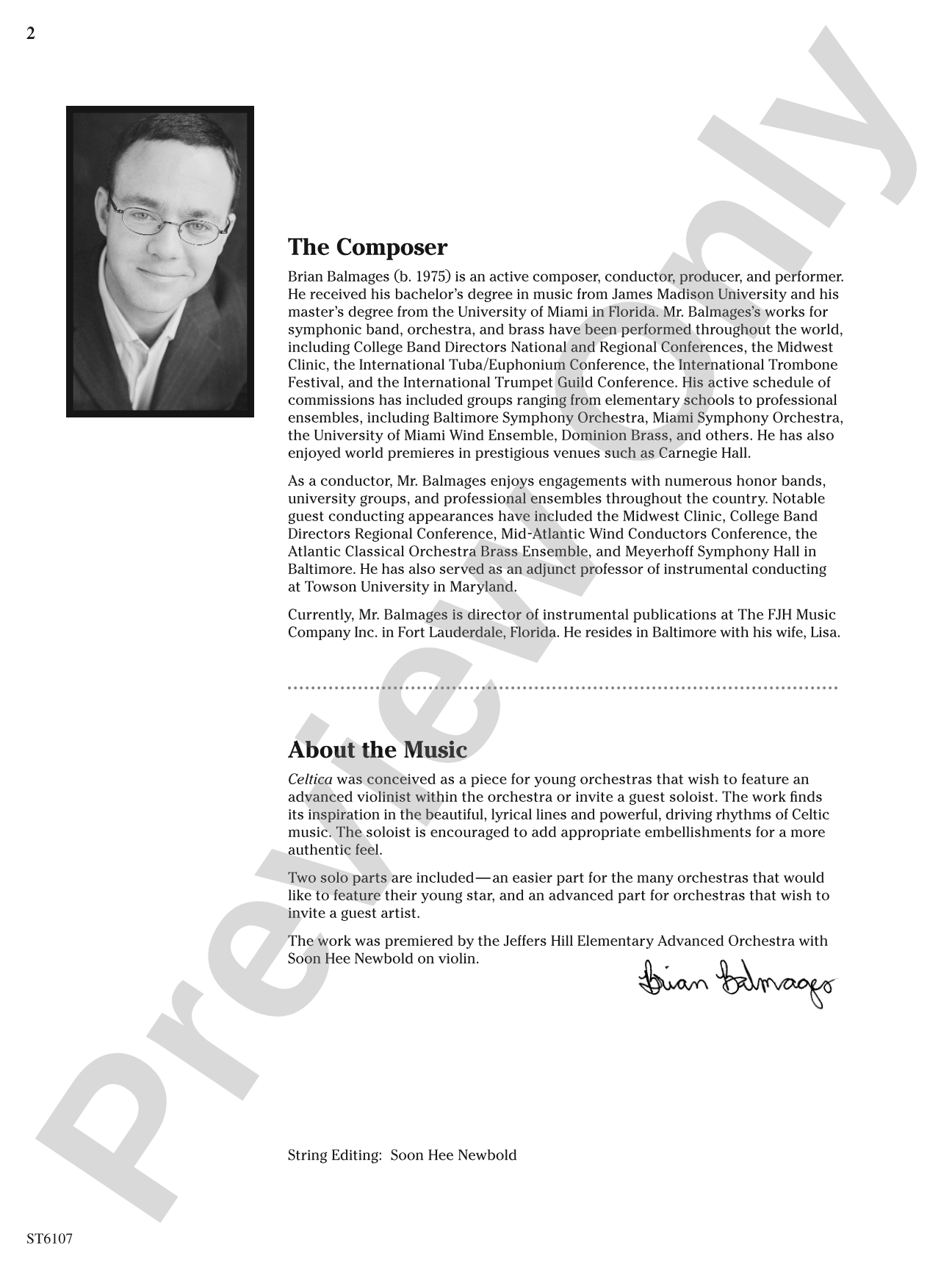
About the Composer: Brian Balmages

Brian Balmages has established himself as a prolific composer and conductor working across orchestral, band, and chamber idioms. His works have been commissioned and performed by professional ensembles and school groups alike, from Carnegie Hall to the Kennedy Center to regional venues worldwide. He received the A. Austin Harding Award from the American School Band Directors Association and won the 2020 NBA William D. Revelli Composition Contest. His music was performed at the 2013 Presidential Inaugural Prayer Service attended by President Obama and Vice President Biden.
Balmages earned the James Madison University Distinguished Alumni Award and was commissioned by the University of Miami to compose for the inauguration of its sixth president. As a guest conductor, he regularly appears at all-state ensembles, university orchestras, and professional groups, with notable engagements at the Midwest Clinic, Western International Band Clinic, and numerous state ASTA conferences. He currently serves as Director of MakeMusic Publications and Digital Education for Alfred and MakeMusic.
Why we love this
Celtica strikes a rare balance: it's accessible enough for young orchestras performing at Grade 1 level, yet it gives you a genuine solo feature that lets an advanced violinist shine. The Celtic idiom brings rhythmic energy and lyrical warmth that energizes both rehearsals and performances without requiring advanced technical demands from the ensemble.
What to expect
Celtica captures the soul of traditional Celtic music translated into the concert hall. Soaring melodic lines weave over rhythmic ostinatos that pulse with life and momentum, creating moments of both introspection and exhilaration.
Who it's for
String orchestras looking to program a spotlight piece for an accomplished young soloist while keeping technical demands reasonable for the ensemble as a whole. Directors seeking accessible repertoire that still feels substantial and appealing to audiences of all ages.
How to get the most out of it
- Balance the solo voice against the accompaniment by having string players use lighter bow pressure in supporting passages, allowing the soloist's tone to project naturally without drowning out the ensemble.
- Emphasize the Celtic rhythmic character by maintaining crisp articulation in the accompaniment figures, particularly in driving passages where the pulse should feel propulsive rather than straight.
- Coordinate the soloist with your ensemble's tempo by conducting through the lyrical sections with shape and direction, ensuring rubato or expressive timing in the solo line aligns with the ensemble's harmonic support.
How to use it
Feature this as a centerpiece when featuring a guest soloist or your concertmaster in a winter or spring concert. It works well alongside other Grade 1 string repertoire that shares lyrical depth, and its cultural roots make it a natural fit for programs exploring world music traditions.
Skills your students will build
- Supporting a solo line while maintaining independent rhythmic clarity
- Playing sustained harmonic foundations under an exposed solo voice
- Responding to rubato and expressive timing in the soloist's phrasing
- Executing Celtic-influenced rhythmic figures with rhythmic precision
- Balancing ensemble blend across multiple string sections in accompaniment roles