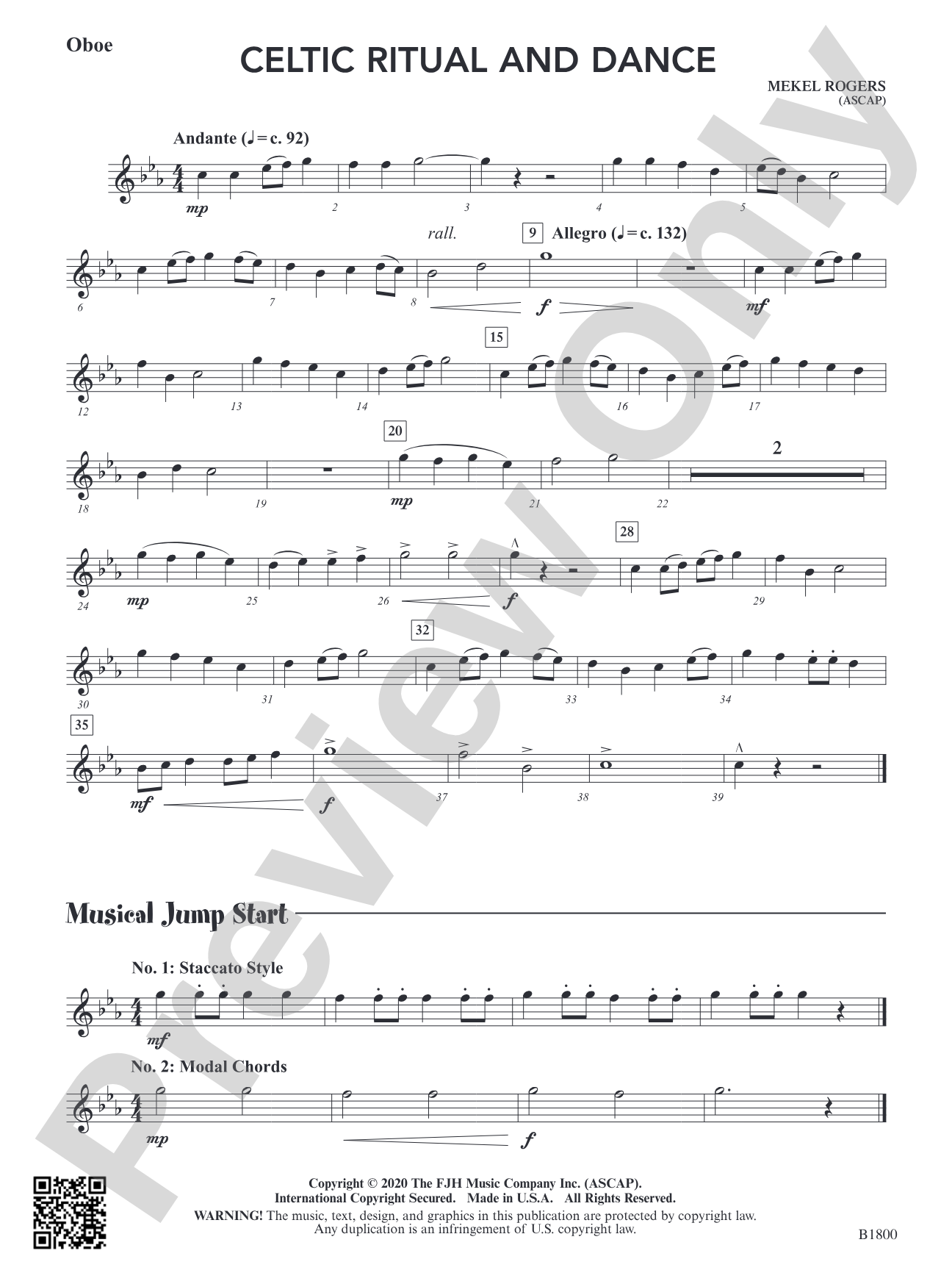
Celtic Ritual and Dance: Oboe Sheet Music Preview

Celtic Ritual and Dance: Oboe

By Mekel Rogers

Level:.5

Item: 98-PC-DB1800_O1

Digital Download
$7.00
Description
Journey back to the time of the ancient Celtic Druids through the use of modal harmonies and a variety of percussion timbres. Conveying both mysticism and strength, the melodic ideas weave throughout the ensemble before coming to a powerful conclusion. Using only six notes and simple eighth-note rhythms, this is a great piece for young musicians.

Celtic Ritual and Dance: Oboe isn't in MakeMusic Cloud just yet...but it could be. Let us know you'd like to see it, and you'll help shape what comes next. In the meantime, start a free trial and dive into thousands of interactive titles your students can play along with today.

Sample Audio
0:00
0:00
Sample Video
Additional Details
Series: FJH Starter Series
Publisher: The FJH Music Company, Inc.
SKU: 98-PC-DB1800_O1

More about this title

Why we love this

Rogers writes for beginning bands with real musical intention, not just simplification. The pentatonic framework creates an immediately cohesive sound while the percussion writing adds textural variety that keeps young players engaged—and it gives your ensemble a genuinely interesting piece to perform, not just an exercise.

What to expect

Ancient and elemental, without sounding either precious or forced. The modal harmonies evoke a timeless Druidic atmosphere while the rhythmic clarity and melodic directness keep the energy grounded and accessible. You move from introspection to strength across the arc of the piece.

Who it's for

Beginning concert bands (Grade ½) looking for a genuine musical experience that doesn't demand technical virtuosity. This piece works equally well as an opening number on a concert or as part of a multicultural programming theme.

How to get the most out of it

  • Balance the melodic lines across sections as they pass the main ideas around. Young musicians often play louder when they have the melody; remind them that unity of sound matters more than prominence.
  • Explore the percussion colors available to you. If your inventory is limited, the piece works with basics, but layering available timbres (marimba, vibraphone, suspended cymbal, triangle) transforms the modal atmosphere.
  • Shape the rhythmic momentum through slight dynamic swell rather than tempo changes. The simple eighth-note patterns are most effective when they feel driven forward within a consistent pulse.
  • Land the final section with clarity and weight. The progression toward a powerful conclusion needs ensemble commitment; younger bands sometimes rush or lose focus in the home stretch.

How to use it

Pair this with other world music repertoire to explore non-Western harmonic approaches with your young ensemble. Its brevity and strong conclusion make it effective as an opening piece that establishes an imaginative tone for the concert. It also fits naturally into a thematic program exploring folk traditions across cultures.

Skills your students will build

  • Reading pentatonic (five-note) scales and modal harmonic contexts
  • Sustaining tone while passing melodic lines between sections
  • Precise ensemble rhythm using simple eighth-note patterns
  • Dynamic control and phrasing across extended sections
  • Listening to and balancing percussion colors within a band texture

You May Also Like