
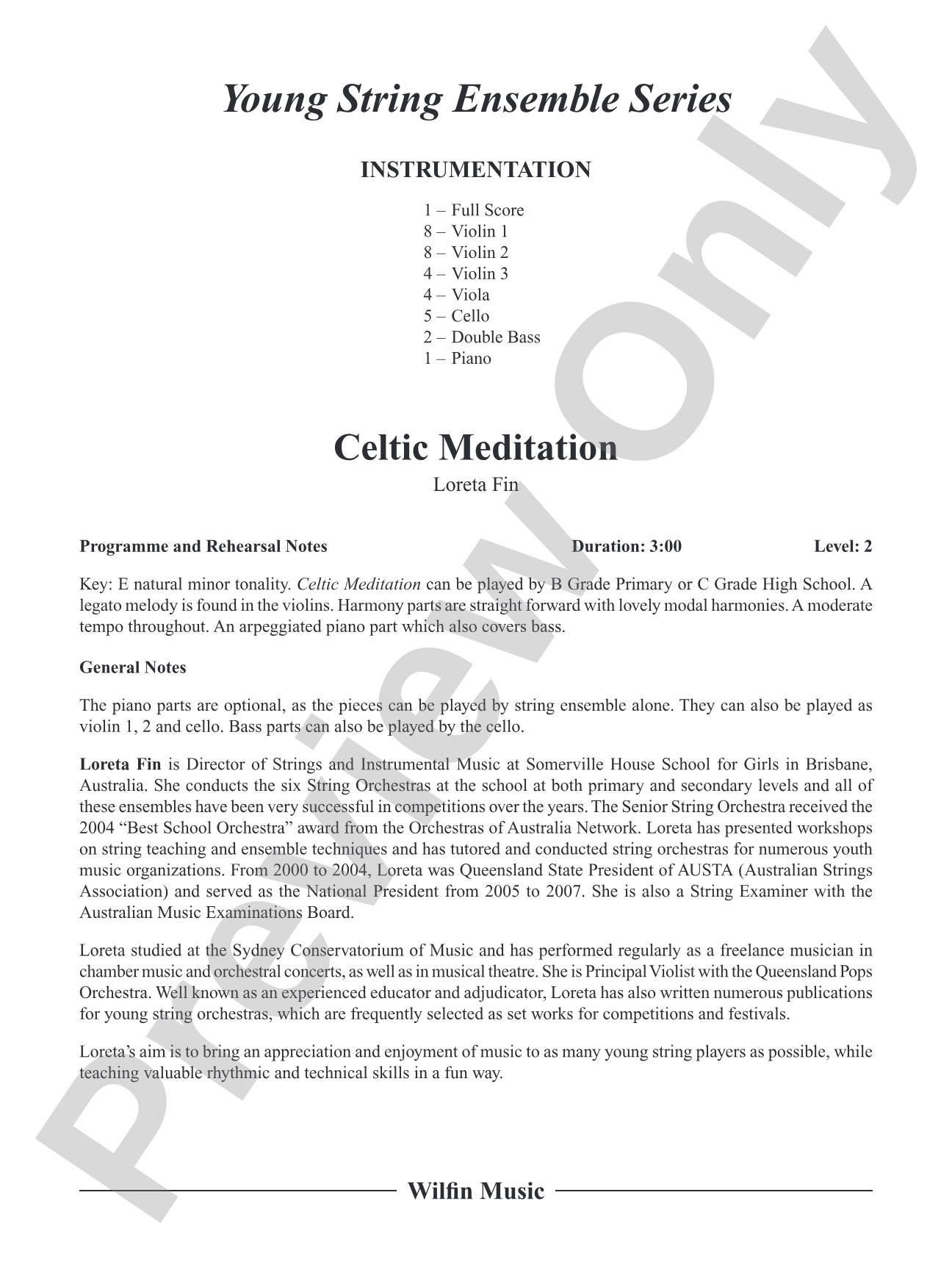
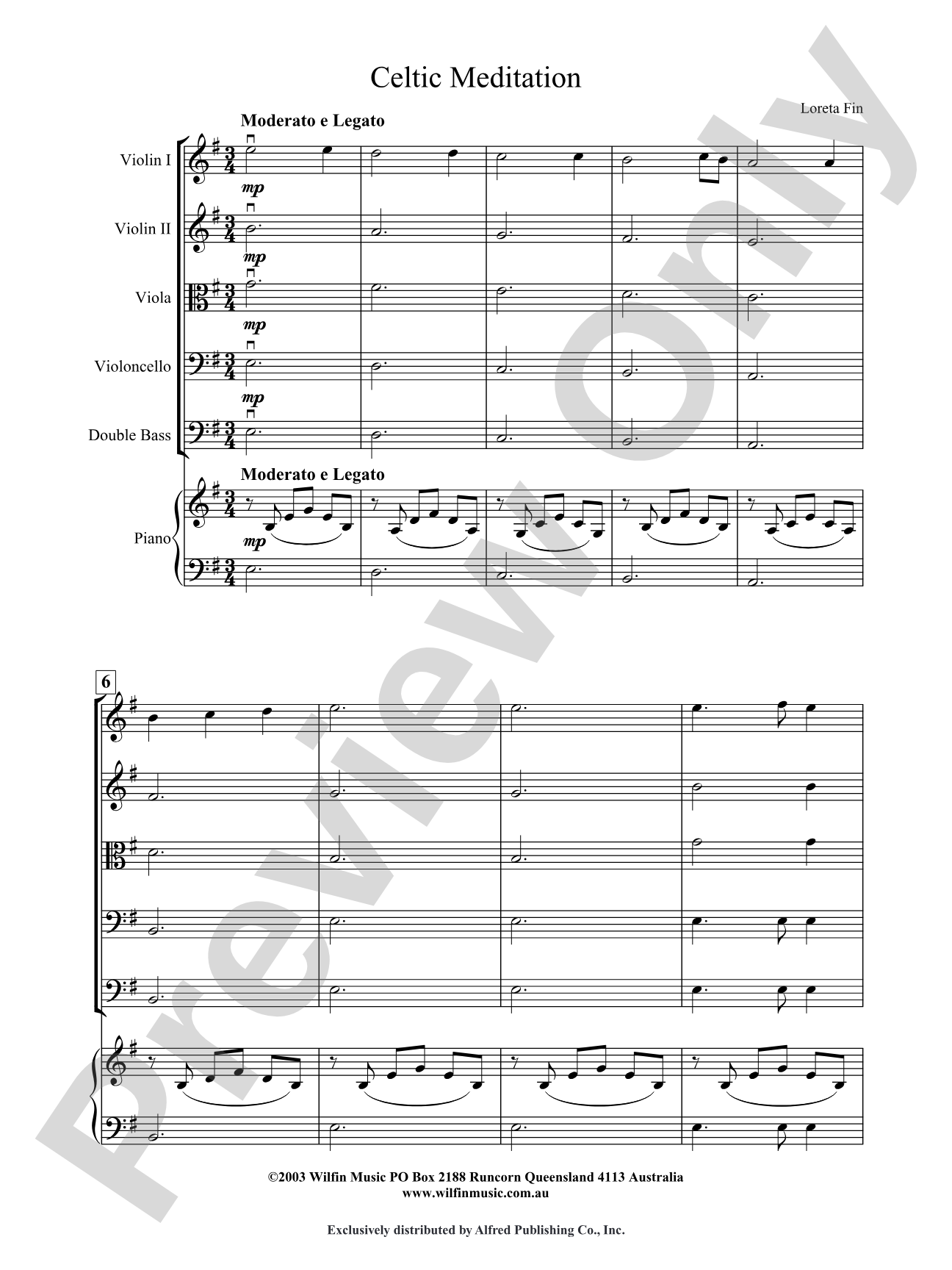
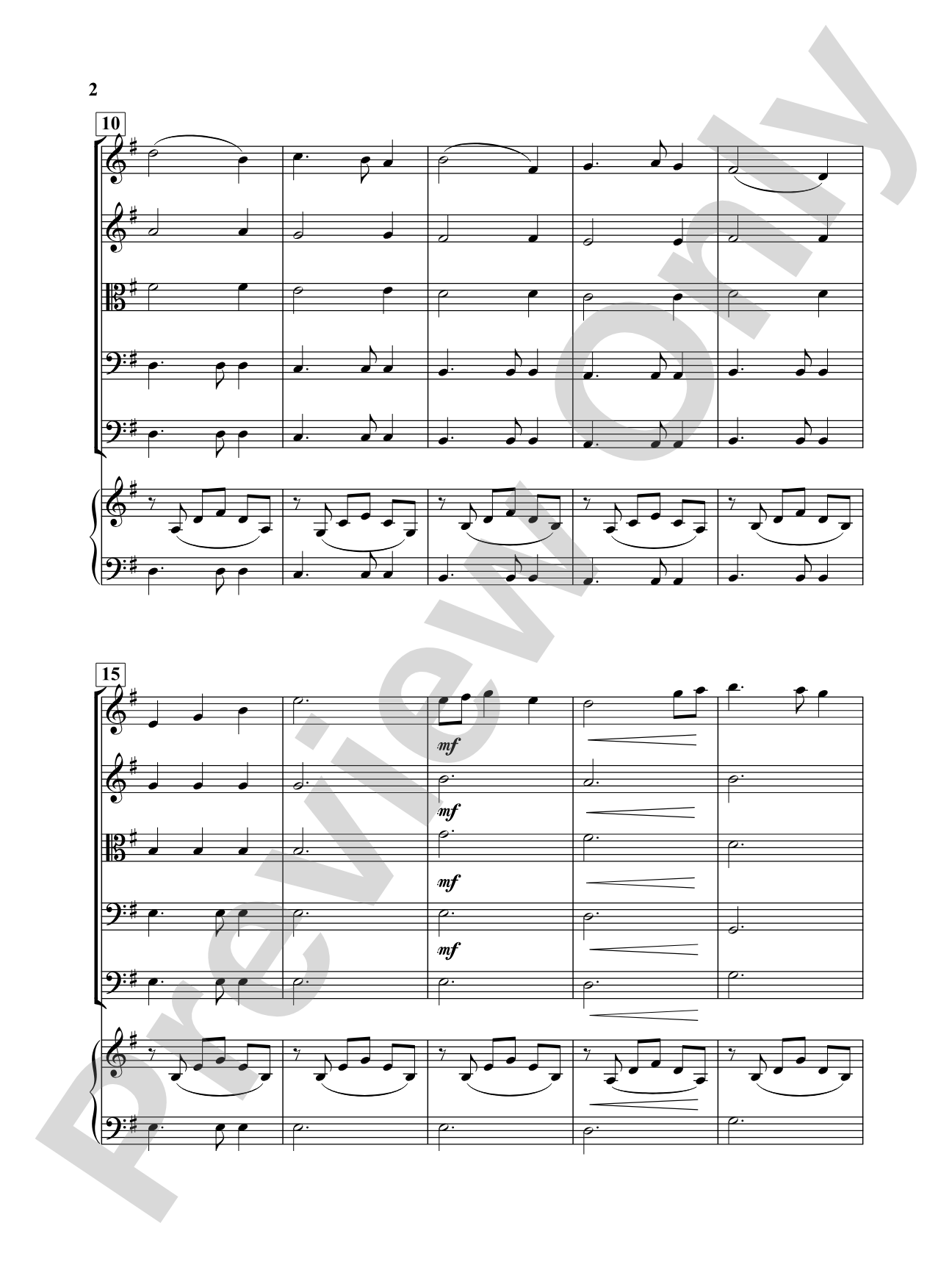
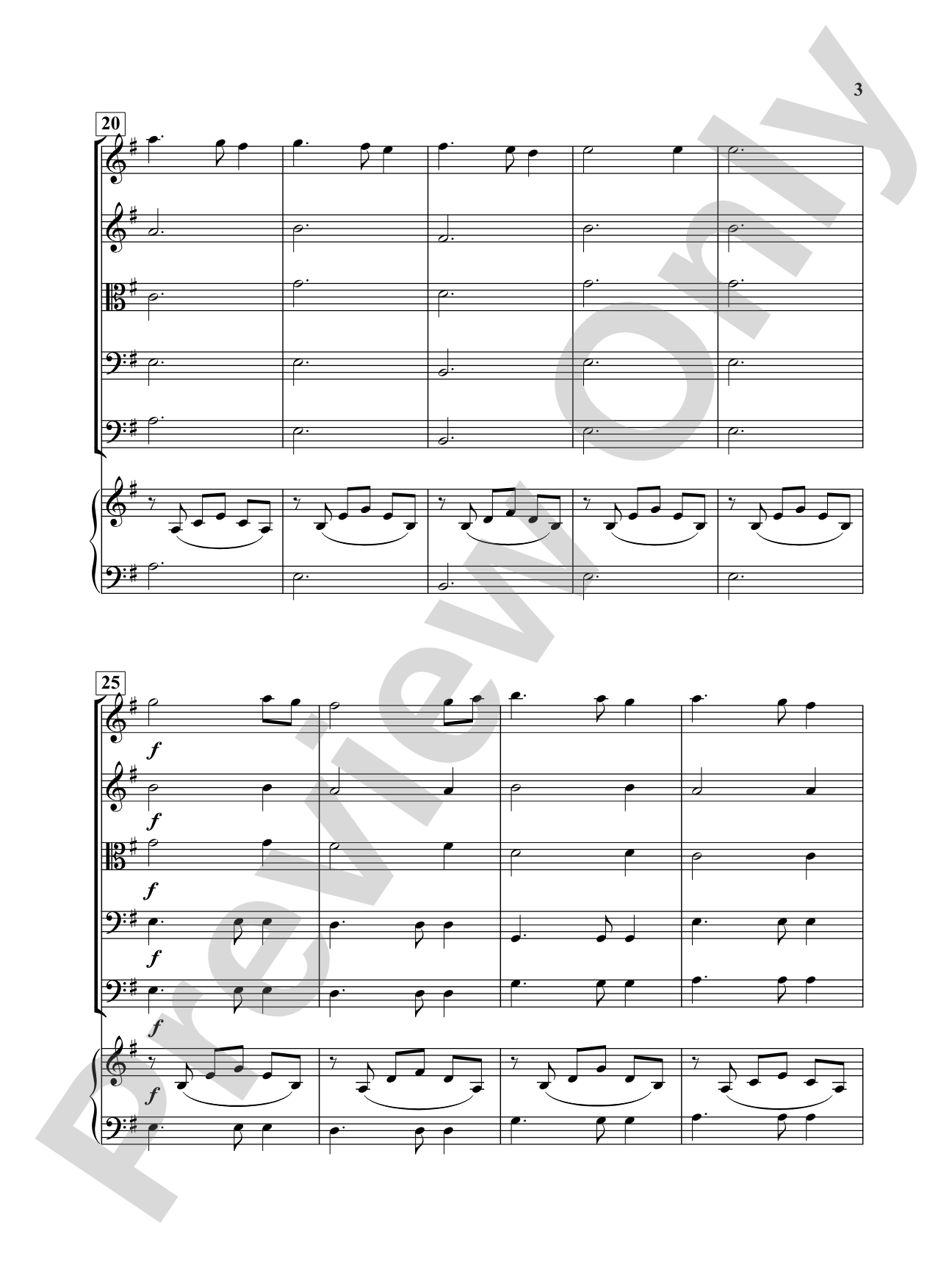




Celtic Meditation: String Orchestra Conductor Score & Parts
By Loreta Fin
Grade: 2
Item: 76-PK-0000021
$45.00
Pickup currently not available
Buy Extra Parts (Digital PDF Download)
| Product | Price | Quantity |
|---|---|---|
| Celtic Meditation: Score | $7.00 | |
| Celtic Meditation: 1st Violin | $5.99 | |
| Celtic Meditation: 2nd Violin | $5.99 | |
| Celtic Meditation: 3rd Violin (Viola [TC]) | $5.99 | |
| Celtic Meditation: Viola | $5.99 | |
| Celtic Meditation: Cello | $5.99 | |
| Celtic Meditation: String Bass | $5.99 | |
| Celtic Meditation: Piano Accompaniment | $5.99 |
Parts Added to Cart!
Description
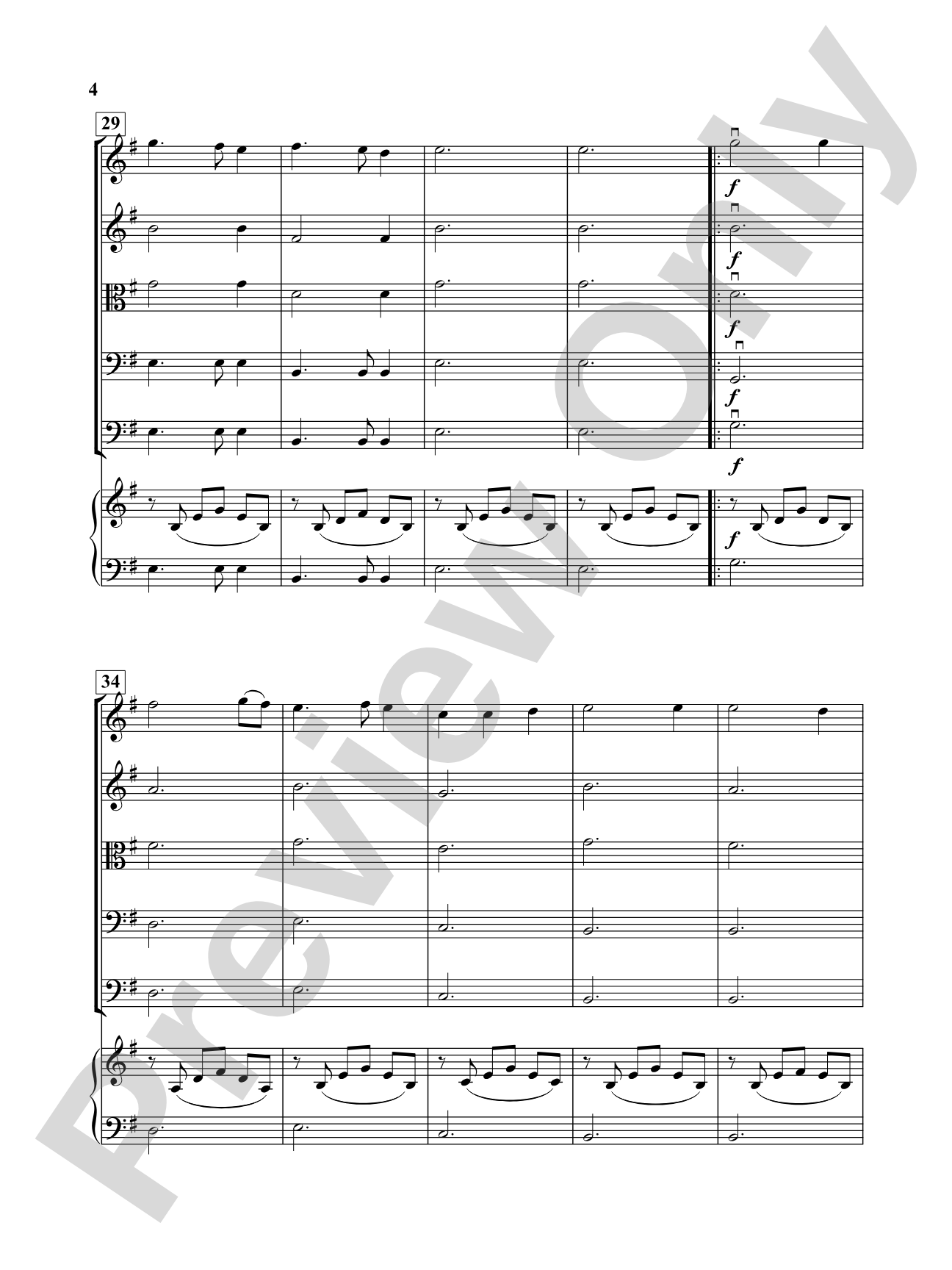
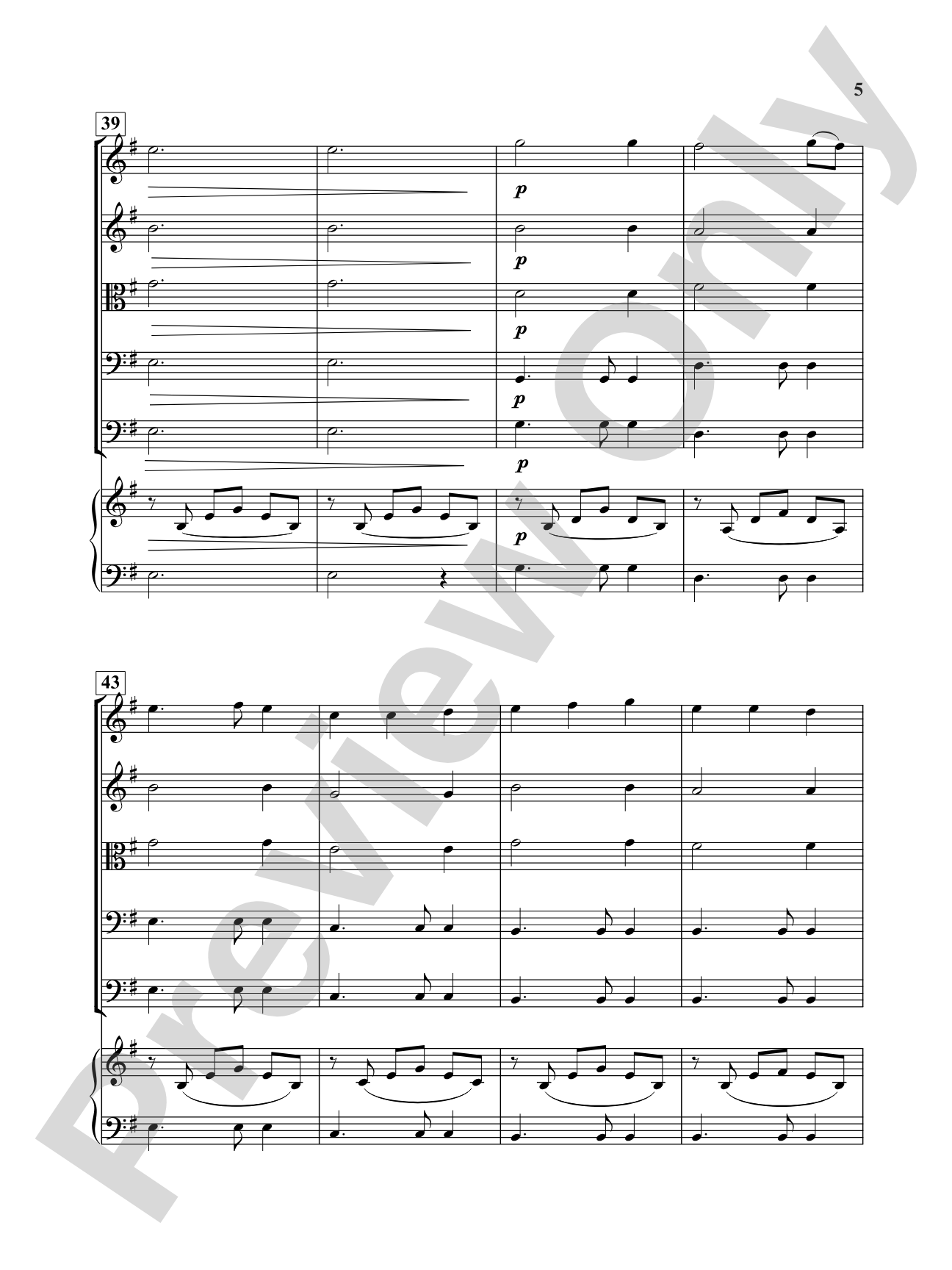
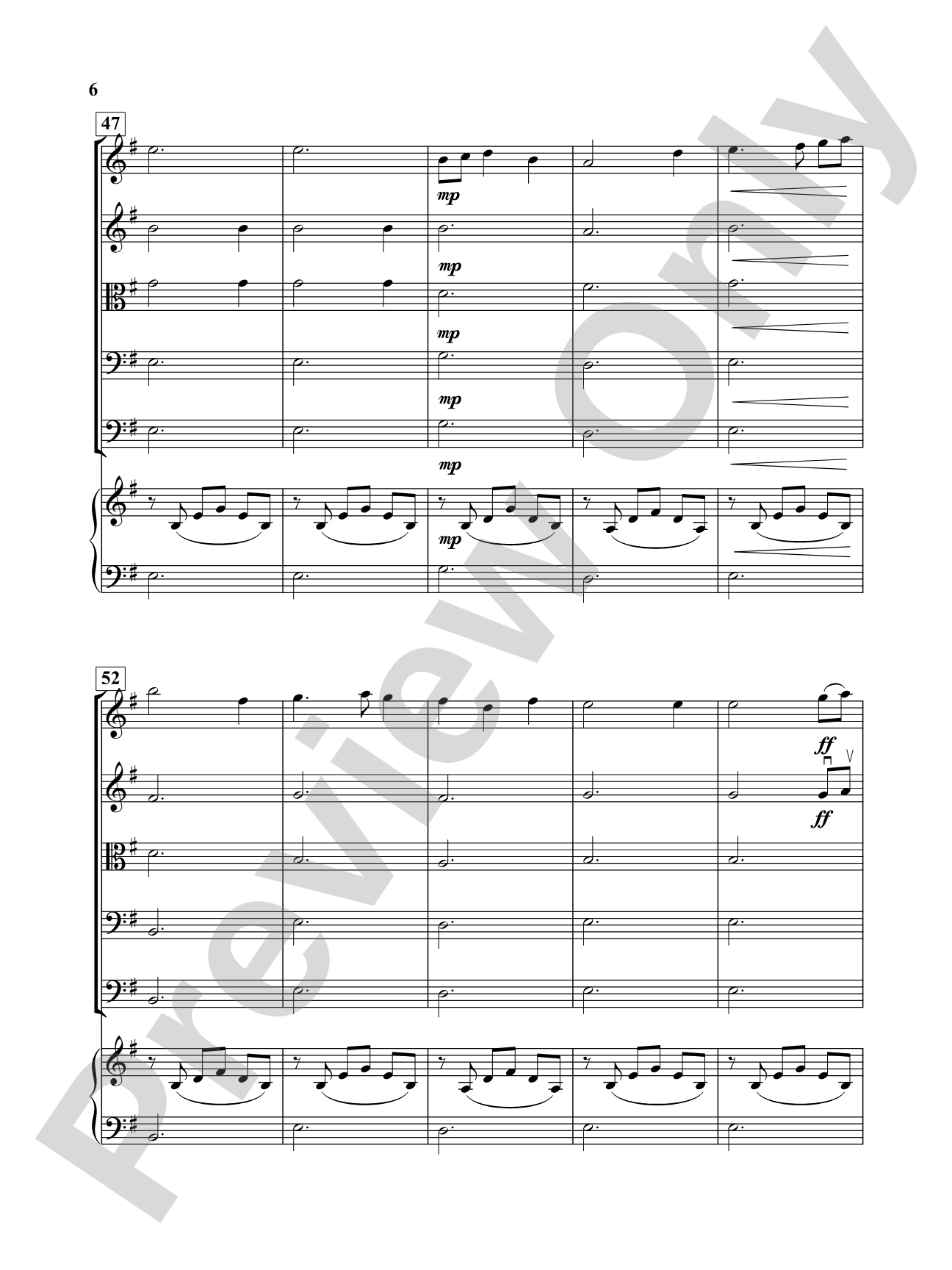
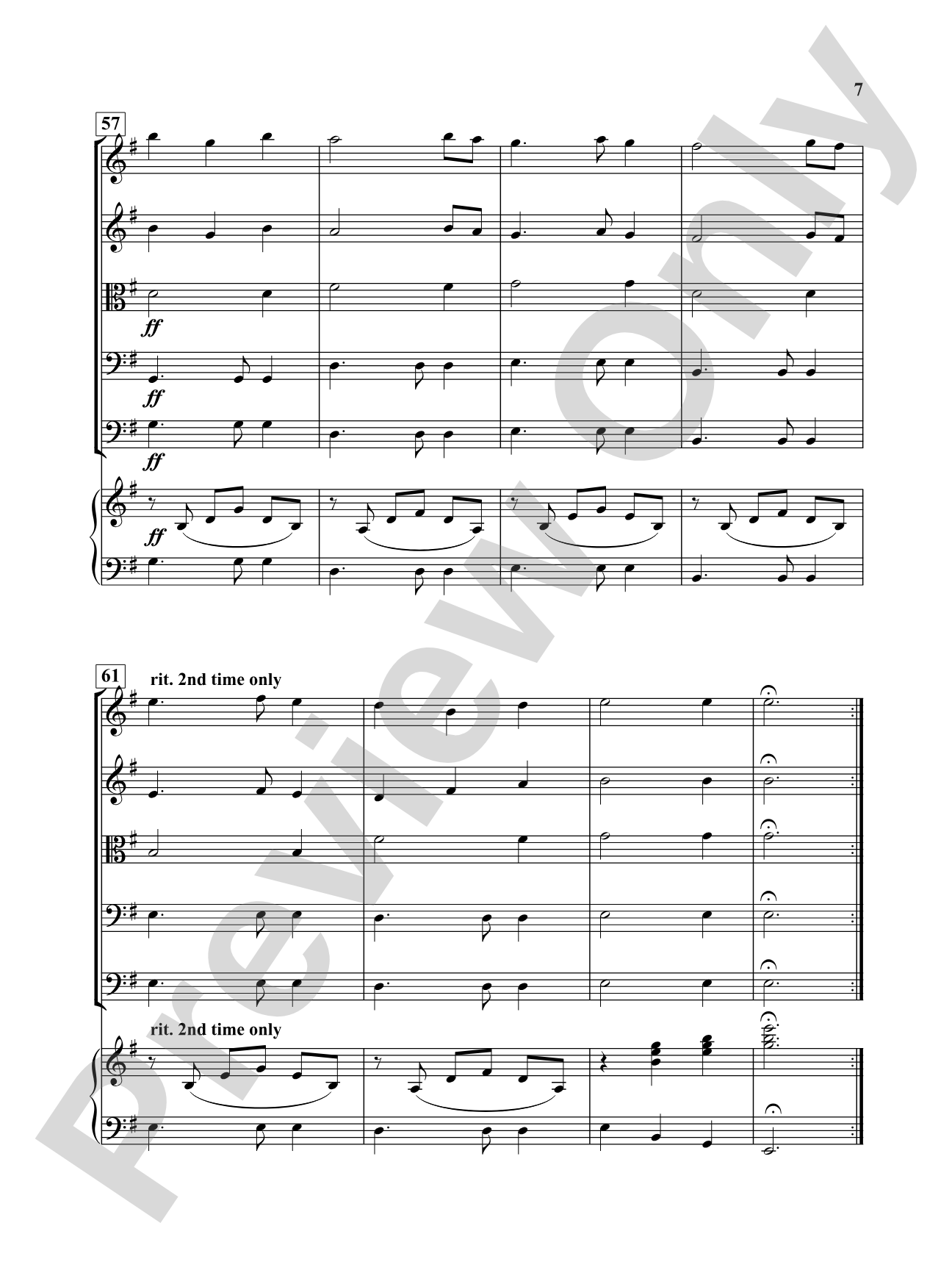
Middle School/High School. A legato melody is found in the violins. Harmony parts are straightforward with lovely modal harmonies. A moderate tempo throughout.


Celtic Meditation: String Orchestra Conductor Score & Parts isn't in MakeMusic Cloud just yet...but it could be. Let us know you'd like to see it, and you'll help shape what comes next. In the meantime, start a free trial and dive into thousands of interactive titles your students can play along with today.
Request This Title
Tell us you want it.
Start Your Free Trial
Explore everything that's ready to play right now.
Sample Audio
No sample audio found.
Sample Video
No sample videos found.
Additional Details
Series:
Wilfin String Orchestra: Young String Ensemble Series
Publisher:
Wilfin Music
Page Count:
66
SKU:
76-PK-0000021
More about this title
About the Composer: Loreta Fin
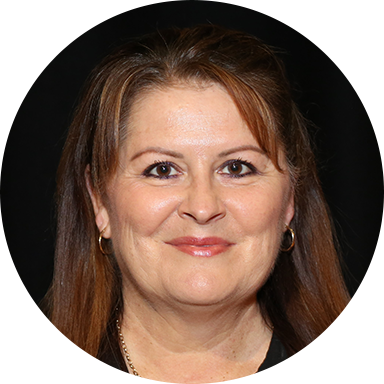
Loreta Fin AM brings decades of performance and teaching experience to her compositional work. A violinist trained at the Sydney Conservatorium of Music, she served as concertmaster of the Sydney Youth Orchestra and spent over 25 years as principal viola with the Queensland Pops Orchestra, performing alongside world-class artists. Since 1993, she has directed strings at Somerville House School in Brisbane, establishing herself as a respected educator and adjudicator at major Australian competitions and two American National String Teachers' Conferences.
Fin's contribution to string repertoire spans more than 100 published works with Alfred Music, reflecting her deep understanding of student ensembles and ensemble pedagogy. She served as State and National President of the Australian Strings Association for 25 years and holds the position of State Advisor for Strings with the Australian Music Examinations Board. Her leadership extends to conducting state and national honours ensembles since 2015. Fin received the Queensland State Award for services to AUSTA in 2009 and was honored with the National Award for Services to Music and String Teaching in Australia.
Why we love this
Fin writes modal harmonies with genuine melodic substance, avoiding the predictable progressions that can make string pieces feel routine at this level. The legato writing sits naturally under student bows, allowing young players to focus on phrase shaping rather than fighting awkward string crossings or uncomfortable registers.
What to expect
Calm and introspective, with a floating quality created by the modal harmonies. The violins carry a singing melody that invites listeners into a quiet, contemplative space, while the supporting voices provide gentle harmonic color without competition.
Who it's for
String orchestras in middle and high school settings seeking repertoire that develops musicianship without excessive technical demands. Players at early intermediate level will benefit from the straightforward harmony writing and supportive texture while building control over sustained, legato playing.
How to get the most out of it
- Shape the legato melody in the violins by thinking of each phrase as a continuous breath, even when the notes suggest obvious stopping points. This sustains the meditative quality throughout.
- Balance the harmony parts carefully so they support rather than obscure the violin line. Cello and bass players should listen for the lead voice and adjust dynamics accordingly.
- Maintain an even, unhurried tempo that allows the modal harmonies to resonate. Rushing will flatten the contemplative character the composer has created.
- Experiment with slight dynamic swells within phrases to bring out the shape of the melody without losing the piece's calm foundation.
How to use it
Program this as a concert opener to establish a thoughtful mood, or pair it with a more energetic work to create dynamic contrast. The moderate tempo and accessible technique make it ideal for early-season performances when ensembles are still building comfort with balancing and blend.
Skills your students will build
- Sustaining legato tone through entire phrases without obvious bow changes
- Listening to and balancing ensemble texture when not playing the melody
- Understanding modal harmony and how it differs from major-minor tonality
- Maintaining an even tempo without tempo fluctuations in reflective music
- Responding to conductor gesture for dynamic shaping within a held harmonic environment