Celtic Dance Sheet Music Preview

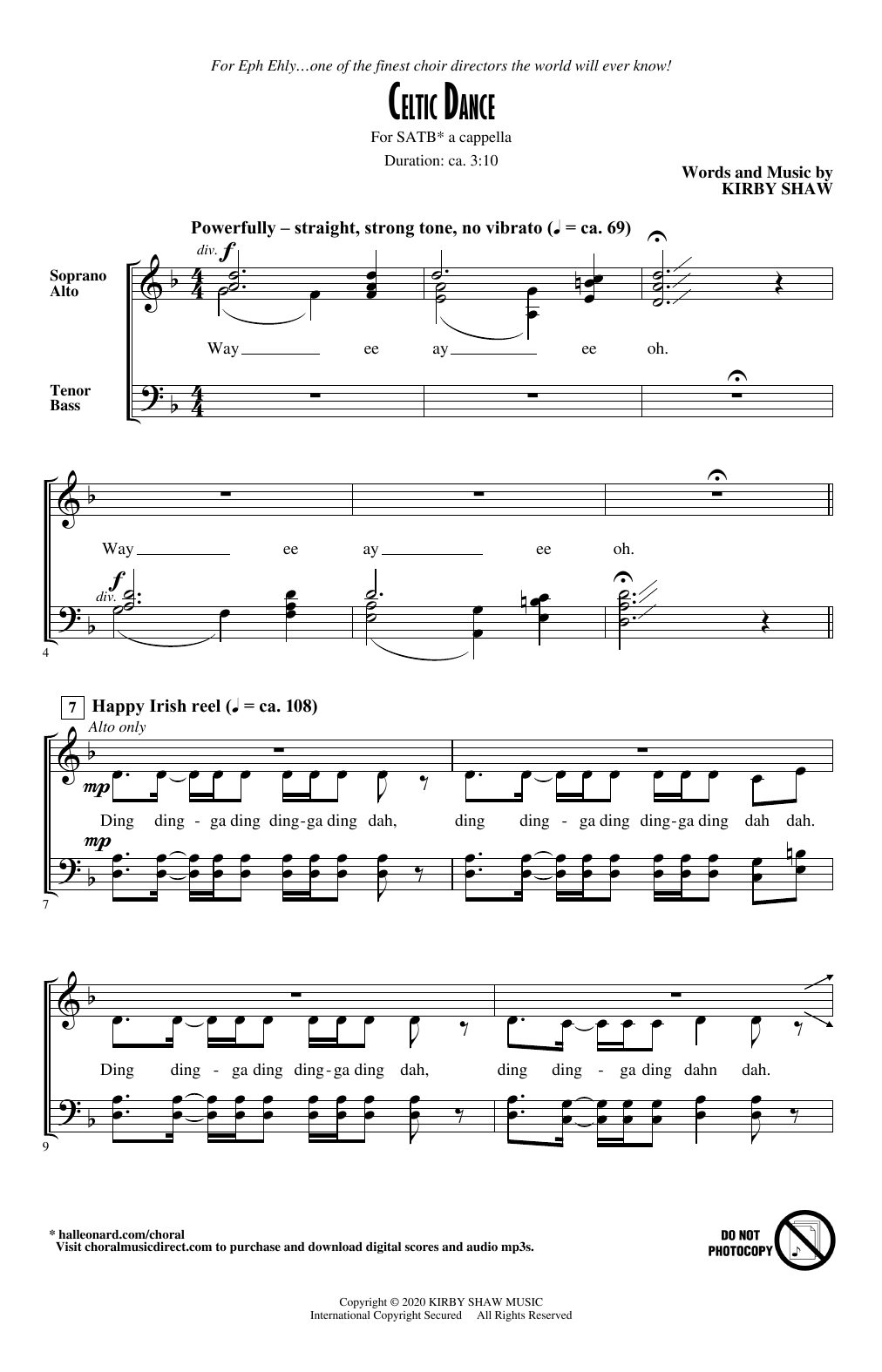
Celtic Dance: SATB Choral Octavo

By Kirby Shaw

Item: 35-DS00461524

Digital Download
$2.35
Description

Celtic Dance: SATB Choral Octavo isn't in MakeMusic Cloud just yet...but it could be. Let us know you'd like to see it, and you'll help shape what comes next. In the meantime, start a free trial and dive into thousands of interactive titles your students can play along with today.

Sample Audio
No sample audio found.
Sample Video
Additional Details
Publisher: Hal Leonard
Page Count: 7
SKU: 35-DS00461524

More about this title

About the Composer: Kirby Shaw

Kirby Shaw

Kirby Shaw stands as one of the most widely performed choral composers in music education, with over 2,500 arrangements and original works in print and nearly 20 million copies sold worldwide. His work has been shared across 45 states and multiple continents, and he holds degrees in Music Education and Choral Composition from San Jose State University as well as a DMA in Choral Conducting from the University of Washington.

A master of both classical and jazz traditions, Shaw founded and directed the acclaimed COS Vocal Jazz Ensemble at College of the Siskiyous before moving on to similar leadership roles at Colorado State University and the University of Missouri at Kansas City. He now directs the Jefferson State Choral Coalition at Southern Oregon University. Shaw's teaching approach combines rigorous musical training with infectious humor and deep stylistic knowledge. His prolific output has earned him numerous ASCAP awards, and his choral music continues to be performed by ensembles of all levels.

Why we love this

Shaw brings his distinctive gift for rhythmic vitality and accessible writing to this Celtic setting, creating a piece that feels both authentic and genuinely singable for mixed voices. The arrangement captures the energy of traditional Irish music without sacrificing the clarity and musicality that makes a piece rewarding to rehearse. Choirs respond to the bright character and the straightforward harmonic language, which lets the text and melody shine.

What to expect

Energy and warmth combine in this celebration of Irish musical tradition. The piece captures the buoyancy of a folk dance while maintaining the harmonic sophistication Shaw brings to his choral writing, creating a setting that feels both rooted in tradition and freshly composed.

Who it's for

This octavo works beautifully for intermediate to advanced high school choirs, college ensembles, and adult community choirs seeking accessible festival or concert repertoire with genuine musical substance. Directors programming festival material or building a concert around cultural themes will find it both engaging and musically coherent for mixed voices.

How to get the most out of it

  • Establish a clear, driving pulse from the start; this piece thrives on rhythmic precision and forward momentum. Use the recorded accompaniment as a tempo reference during early rehearsals.
  • Balance the melody between soprano and alto lines, especially where they weave together. These passages define the Celtic character, so let them breathe naturally without overblending.
  • Keep vowel sounds consistent across voice parts during unison or near-unison passages. The open, resonant vowels typical of Irish music will help the piece project its character.
  • Shape phrases with a light, articulate approach to consonants. Clarity here reinforces the rhythmic snap that gives Celtic music its appeal.

How to use it

Pair this with other world music arrangements to build a concert theme, or use it as a crowd-pleasing closer that leaves audiences in a bright, energized mood. The seven-page format makes it manageable to add to a rehearsal schedule without overwhelming singers juggling multiple pieces.

Skills your students will build

  • Rhythmic independence in syncopated figures
  • Ensemble balance across four parts with independent melodic lines
  • Stylistic interpretation of Celtic music characteristics
  • Diction clarity and articulation in a folk idiom
  • Reading mixed meters and rhythmic patterns within a tonal framework

You May Also Like