
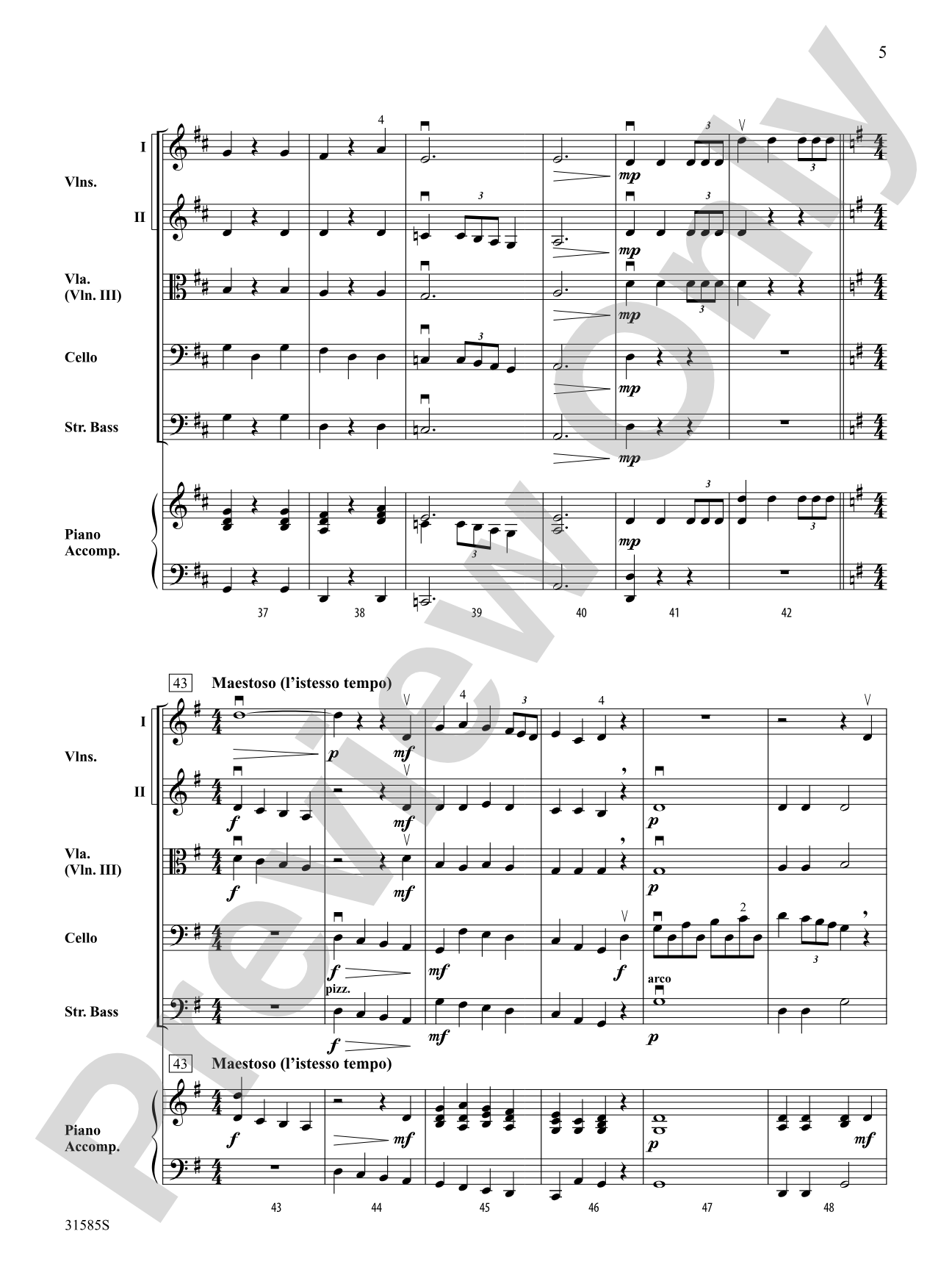
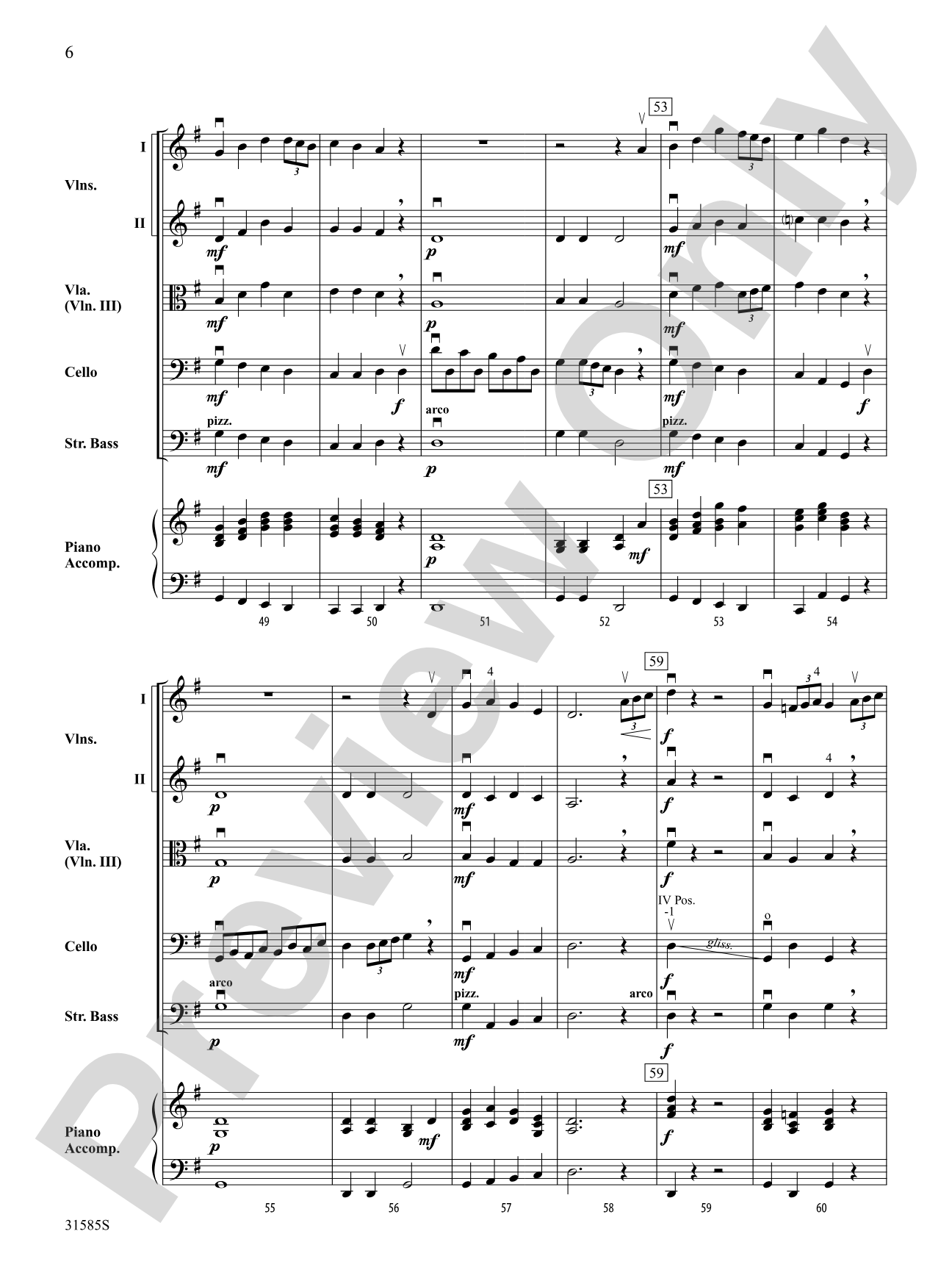
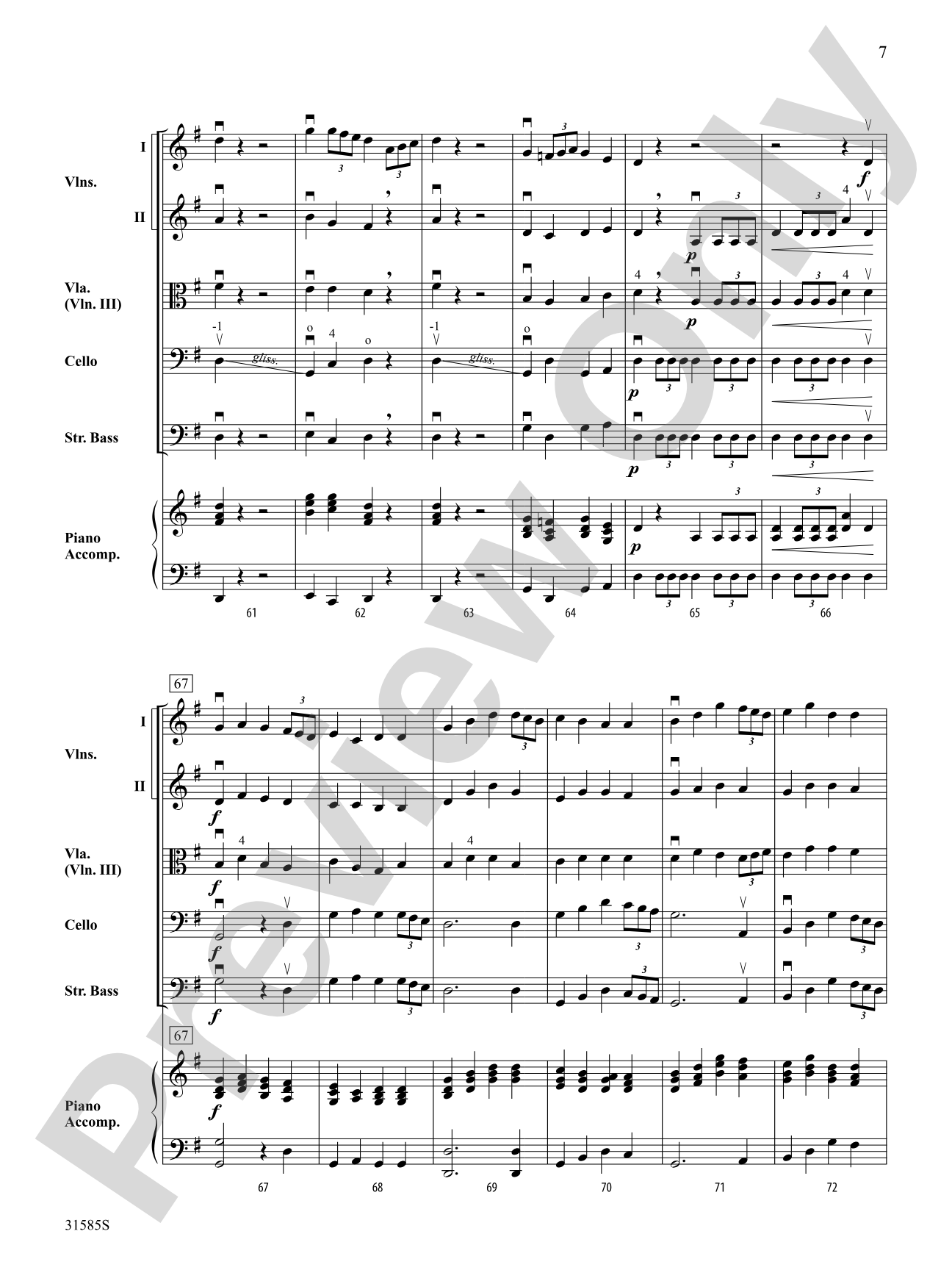
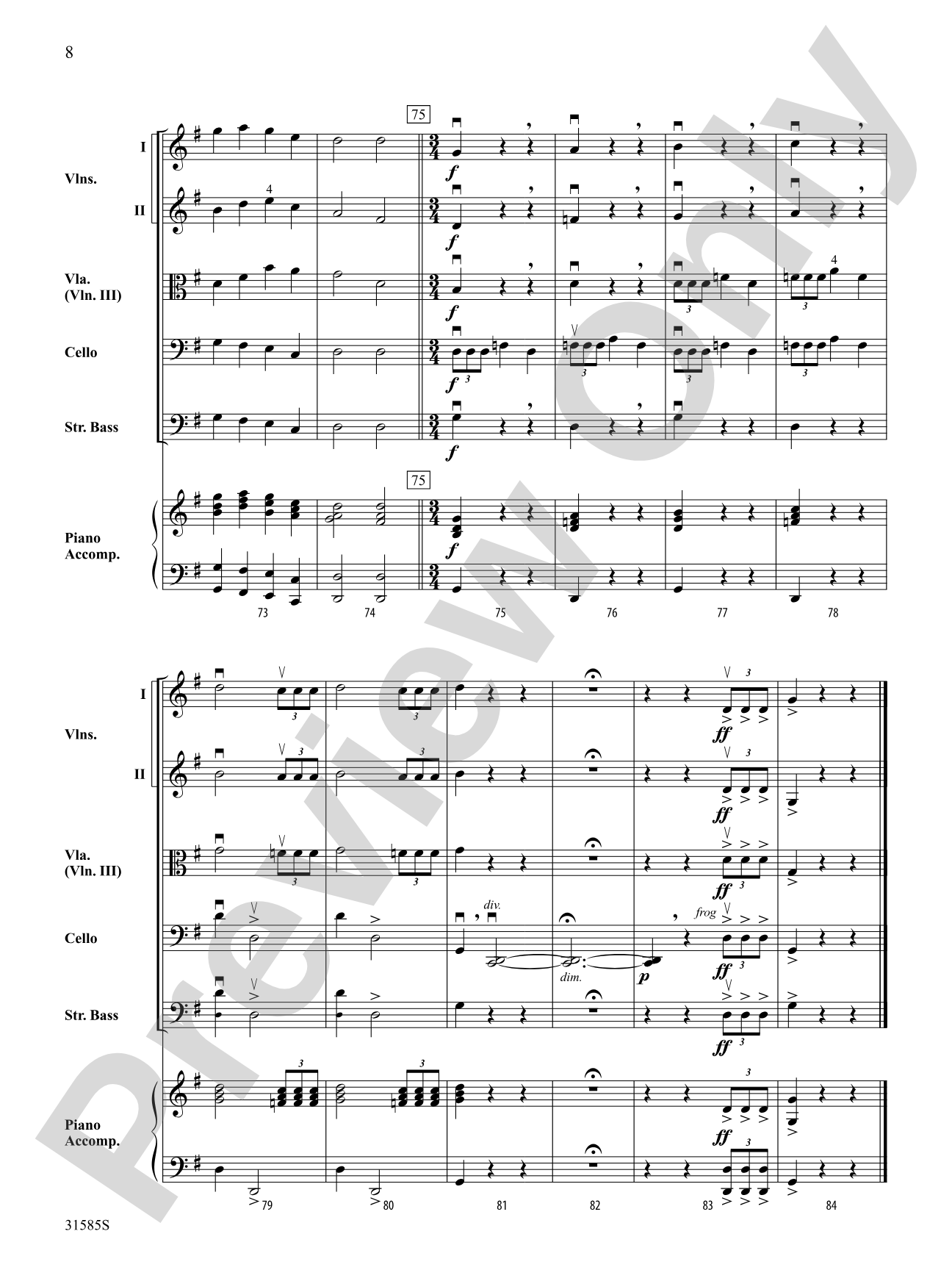

Cello Squadron: Score
Cello Section Feature
By Richard Meyer
Grade: 2
Item: 00-PR-0001731
$8.00
Pickup currently not available
Description
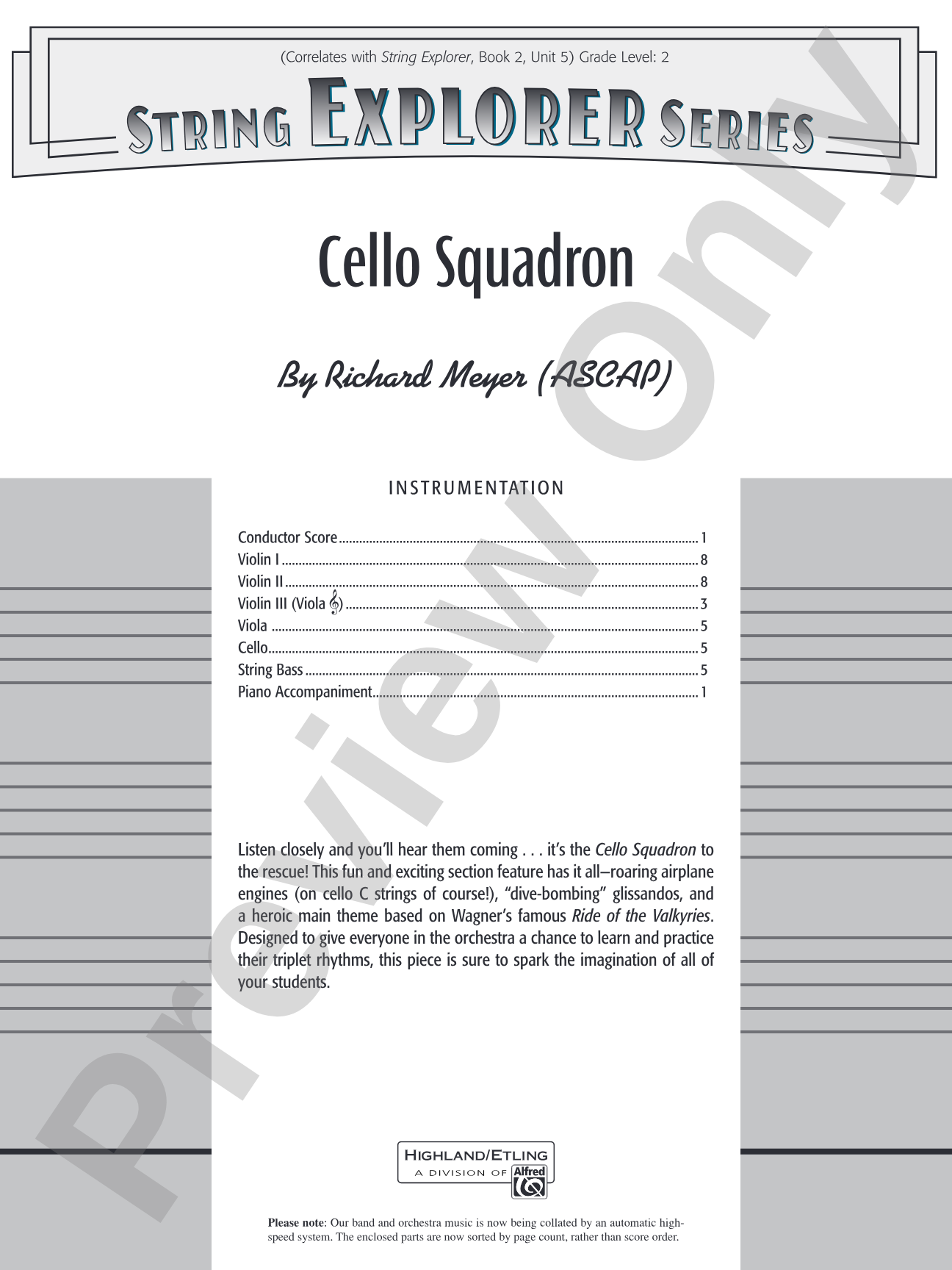
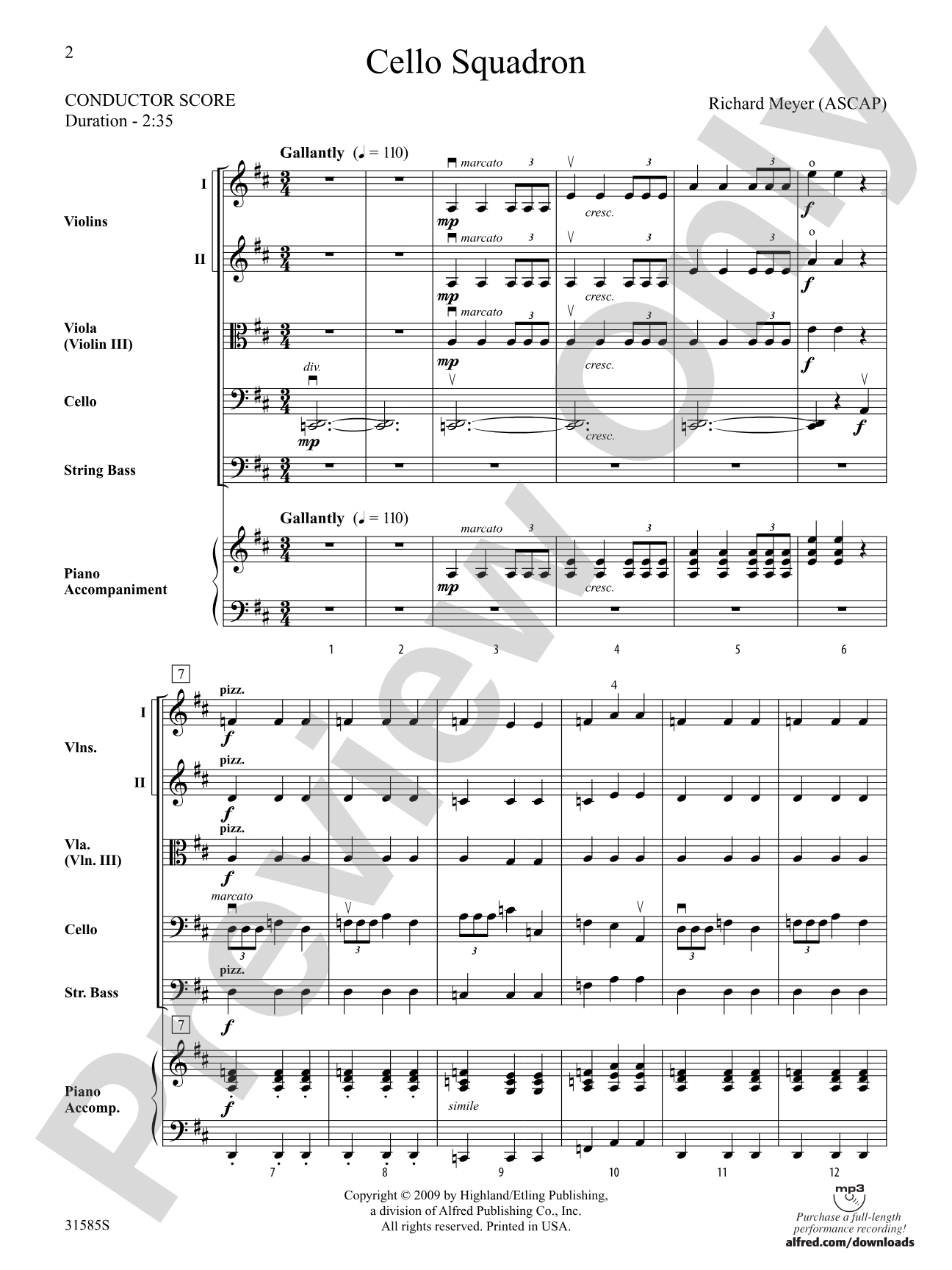
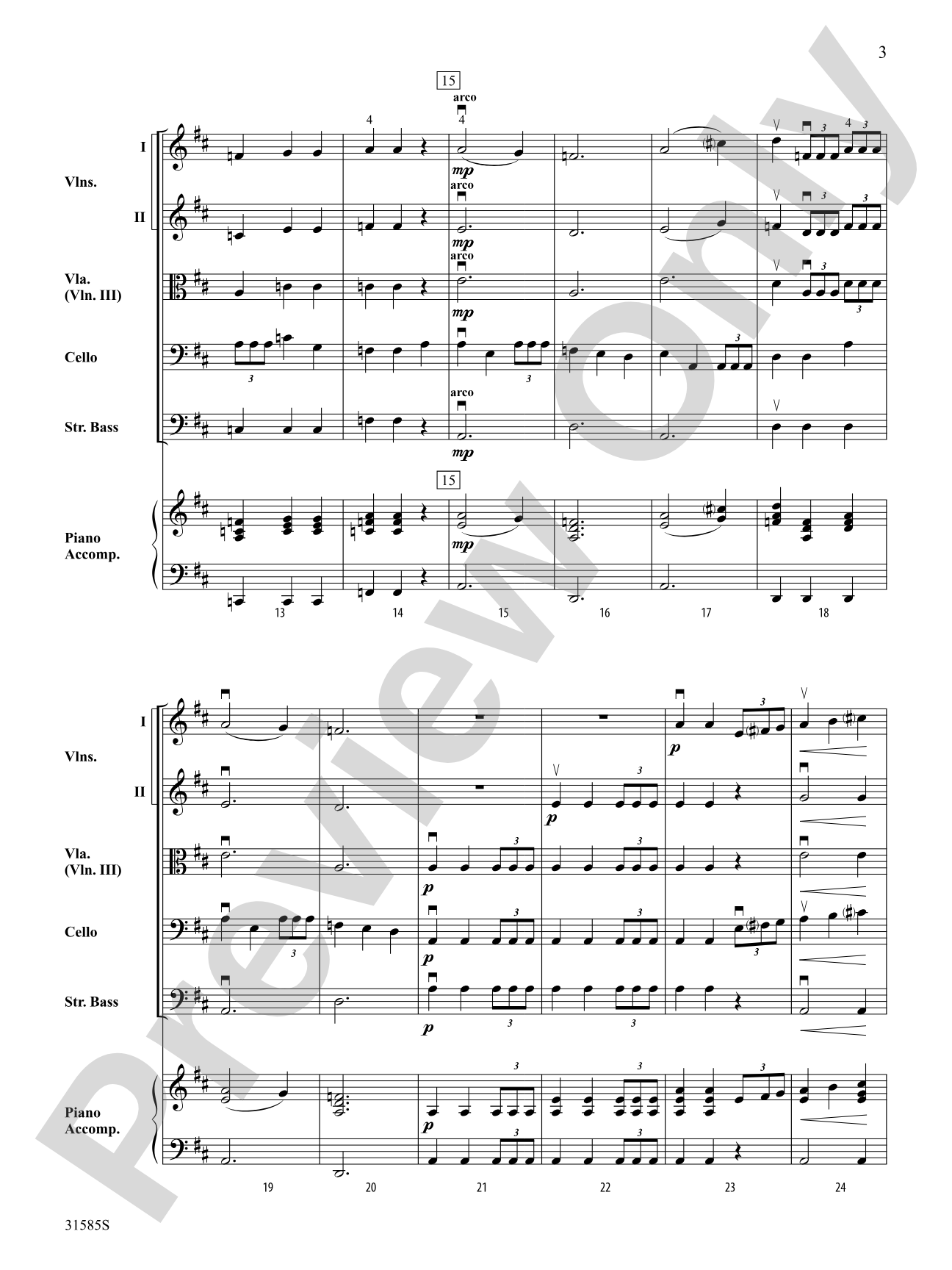
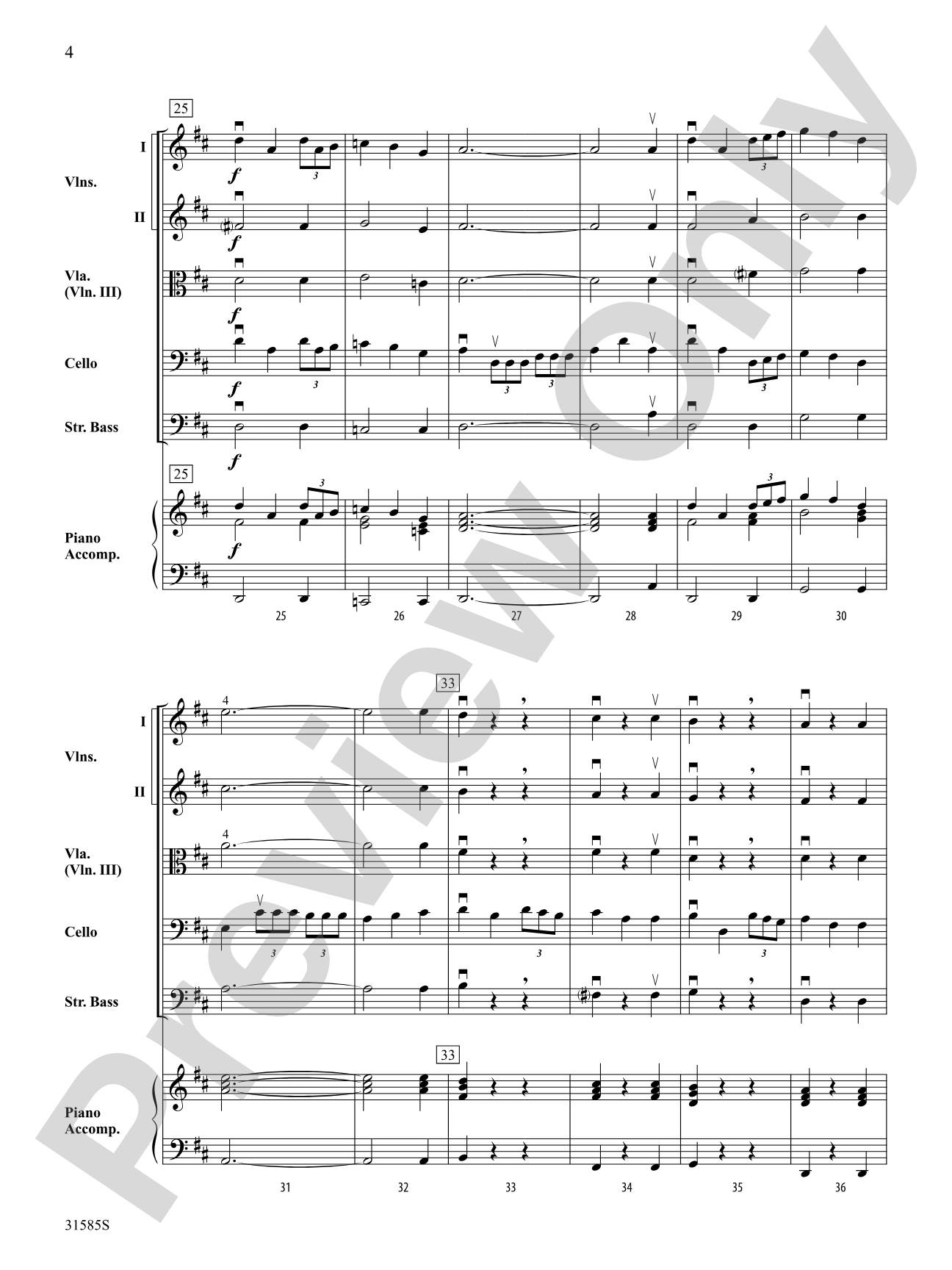
Listen closely and you'll hear them coming . . . it's the "Cello Squadron" to the rescue! This fun and exciting section feature has it all---roaring airplane engines (on cello C strings of course!), "dive-bombing" glissandos, and a heroic main theme based on Wagner's famous "Ride of the Valkyries." Designed to give everyone in the orchestra a chance to learn and practice their triplet rhythms, this piece is sure to spark the imagination of all of your students. Correlates with String Explorer Book Two, unit 5. This title is available in MakeMusic Cloud.


Don't just read it, hear it, play along with it, and watch your students grow with it. In MakeMusic Cloud, Cello Squadron: Score comes alive with professional accompaniment, adjustable tempo, and built-in practice tools that turn solo practice into real progress.
Open in the Player
Jump straight in and assign it today.
Start Your Free Trial
Open this title and explore the full library in minutes.
Sample Audio
1
Audio File
--:--
0:00
0:00
Sample Video
No sample videos found.
Additional Details
Series:
Highland/Etling String Explorer
Publisher:
Alfred Music
Page Count:
140
SKU:
00-PR-0001731
More about this title
About the Composer: Richard Meyer
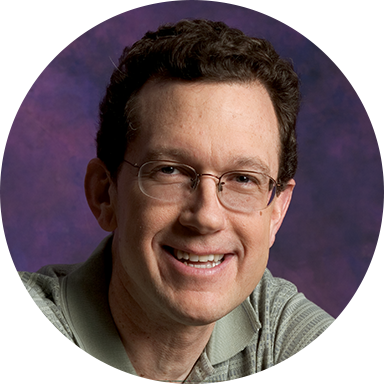
Richard Meyer spent 35 years teaching strings across elementary, middle, and high school levels in public schools, with 22 of those years directing the orchestra program at Oak Avenue Intermediate School in Temple City, California. During his tenure there, he grew the program from 29 students to 200 and oversaw the city's elementary string curriculum. He also served as music director of the Pasadena Youth Symphony Orchestra for 16 years, leading performances across North America, Europe, and Australia.
Beyond the classroom, Meyer founded the "Giving Bach" program in 2009, an initiative that has earned national recognition for using interactive concerts to reach special needs and underserved students throughout Southern California. A prolific composer with nearly 200 published works to his name, he spent 16 years as string editor for Alfred Publishing and co-authored several influential string method resources, including the String Explorer Series. He has clinicked at major conferences including the A.S.T.A. National Conference and guest-conducted honor orchestras across multiple states.
Why we love this
This piece captures everything that makes elementary string orchestras exciting: genuine humor, immediate engagement, and a musical concept that stays with students long after rehearsal ends. The triplet rhythm work feels purposeful rather than mechanical because it's embedded in a narrative that makes sense (those dive-bombing glissandos need precision), and Meyer's clever orchestration ensures every section gets a moment to shine while staying solidly in Grade 2 territory.
What to expect
Playful and adventurous, with the energy of a Saturday morning cartoon brought to orchestral life. The roaring cello engines give way to dramatic glissandos and a soaring main theme that taps into every young musician's sense of heroism, all while staying musically grounded and achievable.
Who it's for
String orchestras in grades 2-3 who are ready to tackle rhythmic complexity with pedagogical purpose. This works equally well as a standalone concert feature or as a reinforcement tool for students working through String Explorer Book Two.
How to get the most out of it
- Spend time establishing the airplane engine sound on the C strings before tackling the full section feature. The roaring effect relies on consistent bow pressure and tone quality, so isolate that work in warm-up.
- Mark the triplet subdivisions clearly in rehearsal. Have students count or conduct the triplet pulse to lock the rhythmic precision Meyer builds throughout the piece.
- Balance the heroic Wagner-based theme so it emerges over the rhythmic texture underneath. The excitement comes from layering, not from everyone playing at full volume.
- Record a rehearsal and listen back as a section. Students often hear their rhythmic alignment issues more clearly when they're not concentrating on their own part.
How to use it
Program this early in a concert to set a fun, approachable tone, or place it as a palate-cleanser between heavier works. For classes working through String Explorer Book Two, use it as the capstone project for unit 5 to reinforce concepts in a performance context that genuinely excites students.
Skills your students will build
- Reading and performing triplet rhythms in ensemble context
- Producing quality tone on lower strings (cello C string technique)
- Executing glissandos with control and musicality
- Balancing independent section parts within an orchestral texture
- Responding to narrative or programmatic musical content