
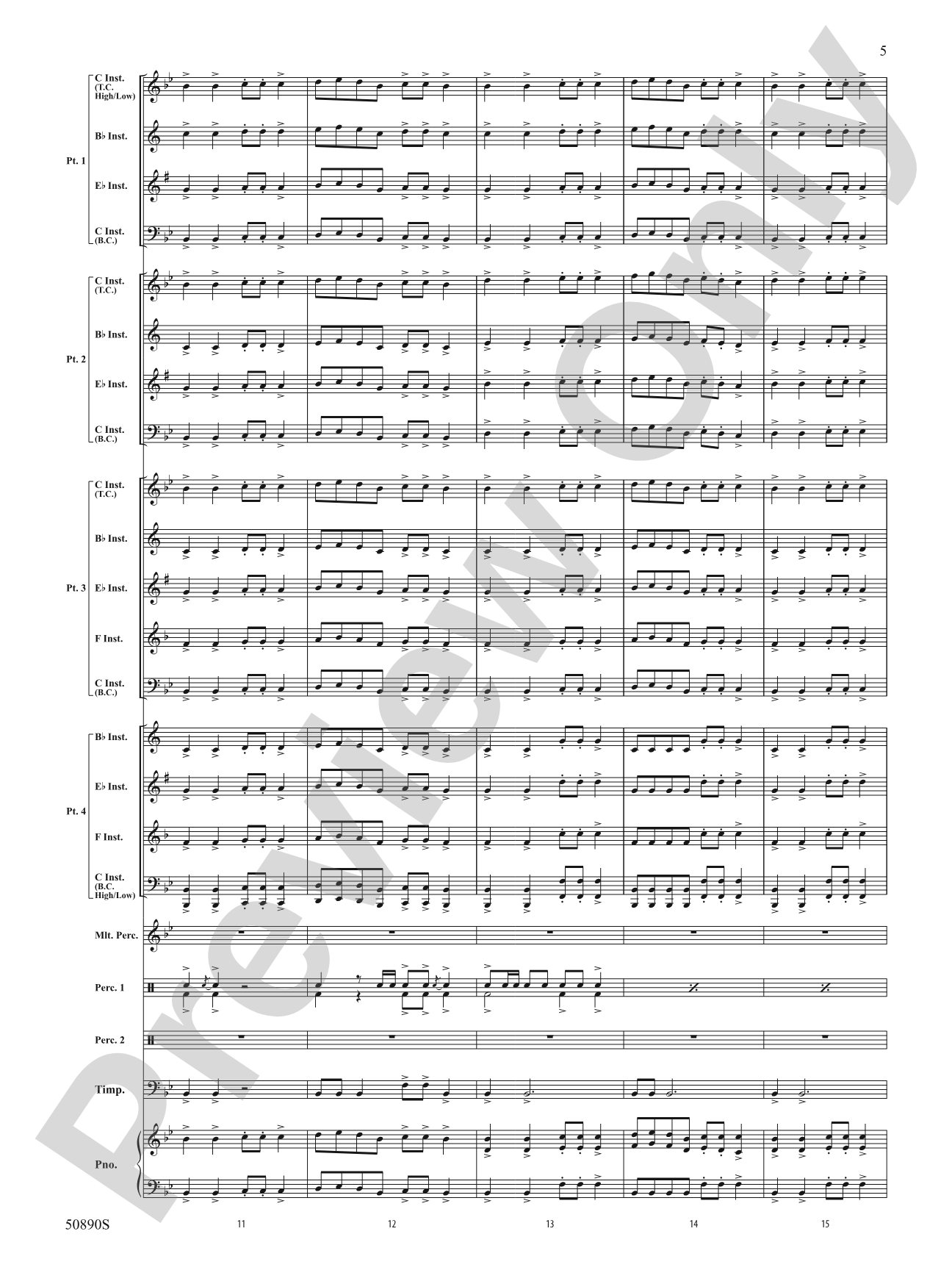
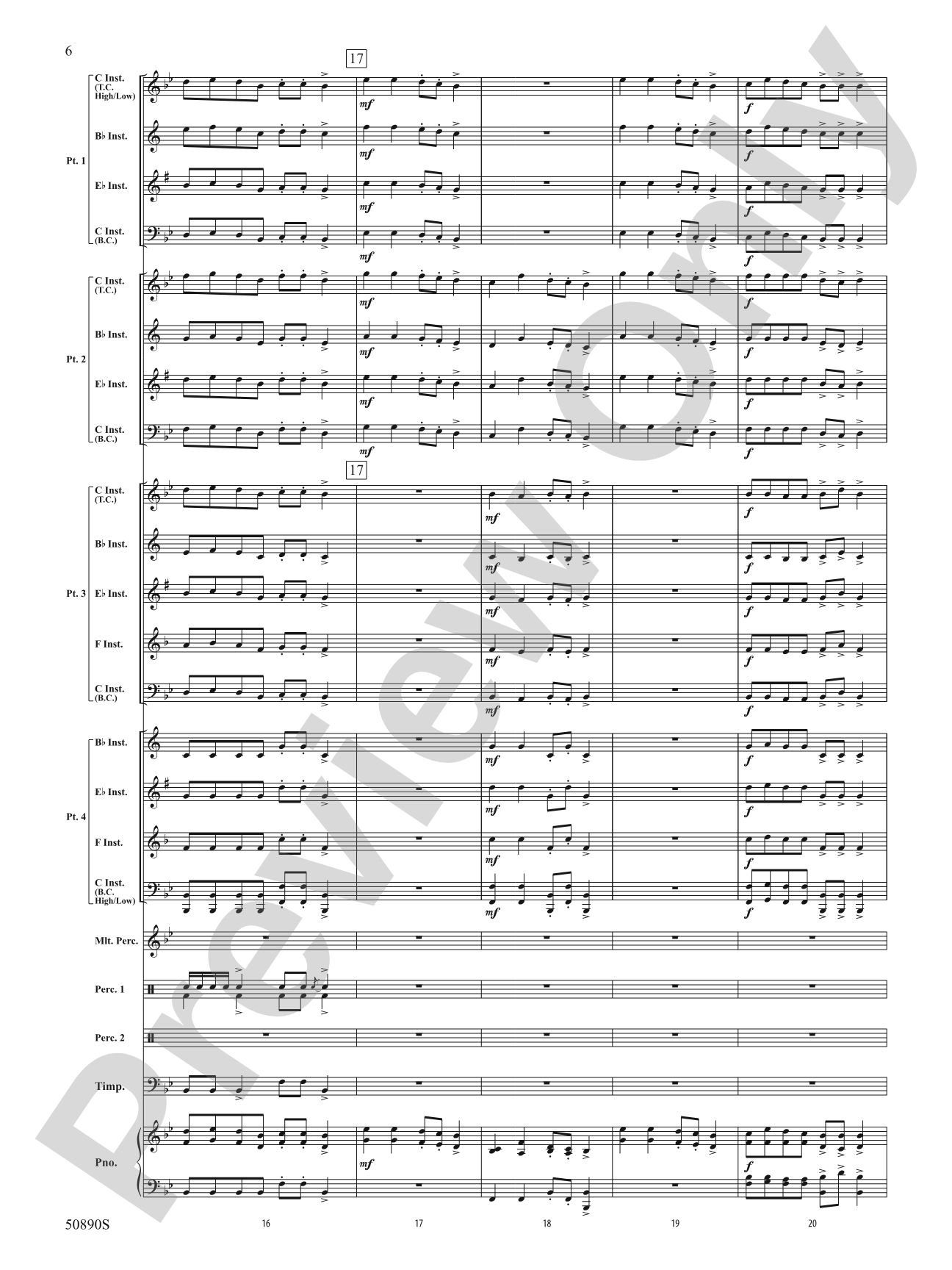
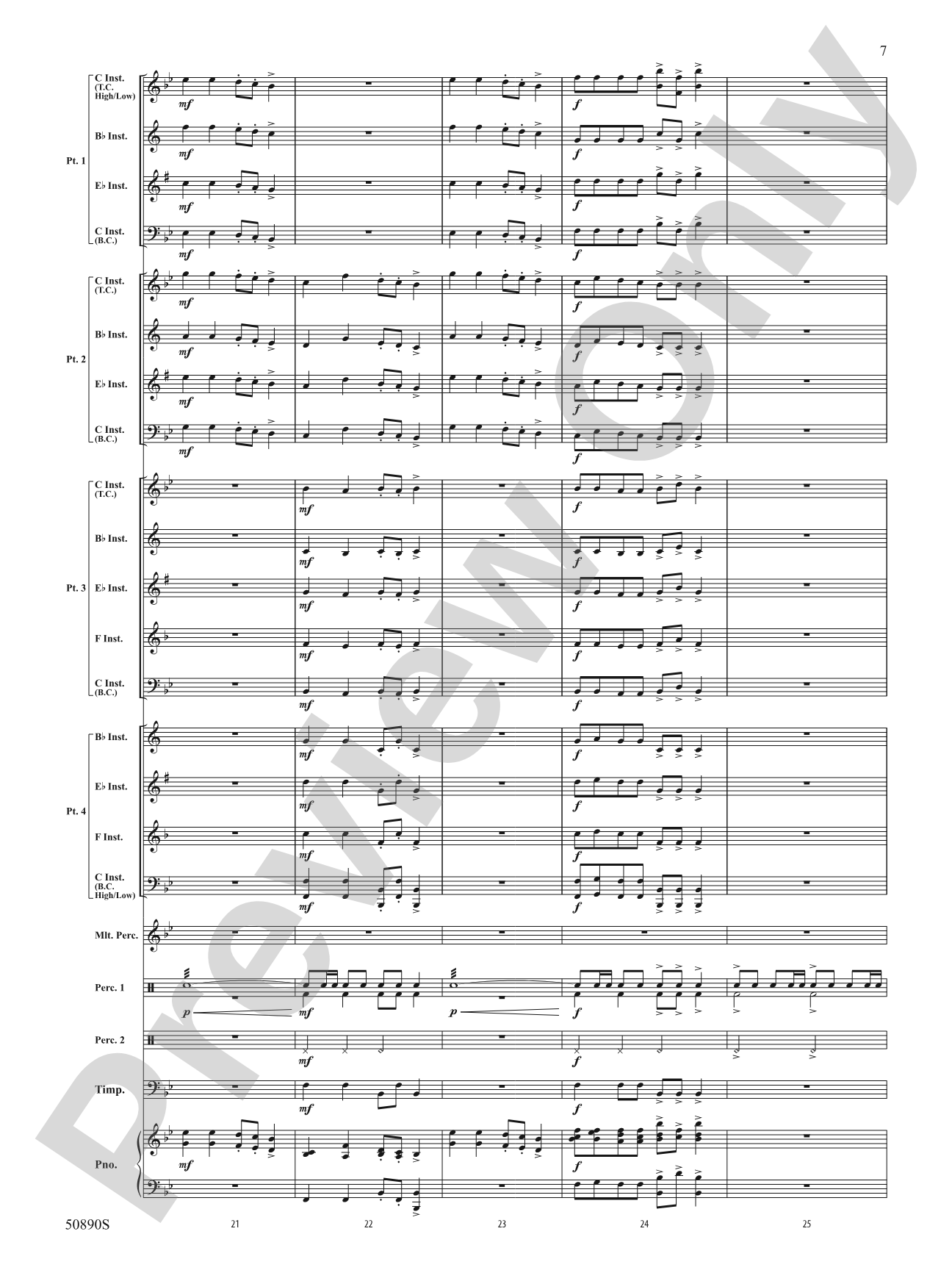
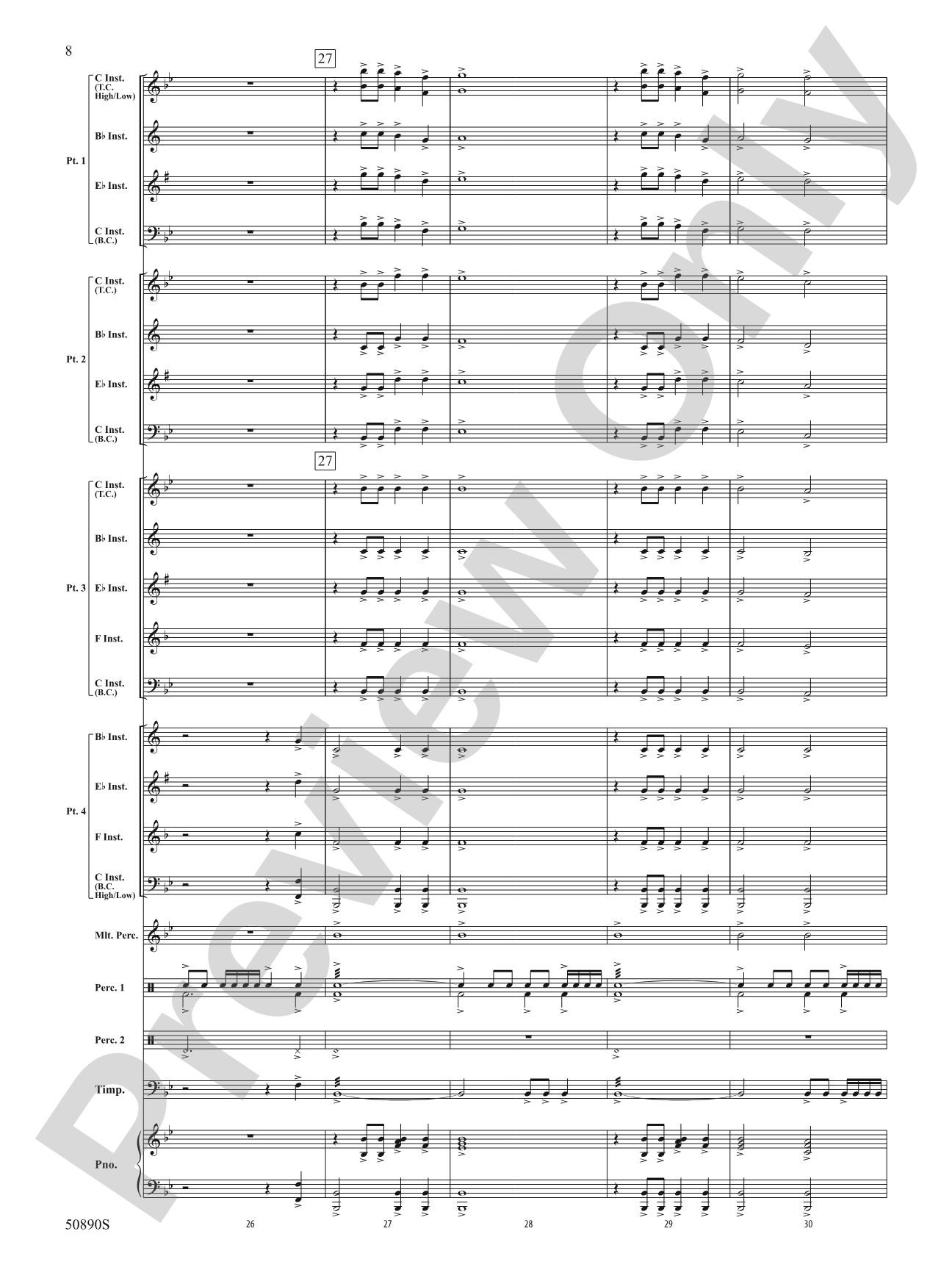
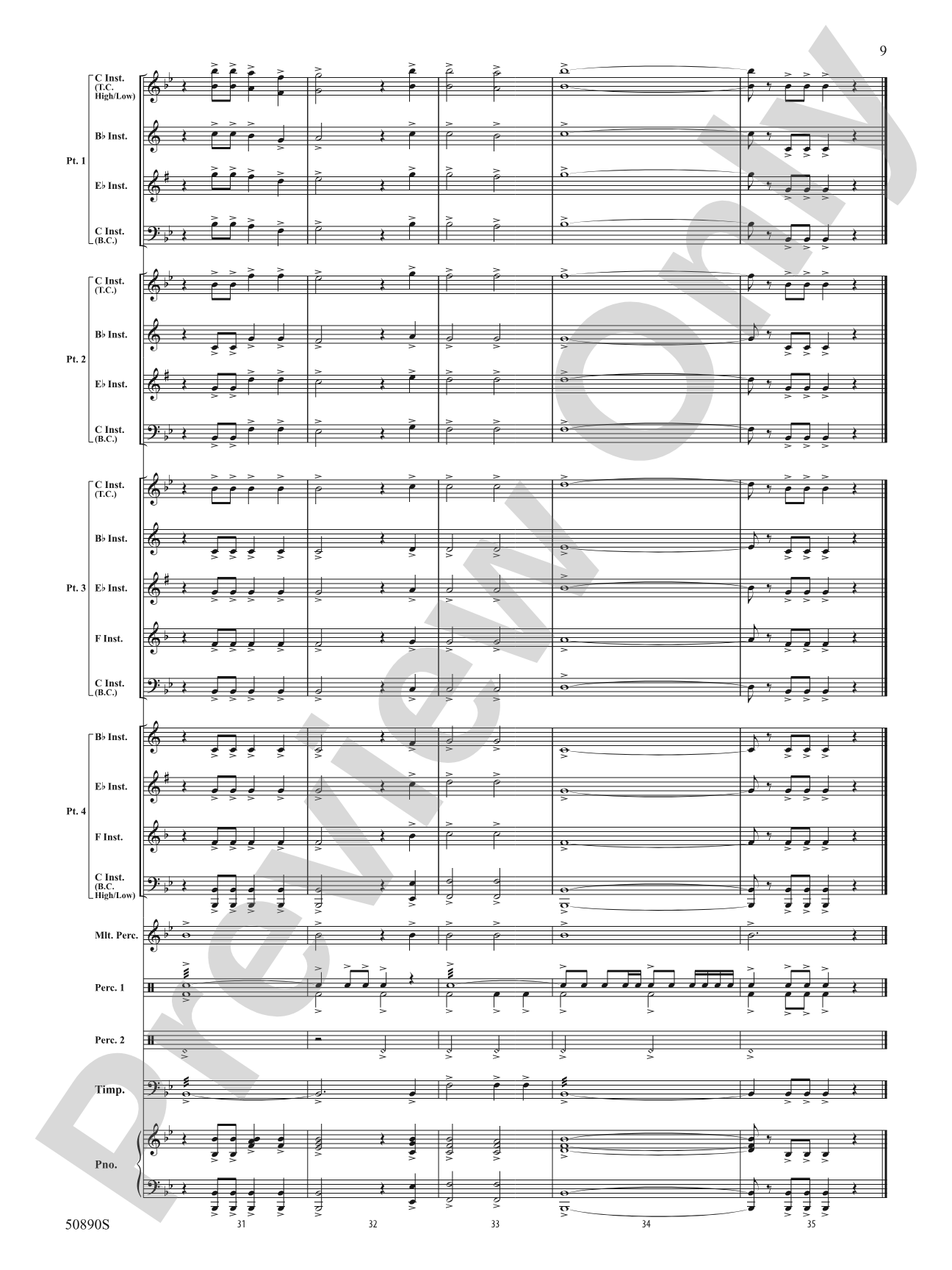

Celebratory Fanfare: Score
By Scott Watson
Grade: 1
Item: 00-PR-0007349
$10.00
Pickup currently not available
Description
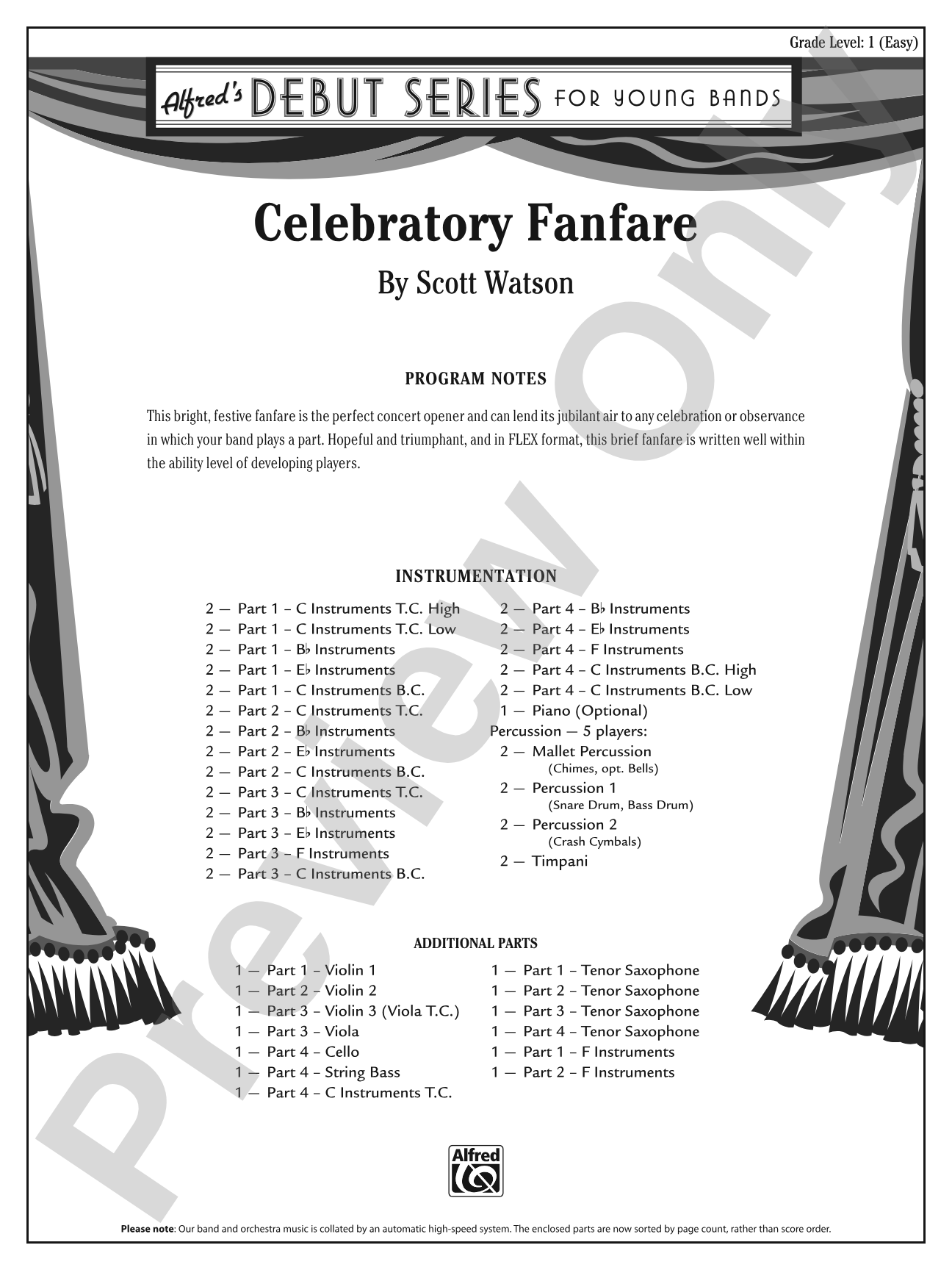
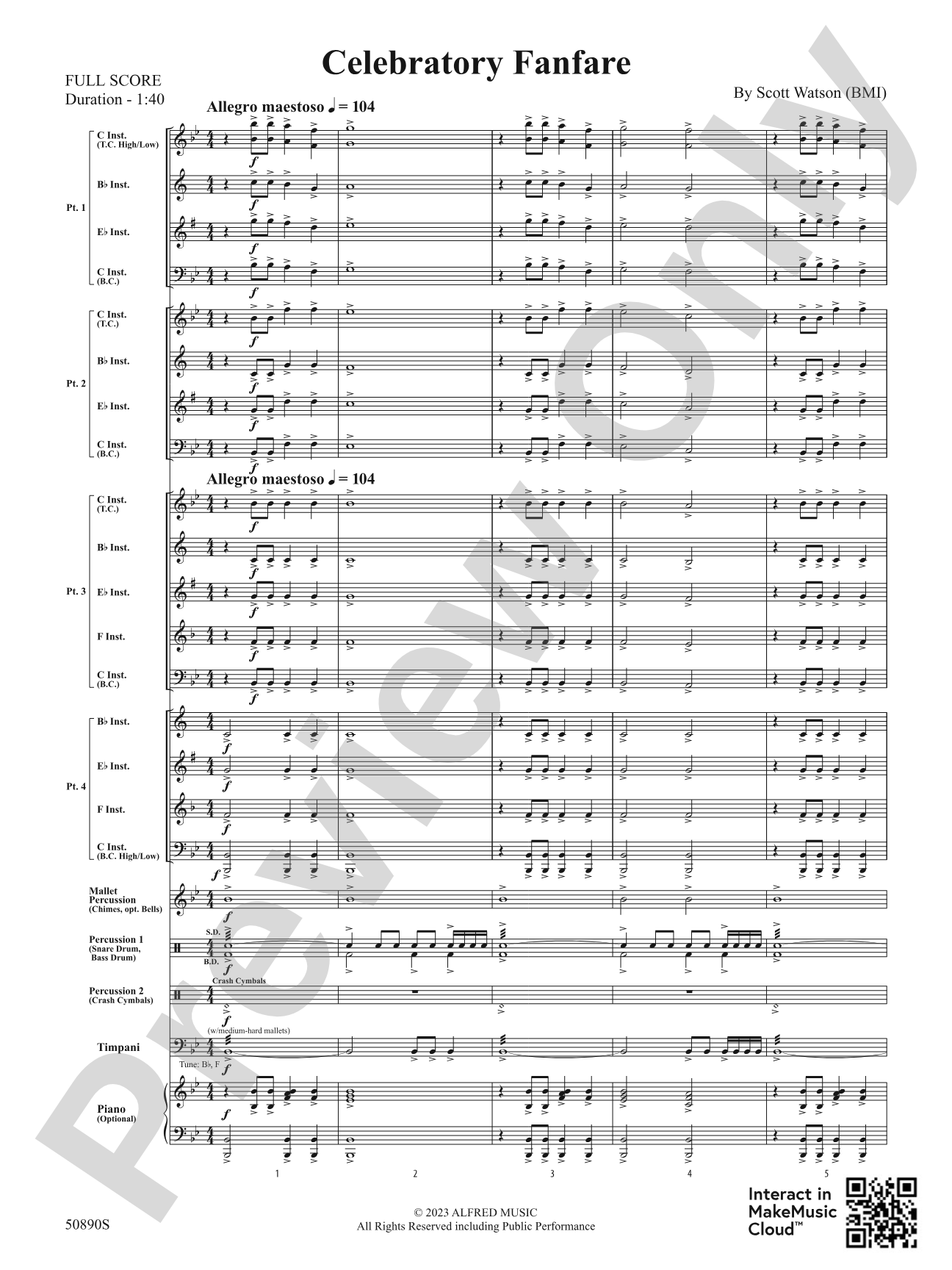
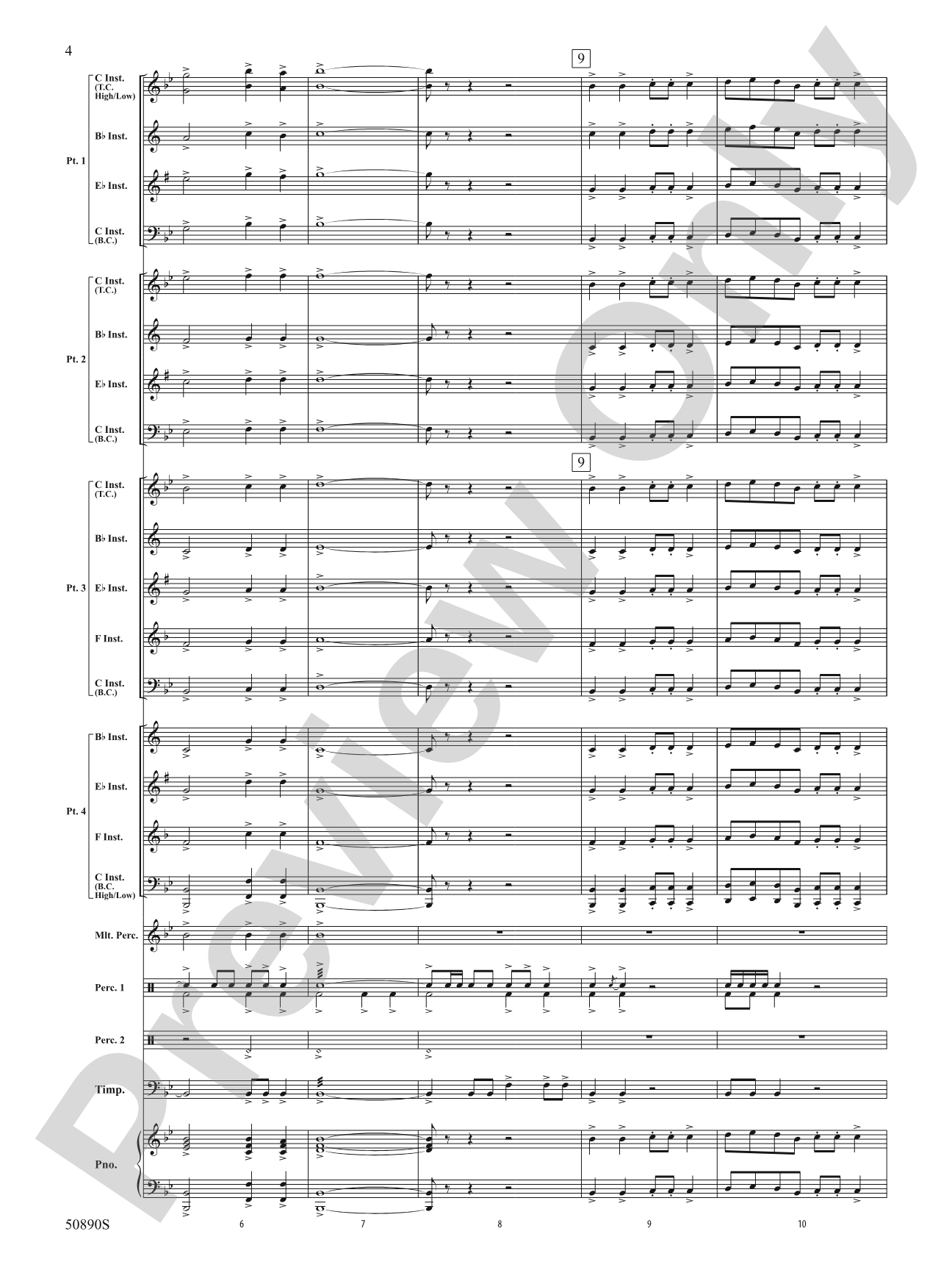
This bright, festive fanfare is the perfect concert opener and can lend its jubilant air to any celebration or observance in which your band plays a part. Hopeful and triumphant, and in FLEX format, this brief fanfare is written well within the ability level of developing players. (1:20)
Percussion Accompaniment Track Downloads:
with click
without click


Percussion Accompaniment Track Downloads:
with click
without click
Don't just read it, hear it, play along with it, and watch your students grow with it. In MakeMusic Cloud, Celebratory Fanfare: Score comes alive with professional accompaniment, adjustable tempo, and built-in practice tools that turn solo practice into real progress.
Open in the Player
Jump straight in and assign it today.
Start Your Free Trial
Open this title and explore the full library in minutes.
Sample Audio
1
Audio File
--:--
0:00
0:00
Sample Video
Additional Details
Series:
Alfred Debut Series
Publisher:
Alfred Music
SKU:
00-PR-0007349
More about this title
About the Composer: Scott Watson

Scott Watson has shaped music education across multiple roles over a career spanning several decades. After 35 years leading instrumental and elective music programs in the Parkland School District (Allentown, PA), including his tenure as high school Director of Bands and later as coordinator of the elementary band and strings program, he moved into higher education as Associate Professor of Music at Cairn University. His compositional output reflects this dual expertise: more than 120 published works for concert band, string orchestra, and chamber ensembles across all grade levels draw equally from his grounding in contemporary concert music and his deep knowledge of the school band world.
Watson's music has reached audiences at major venues including the Academy of Music in Philadelphia, the Midwest Clinic in Chicago, and the White House. He serves as an exclusive composer and clinician for Alfred Publications, contributes to their Sound Innovations series, and authored Using Technology to Unlock Musical Creativity (Oxford University Press, 2011). His work as a guest conductor and clinician for honor and festival bands keeps him connected to the daily realities of music teaching.
Why we love this
This fanfare opens with immediate energy and clarity at a grade that students can access without struggle. Watson's writing here reflects his understanding of what developing ensembles need: strong melodic shape, transparent voicing, and the kind of joyful confidence that makes young players feel like they're making real music from measure one.
What to expect
Bright and triumphant, the piece carries an unmistakable celebratory character that feels both accessible and genuine. In just 80 seconds, it manages to feel like a proper fanfare—festive and hopeful, with the kind of straightforward joy that resonates with audiences and energizes performers without asking for complexity they haven't yet mastered.
Who it's for
This is ideal for beginning and early intermediate concert bands working at the Grade 1 level, including flexible ensembles where instrumentation varies from concert to concert. String orchestras at a similar developmental level can also use this arrangement. Directors looking for a confident opener that doesn't require extensive rehearsal time will find this especially practical.
How to get the most out of it
- Start with a crisp attack on the opening gesture; even at this level, precision in the ensemble's first moments sets the tone for the entire performance.
- Balance the upper and lower voices so that the harmonic progression emerges clearly; avoid letting the inner parts disappear.
- Use the click track during early rehearsals to lock the rhythmic pulse, then perform without it to develop ensemble independence.
- Bring out any short melodic fragments that pass between sections; they create forward momentum in this brief time frame.
How to use it
Program this as your concert opener to establish an immediate sense of celebration and forward momentum. It works equally well as a standalone greeting at assemblies, ceremonies, or pep rallies, or paired with contrasting pieces to create programming variety within a concert. The brief duration makes it an efficient warm-up performance that leaves time for longer works.
Skills your students will build
- Playing sustained tones with consistent tone quality across multiple measures
- Balancing within four-part harmony and tracking voice independence
- Executing fanfare rhythms and articulation patterns with ensemble precision
- Reading flexible instrumentation parts and adapting to different ensemble configurations