
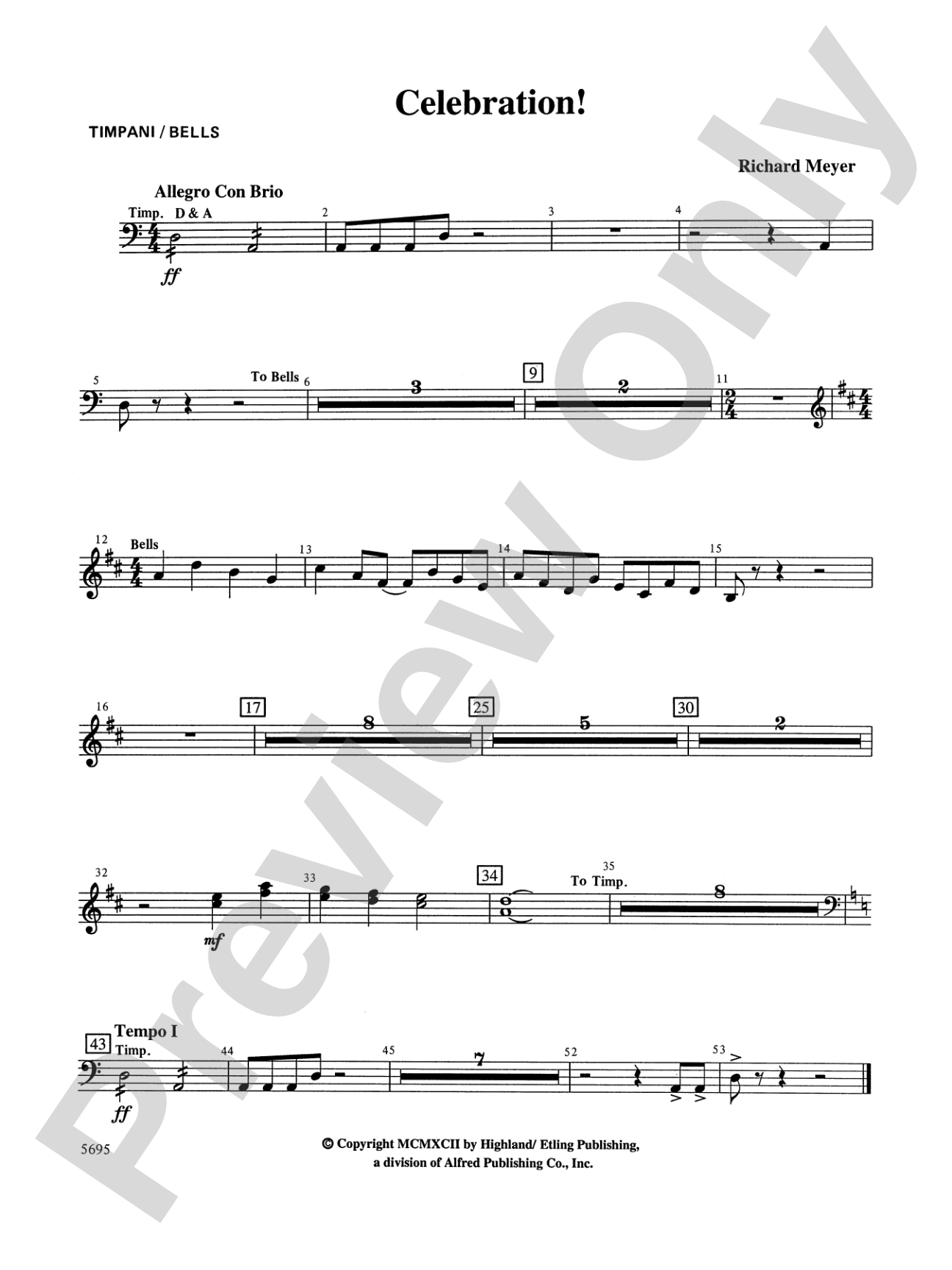

Celebration!: Timpani
By Richard Meyer
Grade: 4
Item: 00-PC-0001915_TMP
$3.00
Pickup currently not available
Description
Truly a celebration in itself, this NSOA Competition Winner from 1989 is a classic! Contrasting style sections and lively syncopated rhythms accent the festive nature of this piece. The key is centered on D with brief excursions to others. Position work includes fifth and sixth for first violin and fourth (tenor clef) for cello during their soli in the Cantabile section. (2:00)


Don't just read it, hear it, play along with it, and watch your students grow with it. In MakeMusic Cloud, Celebration!: Timpani comes alive with professional accompaniment, adjustable tempo, and built-in practice tools that turn solo practice into real progress.
Open in the Player
Jump straight in and assign it today.
Start Your Free Trial
Open this title and explore the full library in minutes.
Sample Audio
1
Audio File
--:--
0:00
0:00
Sample Video
No sample videos found.
Additional Details
Series:
Highland/Etling Full Orchestra
Publisher:
Alfred Music
Page Count:
100
SKU:
00-PC-0001915_TMP
More about this title
About the Composer: Richard Meyer

Richard Meyer brought three decades of classroom experience to the orchestral podium, teaching strings across elementary through high school levels in California public schools. At Oak Avenue Intermediate School in Temple City, he expanded the program from 29 students to 200 over 22 years while simultaneously directing the city's elementary string initiative. Beyond the classroom, Meyer led the Pasadena Youth Symphony Orchestra for 16 years, taking students on international performance tours across Vienna, Australia, Canada, and major U.S. cities.
Meyer's reputation extends across the profession as a guest conductor, clinician at ASTA and regional conferences, and a prolific composer with nearly 200 published works. He founded the "Giving Bach" program in 2009, an interactive concert initiative that has gained national recognition for bringing orchestral music to special needs and underserved student populations throughout Southern California. His work as string editor for Alfred Publishing and co-author of method materials including the String Explorer Series has shaped music education curricula nationwide.
Why we love this
Meyer's 1989 competition entry strikes an uncommon balance: the piece celebrates without sacrificing musicianship. The syncopated rhythms and stylistic shifts keep students engaged while the strategic position work (fifth and sixth for first violin, tenor clef writing for cello) ensures that soli passages demand real technical growth rather than merely showcasing what students already know.
What to expect
A piece that refuses to choose between sophistication and joy. The syncopated figures sparkle with infectious rhythmic drive, while the Cantabile section invites a moment of genuine lyricism where the orchestra breathes together as one. The result feels earned rather than ornamental.
Who it's for
Orchestra directors seeking a Grade 4 piece that balances festive energy with genuine musical substance. The work suits mid-year or end-of-year concerts where you want to feature soloist passages without sacrificing ensemble cohesion or audience appeal.
How to get the most out of it
- Bring out the contrast between sections deliberately. Meyer's style shifts create natural narrative points; use rehearsal time to identify and exaggerate the character change from one section to the next rather than smoothing them together.
- Balance the syncopation with clarity. Upbeat rhythmic figures can blur under tempo; lock the rhythm section (cellos, basses, percussion) on a steady pulse and let the upper voices layer their syncopated lines on top.
- Prepare the Cantabile section early. The position work requires confident intonation at the fifth and sixth positions for first violin and tenor clef reading for cello; isolate these passages in sectional rehearsals before full orchestra work.
How to use it
Program this as a concert centerpiece at any point after winter break, when students have built the technical foundation to handle the position work comfortably. Its 2:00 length makes it a natural anchor for a set with contrasting tempos, or pair it with a slower work to highlight the stylistic range Meyer builds into the piece itself.
Skills your students will build
- Playing in fifth and sixth positions (first violin) and tenor clef (cello)
- Reading and executing syncopated rhythmic patterns across multiple instrumental lines
- Navigating key modulations and brief tonal excursions while maintaining tonal center in D major
- Balancing individual solo lines with ensemble texture during the Cantabile section
- Responding to style and character changes within a single piece