
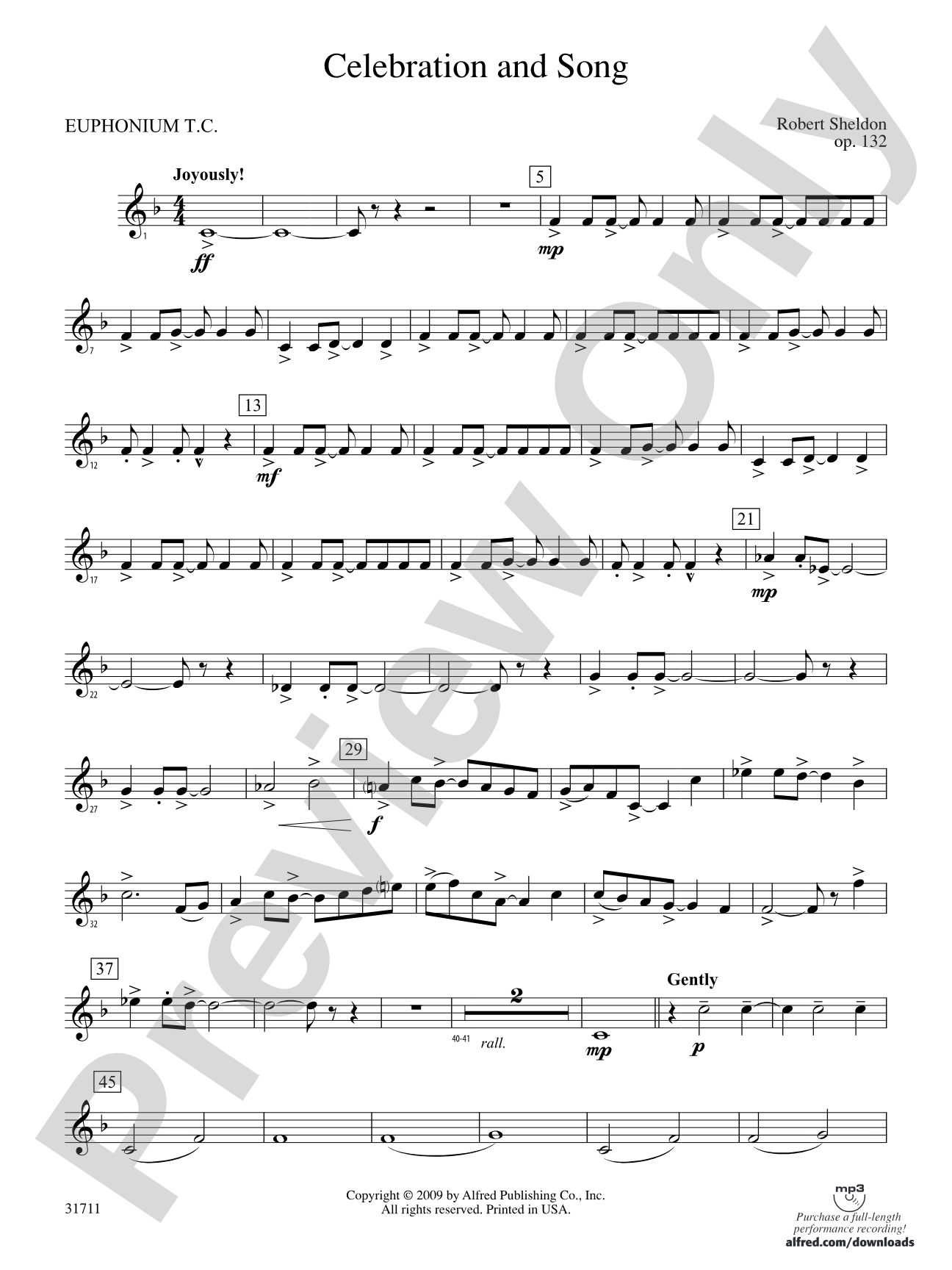
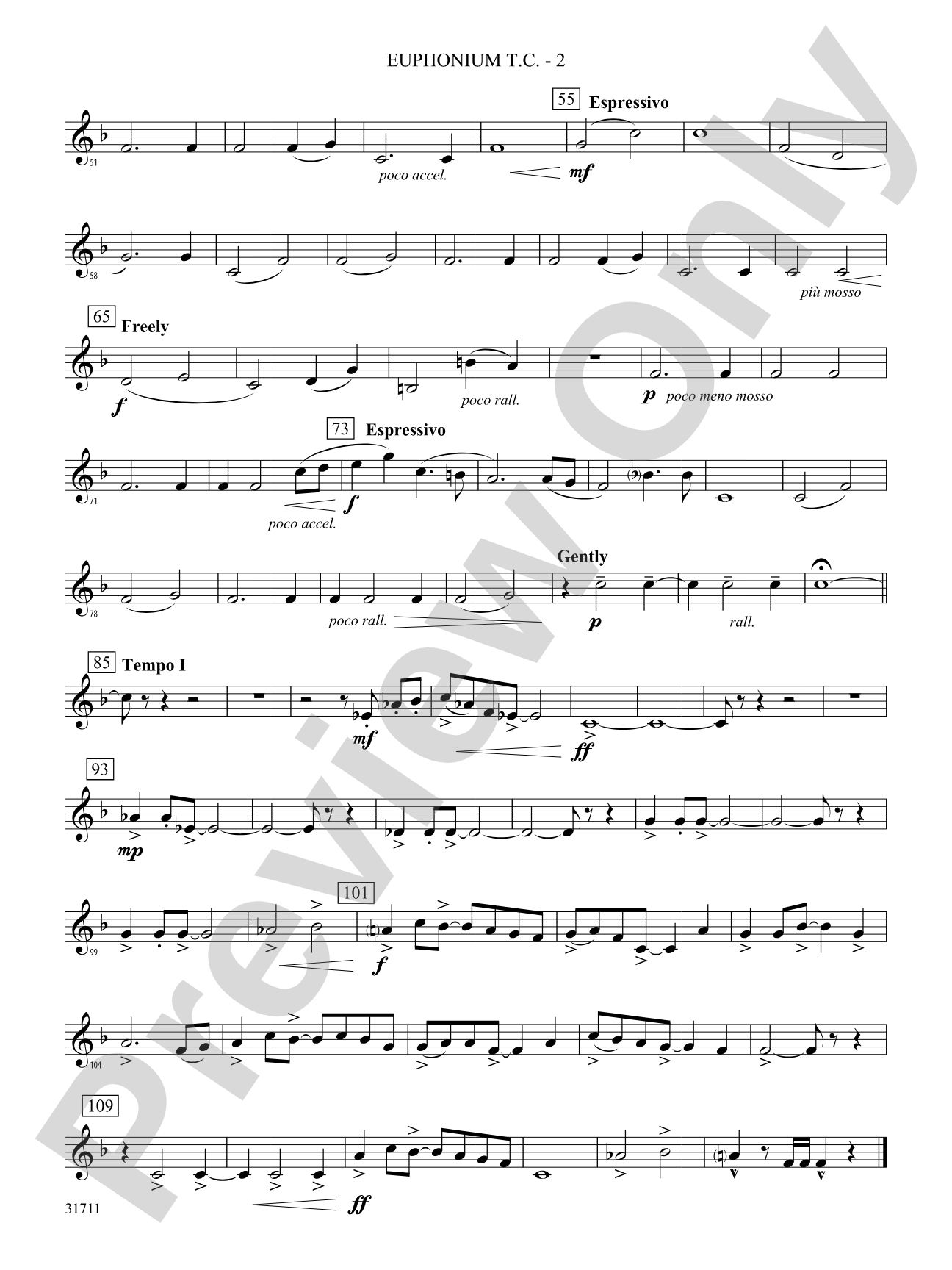

Celebration and Song: (wp) Baritone T.C.
By Robert Sheldon
Grade: 3 (Medium)
Item: 00-PC-0001806_wpBTC1
$3.00
Pickup currently not available
Description
With a rhythmic drive and tuneful melody, this concert overture engages the listener from the first measure. Colorful scoring and tasteful percussion bring the opening section to life. The plaintive lyrical section follows, featuring solos and soaring accompaniment lines. A return to the original theme brings the piece to a close with a rousing high-energy conclusion. (4:46) This title is available in MakeMusic Cloud.


Don't just read it, hear it, play along with it, and watch your students grow with it. In MakeMusic Cloud, Celebration and Song: (wp) Baritone T.C. comes alive with professional accompaniment, adjustable tempo, and built-in practice tools that turn solo practice into real progress.
Open in the Player
Jump straight in and assign it today.
Start Your Free Trial
Open this title and explore the full library in minutes.
Sample Audio
1
Audio File
--:--
0:00
0:00
Sample Video
Additional Details
Series:
Young Symphonic
Publisher:
Alfred Music
Page Count:
254
SKU:
00-PC-0001806_wpBTC1
More about this title
About the Composer: Robert Sheldon

Robert Sheldon stands among the most frequently programmed composers writing for wind ensembles today. His award-winning catalog spans thousands of performances annually across the United States and internationally, with his works appearing consistently on state and national festival lists. He has received major recognition from the American School Band Director's Association, Phi Beta Mu, and the American Society of Composers, Authors and Publishers.
Beyond composition, Sheldon has shaped wind band pedagogy as lead author of Sound Innovations for Concert Band. He maintains an active schedule as guest conductor for all-state and honor bands, travels extensively as a clinician and educator, and regularly accepts commissions for new works. His performances have been heard at Carnegie Hall, Boston's Symphony Hall, the Sydney Opera House, and the Kennedy Center. In 2020, VanderCook College of Music awarded him an honorary doctorate in recognition of his contributions to music education.
Why we love this
Sheldon's gift for clear, engaging melodic writing shines throughout this overture, making it a smart choice for bands still building confidence with longer concert forms. The piece balances accessibility with genuine musicality—the rhythmic opening commands attention, the lyrical middle section teaches ensemble balance and phrasing, and the high-energy finale gives students a satisfying payoff. At Grade 3, it sits perfectly for programs seeking substantial material that doesn't sacrifice artistry.
What to expect
This overture pulses with forward motion from the first measure, its rhythmic drive and bright melodic material creating immediate engagement. The middle section shifts into introspection, revealing the lyrical voice beneath the energy, before the piece transforms into a rousing, celebratory close that feels earned and joyful.
Who it's for
Concert bands at the Grade 3 level looking for a substantial overture that develops musical maturity without extreme technical demands. Directors programming contest or concert festivals will find this appealing for ensembles ready to tackle longer, multi-sectional forms with character and purpose.
How to get the most out of it
- Shape the opening rhythmic section with dynamic contrast; the driving pulse should feel propulsive, not mechanical. Let the melodic fragments sing over the rhythmic foundation.
- The lyrical section needs secure solo preparation before full rehearsal. Have your soloists and accompaniment parts rehearse independently first so the ensemble can balance these delicate textures.
- Conduct the return to the original theme with clarity and momentum to rebuild energy after the reflective middle section. This transition sets up the final climax.
- Use percussion strategically to color rather than dominate. The scoring calls for tasteful touches that support the overall narrative arc.
How to use it
Open a concert with this piece to establish energy and momentum, or position it mid-program as a substantial orchestral movement that shifts the emotional temperature. Its four-and-a-half-minute length makes it ideal filler between longer works, and its celebration of melody and color works beautifully alongside both classical standards and contemporary concert band repertoire.
Skills your students will build
- Maintaining consistent rhythmic pulse across extended musical forms
- Balancing solo lines against accompaniment textures
- Shaping lyrical phrasing with control and expression
- Responding to sectional contrasts and dynamic architectural planning
- Managing sustained performance energy across climactic passages