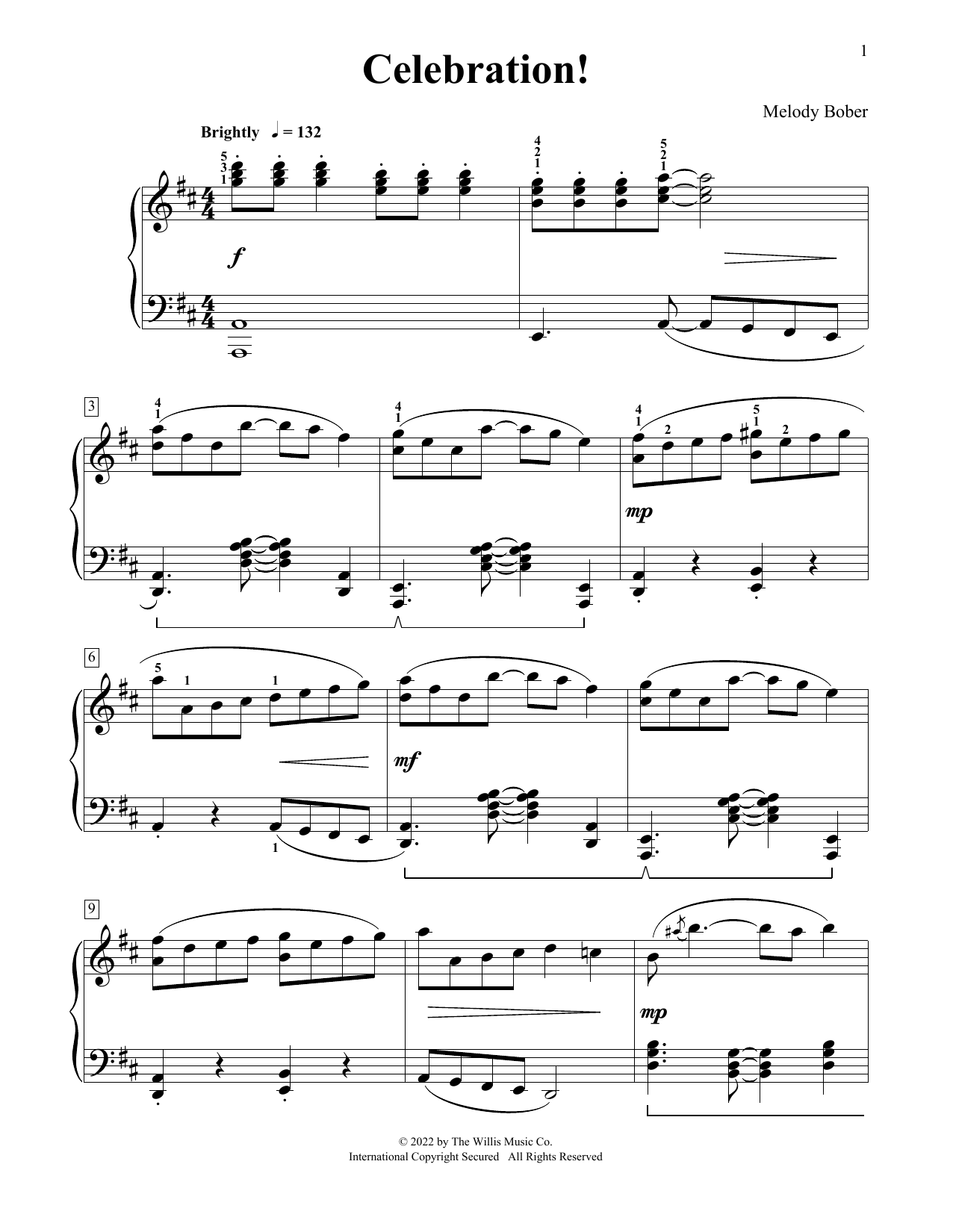
Melody Bober has spent over two decades in music education, teaching piano privately while simultaneously serving as a public school music educator and university instructor. Her training at the University of Illinois (B.M. in music education, summa cum laude) and Minnesota State University, Moorhead (M.A. in piano performance) shaped her pedagogical approach, which emphasizes both technical skill and genuine musical engagement. She studied piano with Joel Shapiro and Andrew Froelich, music education with Mary Hoffman, and jazz with Tony Caramia.
Beyond the studio and classroom, Bober has held positions as church pianist, accompanist, and music director, roles that deepened her understanding of how music serves different musical contexts. Her reputation as a clinician and composer has made her a frequent presenter at piano teacher conventions and workshops across North America. She currently resides in Minnesota with her husband Jeff.
Why we love this
Bober writes with genuine understanding of what motivates students at the elementary level. This piece delivers a genuine sense of accomplishment without resorting to empty technical flash or condescension, making it the kind of work students actually want to practice and teachers enjoy hearing repeatedly in studio recitals.
What to expect
Bright and forward-looking, with a sense of genuine accomplishment rather than forced cheerfulness. The music has an open, uncluttered quality that lets young pianists feel the shape and purpose of every phrase they play.
Who it's for
Elementary and early intermediate pianists seeking a piece that builds technical confidence alongside musical expression. Teachers will find it valuable for students ready to move beyond strict note-reading into genuine interpretive choice.
How to get the most out of it
Establish a steady, confident pulse before adding dynamic shaping; the celebratory character depends on rhythmic security rather than pedal experimentation.
Shape phrases with intentional tempo flexibility; allow small moments of space between musical ideas to let the sense of triumph register fully.
Balance the melody clearly against accompaniment figures without sacrificing the overall buoyancy of the tempo.
How to use it
Position this as a finale to a studio recital or small group performance, where its celebratory energy provides a satisfying close. It also works well as a milestone piece within a lesson sequence, marking progress from one level to the next without requiring extensive preparation time.
Skills your students will build
Dynamic control in both melody and accompaniment voices
Sustaining musical shape across multi-phrase structures
Balancing technical accuracy with interpretive expression
Hand independence in moderately active accompaniment patterns
You May Also Like
Scan to Complete Your Purchase
Use your phone's camera to scan the code below
You'll log in on your phone and the order will be added to your account