
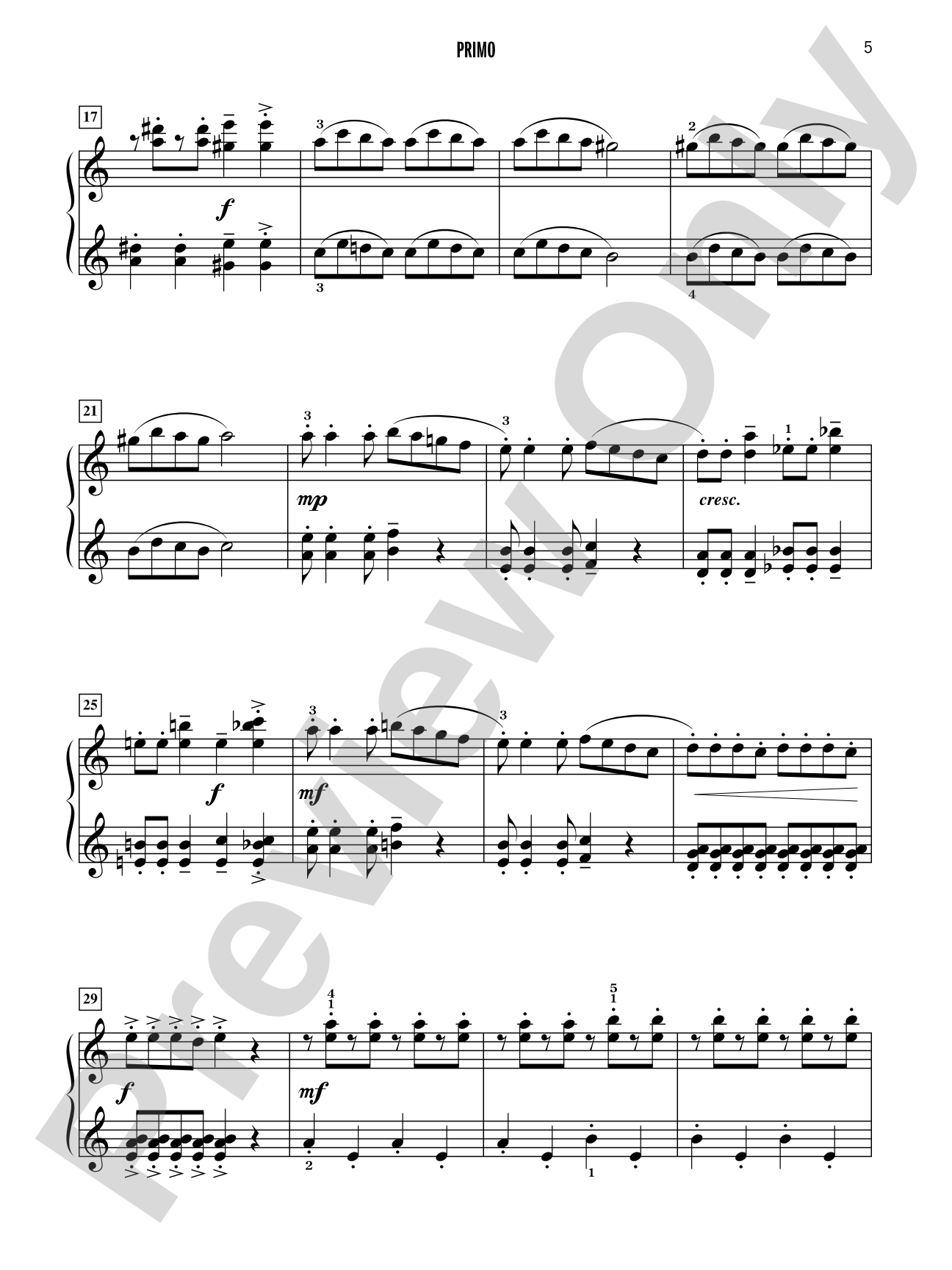
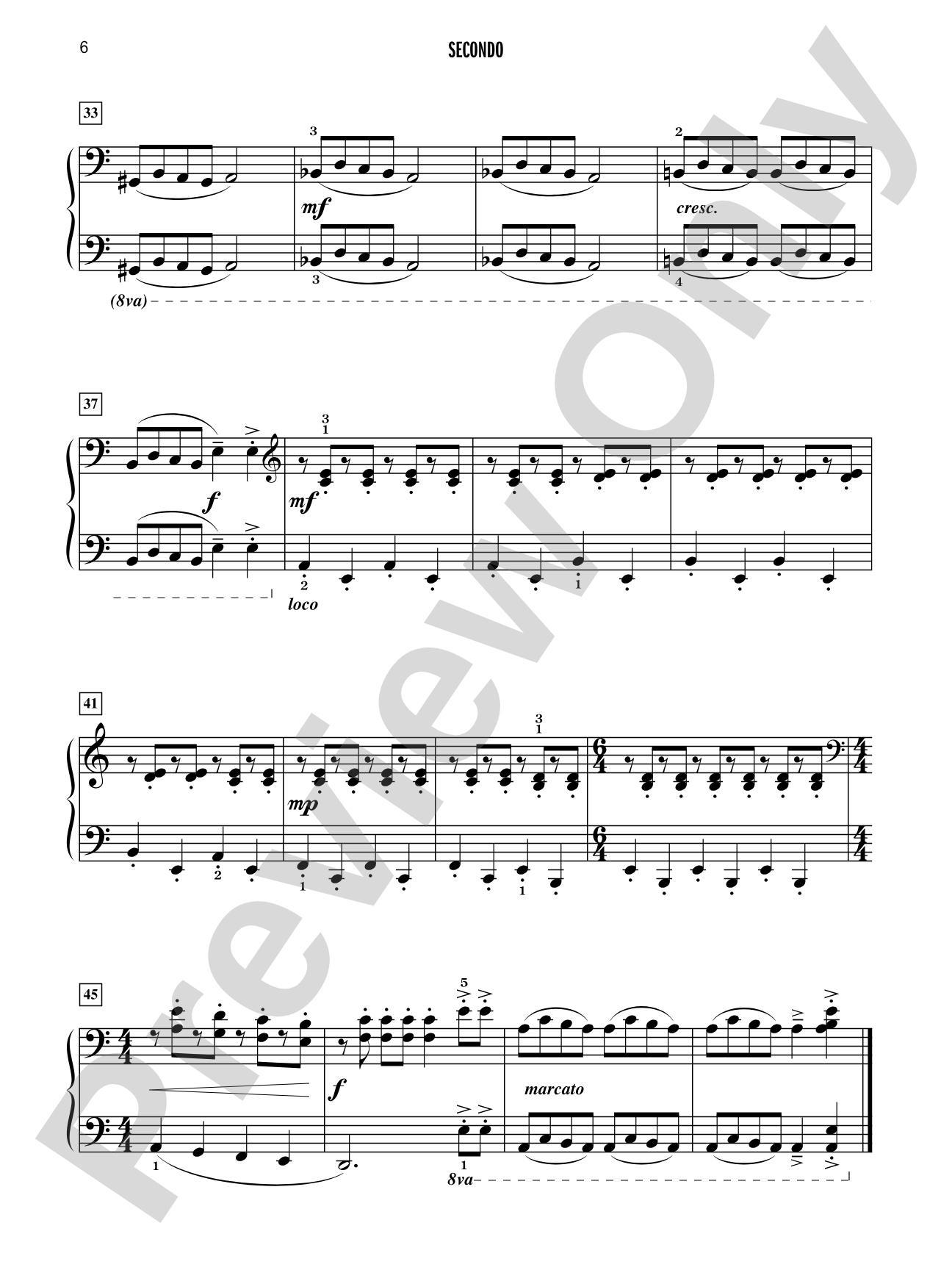
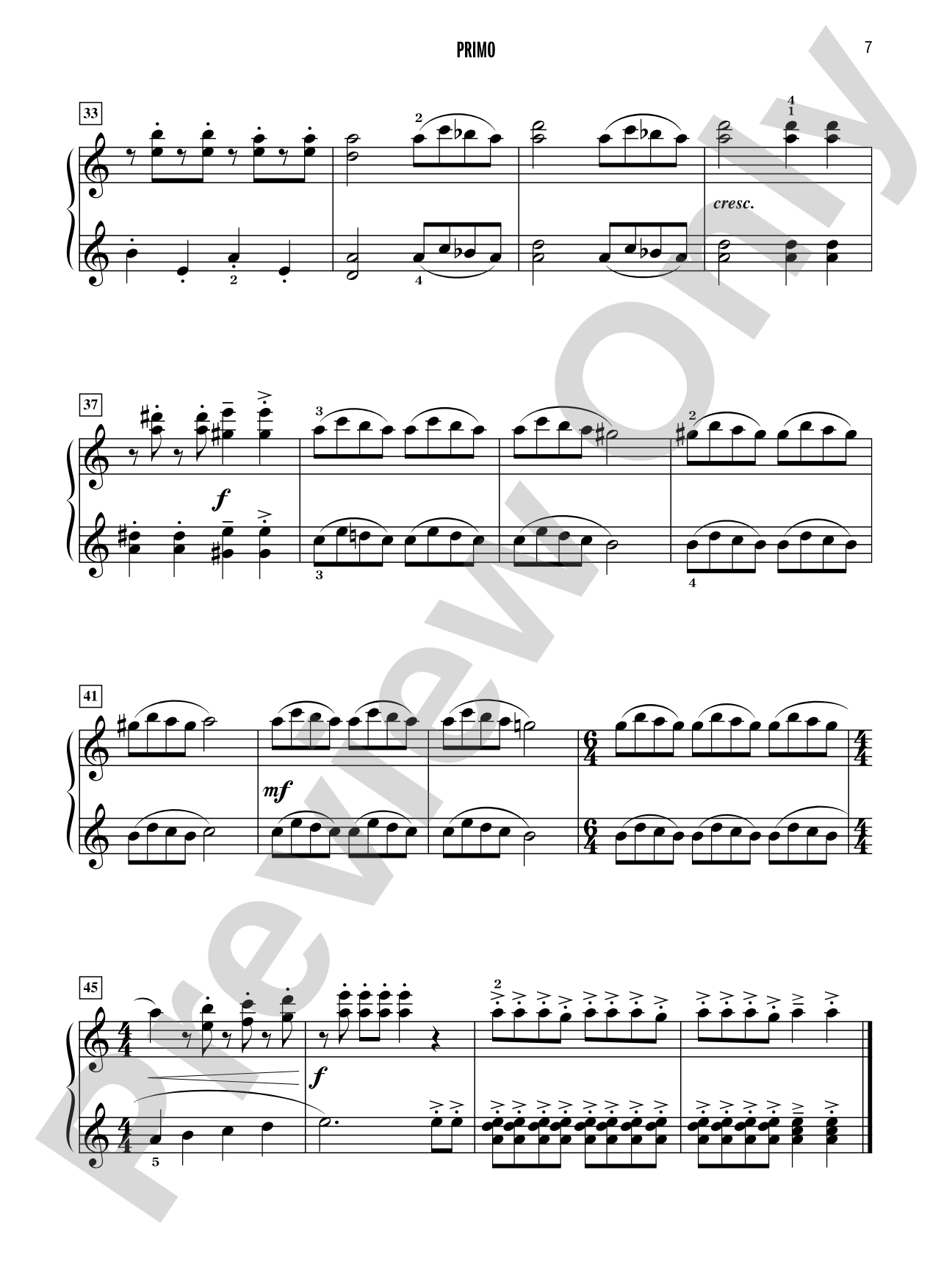
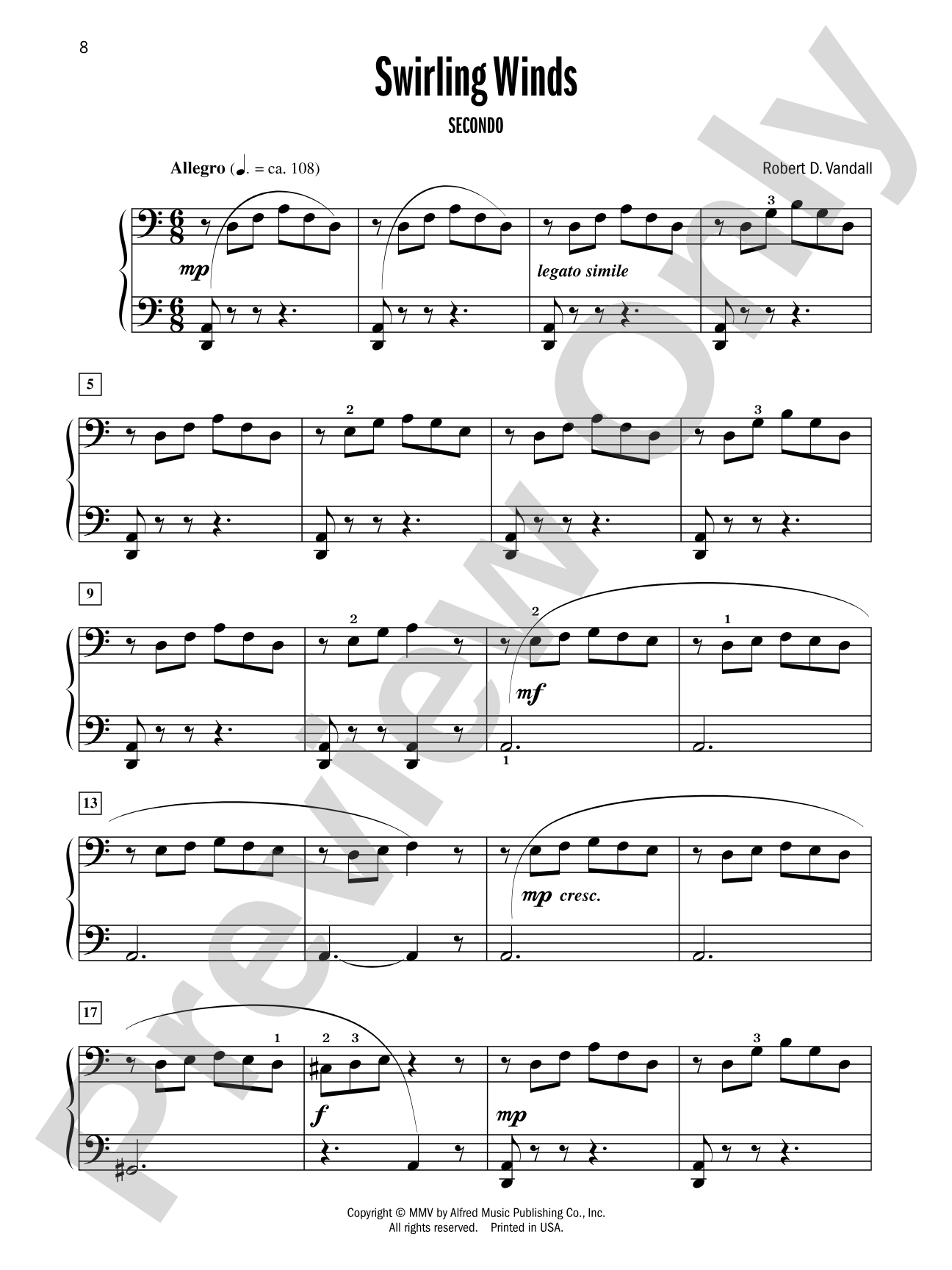

Celebrated Piano Duets, Book 2: Six Diverse Duets for Late Elementary to Early Intermediate Pianists: Piano Duets & Four Hands
Six Diverse Duets for Late Elementary to Early Intermediate Pianists
By Robert D. Vandall
Level: Late Elementary / Early Intermediate
Item: 00-PB-0000600
$8.99
Pickup currently not available
Related Items
Celebrated Piano Duets, Book 2: Piano Duet (1 Piano, 4 Hands) Book |
$8.99
|
View |
Description
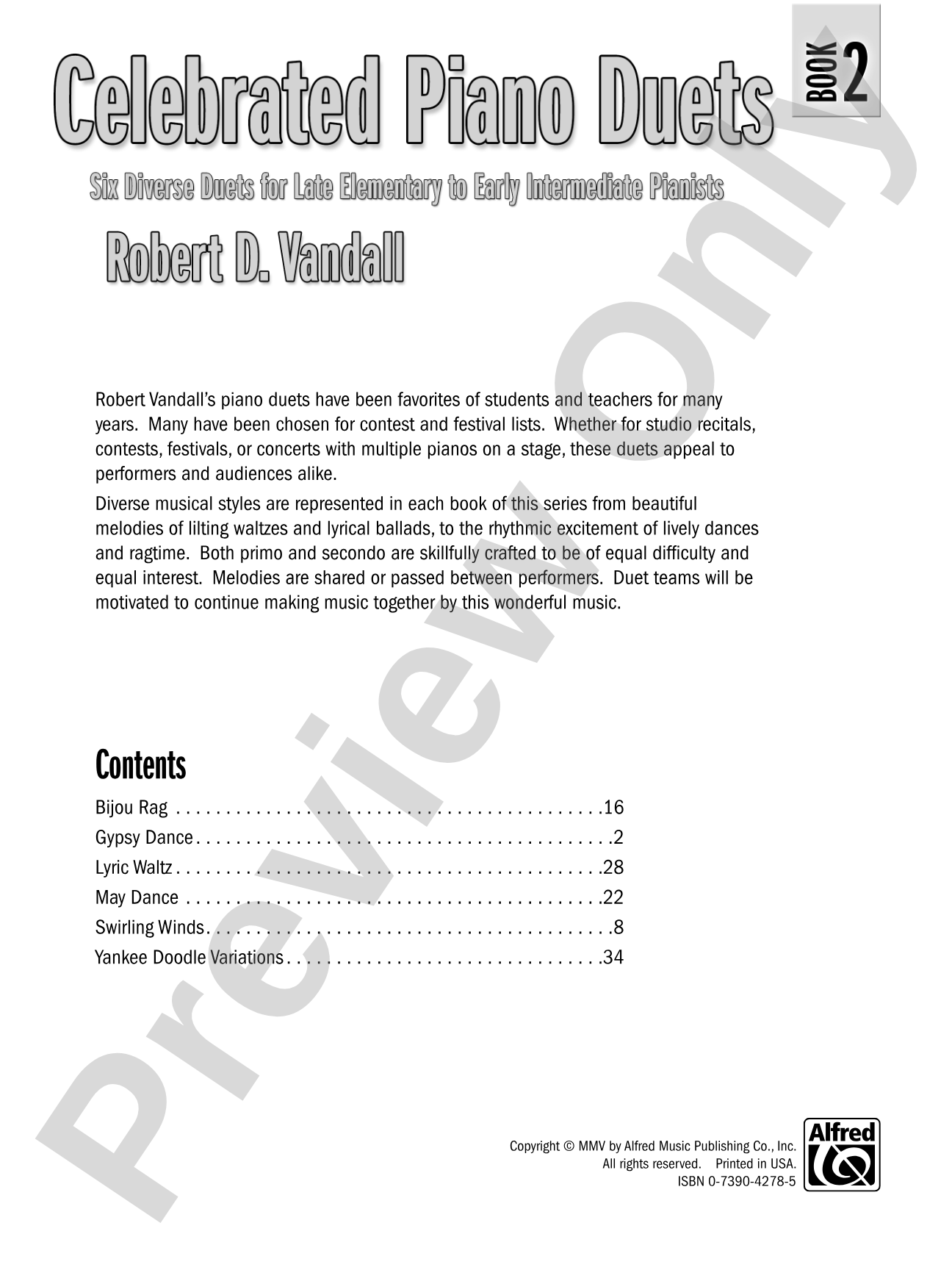
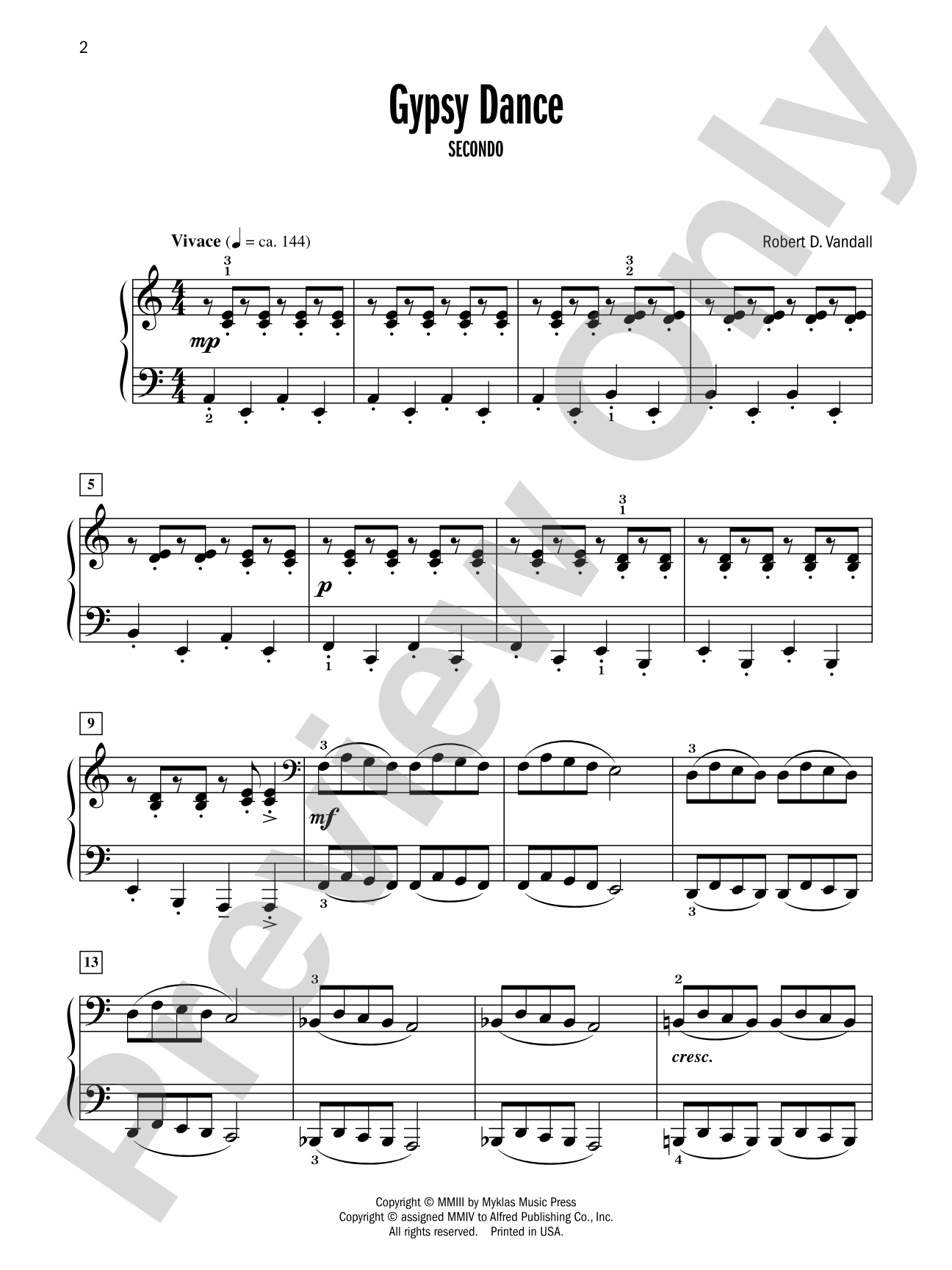
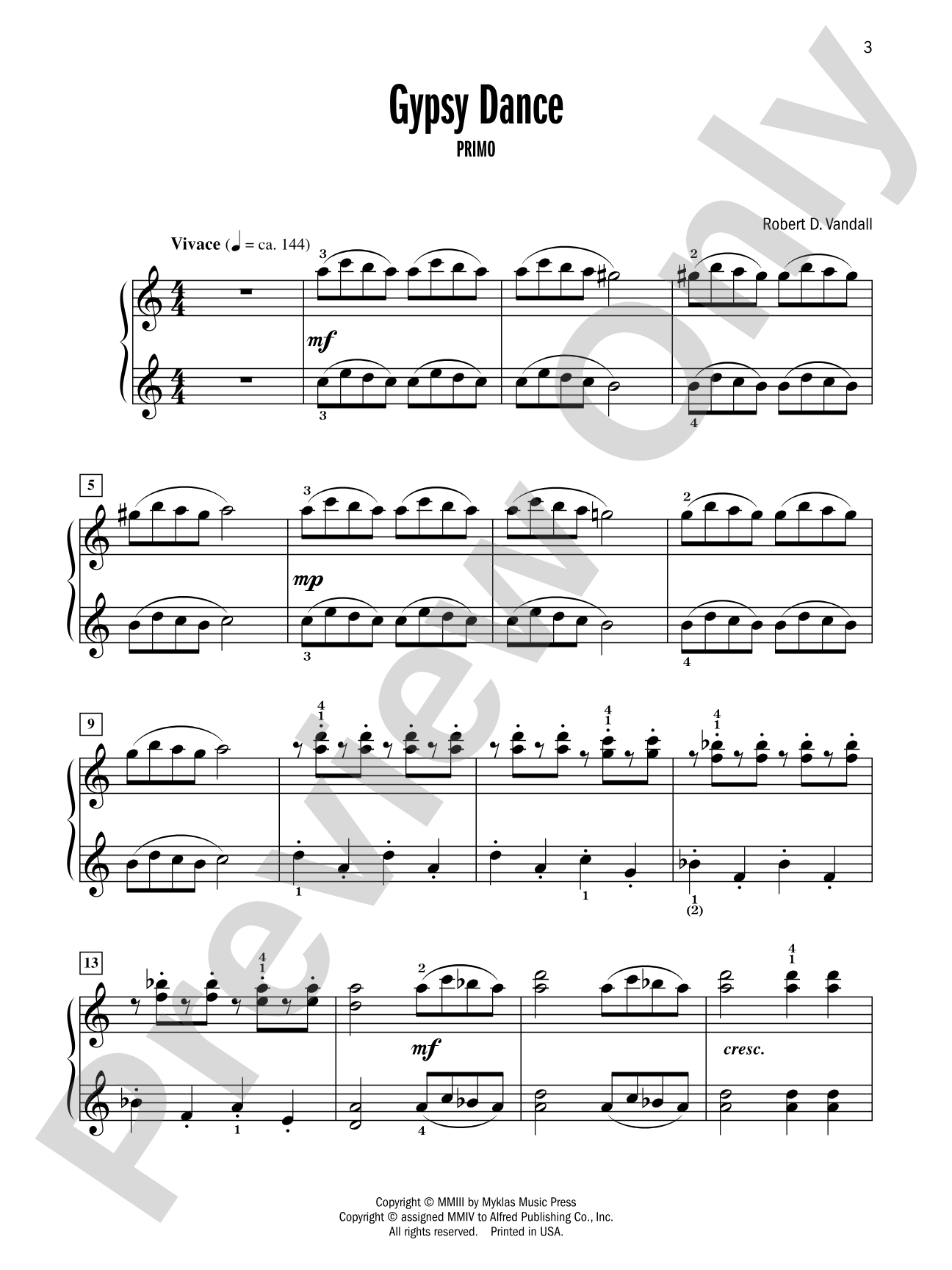
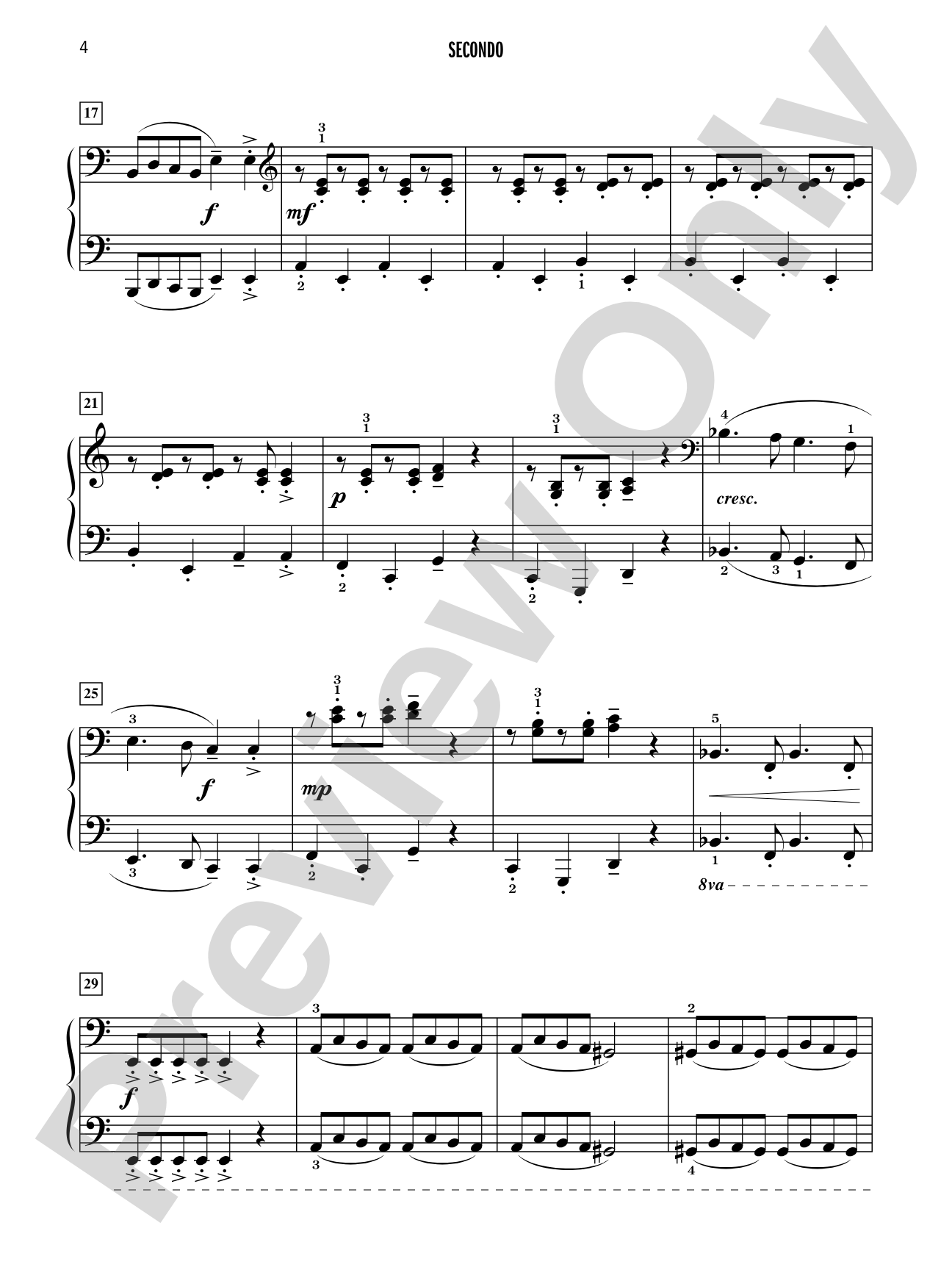
Robert Vandall's piano duets have been favorites of students and teachers for several years. Many have been chosen for contest and festival lists. Whether performed for studio recitals, contests, festivals, or concerts with multiple pianos on a stage, these duets appeal to performers and audiences alike. Diverse musical styles are represented in each book of this series-from beautiful melodies of lilting waltzes and lyrical ballads, to the rhythmic excitement of lively dances and ragtime. Both primo and secondo are skillfully crafted to be of equal difficulty and equal interest. Melodies are shared or passed between performers. These wonderful collections will motivate duet teams to continue making music together. Titles: Bijou Rag * Gypsy Dance * Lyric Waltz * May Dance * Swirling Winds * Yankee Doodle Variations. "Gypsy Dance" is a Federation Festivals 2016-2020 selection. A Federation Festivals 2020-2024 selection. A Federation Festivals 2024-2028 selection.


Celebrated Piano Duets, Book 2: Six Diverse Duets for Late Elementary to Early Intermediate Pianists: Piano Duets & Four Hands isn't in MakeMusic Cloud just yet...but it could be. Let us know you'd like to see it, and you'll help shape what comes next. In the meantime, start a free trial and dive into thousands of interactive titles your students can play along with today.
Request This Title
Tell us you want it.
Start Your Free Trial
Explore everything that's ready to play right now.
Sample Audio
No sample audio found.
Sample Video
No sample videos found.
Additional Details
Series:
Celebrated
Publisher:
Alfred Music
Page Count:
40
SKU:
00-PB-0000600
More about this title
About the Composer: Robert D. Vandall
Robert D. Vandall has built a reputation as a composer who understands what works in the teaching studio. His pieces appear regularly on state festival and contest lists, a testament to their musical substance and pedagogical soundness. He writes with the intermediate student in mind, crafting parts that challenge without overwhelming and rewarding both players equally.
Why we love this
Vandall resists the trap of making one hand do all the heavy lifting. The primo and secondo parts trade melodic interest and rhythmic responsibility, so neither player feels relegated to accompaniment duty. Studio teachers love these pieces because they genuinely motivate students to keep coming back to duet playing after the first experience.
What to expect
These duets span from the infectious swagger of ragtime to the flowing grace of waltzes and the exotic color of a gypsy dance. There's genuine musical personality in each piece; they never feel like exercises dressed up as repertoire. Playing them leaves you wanting to try the next one.
Who it's for
Late elementary and early intermediate pianists ready to experience duet playing as true collaboration rather than one player supporting another. Studio teachers assembling recital programs will find these six pieces cover enough stylistic ground to keep things interesting for performers and audiences.
How to get the most out of it
- Balance the melody between hands by listening for which part carries the tune in each section; this shifts multiple times across the collection, so plan your voicing accordingly.
- Work the rhythmic pieces (especially Bijou Rag) with a metronome first at a conservative tempo, then gradually build energy without sacrificing clarity.
- In the waltzes and lyrical movements, shape the phrasing together by agreeing on breath points before you sit down to rehearse; these pieces sing best when both players understand the arc of the phrase.
- Record yourselves playing through the entire duet to catch ensemble issues that might not be obvious in the moment, particularly in passages where parts move independently.
How to use it
Build a duet-focused studio recital around this collection, or select individual pieces to frame a longer program. The variety means you can program a waltz, a rag, and a character piece in sequence without repetition of mood. These also hold up beautifully in festival and contest settings, where they've already proven themselves multiple times over.
Skills your students will build
- Ensemble listening and balance between equal parts
- Shared melodic responsibility and part independence
- Style-specific interpretation (ragtime swing, waltz lilt, dance rhythm)
- Coordinating hand position and technique across two players
- Reading and executing stylistic articulations (staccato, legato, accent placement)