
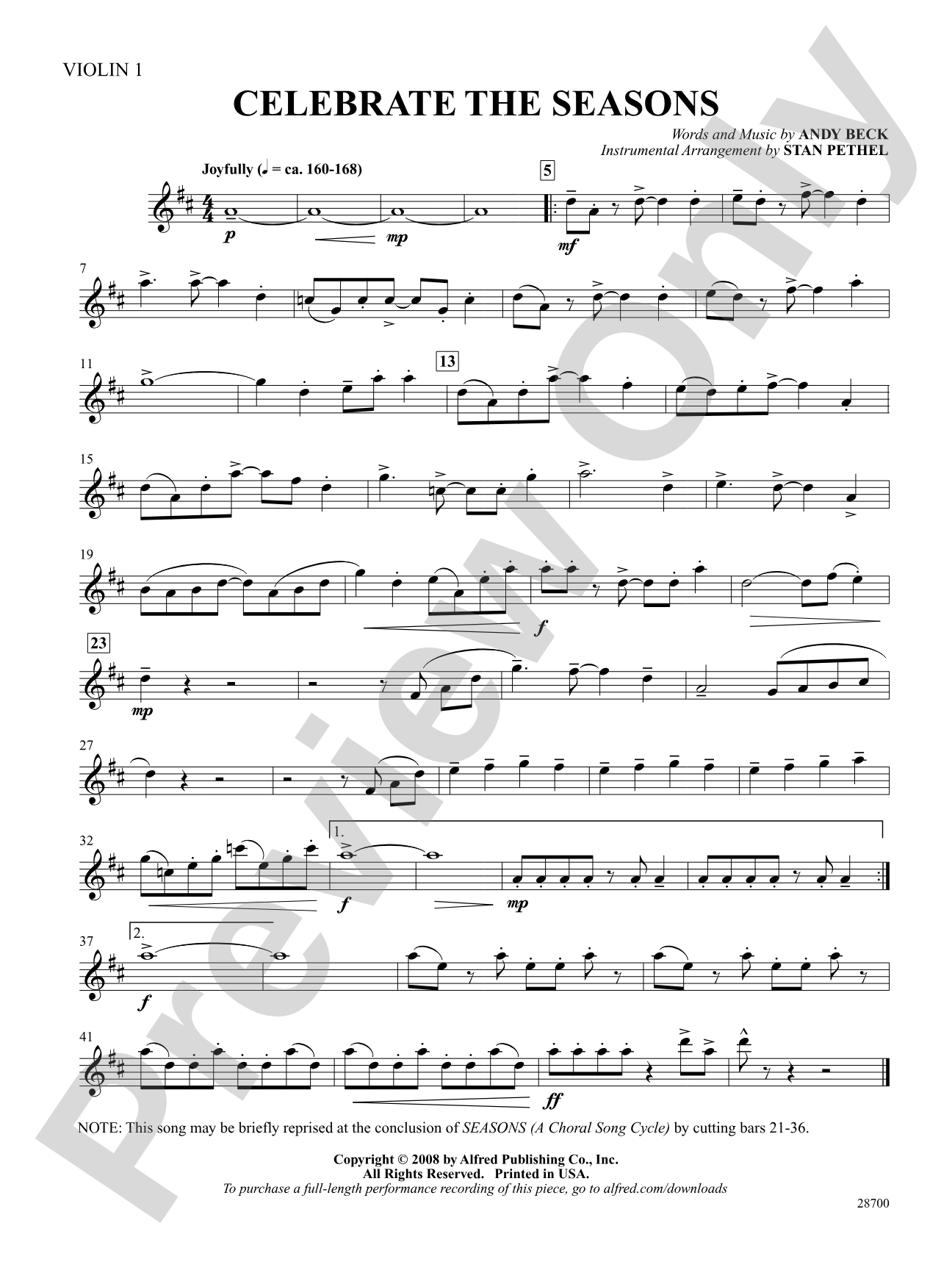

Celebrate the Seasons: 1st Violin: Choral SoundPax
Words and music by Andy Beck
Item: 00-PC-0001349_VN1
$3.00
Pickup currently not available
Description
A rhythmic piano ostinato grows into an exciting choral celebration for the changing seasons of the year. Modal harmonies and accented rhythms contribute to the contemporary sounds of this joyful fanfare and tribute to nature. Program with other Andy Beck "seasons" songs to create a choral song cycle. Includes part for string quartet.


Don't just read it, hear it, play along with it, and watch your students grow with it. In MakeMusic Cloud, Celebrate the Seasons: 1st Violin: Choral SoundPax comes alive with professional accompaniment, adjustable tempo, and built-in practice tools that turn solo practice into real progress.
Open in the Player
Jump straight in and assign it today.
Start Your Free Trial
Open this title and explore the full library in minutes.
Sample Audio
1
Audio File
--:--
0:00
0:00
Sample Video
No sample videos found.
Additional Details
Series:
Alfred Choral Designs
Publisher:
Alfred Music
Page Count:
8
SKU:
00-PC-0001349_VN1
Instrumentation:
SoundPax
More about this title
About the Composer: Andy Beck

Andy Beck directs choral publications at Alfred Music and has composed and arranged over 450 choral works now in active use by singers at every level. His output spans secular and sacred repertoire, vocal resources for music literacy, and children's musicals; his educational materials include Sing at First Sight, Foundations in Choral Sight Singing, and Vocalize! 45 Vocal Warm-Ups That Teach Technique. A trained tenor with degrees in music education from Ithaca College and Northwest Missouri State University, Beck remains active as a guest conductor, clinician, and adjudicator, and has served as commissioned composer and conductor for honor choirs and all-state ensembles throughout the Southeast.
Beyond his publication work, Beck performs regularly with the North Carolina Master Chorale Chamber Choir and has been a studio singer for Alfred Music since 1992. His commitment to music literacy and choral artistry shapes every project he curates for the Alfred catalog, and his international visibility on YouTube speaks to the accessibility and durability of his compositional voice.
Why we love this
Beck's use of modal harmony and contemporary rhythmic language keeps this celebration fresh and engaging rather than precious or sentimental. The ostinato foundation gives your accompanist (or recorded track) a clear anchor while the choir builds energy, and the optional string quartet parts elevate the piece without complicating rehearsal logistics.
What to expect
A celebratory burst of energy driven by interlocking rhythms and stacked modal sonorities that create brightness without major-key sweetness. The piece feels like a festival or turning point, marking the cycle of the year with joy and sharp musical definition.
Who it's for
Directors seeking a secular seasonal piece that sounds modern and rhythmically alive, not nostalgic or folk-tinged. This works equally well for intermediate to advanced high school choirs and accomplished adult ensembles looking for contemporary material with substance.
How to get the most out of it
- Let the opening ostinato establish itself clearly before the voices enter; the rhythmic clarity of this foundation carries the whole arrangement.
- Articulate the accented rhythms as written to unlock the contemporary character Beck is after; underplaying them flattens the fanfare quality.
- If using string quartet parts, conduct them in during rehearsals even if your pianist begins alone, so singers hear the full harmonic palette before performance.
- Shape phrases by seasons rather than by melodic contour; this reminds singers they're painting a year-long arc, not just singing a tune.
How to use it
Pair it with other Andy Beck seasons pieces to create a thematic choral song cycle spanning a full concert or show. It also stands alone beautifully as a concert opener or closer that energizes the room and leaves the audience with a strong harmonic and rhythmic impression.
Skills your students will build
- Reading and singing modal harmonies
- Executing syncopated rhythms with precision and uniform articulation
- Balancing a sustained ostinato (piano or ensemble) against active choral lines
- Shaping long-form narrative through sectional and seasonal phrasing
- Blending voices within modal sonorities that lack traditional tonal anchors