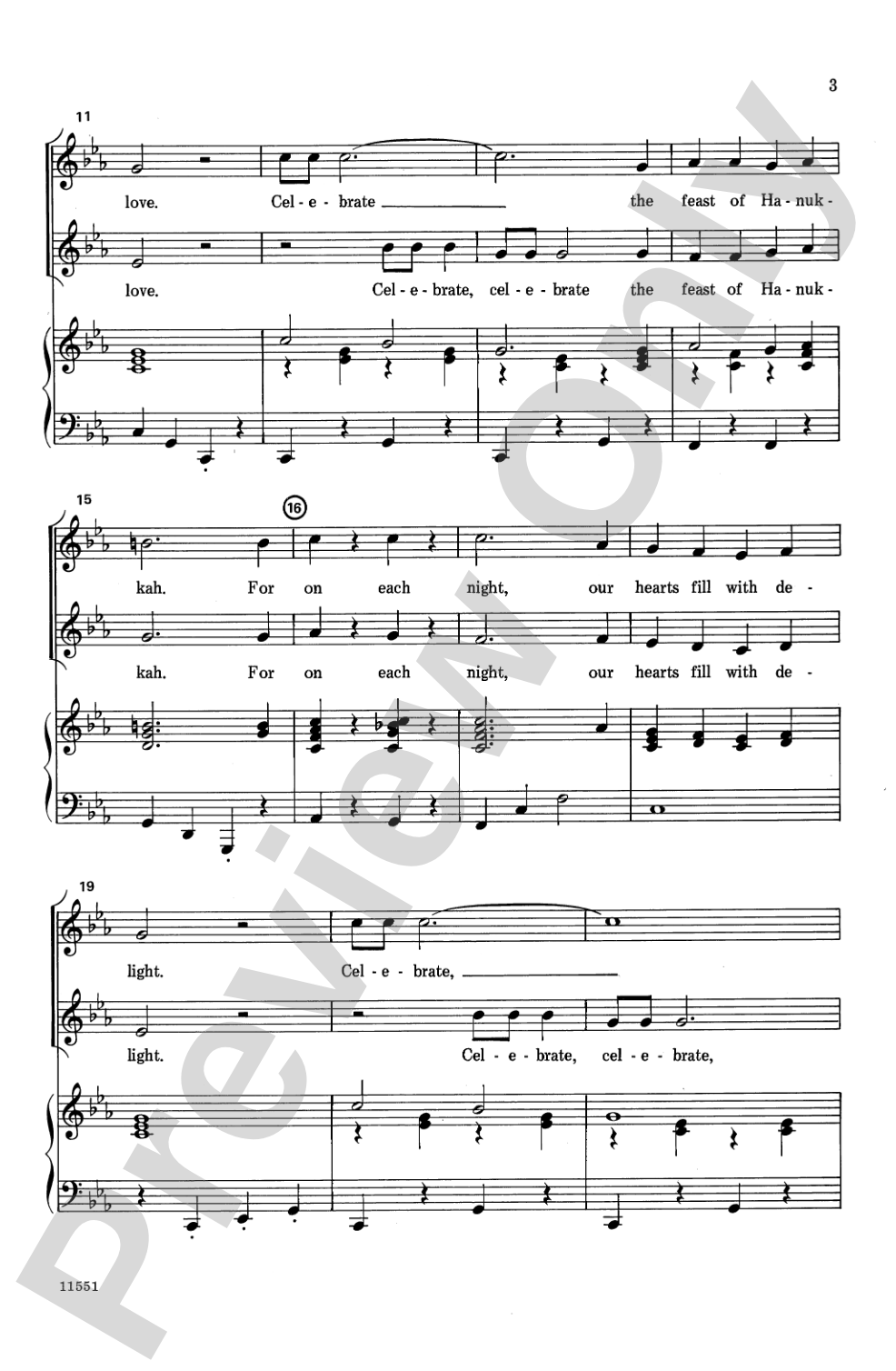
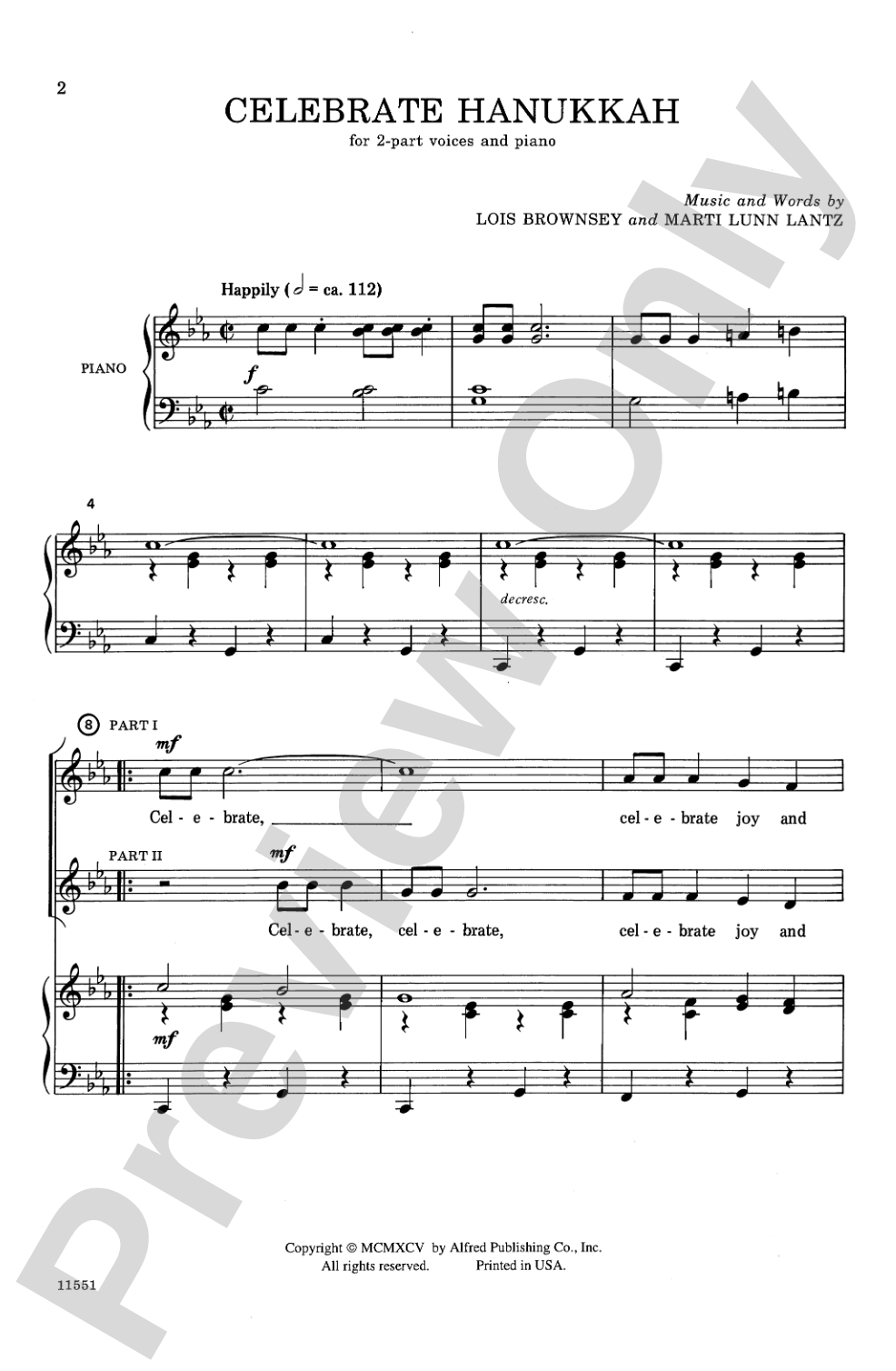
Celebrate Hanukkah Sheet Music Preview

Celebrate Hanukkah: 2-Part Choral Octavo

Music by Lois Brownsey and Marti Lunn Lantz

Item: 00-PO-0003854

Digital Download
$2.25

Minimum order quantity: 20 copies

Description
Each part in this fun-to-sing Hanukkah piece has its own distinct melody...great for teaching part singing to young choirs. The up-beat opening melody, very much in the style of a traditional Hanukkah song, contrasts with a legato middle section. Very easy piano...great for directors who accompany their choirs.

Celebrate Hanukkah: 2-Part Choral Octavo isn't in MakeMusic Cloud just yet...but it could be. Let us know you'd like to see it, and you'll help shape what comes next. In the meantime, start a free trial and dive into thousands of interactive titles your students can play along with today.

Sample Audio
No sample audio found.
Sample Video
Additional Details
Series: Alfred Archive Edition: Alfred Choral Designs
Publisher: Alfred Music
Page Count: 8
SKU: 00-PO-0003854

More about this title

About the Composer: Lois Brownsey

Lois Brownsey

Lois Brownsey studied music at Temple University in Philadelphia and trained at the Guitar Workshop while building experience in musical theatre. Over decades, she performed bass, vocals, and keys in pop, rock, and blues ensembles across the United States and internationally before transitioning to composition and studio work in 1997. Her long partnership with Marti Lunn Lantz has produced numerous Alfred choral works and song collections centered on multicultural and seasonal themes, including "Winter's Frost," "Japanese Snow Song," and "Celebrations around the World."

Brownsey's background in commercial music extends to jingles for national clients including AT&T and GMC. She currently resides in Pennsylvania's Pocono Mountains, where she operates Red Rock Recording Studios with her husband Kent Heckman, a recording engineer, and remains active in community arts and cultural work.

Why we love this

The contrasting sections here offer young choristers genuine musical shape to work with: an energetic opening that sits naturally in young voices, followed by a legato passage that invites them to explore sustained line and blend. Each part has its own melodic identity, which means singers remain engaged rather than simply doubling a melody, and the accessible piano part lets conductors focus on choir sound rather than fighting through complicated accompaniment.

What to expect

Bright and celebratory at the outset, with the energy and rhythmic drive of a traditional Hanukkah folk song, then shifts into a gentler, more introspective mood as the piece softens into its legato middle section. The combination invites singers to experience both joyful expression and lyrical sensitivity within a single piece.

Who it's for

Young and developing choirs learning to sing in parts, particularly those new to two-part writing. This piece works well for intermediate-level ensembles in schools, youth choirs, and community programs that want accessible yet musically substantive Hanukkah repertoire.

How to get the most out of it

  • Shape the opening melody with crisp articulation and rhythmic precision to capture the traditional Hanukkah song style; avoid rushing the upbeat passages.
  • Create clear contrast by introducing the legato middle section with a marked reduction in tempo and softer dynamic approach.
  • Balance the two parts equally during the legato section so that neither melody dominates; have singers listen across the choir to ensure both lines are audible.
  • Keep the piano part light and rhythmically steady during the opening, then let it support and sustain through the middle section without overwhelming the voices.

How to use it

Include this in a winter or holiday concert that celebrates Jewish heritage, positioning it alongside other seasonal or multicultural pieces. Its accessible difficulty and short length (8 pages) make it an ideal opener or closer for a program featuring young singers, or use it as part of a themed set exploring Hanukkah traditions.

Skills your students will build

  • Part singing with independent melodic lines in two-part texture
  • Contrasting musical styles (rhythmic/energetic versus legato/sustained)
  • Dynamic control and phrase shaping across a single piece
  • Listening to and balancing different vocal parts simultaneously

You May Also Like