
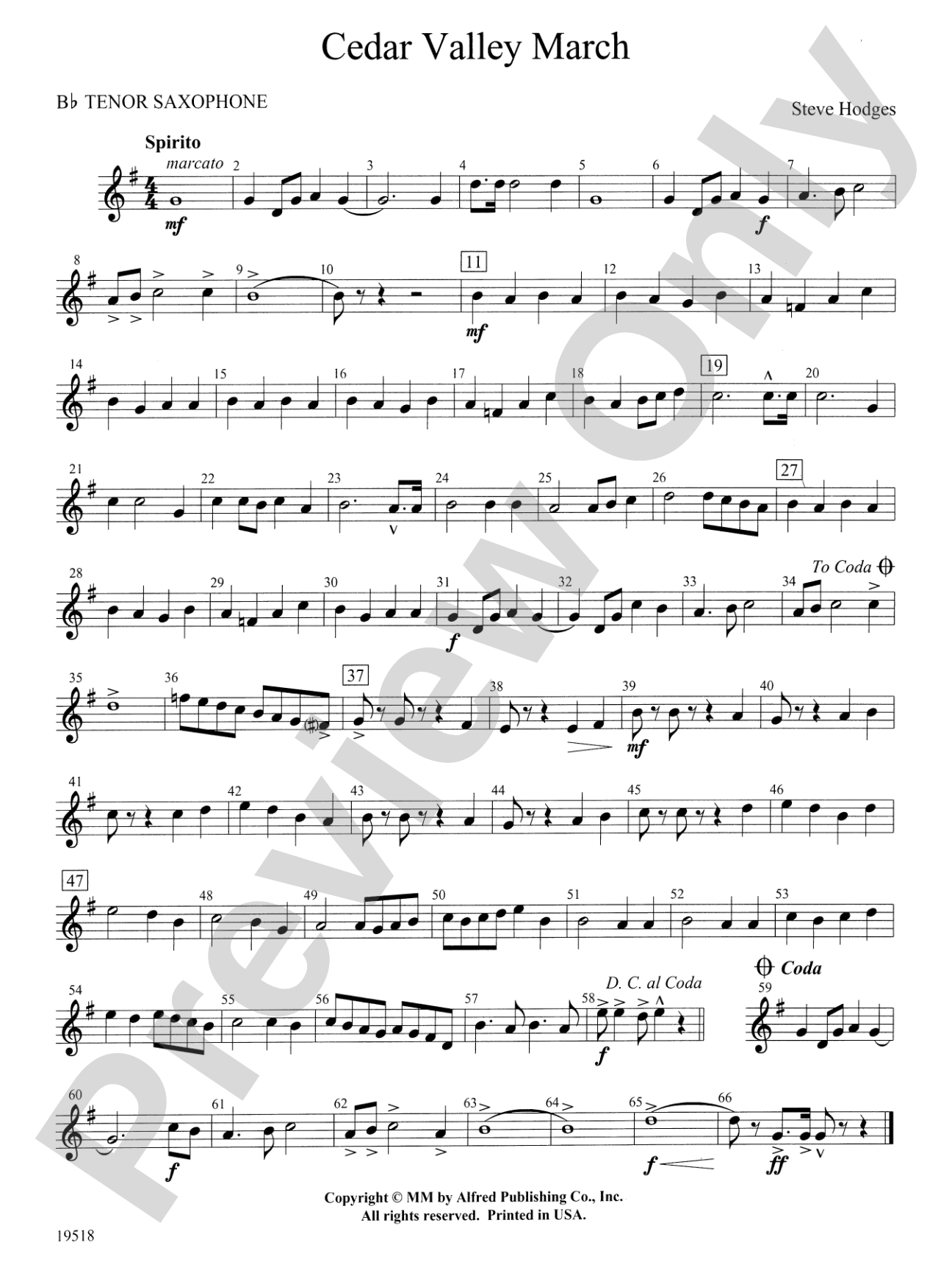

Cedar Valley March: B-flat Tenor Saxophone
By Steve Hodges
Grade: 1.5 (Easy)
Item: 00-PC-0000323_TX1
$3.00
Pickup currently not available
Description
This spirited march begins with a dynamic "echo" introduction that leads to the memorable main theme. All sections share the spotlight before transitioning into the contrasting B section with a minor, more lyrical theme. After an understated presentation, this section builds to a big cymbal crash that leads to a repeat of the A section. The coda features a variation of the echo introduction before ending in a dynamic fashion. The vitality of this new work makes Cedar Valley March an ideal concert opener that both the band and audience will enjoy.


Don't just read it, hear it, play along with it, and watch your students grow with it. In MakeMusic Cloud, Cedar Valley March: B-flat Tenor Saxophone comes alive with professional accompaniment, adjustable tempo, and built-in practice tools that turn solo practice into real progress.
Open in the Player
Jump straight in and assign it today.
Start Your Free Trial
Open this title and explore the full library in minutes.
Sample Audio
1
Audio File
--:--
0:00
0:00
Sample Video
No sample videos found.
Additional Details
Series:
Challenger Band Series
Publisher:
Alfred Music
Page Count:
120
SKU:
00-PC-0000323_TX1
More about this title
About the Composer: Steve Hodges

Steve Hodges holds degrees from Western Oregon University (Bachelor of Science) and Central Washington University (Master of Music Education). Over four decades in public school music education, he directed bands, choirs, and small ensembles across all levels before retiring from full-time teaching.
Since 1986, Hodges has composed over 120 concert band works published by Alfred Music, along with choral arrangements through Staff Music and Shawnee Press. His compositions have traveled internationally to festivals and state conventions, earned commissions from honor bands and school districts across North America, and appeared in broadcasts by TBS and ESPN. A member of ASCAP, Hodges resides in The Dalles, Oregon, where he remains active in community music alongside his wife Teddie. One of his greatest pleasures is hearing his grandchildren perform his pieces in their school bands.
Why we love this
Cedar Valley March trades pretense for pure musical energy. The echo introduction immediately signals something engaging is happening, the main theme sticks with listeners, and the minor B section provides genuine contrast rather than filler. What makes it stand out for directors is how efficiently Hodges gives every section the mic without losing momentum or clarity of purpose.
What to expect
Crisp and purposeful. The echo introduction draws the audience in immediately, and the main theme has the kind of straightforward appeal that makes you want to conduct it again. The minor section offers breathing room and emotional color before the final push sends everyone home energized.
Who it's for
Grade 1.5 bands ready for marches with structure and style beyond typical opener fare. This works equally well for groups developing precision on dynamic contrast and section coordination as it does for those looking to open a concert with something audiences recognize as genuinely musical.
How to get the most out of it
- Balance the echo introduction carefully so the second iteration feels like an answer rather than a repetition. Let each section hear where they fit in the call-and-response texture.
- The transition into the B section benefits from a slight ease in tempo. Treat the minor theme as a genuine shift in mood, not just a key change.
- Build the cymbal crash strategically. The payoff works only if the crescendo before it feels intentional and controlled, not rushed.
- Shape the coda so the echo variation feels like a callback rather than a rerun. Small dynamic and articulation tweaks can make familiar material feel fresh.
How to use it
Cedar Valley March excels as a concert opener, where its immediate energy and clear musical arc set a positive tone for what follows. It also works well in festival or contest settings where you want judges to hear confident execution of both major and minor tonalities, dynamic control, and ensemble precision from the opening downbeat.
Skills your students will build
- Executing dynamic echo passages with clarity and balance
- Transitioning between major and minor tonalities
- Building and sustaining crescendos toward climactic moments
- Maintaining articulation consistency across sections
- Responding to tonal color shifts (bright vs. lyrical)